Kirjojen hintavertailu. Mukana 12 281 563 kirjaa ja 12 kauppaa.

Kirjailija

Tony Collins

Kirjat ja teokset yhdessä paikassa: 23 kirjaa, julkaisuja vuosilta 2002-2026, suosituimpien joukossa The Big Book of Dad Jokes for Kids. Vertaile teosten hintoja ja tarkista saatavuus suomalaisista kirjakaupoista.

23 kirjaa

Kirjojen julkaisuhaarukka 2002-2026.

Collaborative Documentary Filmmaking

Collaborative Documentary Filmmaking

Tony Collins

TAYLOR FRANCIS LTD
2026
sidottu
This book is a hands-on guide that explores the human dimensions of documentary production, offering concrete tools to strengthen collaboration at every stage from pre-production through to distribution. It reframes documentary production as a human system shaped by relationships, purpose, and ethical responsibility. Drawing on decades of international filmmaking and teaching, Tony Collins challenges craft-only approaches and shows how trust, listening, and shared agency determine both creative outcomes and participant care. Through concise case studies, visual frameworks, and field-tested protocols, the book offers practical guidance for navigating creative conflict, protecting dignity, and sustaining collaboration from development through post-production. Written for students, educators, and independent filmmakers, it provides tools that translate reflective theory into everyday practice.
Collaborative Documentary Filmmaking

Collaborative Documentary Filmmaking

Tony Collins

TAYLOR FRANCIS LTD
2026
nidottu
This book is a hands-on guide that explores the human dimensions of documentary production, offering concrete tools to strengthen collaboration at every stage from pre-production through to distribution. It reframes documentary production as a human system shaped by relationships, purpose, and ethical responsibility. Drawing on decades of international filmmaking and teaching, Tony Collins challenges craft-only approaches and shows how trust, listening, and shared agency determine both creative outcomes and participant care. Through concise case studies, visual frameworks, and field-tested protocols, the book offers practical guidance for navigating creative conflict, protecting dignity, and sustaining collaboration from development through post-production. Written for students, educators, and independent filmmakers, it provides tools that translate reflective theory into everyday practice.

Roy Francis

Roy Francis

Tony Collins

BLOOMSBURY PUBLISHING PLC
2025
sidottu
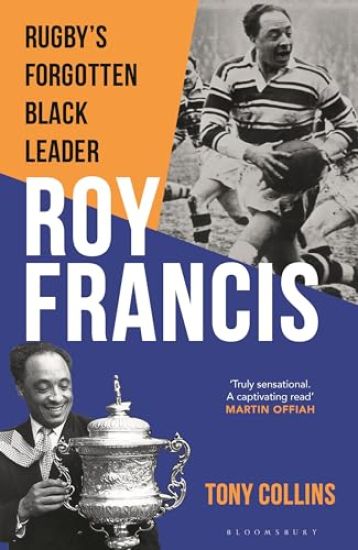
The remarkable story of one man’s struggle to overcome racism and revolutionise rugby coaching.In the 1950s and 1960s one man dominated rugby coaching like no other: Roy Francis. He led teams to championships and Wembley finals, revolutionised the art of coaching and inspired his players to incredible achievements. But even more amazingly for those times, he was a Black man in a white world.As the illegitimate child of a mixed-race couple who gave him up for adoption, his story recounts his upbringing in a Black family living in the Welsh coalfields, a childhood shaped by memories of the 1919 Welsh race riots and, foremost, his gift for rugby. Aged just seventeen, Roy played for Wigan and, despite facing racism, became the first Black player to play for Great Britain in either rugby codes.Roy Francis became Hull rugby league club coach in 1951 where he introduced video-analysis, sports psychology and personalised training – revolutionary methods which turned a mediocre team into championship winners. His crowning glory came when his Leeds team triumphed in the famous 1968 ‘Watersplash’ Wembley Cup Final, before he headed Down Under as North Sydney Bears club coach.Through archives, family members’ accounts and former players’ memories, Roy Francis tells the story of a family’s journey from slavery to sporting success, and of a remarkable man who defied prejudice to reach the pinnacle of rugby as a player, coach and leader.
Raising the Red Flag

Raising the Red Flag

Tony Collins

BRILL
2023
sidottu
Raising the Red Flag explores the origins of the British Marxist movement from the creation of the Social Democratic Federation to the foundation of the Communist Party. It tells a story of rising class struggle, the founding of the Labour Party, the fight against World War One, the Russian Revolution, and the explosive year of 1919. The book also uses new archival sources to re-examine Marxist organisations such as the British Socialist Party, the Socialist Labour Party, and Sylvia Parkhurst’s Workers’ Socialist Federation. Above all, this is the story of men and women who fought to liberate the working class from capitalism through socialist revolution.
Who Framed William Webb Ellis

Who Framed William Webb Ellis

Tony Collins

SCRATCHING SHED PUBLISHING LTD
2022
nidottu
Rugby is full of mysteries on and off the pitch It is played with an odd-shaped ball. There are two versions. The rules seem to change regularly. Fans of the two games still argue about things that happened over a century ago including who invented it. Award-winning sports history professor Tony Collins cracks many such enigmas.
Rugby League: A People's History

Rugby League: A People's History

Tony Collins

SCRATCHING SHED PUBLISHING LTD
2020
pokkari
Tells the story of the game in all its glory, from global superstars to local supporters, professionals and amateurs, men and women, officials and grassroots volunteers. It explains why rugby league was born, grew around the world, and what enabled it to triumph over adversity - a social history of the life and times of the north of England.
How Football Began

How Football Began

Tony Collins

Routledge
2018
nidottu
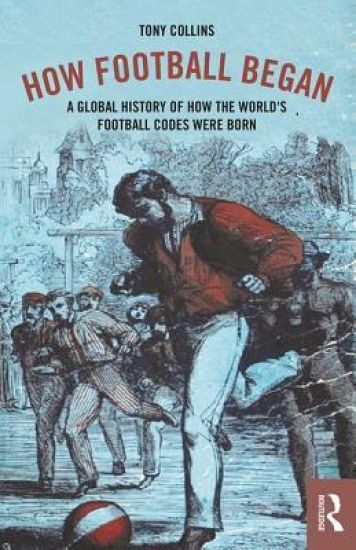
This ambitious and fascinating history considers why, in the space of sixty years between 1850 and 1910, football grew from a marginal and unorganised activity to become the dominant winter entertainment for millions of people around the world. The book explores how the world’s football codes - soccer, rugby league, rugby union, American, Australian, Canadian and Gaelic - developed as part of the commercialised leisure industry in the nineteenth century. Football, however and wherever it was played, was a product of the second industrial revolution, the rise of the mass media, and the spirit of the age of the masses.Important reading for students of sports studies, history, sociology, development and management, this book is also a valuable resource for scholars and academics involved in the study of football in all its forms, as well as an engrossing read for anyone interested in the early history of football.
How Football Began

How Football Began

Tony Collins

Routledge
2018
sidottu
This ambitious and fascinating history considers why, in the space of sixty years between 1850 and 1910, football grew from a marginal and unorganised activity to become the dominant winter entertainment for millions of people around the world. The book explores how the world’s football codes - soccer, rugby league, rugby union, American, Australian, Canadian and Gaelic - developed as part of the commercialised leisure industry in the nineteenth century. Football, however and wherever it was played, was a product of the second industrial revolution, the rise of the mass media, and the spirit of the age of the masses.Important reading for students of sports studies, history, sociology, development and management, this book is also a valuable resource for scholars and academics involved in the study of football in all its forms, as well as an engrossing read for anyone interested in the early history of football.
Taking My God for a Walk

Taking My God for a Walk

Tony Collins

Monarch Books
2016
pokkari
In September 2013 Tony Collins took advantage of a long-overdue sabbatical to walk the 490 miles of the Camino, from the French border to Santiago de Compostela in northern Spain. For decades he had helped to provide the evangelical churches of the world with reading material. Now he was deliberately stepping out of his comfort zone: a pilgrimage, carrying his pack, through a land whose language he did not speak, into a religious culture far removed from his own, in search of sources of reverence. He would not walk alone: the Way has many adherents, well over 200,000 completing their Camino during that year. He had expected the Way to be arduous, and so it proved. But he had not expected so bracing an internal journey, his battered soul laid down for examination, past errors offered up for scrutiny. Nor had he expected such moments of intense spiritual encounter; nor so many precious friendships. He discovered, above all, as have many before him, that the Road leaves an indelible mark.
Diamonds are for Heather

Diamonds are for Heather

Tony Collins

Lulu Press Inc
2014
nidottu
Life is already difficult for a sixteen year old boy who is at least a lap behind his peers in the 1500 metre event at the Growing Up Olympics. But when his beloved Grandfather passes away, leaving a cryptic clue to the whereabouts of untold riches, the resultant road trip will increase the pace. Escaping the clutches of an over-protective mother, sexually deprived employer and a furious Asian funeral director, Felix Malholly makes his getaway. What follows is a journey involving diamond theft, grave robbery, surfing, terrifying pensioners, stand-up comedy, torture with a chain-saw and a whole lot of fun in between. If it happened to you, how rich would you feel?
Sport in Capitalist Society

Sport in Capitalist Society

Tony Collins

Routledge
2013
sidottu
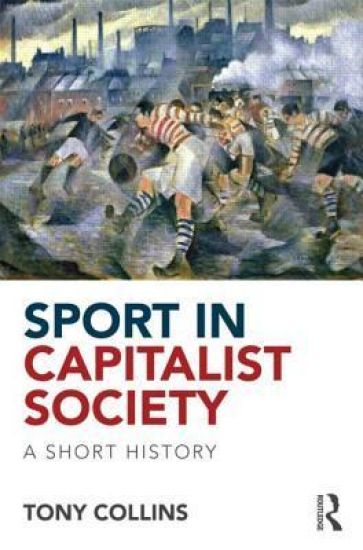
Why are the Olympic Games the driving force behind a clampdown on civil liberties? What makes sport an unwavering ally of nationalism and militarism? Is sport the new opiate of the masses?These and many other questions are answered in this new radical history of sport by leading historian of sport and society, Professor Tony Collins.Tracing the history of modern sport from its origins in the burgeoning capitalist economy of mid-eighteenth century England to the globalised corporate sport of today, the book argues that, far from the purity of sport being ‘corrupted’ by capitalism, modern sport is as much a product of capitalism as the factory, the stock exchange and the unemployment line. Based on original sources, the book explains how sport has been shaped and moulded by the major political and economic events of the past two centuries, such as the French Revolution, the rise of modern nationalism and imperialism, the Russian Revolution, the Cold War and the imposition of the neo-liberal agenda in the last decades of the twentieth century. It highlights the symbiotic relationship between the media and sport, from the simultaneous emergence of print capitalism and modern sport in Georgian England to the rise of Murdoch’s global satellite television empire in the twenty-first century, and for the first time it explores the alternative, revolutionary models of sport in the early twentieth century.Sport in a Capitalist Society is the first sustained attempt to explain the emergence of modern sport around the world as an integral part of the globalisation of capitalism. It is essential reading for anybody with an interest in the history or sociology of sport, or the social and cultural history of the modern world.
Sport in Capitalist Society

Sport in Capitalist Society

Tony Collins

Routledge
2013
nidottu
Why are the Olympic Games the driving force behind a clampdown on civil liberties? What makes sport an unwavering ally of nationalism and militarism? Is sport the new opiate of the masses?These and many other questions are answered in this new radical history of sport by leading historian of sport and society, Professor Tony Collins.Tracing the history of modern sport from its origins in the burgeoning capitalist economy of mid-eighteenth century England to the globalised corporate sport of today, the book argues that, far from the purity of sport being ‘corrupted’ by capitalism, modern sport is as much a product of capitalism as the factory, the stock exchange and the unemployment line. Based on original sources, the book explains how sport has been shaped and moulded by the major political and economic events of the past two centuries, such as the French Revolution, the rise of modern nationalism and imperialism, the Russian Revolution, the Cold War and the imposition of the neo-liberal agenda in the last decades of the twentieth century. It highlights the symbiotic relationship between the media and sport, from the simultaneous emergence of print capitalism and modern sport in Georgian England to the rise of Murdoch’s global satellite television empire in the twenty-first century, and for the first time it explores the alternative, revolutionary models of sport in the early twentieth century.Sport in a Capitalist Society is the first sustained attempt to explain the emergence of modern sport around the world as an integral part of the globalisation of capitalism. It is essential reading for anybody with an interest in the history or sociology of sport, or the social and cultural history of the modern world.
A Social History of English Rugby Union
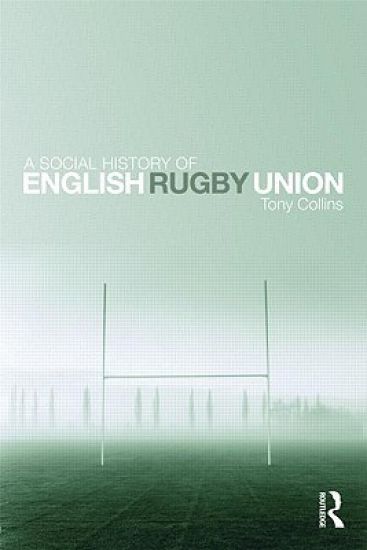
From the myth of William Webb Ellis to the glory of the 2003 World Cup win, this book explores the social history of rugby union in England.Ever since Tom Brown’s Schooldays the sport has seen itself as the guardian of traditional English middle-class values. In this fascinating new history, leading rugby historian Tony Collins demonstrates how these values have shaped the English game, from the public schools to mass spectator sport, from strict amateurism to global professionalism.Based on unprecedented access to the official archives of the Rugby Football Union, and drawing on an impressive array of sources from club minutes to personal memoirs and contemporary literature, the book explores in vivid detail the key events, personalities and players that have made English rugby. From an era of rapid growth at the end of the nineteenth century, through the terrible losses suffered during the First World War and the subsequent ‘rush to rugby’ in the public and grammar schools, and into the periods of disorientation and commercialisation in the 1960s through to the present day, the story of English rugby union is also the story of the making of modern England.Like all the very best writers on sport, Tony Collins uses sport as a prism through which to better understand both culture and society. A ground-breaking work of both social history and sport history, A Social History of English Rugby Union tells a fascinating story of sporting endeavour, masculine identity, imperial ideology, social consciousness and the nature of Englishness.
Rugby's Great Split

Rugby's Great Split

Tony Collins

Routledge
2006
sidottu
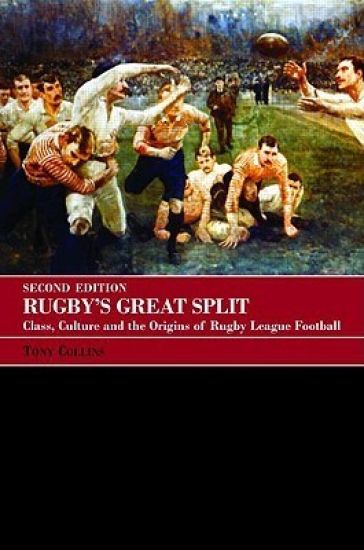
Since it’s first publication, Rugby’s Great Split has established itself as a classic in the field of sport history. Drawing on an unprecedented range of sources, this deeply researched and highly readable book traces the social, cultural and economic divisions that led, in 1895, to schism in the game of rugby and the creation of rugby league, the sport of England’s northern working class. Tony Collins’ analysis challenges many of the conventional assumptions about this key event in rugby history – about class conflict, amateurism in sport, the North-South divide, violence on the pitch, the development of mass spectator sport and the rise of football. This new edition is expanded to cover parallel events in Australia and New Zealand, and to address the key question of rugby league’s failure to establish itself in Wales. Rugby’s Great Split is a benchmark text in the history of rugby, and an absorbing case study of wider issues – issues of class, gender, regional and national identity, and the impact of the commercialization and recent professionalization of rugby league. This insightful text is for anyone interested in Britain’s social history or in the emergence of modern sport, it is vital reading.
Rugby's Great Split

Rugby's Great Split

Tony Collins

Routledge
2006
nidottu
Since it’s first publication, Rugby’s Great Split has established itself as a classic in the field of sport history. Drawing on an unprecedented range of sources, this deeply researched and highly readable book traces the social, cultural and economic divisions that led, in 1895, to schism in the game of rugby and the creation of rugby league, the sport of England’s northern working class. Tony Collins’ analysis challenges many of the conventional assumptions about this key event in rugby history – about class conflict, amateurism in sport, the North-South divide, violence on the pitch, the development of mass spectator sport and the rise of football. This new edition is expanded to cover parallel events in Australia and New Zealand, and to address the key question of rugby league’s failure to establish itself in Wales. Rugby’s Great Split is a benchmark text in the history of rugby, and an absorbing case study of wider issues – issues of class, gender, regional and national identity, and the impact of the commercialization and recent professionalization of rugby league. This insightful text is for anyone interested in Britain’s social history or in the emergence of modern sport, it is vital reading.
Rugby League in Twentieth Century Britain
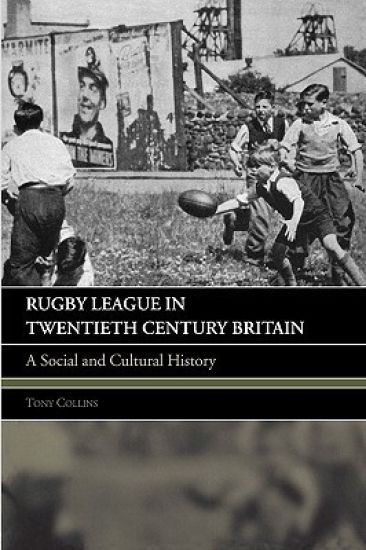
Called ‘the greatest game of all’ by its supporters but often overlooked by the cultural mainstream, no sport is more identified with England’s northern working class than rugby league. This book traces the story of the sport from the Northern Union of the 1900s to the formation of the Super League in the 1990s, through war, depression, boom and deindustrialisation, into a new economic and social age. Using a range of previously unexplored archival sources, this extremely readable and deeply researched book considers the impact of two world wars, the significance of the game’s expansion to Australasia and the momentous decision to take rugby league to Wembley. It investigates the history of rugby union’s long-running war against league, and the sport’s troubled relationship with the national media. Most importantly, this book sheds new light on issues of social class and working-class masculinity, regional identity and the profound impact of the decline of Britain’s traditional industries. For all those interested in the history of sport and working-class culture, this is essential reading.