Kirjojen hintavertailu. Mukana 12 657 676 kirjaa ja 12 kauppaa.

Kirjailija

Tony Redding

Kirjat ja teokset yhdessä paikassa: 5 kirjaa, julkaisuja vuosilta 2011-2026, suosituimpien joukossa Remembering the St John’s Rail Disaster, Lewisham. Vertaile teosten hintoja ja tarkista saatavuus suomalaisista kirjakaupoista.

5 kirjaa

Kirjojen julkaisuhaarukka 2011-2026.

Remembering the St John’s Rail Disaster, Lewisham
On Wednesday 4 December 1957, the 4.56pm steam express for Ramsgate left London’s Cannon Street over an hour late, due to thick fog. The driver at the controls of the locomotive knew the route like the back of his hand, yet, somehow, the express passed two caution signals at speed between New Cross and St John’s, ploughing at 30mph into the rear of a stationary electric train packed with 1,500 passengers. The catastrophic collision at St John’s, Lewisham, was a horrifying disaster, the third worst in British railway history. Ninety people died and over 200 were injured. This new study by Tony Redding presents a detailed analysis of the terrible consequences for the families caught up in the tragedy. The narrative, built on painstaking research and including many interviews with eyewitnesses and families, shows how the human cost of this disaster spread far beyond the direct victims. In some cases, its malign influence is still alive today.
V-Bombers

V-Bombers

Tony Redding

Grub Street Publishing
2024
sidottu
This is the story of a very British deterrent. Much has been written about the V-bombers – the Valiant, Victor and Vulcan – but virtually nothing has been said about their strategic nuclear strike role. How would Britain’s small force of subsonic bombers have retaliated following a Soviet attack? Would they have succeeded in visiting thermonuclear catastrophe on their Soviet targets? V-Bombers: Britain’s Nuclear Frontline in the Cold War is the first detailed account of the operational capability and credibility of the airborne nuclear deterrent during the peak years of confrontation with the Soviet Union. This book is the product of seven years of research by the author, Dr Tony Redding. It includes a great deal of fresh material on V-Force weapons, war mission, targeting, vulnerabilities and tactics for attacking targets within Soviet Russia. Over 70 V-Force aircrew and ground crew were interviewed and over 300 operational research reports and other official documents reviewed. The author demonstrates how the V-bombers retained a unilateral capacity to destroy a small number of the very largest cities in the Soviet Union in the period until the handover of the strategic nuclear deterrent to the Polaris submarines in 1969. This core retaliatory threat, centred on the destruction of Moscow and Leningrad, was judged severe enough to undermine Russia’s position in relation to the United States. In short, a few British V-bombers had the destructive capacity to destabilise the balance between the superpowers. The book concludes that, within the first few hours, a small force of surviving V-bombers could have unleashed the explosive power of all Allied bombs dropped on Germany in six years of war. A sobering thought and a fascinating and necessary read for all those interested in this period of history.
War in the Wilderness

War in the Wilderness

Tony Redding

The History Press Ltd
2015
nidottu
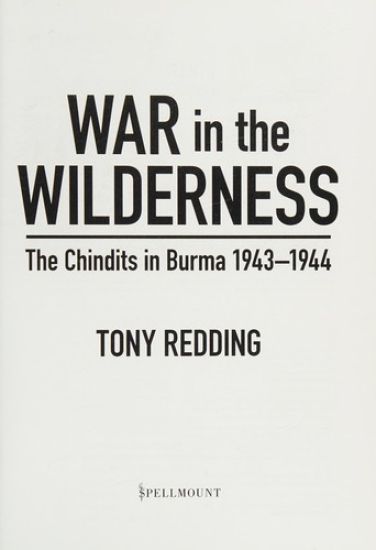
War in the Wilderness is the most comprehensive account ever published of the human aspects of the Chindit war in Burma.The word ‘Chindit’ will always have a special resonance in military circles. Every Chindit endured what is widely regarded as the toughest sustained Allied combat experience of the Second World War. The Chindit expeditions behind Japanese lines in occupied Burma 1943–1944 transformed the morale of British forces after the crushing defeats of 1942. The Chindits provided the springboard for the Allies’ later offensives. The two expeditions extended the boundaries of human endurance. The Chindits suffered slow starvation and exposure to dysentery, malaria, typhus and a catalogue of other diseases. They endured the intense mental strain of living and fighting under the jungle canopy, with the ever-present threat of ambush or simply ‘bumping’ the enemy. Every Chindit carried his kit and weapons (equivalent to two heavy suitcases) in the tropical heat and humidity. A disabling wound or sickness frequently meant a lonely death. Those who could no longer march were often left behind with virtually no hope of survival. Some severely wounded were shot or given a lethal dose of morphia to ensure they would not be captured alive by the Japanese.Fifty veterans of the Chindit expeditions kindly gave interviews for this book. Many remarked on the self-reliance that sprang from living and fighting as a Chindit. Whatever happened to them after their experiences in Burma, they knew that nothing else would ever be as bad. There are first-hand accounts of the bitter and costly battles and the final, wasteful weeks, when men were forced to continue fighting long after their health and strength had collapsed. War in the Wilderness continues the story as the survivors returned to civilian life. They remained Chindits for the rest of their days, members of a brotherhood forged in extreme adversity.
War in the Wilderness

War in the Wilderness

Tony Redding

The History Press Ltd
2011
sidottu
War in the Wilderness is the most comprehensive account ever published of the human aspects of the Chindit war in Burma. The word ‘Chindit’ will always have a special resonance in military circles. Every Chindit endured what is widely regarded as the toughest sustained Allied combat experience of the Second World War. The Chindit expeditions behind Japanese lines in occupied Burma 1943–1944 transformed the morale of British forces after the crushing defeats of 1942. The Chindits provided the springboard for the Allies’ later offensives. The two expeditions extended the boundaries of human endurance. The Chindits suffered slow starvation and exposure to dysentery, malaria, typhus and a catalogue of other diseases. They endured the intense mental strain of living and fighting under the jungle canopy, with the ever-present threat of ambush or simply ‘bumping’ the enemy. Every Chindit carried his kit and weapons (equivalent to two heavy suitcases) in the tropical heat and humidity. A disabling wound or sickness frequently meant a lonely death. Those who could no longer march were often left behind with virtually no hope of survival. Some severely wounded were shot or given a lethal dose of morphia to ensure they would not be captured alive by the Japanese. Fifty veterans of the Chindit expeditions kindly gave interviews for this book. Many remarked on the self-reliance that sprang from living and fighting as a Chindit. Whatever happened to them after their experiences in Burma, they knew that nothing else would ever be as bad. There are first-hand accounts of the bitter and costly battles and the final, wasteful weeks, when men were forced to continue fighting long after their health and strength had collapsed. War in the Wilderness continues the story as the survivors returned to civilian life. They remained Chindits for the rest of their days, members of a brotherhood forged in extreme adversity.