Kirjojen hintavertailu. Mukana 12 390 323 kirjaa ja 12 kauppaa.
Kirjailija
Tony Whitehead
Kirjat ja teokset yhdessä paikassa: 5 kirjaa, julkaisuja vuosilta 2007-2021, suosituimpien joukossa Mike Leigh. Vertaile teosten hintoja ja tarkista saatavuus suomalaisista kirjakaupoista.
Mike Leigh may well be Britain’s greatest living film director; his worldview has permeated our national consciousness. This book gives detailed readings of the nine feature films he has made for the cinema, as well as an overview of his work for television. Written with the co-operation of Leigh himself, this is the first study of his work to challenge the critical privileging of realism in histories of the British cinema, placing the emphasis instead on the importance of comedy and humour: of jokes and their functions, of laughter as a survival mechanism, and of characterisations and situations that disrupt our preconceptions of ‘realism’. Striving for the all-important quality of truth in everything he does, Leigh has consistently shown how ordinary lives are too complex to fit snugly into the conventions of narrative art. From the bittersweet observation of Life is Sweet or Secrets and Lies, to the blistering satire of Naked and the manifest compassion of Vera Drake, he has demonstrated a matchless ability to perceive life’s funny side as well as its tragedies.
Mike Leigh may well be Britain’s greatest living film director; his worldview has permeated our national consciousness. This book gives detailed readings of the nine feature films he has made for the cinema, as well as an overview of his work for television. Written with the co-operation of Leigh himself, this is the first study of his work to challenge the critical privileging of realism in histories of the British cinema, placing the emphasis instead on the importance of comedy and humour: of jokes and their functions, of laughter as a survival mechanism, and of characterisations and situations that disrupt our preconceptions of ‘realism’. Striving for the all-important quality of truth in everything he does, Leigh has consistently shown how ordinary lives are too complex to fit snugly into the conventions of narrative art. From the bittersweet observation of Life is Sweet or Secrets and Lies, to the blistering satire of Naked and the manifest compassion of Vera Drake, he has demonstrated a matchless ability to perceive life’s funny side as well as its tragedies.
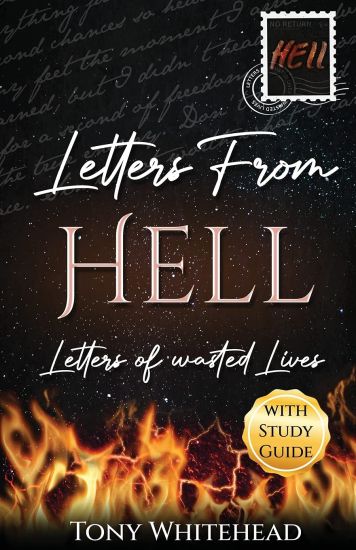
Letters From Hell is a book and personal study guide designed to encourage reflection on either one's personal spiritual life, or help recognize another person's life problems that could cause their spiritual demise. The book contains personal antidotes from the author's encounters with school friends, neighbors, customers, and people from all walks of life that he has known. Many have passed away many years ago due to choices they had made and the lifestyle they lived. These stories written as letters are completely true leading up to the peoples' deaths. Only their journey into the torment of Hell is fiction because we do not know if a person goes to Heaven or Hell upon their departure from this life. However, we can make an educated guess based on the lifestyle he or she lived while alive and well.As an example, one of the stories is about the author's friend Billy. They were best friends from the seventh grade through High School. Several people invited Billy to attend church and Sunday School all through those school years but were always fiercely rejected. Billy was adamant that preachers and churches were only after money "so they wouldn't have to get a real job and work for a living." Over the years, Billy got married and had a child but continually rejected spirituality for himself and strongly discouraged all things religious for his wife and family. Eventually, Billy devolved to throwing away a family bible his wife's family had kept for generations and even destroying other bibles his wife tried to replace it with. When his wife filed for divorce, she was granted 100% custody of their child, leaving Billy with no visitation rights. Having no interpersonal relationship with God and Jesus for spiritual support, he became distraught and promptly committed suicide. The author hopes that as you read these stories about real people and their lifestyles and descent into oblivion, please give some honest thought and self-reflection to see if your life or someone you may know compares to any of these people. And, if you do see a little of yourself in one of these stores by chance, what are you going to do about it? This book and study guide also contains discussion questions after each chapter and biblical references to help in self-evaluation and make the right choices in your (and possibly others') life.The author suspects that you have not heard much about Hell from most pulpits in today's churches other than perhaps an occasional reading of Luke 16:19-31; because most preachers are afraid of scaring the congregation and losing membership and revenue-or so they say. Is it better to keep silent on the subject and let people continue to feel good about themselves, or would it be better to make a few people uncomfortable and cause them to repent of their sins and go to heaven upon their passing? The author hopes this book and study guide will help answer that question.
In their 'Guidebook for an Armchair Pilgrimage', authors Phil Smith, Tony Whitehead and photographer John Schott lead us on a ‘virtual’ journey to explore difference and change on their way to an unknown destination. They create a pilgrimage that any of us can follow, even if we are confined to our homes. To research the 'Guidebook' the authors went on an actual journey. 'Bonelines'? is the secret story of that journey. Given the present circumstances it now appears prophetic, prescient and helpful, so they have decided to bring it into the light. ?It is written as a novel.
Phil Smith (Crabman/Mythogeography) and Tony Whitehead join forces with master photographer John Schott to lead readers on a `virtual’ journey to explore difference and change on their way to an unknown destination. “What is most real is what you have still to discover.” “Relax in your seat. Allow the train to take you along the water’s edge to the beginning point of your walking pilgrimage… When the train pulls into the platform, step off. Hidden behind the platform is a broken machine; a mechanised fortune teller – the `voice of truth’ – discarded from the nearby arcade of slot machines. Propped against the side of a building, its mouth is silent, its pronouncements have ceased; any truths you find today will be your own.” Pilgrimages – real and imagined - are always popular, sometimes compulsory. Bodh Gaya, Santiago, Mecca, Jerusalem, Puri: a few of the sites that beckon. The pilgrimage to the authentic self takes a similar path in an interior landscape. In the 15th century, Felix Fabri combined the two, using his visits to Jerusalem to write a handbook for nuns wanting to make a pilgrimage in the imagination, whilst confined to their religious houses. For Guidebook for an Armchair Pilgrimage, the authors followed Fabri’s example: first walking together over many weeks – not to reach a destination but simply to find one – then, in startling words and images, conjuring an armchair pilgrimage for the reader… along lanes and around hills, into caves and down to the coast. “We arrived again and again at what we assumed would be a final `shrine’, only to be drawn onwards and inwards towards another kind of finality… rather than reaching a destination, the pilgrimage was repeatedly reborn inside us, until its most recent rebirth in this book.” Over the course of the 19-day Armchair Pilgrimage, they invite us to experience the world around us just as they did as they walked. So, over the first three days, they suggest that we contemplate, among other things: • Our habit of generalising – acquired 40-50,000 years ago, when our `chapel’ mind of specialisms became a `cathedral’ mind • Our tendency to let one thing remind us of another thing • What it might be like to be an ocean where fish swim through us • How the world experiences us just as we experience it: `gently feel for the feelers feeling for you’ • A world where we tend to `add’ meaning and intensity • A world where we let go (without the aid of dementia) of memory, imagination, desire and wild fancy. And, as the pilgrimage concludes: “Returning is never going back to the same place.” “A brilliant idea, inviting us to `be present’ to a reality that is imagined and recorded, mediated by words and images. The feelings and emotions are no less `real’ than if we were actually standing in and experiencing that reality. I love the genius of words and images displayed here -- no less than the reality itself.” Carol Donelan, Professor of Cinema and Media Studies, Carleton College, Minnesota