Kirjojen hintavertailu. Mukana 12 591 747 kirjaa ja 12 kauppaa.

Kirjailija

Torben Martinussen

Kirjat ja teokset yhdessä paikassa: 3 kirjaa, julkaisuja vuosilta 2006-2011, suosituimpien joukossa Dynamic Regression Models for Survival Data. Vertaile teosten hintoja ja tarkista saatavuus suomalaisista kirjakaupoista.

3 kirjaa

Kirjojen julkaisuhaarukka 2006-2011.

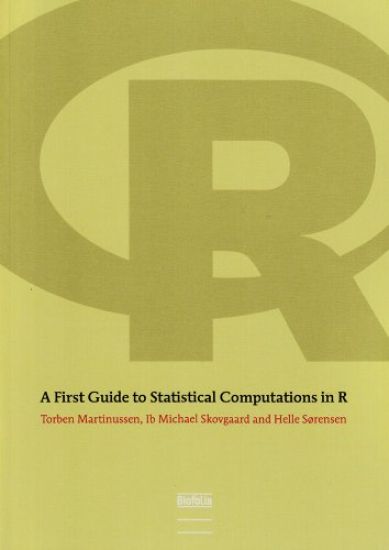
First Guide to Statistical Computations in R

First Guide to Statistical Computations in R

Torben Martinussen; Ib Michael Skovgaard; Helle Sorensen

Gazelle Distribution
2011
pokkari
R is a statistical computer program used and developed by statisticians around the world. It is probably the leading statistical program, at least among statisticians, and it is freely available. This book is intended for the newcomer who wants to do statistical analysis with R and needs a guide to get started. The book focuses on statistical data problems that are often encountered within the biosceinces. It puts special emphasis on linear models and analysis of repeated measurements data, but also deals with binary data and survival data, among others. Problems are presented and solutions -- along with the corresponding OR code and output -- are provided. The guide is divided into two parts: the first part on R basics and the second part on the statistical analyses using R. Various datasets are used for illustration and they are all available in the R package Guide1data.
Dynamic Regression Models for Survival Data

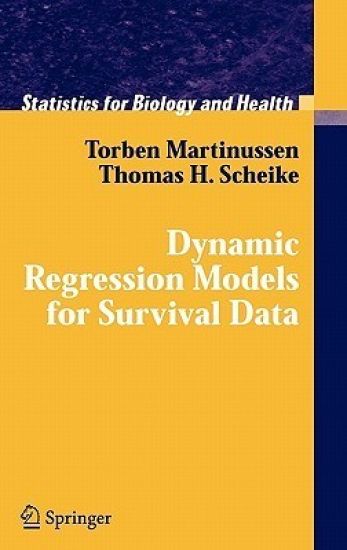
Dynamic Regression Models for Survival Data

Torben Martinussen; Thomas H. Scheike

Springer-Verlag New York Inc.
2010
nidottu
In survival analysis there has long been a need for models that goes beyond the Cox model as the proportional hazards assumption often fails in practice. This book studies and applies modern flexible regression models for survival data with a special focus on extensions of the Cox model and alternative models with the specific aim of describing time-varying effects of explanatory variables. One model that receives special attention is Aalen’s additive hazards model that is particularly well suited for dealing with time-varying effects. The book covers the use of residuals and resampling techniques to assess the fit of the models and also points out how the suggested models can be utilised for clustered survival data. The authors demonstrate the practically important aspect of how to do hypothesis testing of time-varying effects making backwards model selection strategies possible for the flexible models considered. The use of the suggested models and methods is illustrated on real data examples. The methods are available in the R-package timereg developed by the authors, which is applied throughout the book with worked examples for the data sets. This gives the reader a unique chance of obtaining hands-on experience. This book is well suited for statistical consultants as well as for those who would like to see more about the theoretical justification of the suggested procedures. It can be used as a textbook for a graduate/master course in survival analysis, and students will appreciate the exercises included after each chapter. The applied side of the book with many worked examples accompanied with R-code shows in detail how one can analyse real data and at the same time gives a deeper understanding of the underlying theory.
Dynamic Regression Models for Survival Data

Dynamic Regression Models for Survival Data

Torben Martinussen; Thomas H. Scheike

Springer-Verlag New York Inc.
2006
sidottu
In survival analysis there has long been a need for models that goes beyond the Cox model as the proportional hazards assumption often fails in practice. This book studies and applies modern flexible regression models for survival data with a special focus on extensions of the Cox model and alternative models with the specific aim of describing time-varying effects of explanatory variables. One model that receives special attention is Aalen’s additive hazards model that is particularly well suited for dealing with time-varying effects. The book covers the use of residuals and resampling techniques to assess the fit of the models and also points out how the suggested models can be utilised for clustered survival data. The authors demonstrate the practically important aspect of how to do hypothesis testing of time-varying effects making backwards model selection strategies possible for the flexible models considered. The use of the suggested models and methods is illustrated on real data examples. The methods are available in the R-package timereg developed by the authors, which is applied throughout the book with worked examples for the data sets. This gives the reader a unique chance of obtaining hands-on experience. This book is well suited for statistical consultants as well as for those who would like to see more about the theoretical justification of the suggested procedures. It can be used as a textbook for a graduate/master course in survival analysis, and students will appreciate the exercises included after each chapter. The applied side of the book with many worked examples accompanied with R-code shows in detail how one can analyse real data and at the same time gives a deeper understanding of the underlying theory.