
Kirjojen hintavertailu. Mukana 12 390 323 kirjaa ja 12 kauppaa.

Kirjailija

Torpey John

Kirjat ja teokset yhdessä paikassa: 3 kirjaa, julkaisuja vuosilta 1995-1999, suosituimpien joukossa Between Philosophy and Social Science. Vertaile teosten hintoja ja tarkista saatavuus suomalaisista kirjakaupoista.

3 kirjaa

Kirjojen julkaisuhaarukka 1995-1999.

The Invention of the Passport

The Invention of the Passport

Torpey John

Cambridge University Press
1999
sidottu
In order to distinguish between those who may and may not enter or leave, states everywhere have developed extensive systems of identification, central to which is the passport. This innovative book argues that documents such as passports, internal passports and related mechanisms have been crucial in making distinctions between citizens and non-citizens. It examines how the concept of citizenship has been used to delineate rights and penalties regarding property, liberty, taxes and welfare. It focuses on the US and Western Europe, moving from revolutionary France to the Napoleonic era, the American Civil War, the British industrial revolution, pre-World War I Italy, the reign of Germany's Third Reich and beyond. This innovative study combines theory and empirical data in questioning how and why states have established the exclusive right to authorize and regulate the movement of people.
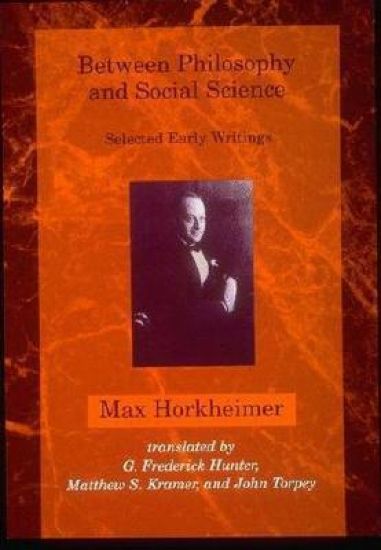
Between Philosophy and Social Science

Between Philosophy and Social Science

Max Horkheimer; G. Frederick Hunter; Matthew S. Kramer; Torpey John

MIT Press
1995
nidottu
Max Horkheimer is well known as the director of the Frankfurt Institute for Social Research and as a sometime collaborator with Theodor Adorno, especially on their classic Dialectic of Enlightenment. These essays reveal another side of Horkheimer, focusing on his remarkable contributions to critical theory in the 1930s. Included are Horkheimer's inaugural address as director of the Institute, in which he outlines the interdisciplinary research program that would dominate the initial phase of the Frankfurt School, his first full monograph, and a number of other pieces published in the 1930s. The essays, most of which have not appeared in English before, are surprisingly relevant to current post-philosophy debates, notably "On the Problem of Truth," with its focus on pragmatism, and "The Rationalism Debate in Current Philosophy," a sustained critique of the post-Cartesian philosophy of consciousness. Horkheimer's 1933 critique of Kantian ethics, "Materialism and Morality," is of particular interest given the current reaction to the neo-Kantian aspect of Habermas's work. There are also essays relevant to the current foundations debate within Continental philosophy, and the rationality/relativism question is sustained throughout the volume.
Intellectuals, Socialism, and Dissent

Intellectuals, Socialism, and Dissent

Torpey John

UNIVERSITY OF MINNESOTA PRESS
1995
nidottu
Intellectuals, Socialism, and Dissent was first published in 1995. Minnesota Archive Editions uses digital technology to make long-unavailable books once again accessible, and are published unaltered from the original University of Minnesota Press editions.Once the Berlin Wall fell in 1989, the people of East Germany had little use for the dissident intellectuals who had helped bring it down. Intellectuals, Socialism, and Dissent offers a penetrating look into the circumstances of this fall from grace, unique among the former Communist states.John Torpey traces the dissident intellectuals' fate to the peculiar situation of the East German regime, which sought to build "socialism in a quarter of a country" on the anti-fascist foundations of Communist opposition to Nazism. He shows how the regime's unusual history and subnational status helped sustain the East German intelligentsia's conviction that socialism could be reformed and humane-that there was a "third way" between Soviet-style socialism and the capitalism that took root in West Germany. How the pursuit of this third way both supported and undermined the regime, and both galvanized and alienated the East German people, becomes clear in Torpey's nuanced analysis. His book makes a powerful contribution to our understanding of the politics of intellectuals during one of the most painful chapters in modern German history.John C. Torpey is currently a Jean Monnet Fellow at the European University Institute in Florence.