
Kirjailija
Torsten Liem
Kirjat ja teokset yhdessä paikassa: 12 kirjaa, julkaisuja vuosilta 2005-2026, suosituimpien joukossa Leitfaden Osteopathie. Vertaile teosten hintoja ja tarkista saatavuus suomalaisista kirjakaupoista.
12 kirjaa
Kirjojen julkaisuhaarukka 2005-2026.
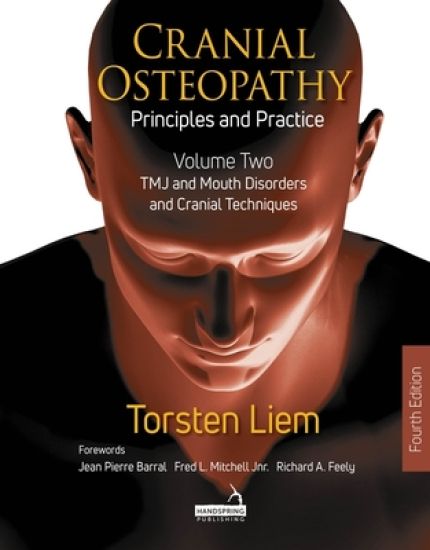
Cranial Osteopathy: Principles and Practice - Volume 2
Torsten Liem
JESSICA KINGSLEY PUBLISHERS
2023
pokkari
Taking a detail-oriented, yet holistic approach to the body, is the underpinning of craniosacral osteopathy. This richly illustrated guide, which focuses on the special sense organs, orofacial pain, headaches and cranial nerves, will help you understand how specific dysfunctions arise, but also how they interrelate to wider patterns of dysfunction. Further chapters cover palpatory procedures, including examples of best practice, and guidance in training your palpatory perception. With precise anatomical diagrams to illustrate each craniosacral technique, this resource provides a strong foundation for any successful cranial osteopathic practice.
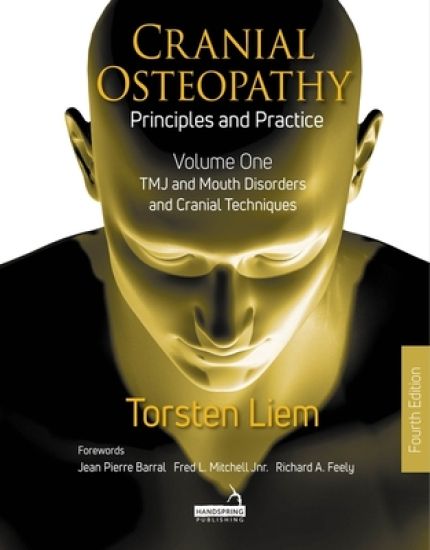
Cranial Osteopathy: Principles and Practice - Volume 1
Torsten Liem
JESSICA KINGSLEY PUBLISHERS
2023
pokkari
Taking a detail-oriented, yet holistic approach to the body is the underpinning of craniosacral osteopathy. This richly illustrated guide, which focuses on the jaw joint, TMJ and mouth disorders disorders, and the facial skull, will help you understand how specific dysfunctions arise, but also how they interrelate to wider patterns of dysfunction. Further chapters cover palpatory procedures, including examples of best practice, and guidance in training your palpatory perception. With precise anatomical diagrams to illustrate each craniosacral technique, this resource provides a strong foundation for any successful cranial osteopathic practice.

Foundations of Morphodynamics in Osteopathy
Torsten Liem; Patrick van den Heede
JESSICA KINGSLEY PUBLISHERS
2017
sidottu
In 35 chapters written by the editors and a team of internationally renowned contributors the book covers the underlying principles of osteopathic palpation from a biodynamic and 'morphodynamic' perspective, and their application in the cranial field and the spinal cord.It emphasises the importance of considering not just the patient's physical self, but also the inner consciousness. It teaches how to assess tissue-energy characteristics, and to use this understanding in managing the whole patient.The work discusses biophysical, neurobiological and psychological interactions as well as the interplay of developmental dynamics and further epigenetic influences on the organism.As well as the primary respiratory mechanism, various biological rhythms play an important role within osteopathic treatment; the book explores new insights that flow from chronobiology and rhythm research.All osteopathic practice develops on conceptual foundations. Acknowledging the importance in the practice of osteopathy of such theoretical underpinning, the book discusses osteopathy with regard to the development of paradigms within the healing arts as well as from various philosophical viewpoints - such as postmodern, system-theoretical, Goethian and phenomenological. It examines thoroughly the multi-layered dynamics of development of human beings interacting with their environment.The resulting implications for therapeutic interaction as well as principles of diagnosis and treatment form the core of the book. These fundamental principles are then specifically applied to the cranial sphere. This section focuses primarily on the treatment of the brain, as well as the developmental dynamics of the relations of the midline, cranial bones, dural structures, vessels and cranial nerves.

Osteopathische Behandlung von Kindern
Torsten Liem; Angela Schleupen; Peter Altmeyer
Karl Haug
2012
sidottu

Cranial osteopathy is an increasingly popular treatment approach for many common disorders affecting the head and neck. This new clinical guide is the first and only in-depth resource on the subject, offering a comprehensive analysis of osteopathic dysfunctions and principles in the cranial field. It examines each cranial bone and describes its location, development, and clinical implications of dysfunction. This discussion is followed by guidance on inspection, palpation, biomechanical and biodynamical approach to the motility of each cranial bone, and explanations of appropriate intrasutural or intraosseal techniques. Excellent illustrations and step-by-step sequencing of techniques make this book an exceptionally valuable resource for clinical practice. Comprehensive approach offers in-depth coverage of the theory and practice of cranial osteopathy, as well as the anatomy and interrelationships of the structures involved. Logically organized, easy-to-follow chapters employ consistent headings for each structure and step-by-step sequencing of techniques. Extensive illustrations include high quality photographs and line drawings to clarify important concepts. The osteopathic methodology and treatment techniques are described for all cranial structures, including the osteopathic approach to headaches. A comprehensive chapter on the temporo mandibular joint includes detailed coverage of TMJ dysfunction and the osteopathic approach to treatment.