Kirjojen hintavertailu. Mukana 12 293 284 kirjaa ja 12 kauppaa.

Kirjailija

Tracey Cullen

Kirjat ja teokset yhdessä paikassa: 4 kirjaa, julkaisuja vuosilta 2001-2018, suosituimpien joukossa Settlement and Land Use on the Periphery. Vertaile teosten hintoja ja tarkista saatavuus suomalaisista kirjakaupoista.

4 kirjaa

Kirjojen julkaisuhaarukka 2001-2018.

Settlement and Land Use on the Periphery

Settlement and Land Use on the Periphery

Jere M. Wickens; Susan I. Rotroff; Tracey Cullen; Lauren E. Talalay; Catherine Perlès

Archaeopress
2018
nidottu
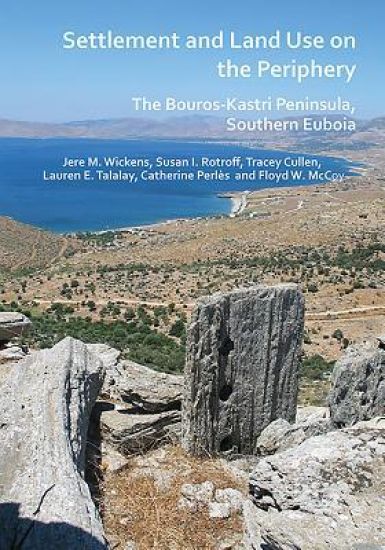
The Bouros-Kastri peninsula at the south-eastern tip of the Greek island of Euboia has previously been overlooked in the archaeological literature. This survey by the Southern Euboea Exploration Project, conducted under the aegis of the Canadian Institute in Greece, now provides a wealth of intriguing information about fluctuations in long-term use and habitation in this part of the Karystia. While the peninsula is agriculturally poor, its coast is blessed with several small coastal inlets and one important ancient port, Geraistos. These provide access to vital maritime routes and connect the peninsula to Athens and other Aegean ports. The survey revealed modest use of the peninsula during the Neolithic and Early Bronze Age; it was then virtually abandoned for the following two and a half millennia. Occupation resumed in the Late Archaic–Early Classical period, followed by near desertion in the 3rd century BC of all but some coastal sites, a resurgence of activity in the Late Roman period, and modest use in Byzantine and Ottoman times. The authors analyse the ways in which the peninsula's use was connected to that of the main urban centre at Karystos, and how the peninsula and the greater Karystia were integrated into the political, economic, and cultural spheres of Athens and the broader region.
Prehistory of the Paximadi Peninsula, Euboea

Prehistory of the Paximadi Peninsula, Euboea

Tracey Cullen; Lauren E. Talalay; Donald R. Keller; Lia Karamali; William R. Farrandy

Institute for Aegean Prehistory
2013
sidottu
The results of two related fieldwork projects are presented: a brief salvage excavation at Plakari (a Final Neolithic site near the modern town of Karystos) and a survey of prehistoric sites on the Paximadi peninsula (the western arm of the Karystos bay), both located in southern Euboea. These ventures were part of the larger mission of the Southern Euboea Exploration Project (SEEP), a multidisciplinary research program dedicated to the study of the Karystian past and which maintained a presence in southern Euboea for over 25 years. These projects have found that, contrary to what archaeologists once believed, southern Euboea was hardly an uninhabited and isolated region in prehistory. The inhabitants actively participated in the expanded maritime and social landscape that characterized the later Neolithic and Early Bronze Age in the Aegean, taking part in exchange networks of stone, ceramics, marble figurines and vessels, and possibly agricultural goods and metalwork.
Aegean Prehistory

Aegean Prehistory

Tracey Cullen

Archaeological Institute of America
2001
nidottu
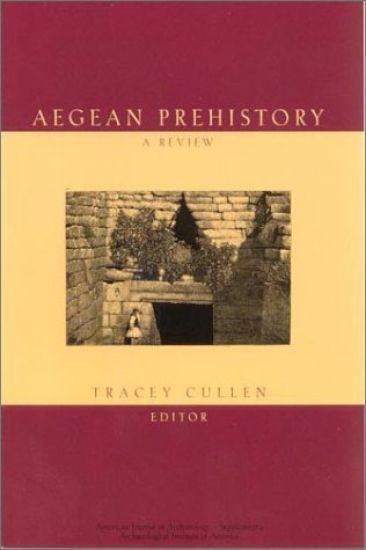
Aegean prehistory has developed over the 20th century into a distinctive and vibrant area of archaeological research. The past few decades, in particular, have seen a dramatic reorientation and expansion of goals and methods as well as a flood of new fieldwork in the Agean. Keeping abreast of these new developments has become a daunting task. Aegean Prehistory: A Review contains detailed syntheses of research, originally published in the American Journal of Archaeology and newly updated here. The volume conveys the diversity and richness of current approaches to the discipline of Aegean prehistory whilst also marshalling an enormous amount of information pertaining to field projects, museum studies, analyses of materials and texts, and supporting theories of interpretation. An introduction by Tracey Cullen places the review articles in historical perspective, tracing the evolution of Aegean prehistory from the 19th century to the present. The author also considers the current status of the discipline--its relationships with classical archaeology and anthropology, and the manner in which it is shaped by various sociopolitical forces. Aegean Prehistory: A Review is a powerful research tool for the exploration of Aegean themes. With its expansive and detailed coverage, the book constitutes essential reading for professionals and students of Aegean prehistory. It will also be of great interest to all who wish to learn more about intellectual trends and current discoveries in this part of the Mediterranean. Perhaps most important, Aegean Prehistory: A Review provides a solid foundation upon which Aegean archaeology can build as it continues to thrive in the coming years.
Aegean Prehistory

Aegean Prehistory

Tracey Cullen

Archaeological Institute of America
2001
sidottu
Aegean prehistory has developed over the 20th century into a distinctive and vibrant area of archaeological research. The past few decades, in particular, have seen a dramatic reorientation and expansion of goals and methods as well as a flood of new fieldwork in the Agean. Keeping abreast of these new developments has become a daunting task. Aegean Prehistory: A Review contains detailed syntheses of research, originally published in the American Journal of Archaeology and newly updated here. The volume conveys the diversity and richness of current approaches to the discipline of Aegean prehistory whilst also marshalling an enormous amount of information pertaining to field projects, museum studies, analyses of materials and texts, and supporting theories of interpretation. An introduction by Tracey Cullen places the review articles in historical perspective, tracing the evolution of Aegean prehistory from the 19th century to the present. The author also considers the current status of the discipline--its relationships with classical archaeology and anthropology, and the manner in which it is shaped by various sociopolitical forces. Aegean Prehistory: A Review is a powerful research tool for the exploration of Aegean themes. With its expansive and detailed coverage, the book constitutes essential reading for professionals and students of Aegean prehistory. It will also be of great interest to all who wish to learn more about intellectual trends and current discoveries in this part of the Mediterranean. Perhaps most important, Aegean Prehistory: A Review provides a solid foundation upon which Aegean archaeology can build as it continues to thrive in the coming years.