Kirjojen hintavertailu. Mukana 12 595 353 kirjaa ja 12 kauppaa.

Kirjailija

Tracy C. Davis

Kirjat ja teokset yhdessä paikassa: 9 kirjaa, julkaisuja vuosilta 1991-2023, suosituimpien joukossa Stages of Emergency. Vertaile teosten hintoja ja tarkista saatavuus suomalaisista kirjakaupoista.

9 kirjaa

Kirjojen julkaisuhaarukka 1991-2023.

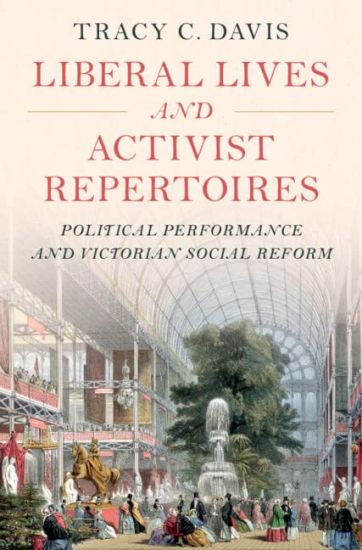
Liberal Lives and Activist Repertoires

Liberal Lives and Activist Repertoires

Tracy C. Davis

Cambridge University Press
2023
sidottu
This ambitious study traces the strategies of human rights activists to show how world-changing reform movements were shaped by women and men from modest backgrounds who were deeply attuned to the power of performance. Tracy C. Davis explores nineteenth-century reform campaigns through the pioneering work of a family of activists – prominent anti-slavery lecturer George Thompson, his daughter Amelia (the first female theatre and music critic for a British daily newspaper) and her husband, the political organizer Frederick Chesson. Engaging in some of the most important social struggles of the late Georgian and Victorian periods – including abolition, enfranchisement, and anti-genocide - this book reveals how two generations' insights into performance consolidated into activist tactics that persist today. Characterised by a skilful deployment of performance theory alongside deep and wide-ranging historical knowledge, this ground-breaking work demonstrates what 'dramaturgy' can teach us about 'history'.

Uncle Tom's Cabins

Uncle Tom's Cabins

Tracy C. Davis; Stefka Mihaylova

The University of Michigan Press
2020
nidottu
As Harriet Beecher Stowe’s novel Uncle Tom’s Cabin traveled around the world, it was molded by the imaginations and needs of international audiences. For over 150 years it has been coopted for a dazzling array of causes far from what its author envisioned. This book tells thirteen variants of Uncle Tom’s journey, explicating the novel’s significance for Canadian abolitionists and the Liberian political elite that constituted the runaway characters’ landing points; nineteenth-century French theatergoers; liberal Cuban, Romanian, and Spanish intellectuals and social reformers; Dutch colonizers and Filipino nationalists in Southeast Asia; Eastern European Cold War communists; Muslim readers and spectators in the Middle East; Brazilian television audiences; and twentieth-century German holidaymakers. Throughout these encounters, Stowe’s story of American slavery serves as a paradigm for understanding oppression, selectively and strategically refracting the African American slave onto other iconic victims and freedom fighters. The book brings together performance historians, literary critics, and media theorists to demonstrate how the myriad cultural and political effects of Stowe’s enduring story has transformed it into a global metanarrative with national, regional, and local specificity.
The Economics of the British Stage 1800–1914

The Economics of the British Stage 1800–1914

Tracy C. Davis

Cambridge University Press
2007
pokkari
During the nineteenth century, British theatre developed into an industry with considerable importance in the economy, diversified by whole new forms of entertainment - first music hall then cinema - evolving alongside the dramatic stage. This comprehensive study examines the theatre's growth from an economic perspective. Tracy Davis reflects the debates of economic theorists from Adam Smith to Alfred Marshall to investigate three key areas: the state's role in protecting theatre; the factors affecting the success or failure of theatre companies; and how theatre came to be regarded as one of the 'service industries'. By grounding debates about subsidization and the economic viability of the live arts in an era predating government funding, Davis sheds light on the history of cultural policy for the arts in Britain. Her book will interest scholars across a range of disciplines - theatre, social history, economics, gender studies and the sociology of culture.
Stages of Emergency

Stages of Emergency

Tracy C. Davis

Duke University Press
2007
pokkari
In an era defined by the threat of nuclear annihilation, Western nations attempted to prepare civilian populations for atomic attack through staged drills, evacuations, and field exercises. In Stages of Emergency the distinguished performance historian Tracy C. Davis investigates the fundamentally theatrical nature of these Cold War civil defense exercises. Asking what it meant for civilians to be rehearsing nuclear war, she provides a comparative study of the civil defense maneuvers conducted by three NATO allies-the United States, Canada, and the United Kingdom-during the 1950s and 1960s. Delving deep into the three countries’ archives, she analyzes public exercises involving private citizens-Boy Scouts serving as mock casualties, housewives arranging home protection, clergy training to be shelter managers-as well as covert exercises undertaken by civil servants.Stages of Emergency covers public education campaigns and school programs-such as the ubiquitous “duck and cover” drills-meant to heighten awareness of the dangers of a possible attack, the occupancy tests in which people stayed sequestered for up to two weeks to simulate post-attack living conditions as well as the effects of confinement on interpersonal dynamics, and the British first-aid training in which participants acted out psychological and physical trauma requiring immediate treatment. Davis also brings to light unpublicized government exercises aimed at anticipating the global effects of nuclear war. Her comparative analysis shows how the differing priorities, contingencies, and social policies of the three countries influenced their rehearsals of nuclear catastrophe. When the Cold War ended, so did these exercises, but, as Davis points out in her perceptive afterword, they have been revived-with strikingly similar recommendations-in response to twenty-first-century fears of terrorists, dirty bombs, and rogue states.
Stages of Emergency

Stages of Emergency

Tracy C. Davis

Duke University Press
2007
sidottu
In an era defined by the threat of nuclear annihilation, Western nations attempted to prepare civilian populations for atomic attack through staged drills, evacuations, and field exercises. In Stages of Emergency the distinguished performance historian Tracy C. Davis investigates the fundamentally theatrical nature of these Cold War civil defense exercises. Asking what it meant for civilians to be rehearsing nuclear war, she provides a comparative study of the civil defense maneuvers conducted by three NATO allies-the United States, Canada, and the United Kingdom-during the 1950s and 1960s. Delving deep into the three countries’ archives, she analyzes public exercises involving private citizens-Boy Scouts serving as mock casualties, housewives arranging home protection, clergy training to be shelter managers-as well as covert exercises undertaken by civil servants.Stages of Emergency covers public education campaigns and school programs-such as the ubiquitous “duck and cover” drills-meant to heighten awareness of the dangers of a possible attack, the occupancy tests in which people stayed sequestered for up to two weeks to simulate post-attack living conditions as well as the effects of confinement on interpersonal dynamics, and the British first-aid training in which participants acted out psychological and physical trauma requiring immediate treatment. Davis also brings to light unpublicized government exercises aimed at anticipating the global effects of nuclear war. Her comparative analysis shows how the differing priorities, contingencies, and social policies of the three countries influenced their rehearsals of nuclear catastrophe. When the Cold War ended, so did these exercises, but, as Davis points out in her perceptive afterword, they have been revived-with strikingly similar recommendations-in response to twenty-first-century fears of terrorists, dirty bombs, and rogue states.
The Economics of the British Stage 1800–1914

The Economics of the British Stage 1800–1914

Tracy C. Davis

Cambridge University Press
2000
sidottu
During the nineteenth century, British theatre developed into an industry with considerable importance in the economy, diversified by whole new forms of entertainment - first music hall then cinema - evolving alongside the dramatic stage. This is the first comprehensive study to examine the theatre’s growth from an economic perspective. Tracy Davis reflects the debates of economic theorists from Adam Smith to Alfred Marshall to investigate three key areas: the state’s role in protecting theatre; the factors affecting the success or failure of theatre companies; and how theatre came to be regarded as one of the ‘service industries’. By grounding debates about subsidisation and the economic viability of the live arts in an era predating government funding, Davis sheds new light on the history of cultural policy for the arts in Britain. Her book will interest scholars across a range of disciplines - theatre, social history, economics, gender studies and the sociology of culture.
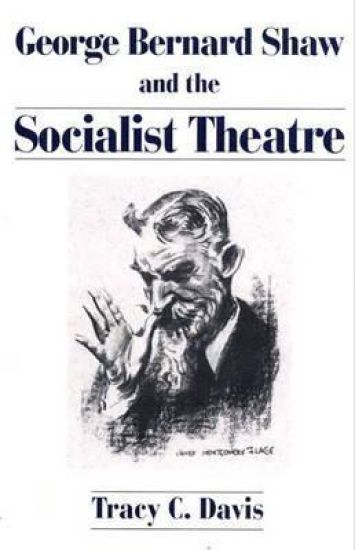
George Bernard Shaw and the Socialist Theatre

George Bernard Shaw and the Socialist Theatre

Tracy C. Davis

Praeger Publishers Inc
1994
sidottu
A biographically based study of George Bernard Shaw and his milieu, this book offers a non-laudatory reading of Shaw's economic practices and theories, augments feminist and postcolonial critiques that preoccupy the study of literary history in the 1990s, and provides a long overdue revisionist reading of Shaw for an undergraduate readership. It traces the theatrical and political influences on Shaw from his earliest days in London; tracks his interest in socialism as an activist and author of tracts, novels, and plays emphasizing certain polemical traits; and follows his career as a major literary figure into the mid-20th century. The overarching themes of theatre and politics are narrated in relation to attempts by Shaw and his contemporaries to identify an audience and aesthetic for socialist theatre. The bibliographic essay that concludes the book is particularly helpful for student readers, who can benefit from a manageably-sized orientation to the mountain of Shavian scholarship.
George Bernard Shaw and the Socialist Theatre

George Bernard Shaw and the Socialist Theatre

Tracy C. Davis

Praeger Publishers Inc
1994
nidottu
A biographically based study of George Bernard Shaw and his milieu, this book offers a non-laudatory reading of Shaw's economic practices and theories, augments feminist and postcolonial critiques that preoccupy the study of literary history in the 1990s, and provides a long overdue revisionist reading of Shaw for an undergraduate readership. It traces the theatrical and political influences on Shaw from his earliest days in London; tracks his interest in socialism as an activist and author of tracts, novels, and plays emphasizing certain polemical traits; and follows his career as a major literary figure into the mid-20th century. The overarching themes of theatre and politics are narrated in relation to attempts by Shaw and his contemporaries to identify an audience and aesthetic for socialist theatre. The bibliographic essay that concludes the book is particularly helpful for student readers, who can benefit from a manageably-sized orientation to the mountain of Shavian scholarship.
Actresses as Working Women

Actresses as Working Women

Tracy C. Davis

Routledge
1991
sidottu
Using historical evidence as well as personal accounts, Tracy C. Davis examines the reality of conditions for `ordinary' actresses, their working environments, employment patterns and the reasons why acting continued to be such a popular, though insecure, profession. Firmly grounded in Marxist and feminist theory she looks at representations of women on stage, and the meanings associated with and generated by them.