Kirjojen hintavertailu. Mukana 12 595 353 kirjaa ja 12 kauppaa.

Kirjailija

Travis C. Pratt

Kirjat ja teokset yhdessä paikassa: 5 kirjaa, julkaisuja vuosilta 2010-2023, suosituimpien joukossa Confronting School Violence. Vertaile teosten hintoja ja tarkista saatavuus suomalaisista kirjakaupoista.

5 kirjaa

Kirjojen julkaisuhaarukka 2010-2023.

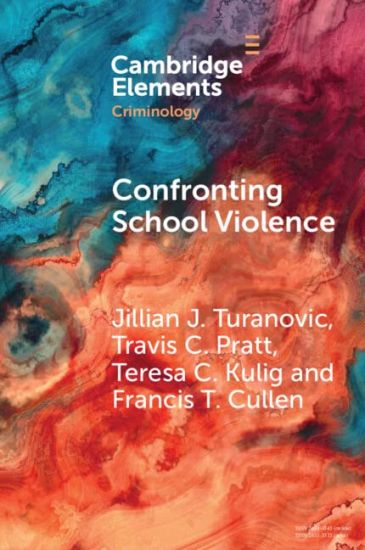
Confronting School Violence

Confronting School Violence

Jillian J. Turanovic; Travis C. Pratt; Teresa C. Kulig; Francis T. Cullen

Cambridge University Press
2022
pokkari
School violence is a significant social concern. To better understand its sources, a comprehensive meta-analysis of the school violence and victimization literature was undertaken. Across 761 studies, the relative effects of 30 different individual, school, and community level correlates were assessed (8,790 effect size estimates). Violence and victimization were conceptualized broadly to include various forms of aggression and crime at school. The results revealed that the strongest correlates of school violence perpetration were antisocial behavior, deviant peers, antisocial attitudes, victimization, and peer rejection; and that the strongest correlates of school victimization were prior/other victimization, social competence, risk avoidance, antisocial behavior, and peer rejection. Extracurricular activities and school security devices had among the weakest associations in the meta-analysis, and several traditional criminological predictors did not perform well in the school context. We conclude with recommendations for theory, future research, and policy.

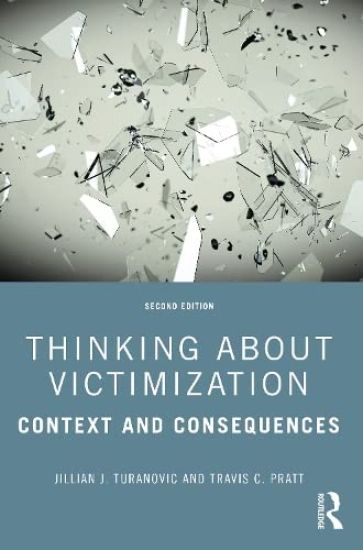
Thinking About Victimization

Thinking About Victimization

Jillian J. Turanovic; Travis C. Pratt

TAYLOR FRANCIS LTD
2023
sidottu
Bringing together cutting-edge theory and research that bridges academic disciplines from criminology and criminal justice, to developmental psychology, sociology, and political science, Thinking About Victimization offers an authoritative and refreshingly accessible overview of scholarship on the nature, sources, and consequences of victimization.This book integrates empirical research and victimization theory and is written in a lively style, with sharp storytelling and an appreciation of international research on victimization. Rooted in a healthy respect for criminological history and the important foundational works in victimization studies, it provides a detailed account of how different data sources can influence our understanding of victimization; of how the sources of victimization - individual, situational, and contextual - are complicated and varied; and of how the consequences of victimization - personal, social, and political - are just as complex. Thinking About Victimization also engages with contemporary issues such as sexual victimization and intimate partner violence, victimization in schools, cybervictimization, and prison victimization, as well as terrorism and state-sponsored violence. The second edition reflects new research developments in victimology, including updated discussions on the COVID-19 pandemic, police brutality, increases in crime, and school shootings.Thinking About Victimization is essential reading for advanced courses in victimization offered in criminology, criminal justice, sociology, health, and social work departments. With its unapologetic reliance on theory and research combined with its easy readability, undergraduate and graduate students alike will find much to learn in these pages.
Thinking About Victimization

Thinking About Victimization

Jillian J. Turanovic; Travis C. Pratt

TAYLOR FRANCIS LTD
2023
nidottu
Bringing together cutting-edge theory and research that bridges academic disciplines from criminology and criminal justice, to developmental psychology, sociology, and political science, Thinking About Victimization offers an authoritative and refreshingly accessible overview of scholarship on the nature, sources, and consequences of victimization.This book integrates empirical research and victimization theory and is written in a lively style, with sharp storytelling and an appreciation of international research on victimization. Rooted in a healthy respect for criminological history and the important foundational works in victimization studies, it provides a detailed account of how different data sources can influence our understanding of victimization; of how the sources of victimization - individual, situational, and contextual - are complicated and varied; and of how the consequences of victimization - personal, social, and political - are just as complex. Thinking About Victimization also engages with contemporary issues such as sexual victimization and intimate partner violence, victimization in schools, cybervictimization, and prison victimization, as well as terrorism and state-sponsored violence. The second edition reflects new research developments in victimology, including updated discussions on the COVID-19 pandemic, police brutality, increases in crime, and school shootings.Thinking About Victimization is essential reading for advanced courses in victimization offered in criminology, criminal justice, sociology, health, and social work departments. With its unapologetic reliance on theory and research combined with its easy readability, undergraduate and graduate students alike will find much to learn in these pages.
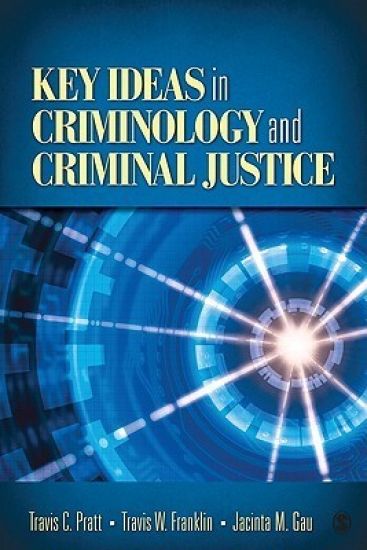
Key Ideas in Criminology and Criminal Justice

Key Ideas in Criminology and Criminal Justice

Travis C. Pratt; Jacinta M. Gau; Travis W. Franklin

SAGE Publications Inc
2010
sidottu
Explores the key contributions to the fields of criminology and criminal justice from the late 18th century to today— and the conditions that led to their prominence The development of both criminology and criminal justice has been characterized by different theories and ideas that capture academic (and sometimes political) imaginations and send the discipline veering in entirely new directions. Why did these ideas catch on? What about them attracted and held scholars' attention and on occasion caused them to impact policy considerations? Why do they still have value today? These are the questions addressed in Key Ideas in Criminology and Criminal Justice.Key Ideas in Criminology and Criminal Justice is an innovative, fascinating treatment of some of the seminal theories in criminology and key policies in criminal justice, offering a detailed and nuanced picture of these core ideas. With a fluid, accessible, and lively writing style, this brief text is organized around major theories, ideas, and movements that mark a turning point in the field, and concludes with a discussion of the future of criminology and criminal justice. Readers will learn about the most salient criminological and criminal justice research and understand its influence on theory and policy. They will also understand the surrounding socio-political conditions from which the ideas sprang and the style and manner in which they were disseminated, both of which helped these scholarly contributions become cornerstones in the fields of criminology and criminal justice.
Key Ideas in Criminology and Criminal Justice

Key Ideas in Criminology and Criminal Justice

Travis C. Pratt; Jacinta M. Gau; Travis W. Franklin

SAGE Publications Inc
2010
nidottu
Explores the key contributions to the fields of criminology and criminal justice from the late 18th century to today— and the conditions that led to their prominence The development of both criminology and criminal justice has been characterized by different theories and ideas that capture academic (and sometimes political) imaginations and send the discipline veering in entirely new directions. Why did these ideas catch on? What about them attracted and held scholars' attention and on occasion caused them to impact policy considerations? Why do they still have value today? These are the questions addressed in Key Ideas in Criminology and Criminal Justice.Key Ideas in Criminology and Criminal Justice is an innovative, fascinating treatment of some of the seminal theories in criminology and key policies in criminal justice, offering a detailed and nuanced picture of these core ideas. With a fluid, accessible, and lively writing style, this brief text is organized around major theories, ideas, and movements that mark a turning point in the field, and concludes with a discussion of the future of criminology and criminal justice. Readers will learn about the most salient criminological and criminal justice research and understand its influence on theory and policy. They will also understand the surrounding socio-political conditions from which the ideas sprang and the style and manner in which they were disseminated, both of which helped these scholarly contributions become cornerstones in the fields of criminology and criminal justice.