Kirjojen hintavertailu. Mukana 12 370 040 kirjaa ja 12 kauppaa.

Kirjailija

Trent Watts

Kirjat ja teokset yhdessä paikassa: 3 kirjaa, julkaisuja vuosilta 1996-2014, suosituimpien joukossa Ed King’s Mississippi. Vertaile teosten hintoja ja tarkista saatavuus suomalaisista kirjakaupoista.

3 kirjaa

Kirjojen julkaisuhaarukka 1996-2014.

Ed King’s Mississippi

Ed King’s Mississippi

Ed King; Trent Watts

University Press of Mississippi
2014
sidottu
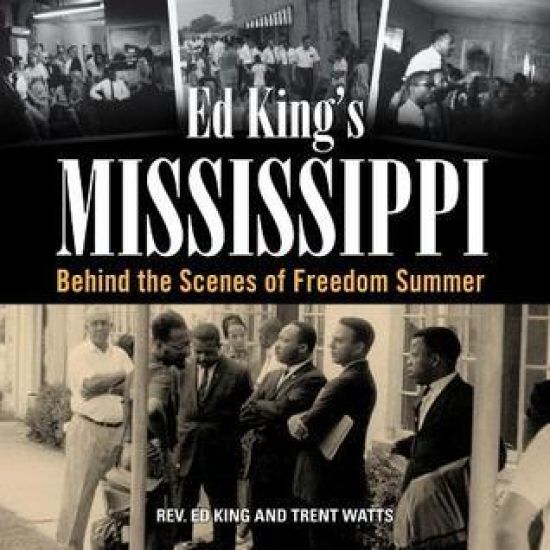
Ed King's Mississippi: Behind the Scenes of Freedom Summer features more than forty unpublished black-and-white photographs and substantial writings by the prominent civil rights activist Reverend Ed King. The images and text provide a unique perspective on Mississippi during the summer of 1964. Taken in Jackson, Greenwood, and Philadelphia, the photographs showcase informal images of Martin Luther King Jr., Andrew Young, Mississippi civil rights workers, and college student volunteers in the movement. Ed King's writings offer background and insights on the motivations and work of Freedom Summer volunteers, on the racial climate of Mississippi during the late 1950s and 1960s, and the grassroots effort by black Mississippians to enter the political arena and exercise their fundamental civil rights.Ed King, a native of Vicksburg and a Methodist minister, was a founder of the Mississippi Freedom Democratic Party and a key figure in the civil rights movement in the state in the 1960s. As one of the few white Mississippians with a leadership position in the movement, his words and photographs offer a rare behind-the-scenes chronicle of events in the state during Freedom Summer. Ed King is a retired faculty member of the School of Health Related Professions, University of Mississippi Medical Center. Historian Trent Watts furnishes a substantial introduction to the volume and offers background on the Freedom Summer campaign as well as a description of Ed King's civil rights activism from the late 1950s to the present day.

One Homogeneous People

One Homogeneous People

Trent Watts

University of Tennessee Press
2010
sidottu
Southerners have a reputation as storytellers, as a people fond of telling about family, community, and the southern way of life. A compelling book about some of those stories and their consequences, One Homogeneous People examines the forging and the embracing of southern “pan-whiteness” as an ideal during the volatile years surrounding the turn of the twentieth century.Trent Watts argues that despite real and signifcant divisions within the South along lines of religion, class, and ethnicity, white southerners—especially in moments of perceived danger—asserted that they were one people bound by a shared history, a love of family, home, and community, and an uncompromising belief in white supremacy. Watts explores how these southerners explained their region and its people to themselves and other Americans through narratives found in a variety of forms and contexts: political oratory, fiction, historiography, journalism, correspondence, literary criticism, and the built environment.Watts examines the assertions of an ordered, homogeneous white South (and the threats to it) in the unsettling years following the end of Reconstruction through the early 1900s. In three extended essays on related themes of race and power, the book demonstrates the remarkable similarity of discourses of pan-whiteness across formal and generic lines. In an insightful concluding essay that focuses on an important but largely unexamined institution, Mississippi’s Neshoba County Fair, Watts shows how narratives of pan-white identity initiated in the late nineteenth century have persisted to the present day.Written in a lively style, One Homogeneous People is a valuable addition to the scholarship on southern culture and post-Reconstruction southern history.
Men Working

Men Working

John Faulkner; Trent Watts

University of Georgia Press
1996
pokkari
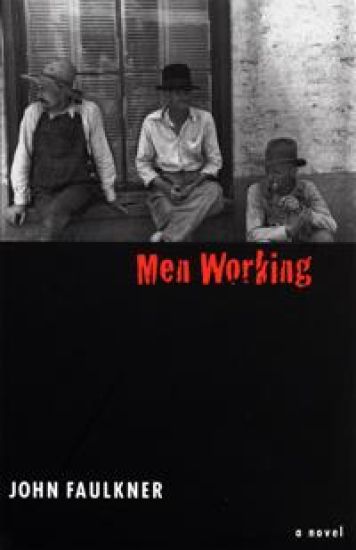
This novel of Mississippi hill country life depicts some of the more troubling and unpublicized aspects of the New Deal by tracing the fortunes of the Taylor family, sharecroppers who move to town to work for the "WP and A," the Works Progress Administration.John Faulkner, a one-time WPA project engineer, has much to satirize in this broadly comic novel. First and foremost are the Taylors: exasperating and unemployable, they are unaccountably abiding; hopelessly destitute, they place a higher premium on a new radio than on food and shelter. Faulkner also casts a sardonic eye on the town merchants, who extend credit to WPA workers as quickly as they inflate prices, and, of course, on the WPA itself, an agency that entices naive, desperate country folk with the promise of a dole—only to lay them off and then ignore them.In his foreword, Trent Watts establishes the singularity of Men Working while noting in it echoes of Tobacco Road, As I Lay Dying, and The Grapes of Wrath. Watts also identifies in John Faulkner's tone an ambivalence shared by many southerners who witnessed the changes wrought by "progress" upon their traditional way of life.