Kirjojen hintavertailu. Mukana 12 595 353 kirjaa ja 12 kauppaa.

Kirjailija

Trevor Hart

Kirjat ja teokset yhdessä paikassa: 19 kirjaa, julkaisuja vuosilta 2005-2024, suosituimpien joukossa The End of the Church?. Vertaile teosten hintoja ja tarkista saatavuus suomalaisista kirjakaupoista.

19 kirjaa

Kirjojen julkaisuhaarukka 2005-2024.

The End of the Church?

The End of the Church?

Hannah Marije Altorf; John Reuben Davies; Tibor Fabiny; Michael Fuller; Trevor Hart; Alison Jack; Elisabeth Jay; Lori A . Kanitz; Vassiliki Kolocotroni; Ann Loades; Margaret Masson; Donald Orr; Jeremy J . Smith; Heather Walton

Sacristy Press
2022
sidottu
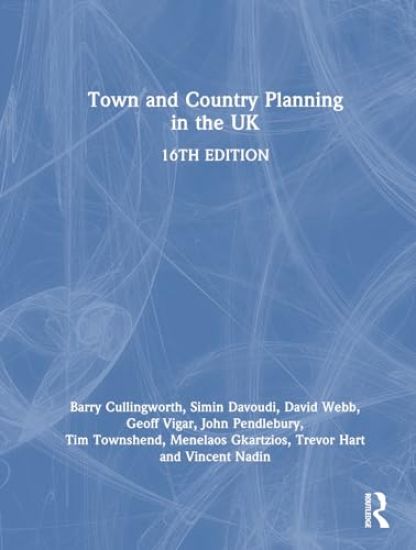
Town and Country Planning in the UK

Town and Country Planning in the UK

Barry Cullingworth; Simin Davoudi; David Webb; Geoff Vigar; John Pendlebury; Tim Townshend; Menelaos Gkartzios; Trevor Hart; Vincent Nadin

TAYLOR FRANCIS LTD
2024
sidottu
Town and Country Planning in the UK provides one of the most authoritative and comprehensive accounts of British planning history, institutions, legislation, policies, processes and practices. This 16th edition has been substantially revised and re-organised to provide an up-to-date overview of the planning systems in the four nations of the UK, supported by analyses, interpretations, illustrations and examples from planning practice.The new edition features:details of the legislative and policy changes since 2015 and discussion of their implications, including the early stages of the Levelling Up and Regeneration Act, 2023discussion of environmental policies and programmes and the impact of Brexit on environmental regulatory landscape in Britainchanges to climate change and resilience policies, notably the government’s ‘Net Zero’ agenda and their implications for planningupdates to the substantive issues in plan-making, especially the responses to the shortage of affordable housing and the development of major infrastructurechanges to the processes involved in plan-making and development managementan expanded and revised chapter on design to include the growing significance of public health in the built environmentmajor revisions to the chapter on rural planningrevisions of the text on planning theory especially in relation to management of conflicts over the use and development of landextended discussion of politics, professionalism and participation in planningThe 16th edition of Town and Country Planning in the UK is an ideal starting point for those who are studying or working in the planning field, and for other professionals who need to locate their work in the planning context.
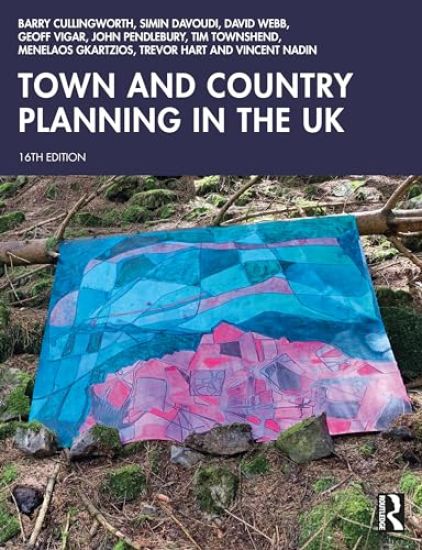
Town and Country Planning in the UK

Town and Country Planning in the UK

Barry Cullingworth; Simin Davoudi; David Webb; Geoff Vigar; John Pendlebury; Tim Townshend; Menelaos Gkartzios; Trevor Hart; Vincent Nadin

TAYLOR FRANCIS LTD
2024
nidottu
Town and Country Planning in the UK provides one of the most authoritative and comprehensive accounts of British planning history, institutions, legislation, policies, processes and practices. This 16th edition has been substantially revised and re-organised to provide an up-to-date overview of the planning systems in the four nations of the UK, supported by analyses, interpretations, illustrations and examples from planning practice.The new edition features:details of the legislative and policy changes since 2015 and discussion of their implications, including the early stages of the Levelling Up and Regeneration Act, 2023discussion of environmental policies and programmes and the impact of Brexit on environmental regulatory landscape in Britainchanges to climate change and resilience policies, notably the government’s ‘Net Zero’ agenda and their implications for planningupdates to the substantive issues in plan-making, especially the responses to the shortage of affordable housing and the development of major infrastructurechanges to the processes involved in plan-making and development managementan expanded and revised chapter on design to include the growing significance of public health in the built environmentmajor revisions to the chapter on rural planningrevisions of the text on planning theory especially in relation to management of conflicts over the use and development of landextended discussion of politics, professionalism and participation in planningThe 16th edition of Town and Country Planning in the UK is an ideal starting point for those who are studying or working in the planning field, and for other professionals who need to locate their work in the planning context.
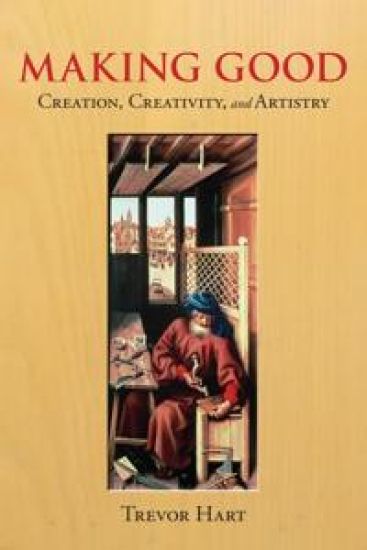
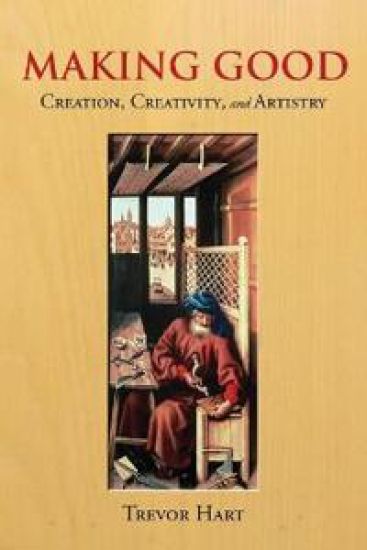
Making Good

Making Good

Trevor Hart

Baylor University Press
2023
pokkari
God spoke, and all that is and all that ever will be came into existence. God alone can be called uncreated and Creator, and creation can only accomplish that which already exists within God's imagination. In Making Good, Trevor Hart argues that human creativity is always a matter of unfolding the possibilities already latent within the original creative event. Making Good contends that while humans must acknowledge the unique and incomparable dimensions of God's creative activity, the biblical theology of creation encourages rather than prohibits human creativity within a language of creation. Hart's basic contention is that the God known as the Father of Jesus Christ is no domineering deity who jealously seeks to protect his creative prerogatives, but one whose own creativity calls forth, inspires, and enables creative responses on the part of his human creatures. Making Good blends biblical, historical, and systematic theology into conversation with philosophy, aesthetics, and developments in creative theory among the social sciences. Hart renders a theological account of human artistry and the wider human activities of making good.
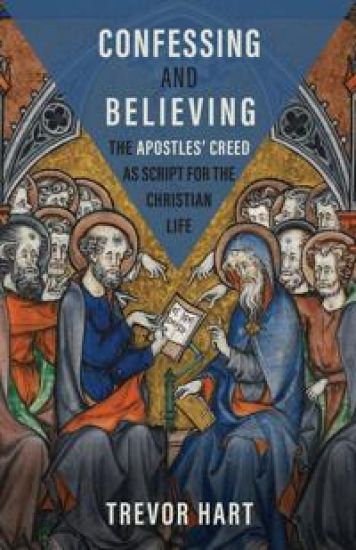
Confessing and Believing

Confessing and Believing

Trevor Hart

1517 Media
2022
sidottu
In Confessing and Believing, Trevor Hart takes readers on a guided tour of the Apostles' Creed, one of the most ancient, universally recognized, and important statements of faith ever penned by the Christian Church. The Creeds' lasting value is not owed simply to its age--it has identifiable roots in the earliest baptismal ceremonies of the earliest Christians--but because, as Hart's careful interpretation demonstrates, the Creed is as comprehensive in its scope as it is concise in its testimony. While the Creeds' intrinsic values make it ideal for regular use in worship, Hart capitalizes on the Creed's structure and highly concentrated nature to provide a framework for teaching the essentials of Christian belief. Hart reveals that there is far more to the Creed than ancient statements about God, Jesus, the Holy Spirit, or the Church. Hart employs the Creeds' twelve clauses to reveal the vibrant theology behind, in, and in front of the Creed. His interpretation of the Creed is not just an historical exercise, i.e., to discover what Christians once believed, but to understand what has been believed everywhere, always, and by all--and to do so in a way that addresses the intellectual and cultural contexts of the 21st Century. Hart's perceptive analysis reveals why the Creed has been, is, and will continue to be both confessed and believed.
Faith Thinking, Second Edition

Faith Thinking, Second Edition

Trevor Hart

Cascade Books
2020
sidottu
Faith Thinking provides a stimulating introduction to some vital questions of method in Christian theology. The book argues that faith commitments are necessary not in theology alone but in all serious acts of our knowing anything at all as human beings. Knowledge, in other words, is always bound to be the outcome of some process of ""faith seeking understanding."" Fresh consideration is given too in this book to relationships obtaining between the authoritative canon of Scripture, tradition, and ""reason"" in the theological task. Finally, in this new edition an important reevaluation is undertaken of the potentially explosive impact of ""truth claims"" in a post-truth world.
Faith Thinking, Second Edition

Faith Thinking, Second Edition

Trevor Hart

Cascade Books
2020
pokkari
Faith Thinking provides a stimulating introduction to some vital questions of method in Christian theology. The book argues that faith commitments are necessary not in theology alone but in all serious acts of our knowing anything at all as human beings. Knowledge, in other words, is always bound to be the outcome of some process of ""faith seeking understanding."" Fresh consideration is given too in this book to relationships obtaining between the authoritative canon of Scripture, tradition, and ""reason"" in the theological task. Finally, in this new edition an important reevaluation is undertaken of the potentially explosive impact of ""truth claims"" in a post-truth world.
In Him Was Life

In Him Was Life

Trevor Hart

Baylor University Press
2019
sidottu
The consideration of the person of Christ is often disentangled from his 'work.' But this doctrinal tidying can be misleading and theologically dangerous. Christians contend that humans need to be rescued from an inescapable and uncontrollable plight that distorts and threatens to destroy their creaturely well-being under God. But how can a God who became flesh, taking on the form of one of God's own creatures and dwelling among us humanly, also be the salvation of humankind? The history of Christian doctrine reveals a remarkable variety and diversity of answers to this question. First, the biblical text itself offers a striking kaleidoscope of metaphors in its attempts to make sense of and develop the gospel message that salvation is at hand. Second, these images have, in turn, been taken up, interpreted, and developed within a vast range of different social and historical contexts, each bringing its distinctive questions, concerns, and expectations to bear upon the text. Finally, the christological identification of Jesus as God incarnate has been permitted varying degrees of purchase on the ways in which these images are unfolded and their entailments explored. In Him Was Life: The Person and Work of Christ is concerned with a series of core questions that arise when Christology and soteriology are deliberately brought together. How should we imagine and speak of what the intrinsically negative image ""salvation"" finally means in positive terms if in Jesus God has, as various theologians over the centuries have dared to suggest, effected a marvelous exchange in which God has become what we are so that we in turn might share in God's own life? What does all this mean for our understanding of who God is, of our own creaturely nature and capacities, and of God's ways of relating to us and realizing God's own creative purposes? And what might Christology itself have to say about the nature, possibilities, and constraints of theology itself? Trevor Hart addresses these current and contemporary questions through a series of incisive engagements with Christian theologians spanning both centuries and ecclesial traditions, including Irenaeus, Clement of Alexandria, Athanasius, Anselm, John Calvin, P. T. Forsyth, Karl Barth, J. A. T. Robinson, and T. F. Torrance.
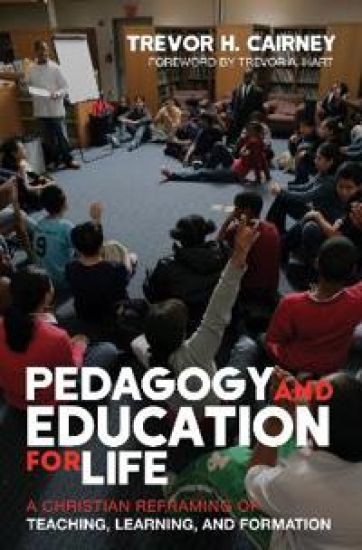
Pedagogy and Education for Life

Pedagogy and Education for Life

Trevor H Cairney; Trevor Hart

Cascade Books
2018
sidottu
There are many books on Christian education, but few consider pedagogy with a biblical focus on formation, and a grounding in varied related disciplines. This book seeks to recapture the term pedagogy and place it at the center of the teacher's role--not as a pseudonym for other things, but as the critical foundation for the orchestration of classroom life. This is a view of pedagogy that accepts that children come to classrooms as inhabitants of multiple and varied communities. Some are known and shared with teachers, but many are not. Children cannot be left to find their way in the world, for as they encounter competing and contradictory worlds, their hopes, dreams, and intentions are shaped. Teachers play a key role in students' formation by ""shaping"" classroom life, for all of life is used by God to reveal himself. The things taught, the priorities set and activities planned, the experiences structured and books shared--indeed, everything in and outside school acts upon and shapes our students. Pedagogy is the vehicle for shaping the life of the school. Learning requires more than subject content and good teaching. The central task of teachers is the development of a pedagogy that shapes ""life."" This book offers challenge and guidance as teachers engage in this noble task. ""What is authentic Christian pedagogy? Trevor Cairney calls us to a broader view of education that covers all of life, not simply cognition about facts. He explains the important of learning in community, and the formation of the whole person. Our ultimate purpose in Christian education means a more radical transformation than just believing in a different worldview--rather, we are called together--heart, mind and strength--to grow as disciples of Christ."" --James Dalziel, Dean of Education, Morling College, Australia ""Amid a wider renewal of interest in the formational dimensions of faith-informed education, Cairney brings long experience and a welcome focus on pedagogy as the whole way of life of a classroom."" --David I. Smith, Director, Kuyers Institute for Christian Teaching and Learning, Calvin College ""Trevor Cairney has made an important and innovative contribution to Christian education in writing this book. Most importantly, he has focused on offering a practical, theologically rigorous understanding of pedagogy, which surely must be the prime, but oft-ignored, responsibility of Christian schools. In a culture that is increasingly focused on compliance and knowledge transmission, Cairney offers an inspiring, alternative vision of Christian formation."" --Trevor Cooling, National Institute for Christian Education Research, Canterbury Christ Church University ""A study of Trevor Cairney's book will engage you in a profound discussion with a practitioner and thinker about education. In particular you will be challenged to embrace a pedagogy which involves the shaping power of a community having as its end goal the kingdom of God. It should be read by all who want to advance the cause of education that is Christian."" --Peter F. Jensen, Former Archbishop of Sydney ""Trevor Cairney's book on Christian pedagogy is a highly significant contribution to one of the most important debates of our time. In a context in which Christian foundations are being dismantled at an alarming rate, it is critical that we explore how we might effectively prepare future generations to live out their faith with confidence, clarity, and compassion. There is hardly a more urgent need in our time. Cairney's emphasis on cultivation, formation, the 'transformation of habits of body and mind', on the critical role of 'the whole life of a community', and on a proper biblical emphasis on the coming kingdom of God is refreshing. How he fills all this out with careful thought that is deeply informed by a serious engagement with the teaching of the Bible lifts this to the front rank of recent books on the subject."" --Mark D. Thompson, Principal, Moore Theological Co
Pedagogy and Education for Life

Pedagogy and Education for Life

Trevor H Cairney; Trevor Hart

Cascade Books
2018
pokkari
There are many books on Christian education, but few consider pedagogy with a biblical focus on formation, and a grounding in varied related disciplines. This book seeks to recapture the term pedagogy and place it at the center of the teacher's role--not as a pseudonym for other things, but as the critical foundation for the orchestration of classroom life. This is a view of pedagogy that accepts that children come to classrooms as inhabitants of multiple and varied communities. Some are known and shared with teachers, but many are not. Children cannot be left to find their way in the world, for as they encounter competing and contradictory worlds, their hopes, dreams, and intentions are shaped. Teachers play a key role in students' formation by ""shaping"" classroom life, for all of life is used by God to reveal himself. The things taught, the priorities set and activities planned, the experiences structured and books shared--indeed, everything in and outside school acts upon and shapes our students. Pedagogy is the vehicle for shaping the life of the school. Learning requires more than subject content and good teaching. The central task of teachers is the development of a pedagogy that shapes ""life."" This book offers challenge and guidance as teachers engage in this noble task. ""What is authentic Christian pedagogy? Trevor Cairney calls us to a broader view of education that covers all of life, not simply cognition about facts. He explains the important of learning in community, and the formation of the whole person. Our ultimate purpose in Christian education means a more radical transformation than just believing in a different worldview--rather, we are called together--heart, mind and strength--to grow as disciples of Christ."" --James Dalziel, Dean of Education, Morling College, Australia ""Amid a wider renewal of interest in the formational dimensions of faith-informed education, Cairney brings long experience and a welcome focus on pedagogy as the whole way of life of a classroom."" --David I. Smith, Director, Kuyers Institute for Christian Teaching and Learning, Calvin College ""Trevor Cairney has made an important and innovative contribution to Christian education in writing this book. Most importantly, he has focused on offering a practical, theologically rigorous understanding of pedagogy, which surely must be the prime, but oft-ignored, responsibility of Christian schools. In a culture that is increasingly focused on compliance and knowledge transmission, Cairney offers an inspiring, alternative vision of Christian formation."" --Trevor Cooling, National Institute for Christian Education Research, Canterbury Christ Church University ""A study of Trevor Cairney's book will engage you in a profound discussion with a practitioner and thinker about education. In particular you will be challenged to embrace a pedagogy which involves the shaping power of a community having as its end goal the kingdom of God. It should be read by all who want to advance the cause of education that is Christian."" --Peter F. Jensen, Former Archbishop of Sydney ""Trevor Cairney's book on Christian pedagogy is a highly significant contribution to one of the most important debates of our time. In a context in which Christian foundations are being dismantled at an alarming rate, it is critical that we explore how we might effectively prepare future generations to live out their faith with confidence, clarity, and compassion. There is hardly a more urgent need in our time. Cairney's emphasis on cultivation, formation, the 'transformation of habits of body and mind', on the critical role of 'the whole life of a community', and on a proper biblical emphasis on the coming kingdom of God is refreshing. How he fills all this out with careful thought that is deeply informed by a serious engagement with the teaching of the Bible lifts this to the front rank of recent books on the subject."" --Mark D. Thompson, Principal, Moore Theological Co
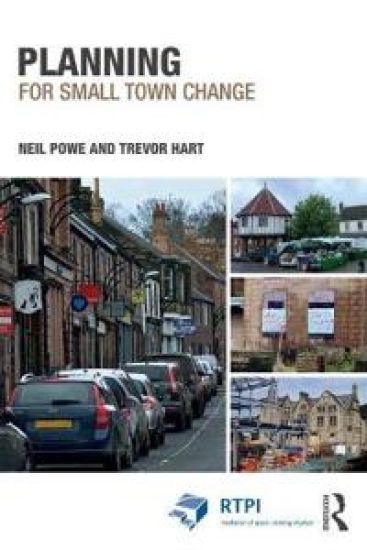
Planning for Small Town Change

Planning for Small Town Change

Neil Powe; Trevor Hart

Routledge
2017
sidottu
Change is inevitable in all communities: they both grow and decline. Planning is a means by which we have sought to manage this change. It has not always succeeded in providing the types of settlements and environments which many residents and others want, either because it is operating with the wrong policies or because it is failing to ensure that the right policies are effectively implemented. These failings have opened planning to criticism by a dominant neoliberal orthodoxy which shapes an increasingly difficult environment in which planning has to operate. Planning for Small Town Change builds on an underexploited selection of international research and the authors’ English case studies to consider the efficacy of planning for change. Drawing on insightful small town experiences, three themes emerge: understanding and conceptualising change; appreciating the potential within place; and the mechanisms for planning and delivery. The research draws on many examples of how key actors have made a significant difference to specific places and provides important insights into how the planning process can be better matched to the long-term and complex challenges faced. Whilst small town experiences are often neglected, they are found to be particularly insightful in understanding the potential roles of local communities and the importance of place quality when planning for change.
Planning for Small Town Change

Planning for Small Town Change

Neil Powe; Trevor Hart

Routledge
2017
nidottu
Change is inevitable in all communities: they both grow and decline. Planning is a means by which we have sought to manage this change. It has not always succeeded in providing the types of settlements and environments which many residents and others want, either because it is operating with the wrong policies or because it is failing to ensure that the right policies are effectively implemented. These failings have opened planning to criticism by a dominant neoliberal orthodoxy which shapes an increasingly difficult environment in which planning has to operate. Planning for Small Town Change builds on an underexploited selection of international research and the authors’ English case studies to consider the efficacy of planning for change. Drawing on insightful small town experiences, three themes emerge: understanding and conceptualising change; appreciating the potential within place; and the mechanisms for planning and delivery. The research draws on many examples of how key actors have made a significant difference to specific places and provides important insights into how the planning process can be better matched to the long-term and complex challenges faced. Whilst small town experiences are often neglected, they are found to be particularly insightful in understanding the potential roles of local communities and the importance of place quality when planning for change.
Making Good

Making Good

Trevor Hart

Baylor University Press
2014
sidottu
God spoke, and all that is and all that ever will be came into existence. God alone can be called uncreated and Creator, and creation can only accomplish that which already exists within God's imagination. In Making Good, Trevor Hart argues that human creativity is always a matter of unfolding the possibilities already latent within the original creative event. Making Good contends that while humans must acknowledge the unique and incomparable dimensions of God's creative activity, the biblical theology of creation encourages rather than prohibits human creativity within a language of creation. Hart's basic contention is that the God known as the Father of Jesus Christ is no domineering deity who jealously seeks to protect his creative prerogatives, but one whose own creativity calls forth, inspires, and enables creative responses on the part of his human creatures. Making Good blends biblical, historical, and systematic theology into conversation with philosophy, aesthetics, and developments in creative theory among the social sciences. Hart renders a theological account of human artistry and the wider human activities of making good.
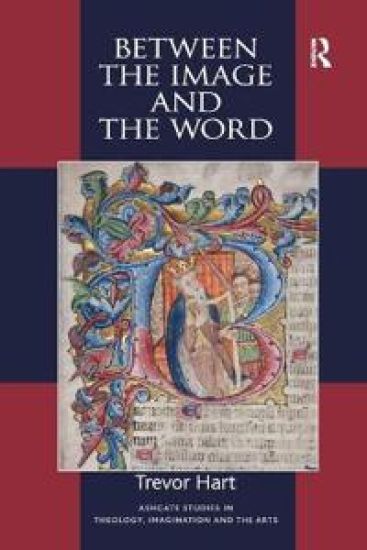
Between the Image and the Word

Between the Image and the Word

Trevor Hart

Routledge
2013
sidottu
The central contention of Christian faith is that in the incarnation the eternal Word or Logos of God himself has taken flesh, so becoming for us the image of the invisible God. Our humanity itself is lived out in a constant to-ing and fro-ing between materiality and immateriality. Imagination, language and literature each have a vital part to play in brokering this hypostatic union of matter and meaning within the human creature. Approaching different aspects of two distinct movements between the image and the word, in the incarnation and in the dynamics of human existence itself, Trevor Hart presents a clearer understanding of each and explores the juxtapositions with the other. Hart concludes that within the Trinitarian economy of creation and redemption these two occasions of ’flesh-taking’ are inseparable and indivisible.
Between the Image and the Word

Between the Image and the Word

Trevor Hart

Routledge
2013
nidottu
The central contention of Christian faith is that in the incarnation the eternal Word or Logos of God himself has taken flesh, so becoming for us the image of the invisible God. Our humanity itself is lived out in a constant to-ing and fro-ing between materiality and immateriality. Imagination, language and literature each have a vital part to play in brokering this hypostatic union of matter and meaning within the human creature. Approaching different aspects of two distinct movements between the image and the word, in the incarnation and in the dynamics of human existence itself, Trevor Hart presents a clearer understanding of each and explores the juxtapositions with the other. Hart concludes that within the Trinitarian economy of creation and redemption these two occasions of ’flesh-taking’ are inseparable and indivisible.
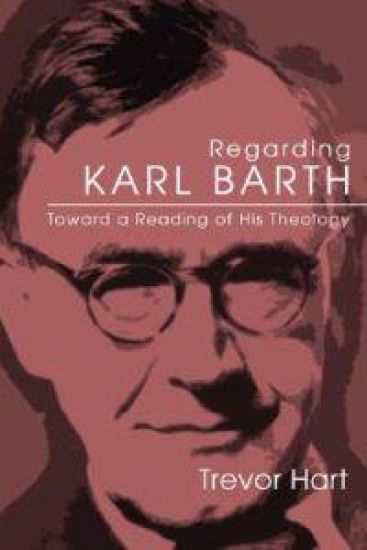
Regarding Karl Barth

Regarding Karl Barth

Trevor Hart

Wipf Stock Publishers
2005
nidottu
'Regarding Karl Barth' is a distinctive engagement with the most significant elements in the theology of, arguably, the most prominent Christian thinker of the twentieth century. Through an ongoing dialogue with Barth's writings and the views of other theologians, notably Brunner, Kung, Lindbeck, McFague, and Moltmann, Trevor Hart initiates fresh explorations of key issues from Barth's work and shows how they continue to provide insight in our postmodern theological context. Topics covered include Scripture and revelation, the Trinity, natural theology, pluralism, justification by faith, ethics, and the nature and problems of religious language. Beginning students, thoughtful pastors, and theologians familiar with Barth will all find this book to be a clear and helpful guide to his theology.