
Kirjailija
Trevor R. Getz
Kirjat ja teokset yhdessä paikassa: 9 kirjaa, julkaisuja vuosilta 2004-2026, suosituimpien joukossa Operation Legacy and Other Stories. Vertaile teosten hintoja ja tarkista saatavuus suomalaisista kirjakaupoista.
Mukana myös kirjoitusasut: Trevor R Getz
9 kirjaa
Kirjojen julkaisuhaarukka 2004-2026.

The Long Nineteenth Century, 1750-1914
Trevor R. Getz; Bennett Sherry
BLOOMSBURY PUBLISHING PLC
2025
sidottu
Part of The Making of the Modern World series, this innovative textbook offers an introduction to the 19th-century world with a focus on human perspectives through social and cultural histories. Taking a period of great transition and change, it shows how the actions and experiences of different communities and individuals across the world constructed, contested and were affected by major trends and events. With a thematic approach, and focusing on social and cultural histories, it connects these major trends and events to experiences of the people who lived through them.Tackling politics, religion, economics, environment, empire and more, with this book students will critically encounter important global trends and key events from the Industrial Revolution, to the Taiping Heavenly Kingdom and the dawn of the First World War. This fully revised second edition includes updated historiography throughout plus:- A new chapter on mobility and migration- Expanded discussion on the interplay between imperialism and the environment- New further reading sections and notes at the end of each chapter- A primary source and interlude section in each chapter to provide historical context- Additional maps and images The Long Nineteenth Century, 1750-1914 offers an introduction to this era of global transformation and the crucible of modernity.

The Long Nineteenth Century, 1750-1914
Trevor R. Getz; Bennett Sherry
BLOOMSBURY PUBLISHING PLC
2025
nidottu
Part of The Making of the Modern World series, this innovative textbook offers an introduction to the 19th-century world with a focus on human perspectives through social and cultural histories. Taking a period of great transition and change, it shows how the actions and experiences of different communities and individuals across the world constructed, contested and were affected by major trends and events. With a thematic approach, and focusing on social and cultural histories, it connects these major trends and events to experiences of the people who lived through them.Tackling politics, religion, economics, environment, empire and more, with this book students will critically encounter important global trends and key events from the Industrial Revolution, to the Taiping Heavenly Kingdom and the dawn of the First World War. This fully revised second edition includes updated historiography throughout plus:- A new chapter on mobility and migration- Expanded discussion on the interplay between imperialism and the environment- New further reading sections and notes at the end of each chapter- A primary source and interlude section in each chapter to provide historical context- Additional maps and images The Long Nineteenth Century, 1750-1914 offers an introduction to this era of global transformation and the crucible of modernity.

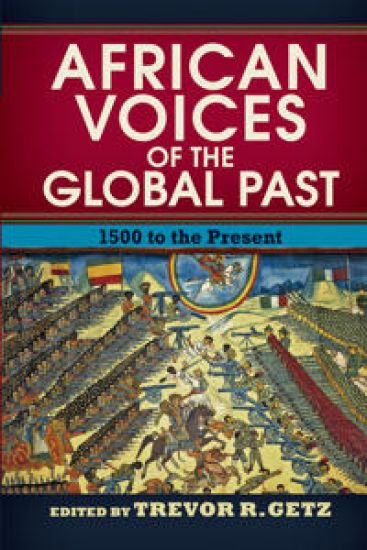
This book focuses on retelling many of the important episodes in the global past (c.1500–present) from African points of view. It discusses the events and trends of global significance: the Atlantic slave system, the industrial revolution, World Wars I and II, and decolonization.
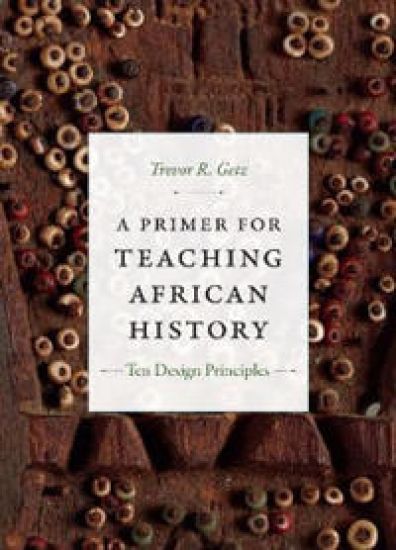
A Primer for Teaching African History is a guide for college and high school teachers who are teaching African history for the first time, for experienced teachers who want to reinvigorate their courses, for those who are training future teachers to prepare their own syllabi, and for teachers who want to incorporate African history into their world history courses. Trevor R. Getz offers design principles aimed at facilitating a classroom experience that will help students navigate new knowledge, historical skills, ethical development, and worldviews. He foregrounds the importance of acknowledging and addressing student preconceptions about Africa, challenging chronological approaches to history, exploring identity and geography as ways to access historical African perspectives, and investigating the potential to engage in questions of ethics that studying African history provides. In his discussions of setting goals, pedagogy, assessment, and syllabus design, Getz draws readers into the process of thinking consciously and strategically about designing courses on African history that will challenge students to think critically about Africa and the discipline of history.
This book focuses on retelling many of the important episodes in the global past (c.1500–present) from African points of view. It discusses the events and trends of global significance: the Atlantic slave system, the industrial revolution, World Wars I and II, and decolonization.
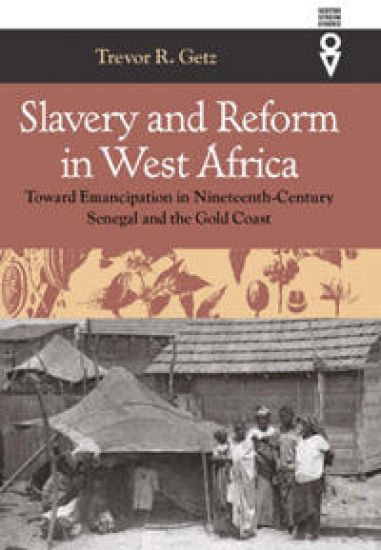
A series of transformations, reforms, and attempted abolitions of slavery form a core narrative of nineteenth-century coastal West Africa. As the region's role in Atlantic commercial networks underwent a gradual transition from principally that of slave exporter to producer of "legitimate goods" and dependent markets, institutions of slavery became battlegrounds in which European abolitionism, pragmatic colonialism, and indigenous agency clashed. In Slavery and Reform in West Africa, Trevor Getz demonstrates that it was largely on the anvil of this issue that French and British policy in West Africa was forged. With distant metropoles unable to intervene in daily affairs, local European administrators, striving to balance abolitionist pressures against the resistance of politically and economically powerful local slave owners, sought ways to satisfy the latter while placating or duping the former. The result was an alliance between colonial officials, company agents, and slave-owning elites that effectively slowed, sidetracked, or undermined serious attempts to reform slave holding. Although slavery was outlawed in both regions, in only a few isolated instances did large-scale emancipations occur. Under the surface, however, slaves used the threat of self-liberation to reach accommodations that transformed the master-slave relationship. By comparing the strategies of colonial administrators, slave-owners, and slaves across these two regions and throughout the nineteenth century, Slavery and Reform in West Africa reveals not only the causes of the astounding success of slave owners, but also the factors that could, and in some cases did, lead to slave liberations. These findings have serious implications for the wider study of slavery and emancipation and for the history of Africa generally.
A series of transformations, reforms, and attempted abolitions of slavery form a core narrative of nineteenth-century coastal West Africa. As the region's role in Atlantic commercial networks underwent a gradual transition from principally that of slave exporter to producer of "legitimate goods" and dependent markets, institutions of slavery became battlegrounds in which European abolitionism, pragmatic colonialism, and indigenous agency clashed. In Slavery and Reform in West Africa, Trevor Getz demonstrates that it was largely on the anvil of this issue that French and British policy in West Africa was forged. With distant metropoles unable to intervene in daily affairs, local European administrators, striving to balance abolitionist pressures against the resistance of politically and economically powerful local slave owners, sought ways to satisfy the latter while placating or duping the former. The result was an alliance between colonial officials, company agents, and slave-owning elites that effectively slowed, sidetracked, or undermined serious attempts to reform slave holding. Although slavery was outlawed in both regions, in only a few isolated instances did large-scale emancipations occur. Under the surface, however, slaves used the threat of self-liberation to reach accommodations that transformed the master-slave relationship. By comparing the strategies of colonial administrators, slave-owners, and slaves across these two regions and throughout the nineteenth century, Slavery and Reform in West Africa reveals not only the causes of the astounding success of slave owners, but also the factors that could, and in some cases did, lead to slave liberations. These findings have serious implications for the wider study of slavery and emancipation and for the history of Africa generally.