Kirjojen hintavertailu. Mukana 12 390 323 kirjaa ja 12 kauppaa.

Kirjailija

Trond Arne Undheim

Kirjat ja teokset yhdessä paikassa: 6 kirjaa, julkaisuja vuosilta 2008-2025, suosituimpien joukossa Leadership from Below. Vertaile teosten hintoja ja tarkista saatavuus suomalaisista kirjakaupoista.

6 kirjaa

Kirjojen julkaisuhaarukka 2008-2025.

The Platinum Workforce

The Platinum Workforce

Trond Arne Undheim

ANTHEM PRESS
2025
sidottu
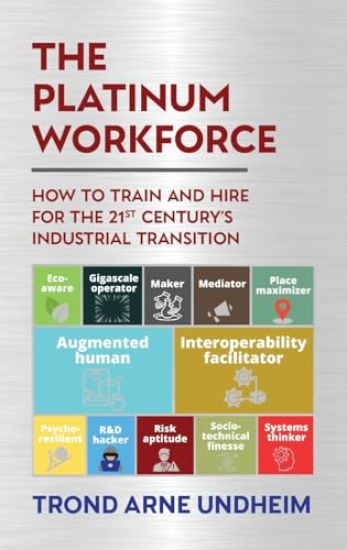
Artificial intelligence is already causing a major shift in the nature of work. Countries, colleges, or employers are not prepared to continuously train billions of knowledge workers to compete in this new economic reality. But that’s not all. More change is coming due to the polycrisis of pressing challenges such as sustainability, social inequality, and geopolitical instability. Figuring out what career paths, skills, and talents we need to nurture has never been more urgent, especially for those who aspire to leadership. In The Platinum Workforce, futurist and technologist Trond Arne Undheim reveals how to be a changemaker in the ongoing re-industrial transition. Industrial principles such as lean manufacturing, technological advancement, and production at scale meet significant sustainability challenges, increased risks, and intricate inequality concerns from the Global South as well as from workers in advanced societies who also feel left behind. Undheim has spent the last decade examining the technologies, risks, and trends shaping the future of work. Helping startups, shaping governance policies, teaching students, and building educational programs, he has found that there are two core skills and ten complementary skills that will define both individual and collective success in the future of work. The core skills are deft human–AI collaboration and an innate interoperability mindset, but teams together mastering the ten complementary skills—eco-awareness, maker skills, mediation skills, megascale operations, mobility, risk aptitude, R&D hacks, psycho-resilience, sociotechnical finesse, and systems thinking—is what will define future leadership. Leading the 21st-century workplace will require unprecedented levels of human–AI collaboration. But evolving new forms of augmented intelligence will not be easy. We all have to train for it, constantly adapting to new interfaces and watching out for risks that could derail progress or create new problems. But the challenge does not stop there. Tackling the cascading effects of evolving hazards requires astute risk management. Transdisciplinary skills such as an entrepreneurial approach, megascale execution ability, and socio-technical skills will need to be constantly honed. Leaders and workers alike need to develop an interoperability mindset. Success requires adapting to, and helping others adapt to, the fundamental shifts in the materials, methods, tools, and technologies fueling the intricate cultural machine we call society. No matter our degrees, experiences, resources, or current skill sets, to compete in this new world, we need a reset.
Augmented Lean

Augmented Lean

Natan Linder; Trond Arne Undheim

JOHN WILEY SONS INC
2022
sidottu
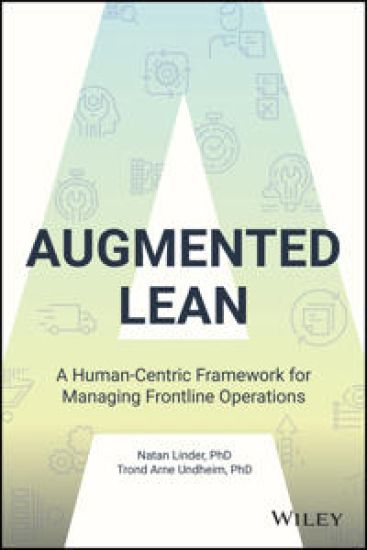
Explore the real future of work in this expert tech implementation guide that goes beyond automation In Augmented Lean: A Human-Centric Framework for Managing Frontline Operations, serial startup founder Dr. Natan Linder and futurist podcaster Dr. Trond Arne Undheim deliver an urgent and incisive exploration of how to facilitate agile processes amongst a millennial workforce that already lives by many of its tenets. The book demonstrates how to abandon legacy industrial technology that is failing modern operations and hindering operational excellence and digital progress. As an executive and leader, you cannot fall prey to hyped-up notions of industry 4.0's factory of the future automation, artificial intelligence, internet of things, sensors, digital twins, and augmented reality fixing every problem. Instead, to truly reduce cognitive load, complexity, and frustrations in the workplace, we must build cyber-physical technologies so that humans remain at the center. Leaders must ensure that the technology they deploy at an industrial scale has fluid interfaces that demonstrably simplifies work and makes operations more flexible without introducing fear, uncertainty, or doubt. The authors provide: A step-by-step walkthrough of the Augmented Lean framework that shows readers when, how, and why to augment your workforce through cyber-physical principles that go beyond both Lean and Agile management practicesConcrete strategies on how to scale these operational augmentation methods throughout your organization based on real-world case studies of operators in the trenches of manufacturing whose impact far outweighs their seniority in the corporate hierarchyInsightful advice for how to use the augmentation framework in small- and medium-sized enterprises where license and training costs are prohibitive when only using off-the-shelf industry 4.0 approaches A thoroughly practical playbook for augmenting your workforce with the latest cyber-physical adaptations to digital technologies, Augmented Lean provides you with the organizational-, process-, and management-level techniques you need to get the most out of your employees. In turn, as an operator, engineer, or industrial worker reading this book, you will become empowered to be a change agent through no-code interfaces instead of remaining a recipient of endless training demands and ever-increasing technological complexity. Augmented Lean will orient you towards the future with the most effective tools to cut through hype so you can instantly apply your learnings and be productive wherever you currently operate.
Future Tech

Future Tech

Trond Arne Undheim

Kogan Page Ltd
2021
nidottu
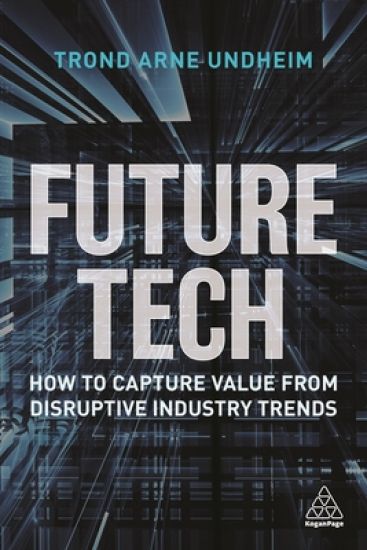
Amazon's Fire phone. Google Glass. Facebook Home. Quikster. New technologies alone don't always cause industry changes. Future Tech explains how the four forces of technology, policy, business models and social dynamics work together to create industry disruption and how this understanding can help to predict what is coming next. Technology is generally viewed as the single force that disrupts markets. However, history is rife with stories of technologies that have failed to meet such hyped expectations. In Future Tech, the author reveals that true change only results from combining the forces of science and technology, policy and regulation, new business models (i.e. sharing economy) and social dynamics (whether or not people adopt it). Whether these four forces align explains why some technologies, such as AI, blockchain, robotics, synthetic biology and 3D printing, stick and why others fail. With an understanding of these four forces, business executives and policymakers can explain what technology is likely to stick and even anticipate what is coming next. By 2030, the global labor force will be led by an elite set of knowledge workers enabled by robotic AI. To help individuals thrive in this workplace, Future Tech advises readers to develop their human capabilities of creativity and adaptation, develop deep expertise in one domain while being well-versed in dozens more, and develop a personalized approach to acquiring and processing information and deliberating decisions.
Future Tech

Future Tech

Trond Arne Undheim

Kogan Page Ltd
2021
sidottu
Amazon's Fire phone. Google Glass. Facebook Home. Quikster. New technologies alone don't always cause industry changes. Future Tech explains how the four forces of technology, policy, business models and social dynamics work together to create industry disruption and how this understanding can help to predict what is coming next. Technology is generally viewed as the single force that disrupts markets. However, history is rife with stories of technologies that have failed to meet such hyped expectations. In Future Tech, the author reveals that true change only results from combining the forces of science and technology, policy and regulation, new business models (i.e. sharing economy) and social dynamics (whether or not people adopt it). Whether these four forces align explains why some technologies, such as AI, blockchain, robotics, synthetic biology and 3D printing, stick and why others fail. With an understanding of these four forces, business executives and policymakers can explain what technology is likely to stick and even anticipate what is coming next. By 2030, the global labor force will be led by an elite set of knowledge workers enabled by robotic AI. To help individuals thrive in this workplace, Future Tech advises readers to develop their human capabilities of creativity and adaptation, develop deep expertise in one domain while being well-versed in dozens more, and develop a personalized approach to acquiring and processing information and deliberating decisions.
Leadership from Below

Leadership from Below

Trond Arne Undheim

Lulu.com
2009
pokkari
Leadership From Below explains how the workplace is being changed by ideas from Asia, Scandinavia, and the socially-networked internet. All managers - but especially the growing group of de facto managers - will take away usable leadership skills.
Leadership from Below

Leadership from Below

Trond Arne Undheim

Lulu.com
2008
sidottu
The Internet generation of interculturally minded, socially networked leaders is redefining the workplace. Management is slow to respond. Asian philosophy - with concepts like ba, Zen, feng shui, and ki - is becoming increasingly important for tomorrow's leader. Blend that with the Scandinavian mindset of egalitarianism, openness, and gender equity, add sophisticated use of network effects and you begin to understand the true logic of Internet in the workplace. Cultural diversity and technological dependence are global trends that demand constant attention. Know: - How to lead without being the leader - How to adapt quickly to change - How to thrive on diversity - How to be a trendsetter in technology - How to be on top but still have a life.