Kirjailija
Troy Hicks
Kirjat ja teokset yhdessä paikassa: 14 kirjaa, julkaisuja vuosilta 2010-2025, suosituimpien joukossa Creating Confident Writers. Vertaile teosten hintoja ja tarkista saatavuus suomalaisista kirjakaupoista.
14 kirjaa
Kirjojen julkaisuhaarukka 2010-2025.
Addressing their colleagues in secondary and college writing instruction, Troy Hicks and Andy Schoenborn initiate a collaborative conversation about instructional decision-making that works to encourage the growth of students as confident writers. Chapters seek common ground on such topics as fostering student agency and goal- setting, optimising the use of class time and technology, and using formative and summative assessments. Examples of assignments, student work, assessment tasks and teacher reflections are included throughout. The book’s approach builds on significant framing documents from NCTE, NWP, the Council of Writing Program Administrators, ISTE and the CCSS.
Because Digital Writing Matters
Danielle Nicole DeVoss; Elyse Eidman-Aadahl; Troy Hicks
John Wiley Sons Inc
2010
nidottu
How to apply digital writing skills effectively in the classroom, from the prestigious National Writing Project As many teachers know, students may be adept at text messaging and communicating online but do not know how to craft a basic essay. In the classroom, students are increasingly required to create web-based or multi-media productions that also include writing. Since writing in and for the online realm often defies standard writing conventions, this book defines digital writing and examines how best to integrate new technologies into writing instruction. Shows how to integrate new technologies into classroom lessonsAddresses the proliferation of writing in the digital ageOffers a guide for improving students' online writing skills The book is an important manual for understanding this new frontier of writing for teachers, school leaders, university faculty, and teacher educators.
Teaching Writing in the Age of AI: Strategies for Teachers of Secondary Students (Support Thinking and Writing in AI-Powered Classrooms.)
Troy Hicks; Kristen Hawley Turner
Solution Tree
2025
nidottu
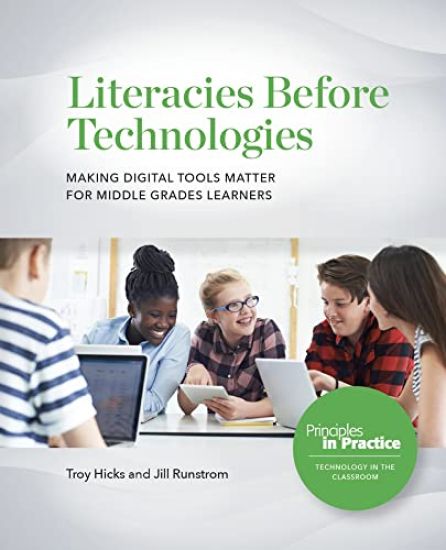
Literacies Before Technologies: Making Digital Tools Matter for Middle Grades Learners
Troy Hicks; Jill Runstrom
National Council of Teachers of English (Ncte
2023
nidottu
This practical book brings together coauthors Troy Hicks and Jill Runstrom with the voices of ten additional middle level educators (Grades 4-9) to explore applications of NCTE's Beliefs for Integrating Technology into the English Language Arts Classroom position statement in middle grades classrooms. Including chapters and vignettes that explore lessons and technologies for close and critical reading for literary analysis, writing to argue and inform, and considerations for remote and hybrid learning, the book follows a year in the life of Runstrom's ninth-grade English classroom. With specific lesson ideas and examples of student work, the book brings the entire Beliefs statement to life while also foregrounding the primary goal that we should consider "literacies before technologies," creating rich opportunities for reading and writing, enhanced with digital tools. An annotated bibliography is also included.
Technology is integral to teaching in the English language arts, whether in-person, hybrid, or remote. In this indispensable guide, Troy Hicks shows how to teach and model "digital diligence"--an alert, intentional stance that helps both teachers and students use technology productively, ethically, and responsibly. Resources and lesson ideas are presented to build adolescents' skills for protecting online privacy, minimizing digital distraction, breaking through “filter bubbles,” fostering civil conversations, evaluating information on the Internet, creating meaningful digital writing, and deeply engaging with multimedia texts. Dozens of websites, apps, and other tools are reviewed, with links provided at the companion website; end-of-chapter teaching points and guiding questions facilitate learning and application.
Discover how to effectively incorporate literacy instruction into your middle or high school science classroom with this practical book. You’ll find creative, inquiry-based tools to show you what it means to teach science with and through writing, and strategies to help your students become young scientists who can use reading and writing to better understand their world. Troy Hicks, Jeremy Hyler, and Wiline Pangle share helpful examples of lessons and samples of students’ work, as well as innovative strategies you can use to improve students’ abilities to read and write various types of scientific nonfiction, including argument essays, informational pieces, infographics, and more. As all three authors come to the work of science and literacy from different perspectives and backgrounds, the book offers unique and wide-ranging experiences that will inspire you and offer you insights into many aspects of the classroom, including when, why, and how reading and writing can work in the science lesson. Featured topics include: Debates and the current conversation around science writing in the classroom and society. How to integrate science notebooks into teaching. Improving nonfiction writing by expanding disciplinary vocabulary and crafting scientific arguments. Incorporating visual explanations and infographics. Encouraging collaboration through whiteboard modeling. Professional development in science and writing.The strategies are all aligned to the Next Generation Science Standards and Common Core State Standards for ease of implementation. From science teachers to curriculum directors and instructional supervisors, this book is essential for anyone wanting to improve interdisciplinary literacy in their school.
Don’t blame technology for poor student grammar; instead, use technology intentionally to reach students and actually improve their writing! In this practical book, bestselling authors Jeremy Hyler and Troy Hicks reveal how digital tools and social media – a natural part of students’ lives – can make grammar instruction more authentic, relevant, and effective in today’s world.Topics Covered: Teaching students to code switch and differentiate between formal and informal sentence styles Using flipped lessons to teach the parts of speech and help students build their own grammar guides Enlivening vocabulary instruction with student-produced video Helping students master capitalization and punctuation in different digital contextsEach chapter contains examples, screenshots, and instructions to help you implement the ideas. With the strategies in this book, you can empower students to become better writers with the tools they already love and use daily. Additional resources and links are available on the book’s companion wiki site: textingtoteaching.wikispaces.com
Coaching Teacher-Writers
Troy Hicks; Anne Elrod Whitney; James Fredricksen; Leah Zuidema; Patricia A. Edwards
Teachers' College Press
2016
nidottu
When teachers write, good things can happen; writing helps educators to better understand themselves, as well as students, parents, and colleagues. This practical book illustrates how to encourage, lead, and sustain teacher-writers, especially in group contexts. In contrast to guides on writing and teacher research, this book is designed for those who support teacher-writers, such as teacher educators and literacy coaches. The authors offer descriptions of key practices they have developed over years of coaching, teaching, and collaborating with K–12 teachers who write about classroom instruction, teacher research, or advocacy for better policy and pedagogy. Knowing firsthand just how hard writing can be for teachers, they provide a repertoire of strategies to elicit writing, to support teachers as they write, to find audiences for the teachers’ work, and much more.
In this book, Troy Hicks – a leader in the teaching of digital writing – collaborates with seven National Writing Project teacher consultants to provide a protocol for assessing students’ digital writing. This collection highlights six case studies centered on evidence the authors have uncovered through teacher inquiry and structured conversations about students’ digital writing. Beginning with a digital writing sample, each teacher offers an analysis of a student’s work and a reflection on how collaborative assessment affected his or her teaching. Because the authors include teachers from kindergarten to college, this book provides opportunities for vertical discussions of digital writing development, as well as grade-level conversations about high-quality digital writing. The collection also includes an introduction and conclusion, written by Hicks, that provides context for the inquiry group’s work and recommendations for assessment of digital writing.
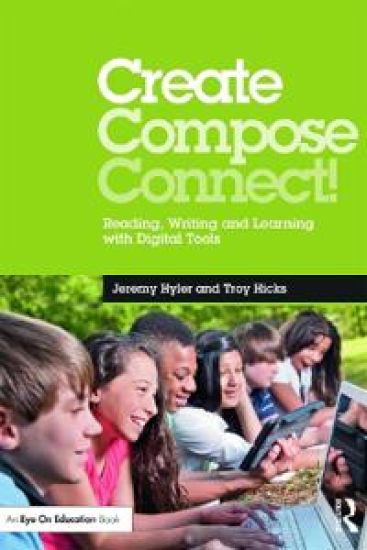
Find out how to incorporate digital tools into your English language arts class to improve students’ reading, writing, listening, and speaking skills. Authors Jeremy Hyler and Troy Hicks show you that technology is not just about making a lesson engaging; it’s about helping students become effective creators and consumers of information in today’s fast-paced world. You’ll learn how to use mobile technologies to teach narrative, informational, and argument writing as well as visual literacy and multimodal research. Each chapter is filled with exciting lesson plans and tech tool suggestions that you can take back to your own classroom immediately.See Jeremy Hyler’s TEDx!https://www.youtube.com/watch?v=WHtXIJvSSAA