Kirjojen hintavertailu. Mukana 12 390 323 kirjaa ja 12 kauppaa.

Kirjailija

Troy J. Sacquety

Kirjat ja teokset yhdessä paikassa: 3 kirjaa, julkaisuja vuosilta 2013-2022, suosituimpien joukossa Victory Through Influence. Vertaile teosten hintoja ja tarkista saatavuus suomalaisista kirjakaupoista.

3 kirjaa

Kirjojen julkaisuhaarukka 2013-2022.

Victory Through Influence

Victory Through Influence

Jared M. Tracy; Troy J. Sacquety

TEXAS A M UNIVERSITY PRESS
2022
sidottu
Covering the period from World War I through the Korean War, Victory through Influence: Origins of Psychological Operations in the US Army argues that the development of US Army psychological operations occurred despite widespread institutional opposition. Skeptics noted that the effects of combat propaganda could not be measured like those of infantry, artillery, or air power. Combat arms officers viewed it as an ancillary, useless, or dishonorable military tactic. Careerists were wary of investing much time or energy in psychological warfare, or “psywar.”After the War Department established a psywar planning cell in early 1918 under its Military Intelligence Branch, it then went a step further by deploying an understaffed, poorly resourced propaganda section. It was the first time that the US military had done such a thing. After the Armistice, that section was eliminated, and its operational lessons were lost. During World War II, the army activated tactical units such as combat propaganda teams, mobile radio broadcasting companies, and base station operating detachments for psywar.When the Korean War began, the ill-prepared US Army again rebuilt its psywar capability from virtually nothing. The tactical groups proved once and for all that psychological operations were invaluable force multipliers in military operations. These units warned civilians of imminent danger, promoted United Nations humanitarian programs, assisted in getting the Communist delegation back to the negotiating table, and more. These indispensable contributions to wartime victory, coupled with recognition of the psychological dimensions of the Cold War, helped convince senior officers and policymakers of the value of psychological operations. Over three wars, and as part of a skeptical institution, practitioners of psychological operations earned for it the status of a permanent presence within the US Army.
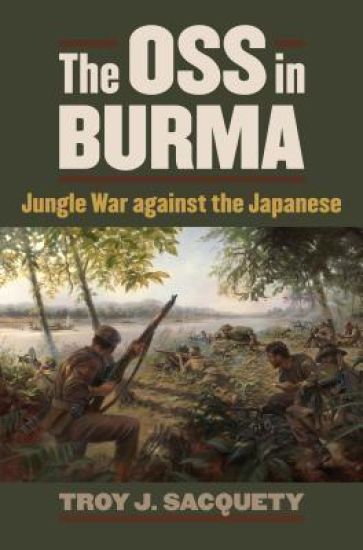
The OSS in Burma

The OSS in Burma

Troy J. Sacquety

University Press of Kansas
2014
nidottu
One could not choose a worse place for fighting the Japanese,"" said Winston Churchill of North Burma, deeming it ""the most forbidding fighting country imaginable."" But it was here that the fledgling Office of Strategic Services conducted its most successful combat operations of World War II. Troy Sacquety takes readers into Burma's steaming jungles in the first book to fully cover the exploits and contributions of the OSS's Detachment 101 against the Japanese Imperial Army. Functioning independently of both the U.S. Army and OSS headquarters-and with no operational or organizational model to follow-Detachment 101 was given enormous latitude in terms of developing its mission and methods. It grew from an inexperienced and poorly supported group of 21 agents training on the job in a lethal environment to a powerful force encompassing 10,000 guerrillas (spread across as many as 8 battalions), 60 long-range agents, and 400 short-range agents. By April 1945, it remained the only American ground force in North Burma while simultaneously conducting daring amphibious operations that contributed to the liberation of Rangoon. With unrivaled access to OSS archives, Sacquety vividly recounts the 101's story with a depth of detail that makes the disease-plagued and monsoon-drenched Burmese theater come unnervingly alive. He describes the organizational evolution of Detachment 101 and shows how the unit's flexibility allowed it to evolve to meet the changing battlefield environment. He depicts the Detachment's two sharply contrasting field commanders: headstrong Colonel Carl Eifler, who pushed the unit beyond its capabilities, and the more measured Colonel William Peers, who molded it into a model special operations force. He also highlights the heroic Kachin tribesmen, fierce fighters defending their tribal homeland and instrumental in acclimating the Americans to terrain, weather, and cultures in ways that were vital to the success of the Detachment's operations. While veterans' memoirs have discussed OSS activities in Burma, this is the first book to describe in detail how it achieved its success-portraying an operational unit that can be seen as a prototype for today's Special Forces. Featuring dozens of illustrations, The OSS in Burma rescues from oblivion the daring exploits of a key intelligence and military unit in Japan's defeat in World War II and tells a gripping story that will satisfy scholars and buffs alike.
The OSS in Burma

The OSS in Burma

Troy J. Sacquety

University Press of Kansas
2013
sidottu
“One could not choose a worse place for fighting the Japanese,” said Winston Churchill of North Burma, deeming it “the most forbidding fighting country imaginable.” But it was here that the fledgling Office of Strategic Services conducted its most successful combat operations of World War II. Troy Sacquety takes readers into Burma’s steaming jungles in the first book to fully cover the exploits and contributions of the OSS’s Detachment 101 against the Japanese Imperial Army. Functioning independently of both the U.S. Army and OSS headquarters—and with no operational or organisational model to follow—Detachment 101 was given enormous latitude in terms of developing its mission and methods. It grew from an inexperienced and poorly supported group of 21 agents training on the job in a lethal environment to a powerful force encompassing 10,000 guerrillas (spread across as many as 8 battalions), 60 long-range agents, and 400 short-range agents. By April 1945, it remained the only American ground force in North Burma while simultaneously conducting daring amphibious operations that contributed to the liberation of Rangoon. With unrivalled access to OSS archives, Sacquety vividly recounts the 101’s story with a depth of detail that makes the disease-plagued and monsoon-drenched Burmese theatre come unnervingly alive. He describes the organisational evolution of Detachment 101 and shows how the unit’s flexibility allowed it to evolve to meet the changing battlefield environment. He depicts the Detachment’s two sharply contrasting field commanders: headstrong Colonel Carl Eifler, who pushed the unit beyond its capabilities, and the more measured Colonel William Peers, who moulded it into a model special operations force. He also highlights the heroic Kachin tribesmen, fierce fighters defending their tribal homeland and instrumental in acclimating the Americans to terrain, weather, and cultures in ways that were vital to the success of the Detachment’s operations. While veterans’ memoirs have discussed OSS activities in Burma, this is the first book to describe in detail how it achieved its success—portraying an operational unit that can be seen as a prototype for today’s Special Forces. Featuring dozens of illustrations, The OSS in Burma rescues from oblivion the daring exploits of a key intelligence and military unit in Japan’s defeat in World War II and tells a gripping story that will satisfy scholars and buffs alike.