Kirjojen hintavertailu. Mukana 12 595 353 kirjaa ja 12 kauppaa.

Kirjailija

Trudier Harris

Kirjat ja teokset yhdessä paikassa: 19 kirjaa, julkaisuja vuosilta 1984-2026, suosituimpien joukossa Speculative Film and Moving Images by or about Black Women and Girls. Vertaile teosten hintoja ja tarkista saatavuus suomalaisista kirjakaupoista.

19 kirjaa

Kirjojen julkaisuhaarukka 1984-2026.

Speculative Film and Moving Images by or about Black Women and Girls

Speculative Film and Moving Images by or about Black Women and Girls

Karima K. Jeffrey-Legette; Hoda M. Zaki; Trudier Harris

BLOOMSBURY PUBLISHING PLC
2026
nidottu
Speculative Film and Moving Images by or about Black Women and Girls: Watch It! examines depictions of African-descended women and girls in twentieth and twenty-first century filmmaking. Topics include a discursive analysis of stereotypes; roles garnered by Halle Berry, the only Black woman to receive an Oscar for Best Actress in a Leading Role; the promise of characters, relationships, and scripts found in works ranging from Altered Carbon, Lovecraft Country, and HBO’s Watchmen series; and a closing chapter that considers the legacy of Black women in horror. Jeffrey-Legette illustrates the ways in which recent texts explore the trauma endured by people of African descent in the United States of America in evocative ways. In doing so, she provides a compelling interpretation of prevalent, well-received, and recurring images of Black women and girls in American popular culture.
Bigger

Bigger

Trudier Harris

YALE UNIVERSITY PRESS
2024
sidottu
A biography of Native Son’s Bigger Thomas that examines his continued relevance in debates over Black men and the violence of racism Bigger Thomas, the central figure in Richard Wright’s novel Native Son (1940), eludes easy categorization. A violent and troubled character who rejects the rules of society, Bigger is both victim and perpetrator, damaged by racism and segregation on the South Side of Chicago, seemingly raping and killing without regrets. His story has electrified readers for more than eight decades, and it continues to galvanize debates around representation, respectability, social justice, and racism in American life. In this book, distinguished scholar Trudier Harris examines the literary life of Bigger Thomas from his birth to the current day. Harris explores the debates between Black critics and Communist artists in the 1930s and 1940s over the “political novel,” the censorship of Native Son by white publishers, and the work’s initial reception—as well as interpretations from Black feminists and Black Power activists in the decades that followed, up to the novel’s resonance with the Black Lives Matter movement today. Bigger, Harris argues, represents the knotted heart of American racism, damning and unsettling, and still very much with us.
Stumbling Blocks and Other Unfinished Work

Stumbling Blocks and Other Unfinished Work

Delores Phillips; Linda Miller; Trudier Harris

UNIVERSITY OF GEORGIA PRESS
2023
pokkari
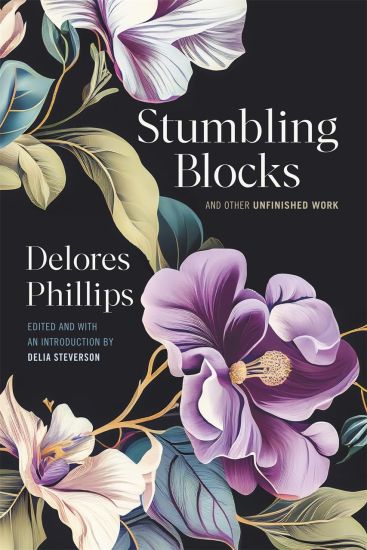
Stumbling Blocks expands and contextualizes the unpublished works of the late African American writer Delores Phillips. Born in Cartersville, Georgia in 1950, Delores Faye Phillips spent much of her childhood in Georgia before moving to Cleveland, Ohio. Best known for her 2004 novel The Darkest Child, which follows the Quinn family as they attempt to survive and escape racism, lynchings, and poverty in Jim Crow Georgia during the 1950s, Phillips wrote much more than that. While the novel was met with critical acclaim, little is known about Phillips herself or about her other writings. Indeed, in the 2018 reissue of The Darkest Child, Tayari Jones remarks in the introduction that when she heard Phillips had passed away in 2014, she was “weighted down with longing for the other books that she would never write.” This volume, then, corrects the misconception that The Darkest Child was Phillips’s only published work. Rather, it establishes her as an experienced and prolific writer who created multi-genre literature throughout her life. It paints a broader picture of Phillips, who was not just a novelist but also a poet and short story writer as well. Just as Alice Walker’s recovery work on Zora Neale Hurston in the 1970s was critical to a revival and appreciation of Hurston as “a genius of the South,” Stumbling Blocks illuminates and expands the legacy of an underrepresented writer who is uniquely situated at the intersections of multiple identities including race, gender, disability, and region. In addition to the sequel to The Darkest Child, this collection also includes an unfinished third novel (No Ordinary Rain), ten poems, seven short stories, contextualizing essays, and an in-depth biography of Phillips. It is also bookended by a foreword from Phillips’s sister, Linda Miller, and an afterword from renowned literary scholar Trudier Harris.
Stumbling Blocks and Other Unfinished Work

Stumbling Blocks and Other Unfinished Work

Delores Phillips; Linda Miller; Trudier Harris

UNIVERSITY OF GEORGIA PRESS
2023
sidottu
Stumbling Blocks expands and contextualizes the unpublished works of the late African American writer Delores Phillips. Born in Cartersville, Georgia in 1950, Delores Faye Phillips spent much of her childhood in Georgia before moving to Cleveland, Ohio. Best known for her 2004 novel The Darkest Child, which follows the Quinn family as they attempt to survive and escape racism, lynchings, and poverty in Jim Crow Georgia during the 1950s, Phillips wrote much more than that. While the novel was met with critical acclaim, little is known about Phillips herself or about her other writings. Indeed, in the 2018 reissue of The Darkest Child, Tayari Jones remarks in the introduction that when she heard Phillips had passed away in 2014, she was “weighted down with longing for the other books that she would never write.” This volume, then, corrects the misconception that The Darkest Child was Phillips’s only published work. Rather, it establishes her as an experienced and prolific writer who created multi-genre literature throughout her life. It paints a broader picture of Phillips, who was not just a novelist but also a poet and short story writer as well. Just as Alice Walker’s recovery work on Zora Neale Hurston in the 1970s was critical to a revival and appreciation of Hurston as “a genius of the South,” Stumbling Blocks illuminates and expands the legacy of an underrepresented writer who is uniquely situated at the intersections of multiple identities including race, gender, disability, and region. In addition to the sequel to The Darkest Child, this collection also includes an unfinished third novel (No Ordinary Rain), ten poems, seven short stories, contextualizing essays, and an in-depth biography of Phillips. It is also bookended by a foreword from Phillips’s sister, Linda Miller, and an afterword from renowned literary scholar Trudier Harris.
Depictions of Home in African American Literature

Depictions of Home in African American Literature

Trudier Harris

BLOOMSBURY PUBLISHING PLC
2023
nidottu
In Depictions of Home in African American Literature, Trudier Harris analyzes fictional homespaces in African American literature from those set in the time of slavery to modern urban configurations of the homespace. She argues that African American writers often inadvertently create and follow a tradition of portraying dysfunctional and physically or emotionally violent homespaces. Harris explores the roles race and religion play in the creation of homespaces and how geography, space, and character all influence these spaces. Although many characters in African American literature crave safe, happy homespaces and frequently carry such images with them through their mental or physical migrations, few characters experience the formation of healthy homespaces by the end of their journeys. Harris studies the historical, cultural, and literary portrayals of the home in works from well-known authors such as Richard Wright, James Baldwin, Toni Morrison, and August Wilson as well as lesser-studied authors such as Daniel Black, A.J. Verdelle, Margaret Walker, and Dorothy West.
From Mammies to Militants

From Mammies to Militants

Trudier Harris

THE UNIVERSITY OF ALABAMA PRESS
2023
sidottu
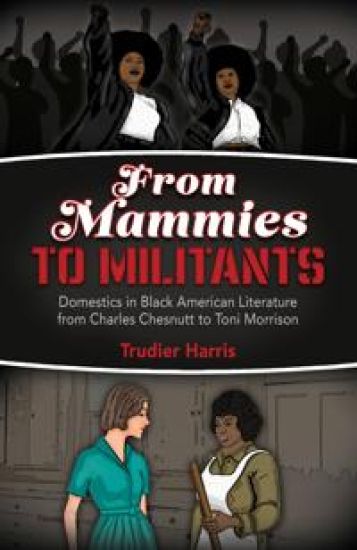
Welfare queen, hot momma, unwed mother: these stereotypes of Black women share their historical conception in the image of the Black woman as domestic. Focusing on the issue of stereotypes, the new edition of Trudier Harris’s classic 1982 study From Mammies to Militants examines the position of the domestic in Black American literature with a new afterword bringing her analysis into the present. From Charles Chesnutt’s The Marrow of Tradition to Toni Morrison’s The Bluest Eye, Black writers, some of whom worked as maids themselves, have manipulated the stereotype in a strategic way as a figure to comment on Black-white relations or to dramatize the conflicts of the Black protagonists. In fact, the characters themselves, like real-life maids, often use the stereotype to their advantage or to trick their oppressors. Harris combines folkloristic, sociological, historical, and psychological analyses with literary ones, drawing on her own interviews with Black women who worked as domestics. She explores the differences between Northern and Southern maids and between “mammy” and “militant.” Her invaluable book provides a sweeping exploration of Black American writers of the twentieth century, with extended discussion of works by Charles Chesnutt, Kristin Hunter, Toni Morrison, Richard Wright, Ann Petry, William Melvin Kelley, Alice Childress, John A. Williams, Douglas Turner Ward, Barbara Woods, Ted Shine, and Ed Bullins. Often privileging political statements over realistic characterization in the design of their texts, the authors in Harris’s study urged Black Americans to take action to change their powerless conditions, politely if possible, violently if necessary. Through their commitment to improving the conditions of Black people in America, these writers demonstrate the connectedness of art and politics. In her new afterword, “From Militants to Movie Stars,” Harris looks at domestic workers in African American literature after the original publication of her book in 1982. Exploring five subsequent literary treatments of Black domestic workers from Ernest J. Gaines’s A Lesson Before Dying to Lynn Nottage’s By the Way, Meet Vera Stark, Harris tracks how the landscape of representation of domestic workers has broken with tradition and continues to transform into something entirely new.
From Mammies to Militants

From Mammies to Militants

Trudier Harris

THE UNIVERSITY OF ALABAMA PRESS
2023
nidottu
Welfare queen, hot momma, unwed mother: these stereotypes of Black women share their historical conception in the image of the Black woman as domestic. Focusing on the issue of stereotypes, the new edition of Trudier Harris’s classic 1982 study From Mammies to Militants examines the position of the domestic in Black American literature with a new afterword bringing her analysis into the present. From Charles Chesnutt’s The Marrow of Tradition to Toni Morrison’s The Bluest Eye, Black writers, some of whom worked as maids themselves, have manipulated the stereotype in a strategic way as a figure to comment on Black-white relations or to dramatize the conflicts of the Black protagonists. In fact, the characters themselves, like real-life maids, often use the stereotype to their advantage or to trick their oppressors. Harris combines folkloristic, sociological, historical, and psychological analyses with literary ones, drawing on her own interviews with Black women who worked as domestics. She explores the differences between Northern and Southern maids and between “mammy” and “militant.” Her invaluable book provides a sweeping exploration of Black American writers of the twentieth century, with extended discussion of works by Charles Chesnutt, Kristin Hunter, Toni Morrison, Richard Wright, Ann Petry, William Melvin Kelley, Alice Childress, John A. Williams, Douglas Turner Ward, Barbara Woods, Ted Shine, and Ed Bullins. Often privileging political statements over realistic characterization in the design of their texts, the authors in Harris’s study urged Black Americans to take action to change their powerless conditions, politely if possible, violently if necessary. Through their commitment to improving the conditions of Black people in America, these writers demonstrate the connectedness of art and politics. In her new afterword, “From Militants to Movie Stars,” Harris looks at domestic workers in African American literature after the original publication of her book in 1982. Exploring five subsequent literary treatments of Black domestic workers from Ernest J. Gaines’s A Lesson Before Dying to Lynn Nottage’s By the Way, Meet Vera Stark, Harris tracks how the landscape of representation of domestic workers has broken with tradition and continues to transform into something entirely new.
Speculative Film and Moving Images by or about Black Women and Girls

Speculative Film and Moving Images by or about Black Women and Girls

Karima K. Jeffrey-Legette; Hoda M. Zaki; Trudier Harris

BLOOMSBURY PUBLISHING PLC
2023
sidottu
Speculative Film and Moving Images by or about Black Women and Girls: Watch It! examines depictions of African-descended women and girls in twentieth and twenty-first century speculative filmmaking. Topics include a discursive analysis of stereotypes; roles garnered by Halle Berry, the only Black woman to receive an Oscar for Best Actress; the promise of characters, relationships and scripts found in works ranging from Altered Carbon, Lovecraft Country, and HBO’s Watchmen series; anda closing chapter that considers the legacy of Black women in Horror. Jeffrey illustrates the ways in which recent texts link this Sci-Fi genre to the trauma endured by people of African descent in the United States of America. In doing so, this book provides a compelling interpretation of popular, prevalent, and recurring images of Black women and girls in American Popular Culture.
Martin Luther King Jr., Heroism, and African American Literature

Martin Luther King Jr., Heroism, and African American Literature

Trudier Harris

THE UNIVERSITY OF ALABAMA PRESS
2023
nidottu
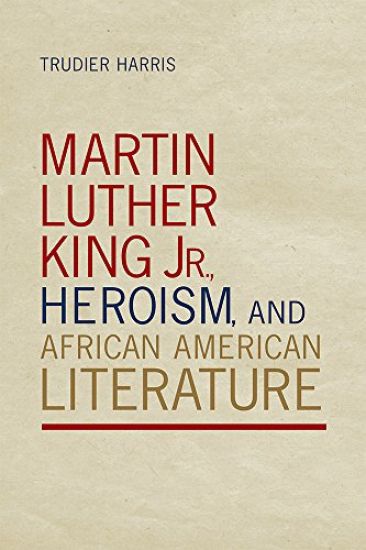
Examines how representations of Martin Luther King Jr.’s character and persona in works of African American literature have evolved and reflect the changing values and mores of African American culture African American writers have incorporated Martin Luther King Jr. into their work since he rose to prominence in the mid-1950s. Martin Luther King Jr., Heroism, and African American Literature is a study by award-winning author Trudier Harris of King’s character and persona as captured and reflected in works of African American literature continue to evolve. One of the most revered figures in American history, King stands above most as a hero. His heroism, argues Harris, is informed by African American folk cultural perceptions of heroes. Brer Rabbit, John the Slave, Stackolee, and Railroad Bill—folk heroes all—provide a folk lens through which to view King in contemporary literature. Ambiguities and issues of morality that surround trickster figures also surround King. Nonconformist traits that define Stackolee and Railroad Bill also inform King’s life and literary portraits. Defiance of the law, uses of indirection, moral lapses, and bad habits are as much a part of the folk-transmitted biography of King as they are a part of writers’ depictions of him in literary texts. Harris first demonstrates that during the Black Arts Movement of the 1960s, when writers such as Nikki Giovanni, Sonia Sanchez, and LeRoi Jones (Amiri Baraka) were rising stars in African American poetry, King’s philosophy of nonviolence was out of step with prevailing notions of militancy (Black Power), and their literature reflected that division. In the quieter times of the 1970s and 1980s and into the twenty-first century, however, treatments of King and his philosophy in African American literature changed. Writers who initially rejected him and nonviolence became ardent admirers and boosters, particularly in the years following his assassination. By the 1980s, many writers skeptical about King had reevaluated him and began to address him as a fallen hero. To the most recent generation of writers, such as Katori Hall, King is fair game for literary creation, no matter what those portrayals may reveal, to a point where King has become simply another source of reference for creativity. Collectively these writers, among many others, illustrate that Martin Luther King Jr. provides one of the strongest influences upon the creative worlds of multiple generations of African American writers of varying political and social persuasions.
Depictions of Home in African American Literature

Depictions of Home in African American Literature

Trudier Harris

BLOOMSBURY PUBLISHING PLC
2021
sidottu
In Depictions of Home in African American Literature, Trudier Harris analyzes fictional homespaces in African American literature from those set in the time of slavery to modern urban configurations of the homespace. She argues that African American writers often inadvertently create and follow a tradition of portraying dysfunctional and physically or emotionally violent homespaces. Harris explores the roles race and religion play in the creation of homespaces and how geography, space, and character all influence these spaces. Although many characters in African American literature crave safe, happy homespaces and frequently carry such images with them through their mental or physical migrations, few characters experience the formation of healthy homespaces by the end of their journeys. Harris studies the historical, cultural, and literary portrayals of the home in works from well-known authors such as Richard Wright, James Baldwin, Toni Morrison, and August Wilson as well as lesser-studied authors such as Daniel Black, A.J. Verdelle, Margaret Walker, and Dorothy West.
The Power of the Porch

The Power of the Porch

Trudier Harris

University of Georgia Press
2019
pokkari
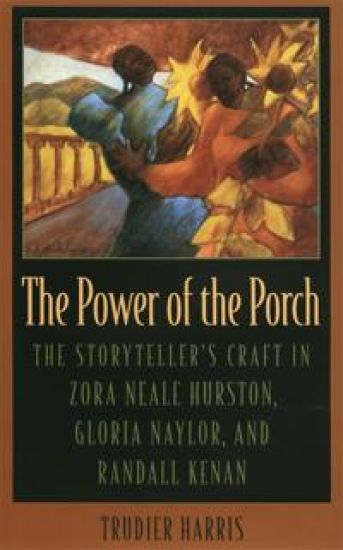
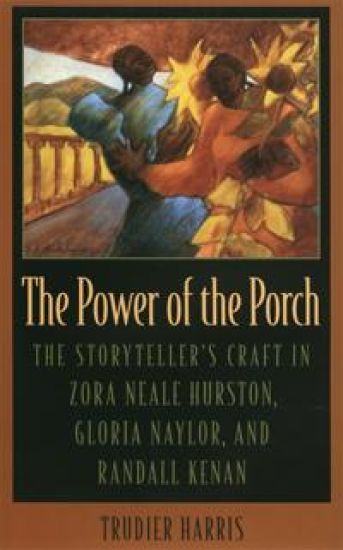
Southern literature is often celebrated for its "told," rather than "written," qualities. Drawing on her own experiences of front-porch storytelling among family, friends, and neighbors, Trudier Harris looks across the generations of twentieth-century southern writers to focus on three African Americans who possess the "power of the porch."In ways that are highly individual, says Harris, yet still within a shared oral tradition, Zora Neale Hurston, Gloria Naylor, and Randall Kenan skillfully use storytelling techniques to define their audiences, reach out and draw them in, and fill them with anticipation. Considering how such dynamics come into play in Hurston's Mules and Men, Naylor's Mama Day, and Kenan's Let the Dead Bury Their Dead, Harris shows how the "power of the porch" resides in readers as well, who, in giving themselves over to a story, confer it on the writer.Against this background of give and take, anticipation and fulfillment, Harris considers Zora Neale Hurston's special challenges as a black woman writer in the thirties, and how her various roles as an anthropologist, folklorist, and novelist intermingle in her work. In Gloria Naylor's writing, Harris finds particularly satisfying themes and characters. A New York native, Naylor came to a knowledge of the South through her parents and during her stay on the Sea Islands while she wrote Mama Day. A southerner by birth, Randall Kenan is particularly adept in getting his readers to accept aspects of African American culture that their rational minds might have wanted to reject. Although Kenan is set apart from Hurston and Naylor by his alliances with a new generation of writers intent upon broaching certain taboo subjects (in his case gay life in small southern towns), Kenan's Time Creek is as rife with the otherworldly and the fantastic as Hurston's New Orleans and Naylor's Willow Springs.The back and forth, the presentation and response of porch sitters and porch watchers, says Harris, is a power wielded skillfully by the best black storytellers of the South. Through tales of Brer Rabbit, John and Ole Marster, dog ghosts and other revenants, they have established and perpetuated an oral tradition that in turn shapes both the creation and enjoyment of the written word.
Martin Luther King Jr., Heroism, and African American Literature

Martin Luther King Jr., Heroism, and African American Literature

Trudier Harris

The University of Alabama Press
2014
sidottu
African American writers have incorporated Martin Luther King Jr. into their work since he rose to prominence in the mid-1950s. Martin Luther King Jr., Heroism, and African American Literature is a study by award-winning author Trudier Harris of King’s character and persona as captured and reflected in works of African American literature continue to evolve.One of the most revered figures in American history, King stands above most as a hero. His heroism, argues Harris, is informed by African American folk cultural perceptions of heroes. Brer Rabbit, John the Slave, Stackolee, and Railroad Bill—folk heroes all—provide a folk lens through which to view King in contemporary literature. Ambiguities and issues of morality that surround trickster figures also surround King. Nonconformist traits that define Stackolee and Railroad Bill also inform King’s life and literary portraits. Defiance of the law, uses of indirection, moral lapses, and bad habits are as much a part of the folk-transmitted biography of King as they are a part of writers’ depictions of him in literary texts.Harris first demonstrates that during the Black Arts Movement of the 1960s, when writers such as Nikki Giovanni, Sonia Sanchez, and LeRoi Jones (Amiri Baraka) were rising stars in African American poetry, King’s philosophy of nonviolence was out of step with prevailing notions of militancy (Black Power), and their literature reflected that division.In the quieter times of the 1970s and 1980s and into the twenty-first century, however, treatments of King and his philosophy in African American literature changed. Writers who initially rejected him and nonviolence became ardent admirers and boosters, particularly in the years following his assassination. By the 1980s, many writers skeptical about King had reevaluated him and began to address him as a fallen hero. To the most recent generation of writers, such as Katori Hall, King is fair game for literary creation, no matter what those portrayals may reveal, to a point where King has become simply another source of reference for creativity.Collectively these writers, among many others, illustrate that Martin Luther King Jr. provides one of the strongest influences upon the creative worlds of multiple generations of African American writers of varying political and social persuasions.
The Scary Mason-Dixon Line

The Scary Mason-Dixon Line

Trudier Harris

Louisiana State University Press
2013
nidottu
New Yorker James Baldwin once declared that a black man can look at a map of the United States, contemplate the area south of the Mason-Dixon Line, and thus scare himself to death. In The Scary Mason-Dixon Line, renowned literary scholar Trudier Harris explores why black writers, whether born in Mississippi, New York, or elsewhere, have consistently both loved and hated the South. Harris explains that for these authors the South represents not so much a place or even a culture as a rite of passage. Not one of them can consider himself or herself a true African American writer without confronting the idea of the South in a decisive way. Harris considers native-born black southerners Raymond Andrews, Ernest J. Gaines, Edward P. Jones, Tayari Jones, Yusef Komunyakaa, Randall Kenan, and Phyllis Alesia Perry, and nonsouthern writers James Baldwin, Sherley Anne Williams, and Octavia E. Butler. The works Harris examines date from Baldwin's Blues for Mr. Charlie (1964) to Edward P. Jones's The Known World (2003). By including Komunyakaa's poems and Baldwin's play, as well as male and female authors, Harris demonstrates that the writers' preoccupation with the South cuts across lines of genre and gender. Whether their writings focus on slavery, migration from the South to the North, or violence on southern soil, and whether they celebrate the triumph of black southern heritage over repression or castigate the South for its treatment of blacks, these authors cannot escape the call of the South. Indeed, Harris asserts that creative engagement with the South represents a defining characteristic of African American writing. A singular work by one of the foremost literary scholars writing today, The Scary Mason-Dixon Line superbly demonstrates how history and memory continue to figure powerfully in African American literary creativity.
Summer Snow

Summer Snow

Trudier Harris

Beacon Press
2007
pokkari
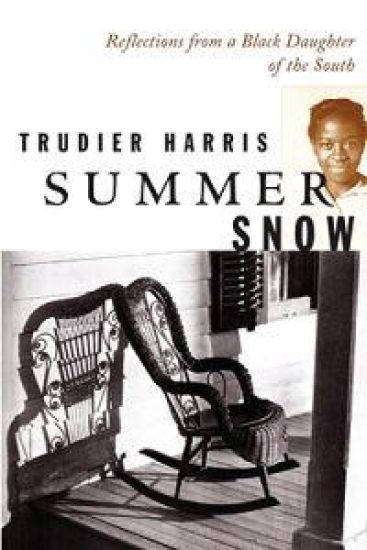
Trudier Harris will tell you that African Americans who consider themselves Southern are about as rare as summer snow. But Harris has always embraced the South, and in "Summer Snow" she explores her experience as a black Southerner and how it has shaped her into the writer and intellectual she has become.
South of Tradition

South of Tradition

Trudier Harris

University of Georgia Press
2002
sidottu
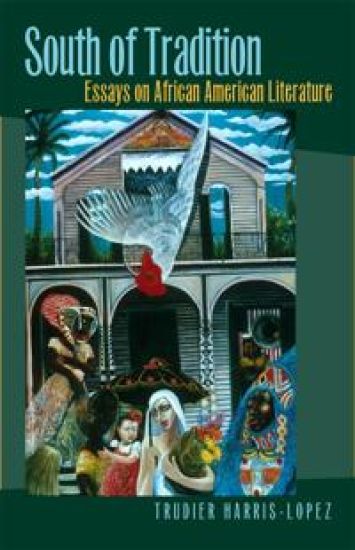
With characteristic originality and insight, Trudier Harris-Lopez offers a new and challenging approach to the work of African American writers in these twelve previously unpublished essays. Collectively, the essays show the vibrancy of African American literary creation across several decades of the twentieth century. But Harris-Lopez's readings of the various texts deliberately diverge from traditional ways of viewing traditional topics.South of Tradition focuses not only on well-known writers such as Zora Neale Hurston, Ralph Ellison, James Baldwin, and Richard Wright, but also on up-and-coming writers such as Randall Kenan and less-known writers such as Brent Wade and Henry Dumas. Harris-Lopez addresses themes of sexual and racial identity, reconceptualizations of and transcendence of Christianity, analyses of African American folk and cultural traditions, and issues of racial justice. Many of her subjects argue that geography shapes identity, whether that geography is the European territory many blacks escaped to from the oppressive South, or the South itself, where generations of African Americans have had to come to grips with their relationship to the land and its history. For Harris-Lopez, "south of tradition" refers both to geography and to readings of texts that are not in keeping with expected responses to the works. She explains her point of departure for the essays as "a slant, an angle, or a jolt below the line of what would be considered the norm for usual responses to African American literature."The scope of Harris-Lopez's work is tremendous. From her coverage of noncanonical writers to her analysis of humor in the best-selling The Color Purple, she provides essential material that should inform all future readings of African American literature.
The Power of the Porch

The Power of the Porch

Trudier Harris

University of Georgia Press
1997
sidottu
Southern literature is often celebrated for its "told," rather than "written," qualities. Drawing on her own experiences of front-porch storytelling among family, friends, and neighbors, Trudier Harris looks across the generations of twentieth-century southern writers to focus on three African Americans who possess the "power of the porch."In ways that are highly individual, says Harris, yet still within a shared oral tradition, Zora Neale Hurston, Gloria Naylor, and Randall Kenan skillfully use storytelling techniques to define their audiences, reach out and draw them in, and fill them with anticipation. Considering how such dynamics come into play in Hurston's Mules and Men, Naylor's Mama Day, and Kenan's Let the Dead Bury Their Dead, Harris shows how the "power of the porch" resides in readers as well, who, in giving themselves over to a story, confer it on the writer.Against this background of give and take, anticipation and fulfillment, Harris considers Zora Neale Hurston's special challenges as a black woman writer in the thirties, and how her various roles as an anthropologist, folklorist, and novelist intermingle in her work. In Gloria Naylor's writing, Harris finds particularly satisfying themes and characters. A New York native, Naylor came to a knowledge of the South through her parents and during her stay on the Sea Islands while she wrote Mama Day. A southerner by birth, Randall Kenan is particularly adept in getting his readers to accept aspects of African American culture that their rational minds might have wanted to reject. Although Kenan is set apart from Hurston and Naylor by his alliances with a new generation of writers intent upon broaching certain taboo subjects (in his case gay life in small southern towns), Kenan's Time Creek is as rife with the otherworldly and the fantastic as Hurston's New Orleans and Naylor's Willow Springs.The back and forth, the presentation and response of porch sitters and porch watchers, says Harris, is a power wielded skillfully by the best black storytellers of the South. Through tales of Brer Rabbit, John and Ole Marster, dog ghosts and other revenants, they have established and perpetuated an oral tradition that in turn shapes both the creation and enjoyment of the written word.
Fiction and Folklore

Fiction and Folklore

Trudier Harris

University of Tennessee Press
1993
nidottu
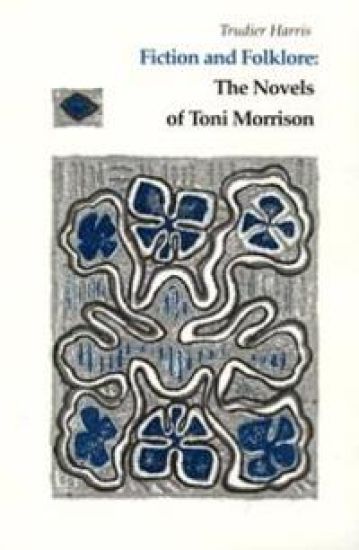
Best-selling novelist Toni Morrison has published five major works: Beloved (which won a Pulitzer Prize in 1988), Tar Baby, Song of Solomon, Sula, and The Bluest Eye. In this provocative study of Morrison's novels, Trudier Harris blends fictive and folkloric approaches to illuminate the depth and complexity of the African-American literary heritage. Morrison stands in a long line of black writers who have grounded their characters, themes, and structures in African-American folk traditions. Typically, students of such grounding have proceeded in two steps--first identifying items of folklore and locating them in previous collections, then interpreting how the items function in the literary text. Thus critics have viewed folklore as merely grafted onto the -real- literature. While Morrison joins her literary predecessors in drawing on folk materials, her -literary- folklore restructures and adapts traditional patterns so creatively that scholars now must reconceptualize the relationship between folklore and literature. Harris identifies Morrison's primary folkloric strategy as reversal--a process that creates an alternative universe where the antithetical is the norm and the incredible is taken for granted. Thus Morrison succeeds in creating worlds where the line between history and fiction, legend and fact, is permanently blurred. Furthermore, in replicating the processes of folk culture, Morrison encourages readers to participate in the creative process itself. The Author: Trudier Harris is J. Carlyle Sitterson Professor of English and Chair of the Curriculum in African and Afro-American Studies at the University of North Carolina at Chapel Hill.
Exorcising Blackness

Exorcising Blackness

Trudier Harris

Indiana University Press
1984
sidottu
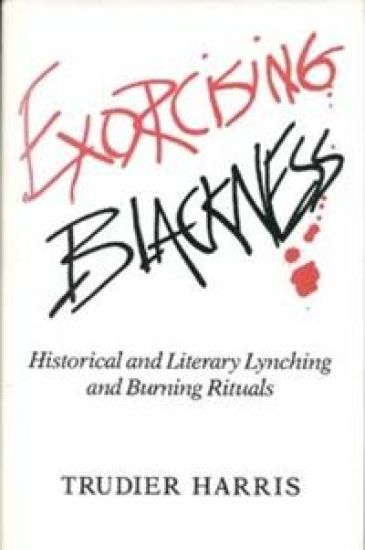
By lynching, burning, castrating, raping, and mutilating black people, contends Trudier Harris, white Americans were perfomring a rite of exorcism designed to eradicate the "black beast" from their midst, or, at the very least, to render him powerless and emasculated. Black writers have graphically portrayed such tragic incidents in their writings. In doing so, they seem to be acting out a communal role—a perpetuation of an oral tradition bent on the survival of the race. Exorcising Blackness demonstrates that the closeness and intensity of black people's historical experiences sometimes overshadows, frequently infuses and enhances, and definitely makes richer in texture the art of black writers. By reviewing the historical and literary interconnections of the rituals of exorcism, Harris opens up the hidden psyche—the soul—of black American writers.