Kirjojen hintavertailu. Mukana 12 657 676 kirjaa ja 12 kauppaa.

Kirjailija

Tshilidzi Marwala

Kirjat ja teokset yhdessä paikassa: 44 kirjaa, julkaisuja vuosilta 2009-2026, suosituimpien joukossa Artificial Intelligence and the Law. Vertaile teosten hintoja ja tarkista saatavuus suomalaisista kirjakaupoista.

44 kirjaa

Kirjojen julkaisuhaarukka 2009-2026.

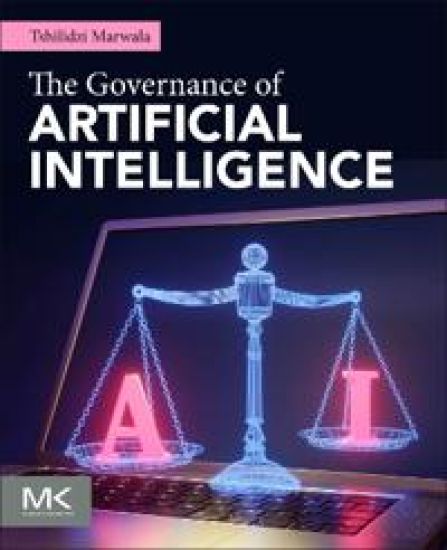
The Governance of Artificial Intelligence

The Governance of Artificial Intelligence

Tshilidzi Marwala

ELSEVIER SCIENCE TECHNOLOGY
2026
nidottu
The Governance of Artificial Intelligence stands out as a comprehensive guide that unifies the essential dimensions of artificial intelligence—values, data, algorithms, computing, applications, and governance—within a single volume. The book offers expert guidance on each of these topics, blending engineering insight with governance strategies. It proposes a holistic approach to AI governance, emphasizing the importance of proactive and balanced policies that foster innovation while safeguarding ethical standards. Prioritizing social welfare and human rights, this work advocates for maximizing AI’s benefits and minimizing its risks through effective, integrative governance structures. Moreover, the book highlights the need for a versatile governance model that draws from various disciplines and champions diversity. It stresses the importance of leveraging existing regulatory frameworks, ethical guidelines, and industry standards, while encouraging active collaboration among governments, businesses, civil society, and academia. Structured into six sections and 33 chapters, the book systematically explores core principles, data concerns, algorithms, computing, practical applications, and governance challenges, making it a crucial resource for understanding the evolving landscape of AI oversight.
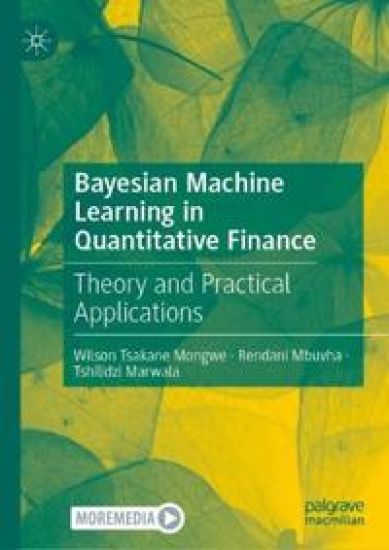
Bayesian Machine Learning in Quantitative Finance

Bayesian Machine Learning in Quantitative Finance

Wilson Tsakane Mongwe; Rendani Mbuvha; Tshilidzi Marwala

Springer International Publishing AG
2025
sidottu
This book offers a comprehensive discussion of the Bayesian inference framework and demonstrates why this probabilistic approach is ideal for tackling the various modelling problems within quantitative finance. It demonstrates how advanced Bayesian machine learning techniques can be applied within financial engineering, investment portfolio management, insurance, municipal finance management as well as banking. The book covers a broad range of modelling approaches, including Bayesian neural networks, Gaussian processes and Markov Chain Monte Carlo methods. It also discusses the utility of Bayesian inference in quantitative finance and discusses future research goals in the applications of Bayesian machine learning in quantitative finance. Chapters are rooted in the theory of quantitative finance and machine learning while also outlining a range of practical considerations for implementing Bayesian techniques into real-world quantitative finance problems. This book is ideal for graduate researchers and practitioners at the intersection of machine learning and quantitative finance, as well as those working in computational statistics and computer science more broadly.
Artificial Intelligence and the Law

Artificial Intelligence and the Law

Tshilidzi Marwala; Letlhokwa George Mpedi

PALGRAVE MACMILLAN
2025
nidottu
This textbook offers a starting point for the education of attorneys and other legal professionals about the potential impact of artificial intelligence (AI) on the law, as well as a forum for discussing artificial intelligence's legal and ethical concerns. Intended for classroom use, this book will help students, legal professionals and policymakers alike. AI is swiftly transforming the world, including the legal system. Legal applications to areas such as ethics, human rights, climate change, labor law, health, social protection, inequality, lethal autonomous weapons, the criminal justice system and autonomous vehicles, contract drafting, legal investigation, criminal analysis and evidence investigation, utilize AI. As AI becomes more sophisticated, its impact on the law will likely increase.
Enterprise Risk Management in the Fourth Industrial Revolution

Enterprise Risk Management in the Fourth Industrial Revolution

Tankiso Moloi; Tshilidzi Marwala

SPRINGER VERLAG, SINGAPORE
2024
nidottu
This book examines enterprise risk management in the fourth industrial revolution, and the technologies associated with this phenomenon. In doing so, it seeks to understand these technologies' potential capabilities, and how they could be utilised in the enterprise risk management setting. With this, the book first details the fourth industrial revolution (4IR), and discusses the concept of enterprise risk management, the stakeholders involved, the typical information stakeholders will be responsible for, and their role in integrating risk management information. The book then examines the information processing steps and the new capabilities in the enterprise risk setting necessitated by the capabilities of the 4IR technologies to harness, analyse and integrate information for decision-making and understanding internal and external contexts. In the final chapter, the book conceptualises enterprise risk management in the 4IR, and maps out potential role changes in this space.
The Balancing Problem in the Governance of Artificial Intelligence
This book examines the balancing problems in the governance of artificial intelligence (AI). AI is transforming the world at an unprecedented pace, which is revolutionary and presents significant challenges. Nevertheless, AI's complex balance dilemma necessitates careful governance as it transforms businesses, economies, and society. Fundamental issues discussed in this book include the complexities of AI's dual nature, the challenges of aligning memorizing with thinking, and the trade-offs between opportunity seeking and risk aversion. This book explores the complex interplay between AI security and transparency, the technical decision between CPUs and GPUs, and the expanding potential of quantum computing. Nevertheless, the challenge of maintaining balance is not resolved by technological advancements. It encompasses the global arena, where the forces of globalization and localization must be reconciled, and the governance sphere, where self-regulation must coexist with government control. Comprising cutting-edge research, real-world examples, and futuristic perspectives, this book guides researchers, practitioners, politicians, entrepreneurs, and leaders in navigating AI's future. The reader will learn how to capitalize on the potential of AI while avoiding its weaknesses, ensuring that this disruptive technology benefits society.
Artificial Intelligence, Game Theory and Mechanism Design in Politics
This book explores how AI and mechanism design can provide a new framework for international politics. The international political system is all manners in which countries, governments and people relate. Mechanism design in international politics relates to identifying rules that define relationships between people and countries that achieve a particular outcome, e.g., peace or more trade or democracy or economic development. Artificial intelligence is technique of making machines intelligent. This book explores mechanism design and artificial intelligence in international politics and applies these technologies to politics, economy and society. This book will be of interest to scholars of international relations, politics, sustainable development, and artificial intelligence.
Mechanism Design, Behavioral Science and Artificial Intelligence in International Relations
Recent advances in AI and Mechanism Design provide a vital tool for solving collective action problems, common in international relations. By using AI to optimize mechanisms for cooperation and coordination, we can better address issues such as climate change, trade, and security. Mechanism Design, Behavioral Science and Artificial Intelligence in International Relations shows readers how the intersection of Mechanism Design and Artificial Intelligence is revolutionizing the way we approach international relations. By using AI to optimize mechanisms, we can design better institutions, policies, and agreements that are more effective and efficient. Dr. Tshilidzi Marwala, United Nations University Rector and UN Under-Secretary General, presents the essential technologies used in Game Theory, Mechanism Design and AI and applies these to significant global issues such as interstate conflict, cybersecurity, and energy. International relations are a complex field, with many different actors and interests in play. By incorporating AI into our analysis and decision-making processes, we can better understand and predict the behavior of multiple actors and design mechanisms that take these behaviors into account, thereby producing more desirable and creative interdisciplinary approaches. The book presents real-world applications of these rapidly evolving technologies in crucial research fields such as Interstate Conflict, International Trade, Climate Change, Water management, Energy, cybersecurity, and global finance.
Artificial Intelligence and the Law

Artificial Intelligence and the Law

Tshilidzi Marwala; Letlhokwa George Mpedi

SPRINGER VERLAG, SINGAPORE
2024
sidottu
This textbook offers a starting point for the education of attorneys and other legal professionals about the potential impact of artificial intelligence (AI) on the law, as well as a forum for discussing artificial intelligence's legal and ethical concerns. Intended for classroom use, this book will help students, legal professionals and policymakers alike. AI is swiftly transforming the world, including the legal system. Legal applications to areas such as ethics, human rights, climate change, labor law, health, social protection, inequality, lethal autonomous weapons, the criminal justice system and autonomous vehicles, contract drafting, legal investigation, criminal analysis and evidence investigation, utilize AI. As AI becomes more sophisticated, its impact on the law will likely increase.
Enterprise Risk Management in the Fourth Industrial Revolution

Enterprise Risk Management in the Fourth Industrial Revolution

Tankiso Moloi; Tshilidzi Marwala

SPRINGER VERLAG, SINGAPORE
2023
sidottu
This book examines enterprise risk management in the fourth industrial revolution, and the technologies associated with this phenomenon. In doing so, it seeks to understand these technologies' potential capabilities, and how they could be utilised in the enterprise risk management setting. With this, the book first details the fourth industrial revolution (4IR), and discusses the concept of enterprise risk management, the stakeholders involved, the typical information stakeholders will be responsible for, and their role in integrating risk management information. The book then examines the information processing steps and the new capabilities in the enterprise risk setting necessitated by the capabilities of the 4IR technologies to harness, analyse and integrate information for decision-making and understanding internal and external contexts. In the final chapter, the book conceptualises enterprise risk management in the 4IR, and maps out potential role changes in this space.
Artificial Intelligence, Game Theory and Mechanism Design in Politics
This book explores how AI and mechanism design can provide a new framework for international politics. The international political system is all manners in which countries, governments and people relate. Mechanism design in international politics relates to identifying rules that define relationships between people and countries that achieve a particular outcome, e.g., peace or more trade or democracy or economic development. Artificial intelligence is technique of making machines intelligent. This book explores mechanism design and artificial intelligence in international politics and applies these technologies to politics, economy and society. This book will be of interest to scholars of international relations, politics, sustainable development, and artificial intelligence.
Hamiltonian Monte Carlo Methods in Machine Learning

Hamiltonian Monte Carlo Methods in Machine Learning

Tshilidzi Marwala; Rendani Mbuvha; Wilson Tsakane Mongwe

ELSEVIER SCIENCE PUBLISHING CO INC
2023
nidottu
Hamiltonian Monte Carlo Methods in Machine Learning introduces methods for optimal tuning of HMC parameters, along with an introduction of Shadow and Non-canonical HMC methods with improvements and speedup. Lastly, the authors address the critical issues of variance reduction for parameter estimates of numerous HMC based samplers. The book offers a comprehensive introduction to Hamiltonian Monte Carlo methods and provides a cutting-edge exposition of the current pathologies of HMC-based methods in both tuning, scaling and sampling complex real-world posteriors. These are mainly in the scaling of inference (e.g., Deep Neural Networks), tuning of performance-sensitive sampling parameters and high sample autocorrelation. Other sections provide numerous solutions to potential pitfalls, presenting advanced HMC methods with applications in renewable energy, finance and image classification for biomedical applications. Readers will get acquainted with both HMC sampling theory and algorithm implementation.
Artificial Intelligence and International Relations Theories

Artificial Intelligence and International Relations Theories

Bhaso Ndzendze; Tshilidzi Marwala

SPRINGER VERLAG, SINGAPORE
2023
sidottu
This book discusses the impact of artificial intelligence (AI) on international relations theories. As a phenomenon, AI is everywhere in the real world and growing. Through its transformative nature, it is simultaneously simplifying and complicating processes. Importantly, it also overlooks and “misunderstands”. Globally, leaders, diplomats and policymakers have had to familiarise themselves and grapple with concepts such as algorithms, automation, machine learning, and neural networks. These and other features of modern AI are redefining our world, and with it, the long-held assumptions scholars of IR have relied on for their theoretical accounts of our universe. The book takes a historic, contemporary and long-term approach to explain and anticipate AI’s impact on IR – and vice versa – through a systematic treatment of 9 theoretical paradigms and schools of thought including realism, liberalism, feminism, postcolonial theory and green theory. This book draws on original datasets, innovative empirical case studies and in-depth engagement with the core claims of the traditional and critical theoretical lenses to reignite debates on the nature and patterns of power, ethics, conflict, and systems among states and non-state actors.
Artificial Intelligence and the Changing Nature of Corporations

Artificial Intelligence and the Changing Nature of Corporations

Tankiso Moloi; Tshilidzi Marwala

Springer Nature Switzerland AG
2022
nidottu
This book explains how various forms of artificial intelligence, namely machine learning, natural language processing, and robotic process automation, could provide a source of competitive advantage to firms deploying them compared to those firms that would not have deployed these technologies. The advantages of machine learning, natural language processing, and robotic process automation in strategy formulation and strategy implementation are explored. The book illustrates the potential sources of advantage for the strategy formulation and strategy implementation processes, which can be derived from the deployment of each form of artificial intelligence.
On Rationality, Artificial Intelligence And Economics

On Rationality, Artificial Intelligence And Economics

Daniel Muller; Fernando Buarque; Tshilidzi Marwala

WORLD SCIENTIFIC PUBLISHING CO PTE LTD
2022
sidottu
The world we live in presents plenty of tricky, impactful, and hard-tomake decisions to be taken. Sometimes the available options are ample, at other times they are apparently binary, either way, they often confront us with dilemmas, paradoxes, and even denial of values.In the dawn of the age of intelligence, when robots are gradually taking over most decision-making from humans, this book sheds a bit of light on decision rationale. It delves into the limits of these decision processes (for both humans and machines), and it does so by providing a new perspective that is somehow opposed to orthodox economics. All Economics reflections in this book are underlined and linked to Artificial Intelligence.The authors hope that this comprehensive and modern analysis, firmly grounded in the opinions of various groundbreaking Nobel laureate economists, may be helpful to a broad audience interested in how decisions may lead us all to flourishing societies. That is, societies in which economic blunders (caused by over simplification of problems and super estimation of tools) are reduced substantially.
Artificial Intelligence and the Changing Nature of Corporations

Artificial Intelligence and the Changing Nature of Corporations

Tankiso Moloi; Tshilidzi Marwala

Springer Nature Switzerland AG
2021
sidottu
This book explains how various forms of artificial intelligence, namely machine learning, natural language processing, and robotic process automation, could provide a source of competitive advantage to firms deploying them compared to those firms that would not have deployed these technologies. The advantages of machine learning, natural language processing, and robotic process automation in strategy formulation and strategy implementation are explored. The book illustrates the potential sources of advantage for the strategy formulation and strategy implementation processes, which can be derived from the deployment of each form of artificial intelligence.
Artificial Intelligence And Emerging Technologies In International Relations

Artificial Intelligence And Emerging Technologies In International Relations

Bhaso Ndzendze; Tshilidzi Marwala

World Scientific Publishing Co Pte Ltd
2021
sidottu
Artificial Intelligence and Emerging Technologies in International Relations explores the geopolitics between technology and international relations. Through a focus on war, trade, investment flows, diplomacy, regional integration and development cooperation, this book takes a holistic perspective to examine the origins of technology, analysing its current manifestations in the contemporary world. The authors present the possible future roles of artificial intelligence (AI) and other emerging technologies (including blockchain, 3D printing, 5G connectivity and the Internet of Things) in the context of global arena.This book is essential reading to all who seek to understand the reality of the inequitable distribution of these game-changing technologies that are shaping the world. Research questions as well as some policy options for the developing world are explored and the authors make the case for cooperation by the international community as we enter the fourth industrial revolution.
Artificial Intelligence in Economics and Finance Theories

Artificial Intelligence in Economics and Finance Theories

Tankiso Moloi; Tshilidzi Marwala

Springer Nature Switzerland AG
2021
nidottu
As Artificial Intelligence (AI) seizes all aspects of human life, there is a fundamental shift in the way in which humans are thinking of and doing things. Ordinarily, humans have relied on economics and finance theories to make sense of, and predict concepts such as comparative advantage, long run economic growth, lack or distortion of information and failures, role of labour as a factor of production and the decision making process for the purpose of allocating resources among other theories. Of interest though is that literature has not attempted to utilize these advances in technology in order to modernize economic and finance theories that are fundamental in the decision making process for the purpose of allocating scarce resources among other things. With the simulated intelligence in machines, which allows machines to act like humans and to some extent even anticipate events better than humans, thanks to their ability to handle massive data sets, this book will use artificialintelligence to explain what these economic and finance theories mean in the context of the agent wanting to make a decision. The main feature of finance and economic theories is that they try to eliminate the effects of uncertainties by attempting to bring the future to the present. The fundamentals of this statement is deeply rooted in risk and risk management. In behavioural sciences, economics as a discipline has always provided a well-established foundation for understanding uncertainties and what this means for decision making. Finance and economics have done this through different models which attempt to predict the future. On its part, risk management attempts to hedge or mitigate these uncertainties in order for “the planner” to reach the favourable outcome. This book focuses on how AI is to redefine certain important economic and financial theories that are specifically used for the purpose of eliminating uncertainties so as to allow agents to make informed decisions. In effect, certain aspects of finance and economic theories cannot be understood in their entirety without the incorporation of AI.
Rational Machines and Artificial Intelligence

Rational Machines and Artificial Intelligence

Tshilidzi Marwala

Academic Press Inc
2021
nidottu
Intelligent machines are populating our social, economic and political spaces. These intelligent machines are powered by Artificial Intelligence technologies such as deep learning. They are used in decision making. One element of decision making is the issue of rationality. Regulations such as the General Data Protection Regulation (GDPR) require that decisions that are made by these intelligent machines are explainable. Rational Machines and Artificial Intelligence proposes that explainable decisions are good but the explanation must be rational to prevent these decisions from being challenged. Noted author Tshilidzi Marwala studies the concept of machine rationality and compares this to the rationality bounds prescribed by Nobel Laureate Herbert Simon and rationality bounds derived from the work of Nobel Laureates Richard Thaler and Daniel Kahneman. Rational Machines and Artificial Intelligence describes why machine rationality is flexibly bounded due to advances in technology. This effectively means that optimally designed machines are more rational than human beings. Readers will also learn whether machine rationality can be quantified and identify how this can be achieved. Furthermore, the author discusses whether machine rationality is subjective. Finally, the author examines whether a population of intelligent machines collectively make more rational decisions than individual machines. Examples in biomedical engineering, social sciences and the financial sectors are used to illustrate these concepts.
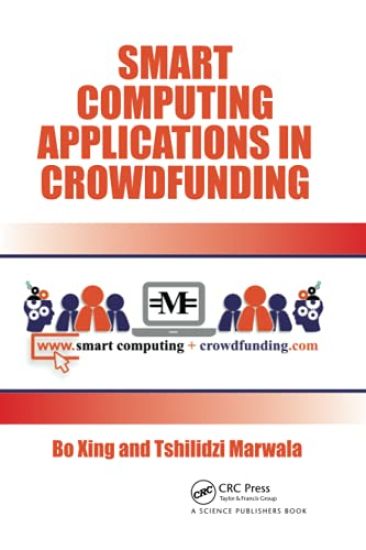
Smart Computing Applications in Crowdfunding

Smart Computing Applications in Crowdfunding

Bo Xing; Tshilidzi Marwala

CRC Press
2021
nidottu
The book focuses on smart computing for crowdfunding usage, looking at the crowdfunding landscape, e.g., reward-, donation-, equity-, P2P-based and the crowdfunding ecosystem, e.g., regulator, asker, backer, investor, and operator. The increased complexity of fund raising scenario, driven by the broad economic environment as well as the need for using alternative funding sources, has sparked research in smart computing techniques. Covering a wide range of detailed topics, the authors of this book offer an outstanding overview of the current state of the art; providing deep insights into smart computing methods, tools, and their applications in crowdfunding; exploring the importance of smart analysis, prediction, and decision-making within the fintech industry. This book is intended to be an authoritative and valuable resource for professional practitioners and researchers alike, as well as finance engineering, and computer science students who are interested in crowdfunding and other emerging fintech topics.
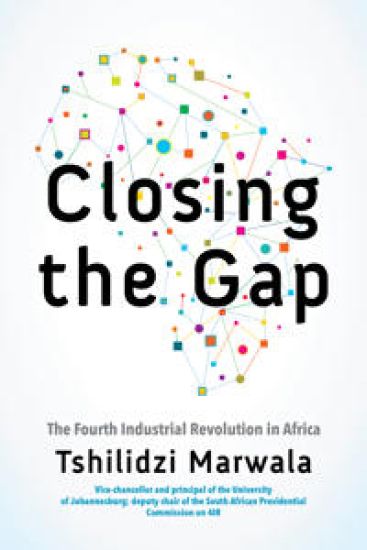
Closing the Gap

Closing the Gap

Tshilidzi Marwala

Pan Macmillan
2020
pokkari
Closing the Gap is an accessible overview of the fourth industrial revolution (4IR) and the impact it is set to have on various sectors in South Africa and Africa. It explores the previous industrial revolutions that have led up to this point and outlines what South Africa’s position has been through each one. With a focus on artificial intelligence as a core concept in understanding the 4IR, this book uses familiar concepts to explain artificial intelligence, how it works and how it can be used in banking, mining, medicine and many other fields. Written from an African perspective, Closing the Gap addresses the challenges and fears around the 4IR by pointing to the opportunities presented by new technologies and outlining some of the challenges and successes to date.Contents overview Introduction1 Understanding the fourth industrial revolution2 Automation3 South Africa’s 4IR strategy Part 1: IndustryPart 2: DataPart 3: BusinessPart 4: Society Conclusion