Kirjojen hintavertailu. Mukana 12 390 323 kirjaa ja 12 kauppaa.

Kirjailija

Tuomas Forsberg

Kirjat ja teokset yhdessä paikassa: 10 kirjaa, julkaisuja vuosilta 2006-2026, suosituimpien joukossa Debating the War in Ukraine. Vertaile teosten hintoja ja tarkista saatavuus suomalaisista kirjakaupoista.

10 kirjaa

Kirjojen julkaisuhaarukka 2006-2026.

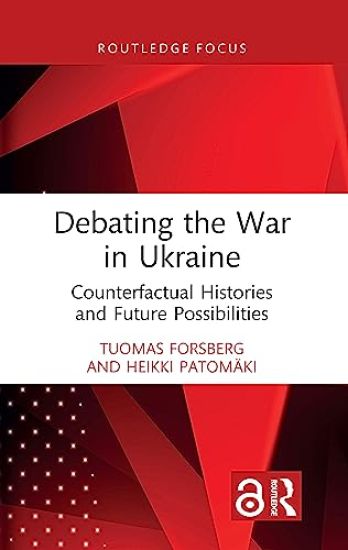
Debating the War in Ukraine

Debating the War in Ukraine

Tuomas Forsberg; Heikki Patomäki

TAYLOR FRANCIS LTD
2024
nidottu
Debating the War in Ukraine discusses whether the war could have been avoided, and, if so, how? In this dialogical book, the authors discuss nodal points of history in terms of counterfactuals and contrastive explanations, concluding by considering future possibilities.They start in the 1990s where several causal elements of the war originate involving Russia’s economic developments and Europe’s security arrangements. Moving on to the next decade, they focus on the Iraq war, colour revolutions, and NATO’s 2008 announcement that Ukraine and Georgia will become members. Finally, they explore the past decade including the Ukrainian crisis of 2013–2014, the annexation of Crimea, and the consecutive war in east Ukraine. The current war can also be seen as a continuum of that war. The authors agree that NATO’s 2008 announcement on Ukraine’s and Georgia’s NATO membership was an unnecessary provocation, and that the implementation of the Minsk agreement could have prevented the current war, but otherwise their analysis of counterfactual possibilities differs, especially when it comes to the action-possibilities of the West (including diverse actors). These differences are not just dependent on different readings of relevant evidence but, importantly, stem from dissimilar contrast spaces and divergent theoretical understandings of the nature of states and mechanisms of international relations and political economy.This short, highly accessible book will be of great interest to all those studying and working in international relations and its various subfields such as peace and conflict studies and security studies, as well as all those wishing to understand more about the backdrop of Russia’s invasion of Ukraine in February 2022.The Open Access version of this book, available at http://www.taylorfrancis.com, has been made available under a Creative Commons Attribution-Non Commercial-No Derivatives (CC-BY-NC-ND) 4.0 license. The Open Access version of this book was funded by University of Helsinki Library.
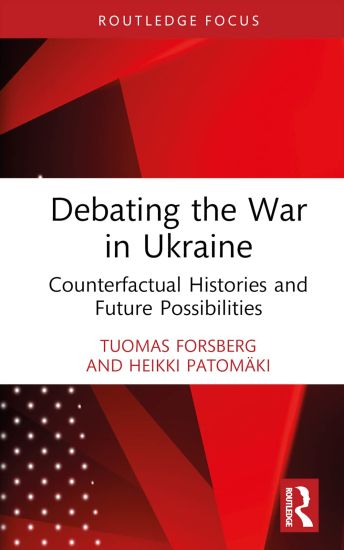
Debating the War in Ukraine

Debating the War in Ukraine

Tuomas Forsberg; Heikki Patomäki

TAYLOR FRANCIS LTD
2022
sidottu
Debating the War in Ukraine discusses whether the war could have been avoided, and, if so, how? In this dialogical book, the authors discuss nodal points of history in terms of counterfactuals and contrastive explanations, concluding by considering future possibilities.They start in the 1990s where several causal elements of the war originate involving Russia’s economic developments and Europe’s security arrangements. Moving on to the next decade, they focus on the Iraq war, colour revolutions, and NATO’s 2008 announcement that Ukraine and Georgia will become members. Finally, they explore the past decade including the Ukrainian crisis of 2013–2014, the annexation of Crimea, and the consecutive war in east Ukraine. The current war can also be seen as a continuum of that war. The authors agree that NATO’s 2008 announcement on Ukraine’s and Georgia’s NATO membership was an unnecessary provocation, and that the implementation of the Minsk agreement could have prevented the current war, but otherwise their analysis of counterfactual possibilities differs, especially when it comes to the action-possibilities of the West (including diverse actors). These differences are not just dependent on different readings of relevant evidence but, importantly, stem from dissimilar contrast spaces and divergent theoretical understandings of the nature of states and mechanisms of international relations and political economy.This short, highly accessible book will be of great interest to all those studying and working in international relations and its various subfields such as peace and conflict studies and security studies, as well as all those wishing to understand more about the backdrop of Russia’s invasion of Ukraine in February 2022.The Open Access version of this book, available at http://www.taylorfrancis.com, has been made available under a Creative Commons Attribution-Non Commercial-No Derivatives (CC-BY-NC-ND) 4.0 license. The Open Access version of this book was funded by University of Helsinki Library.
The European Union and Russia

The European Union and Russia

Tuomas Forsberg; Hiski Haukkala

Red Globe Press
2016
nidottu
This important text provides readers with a systematic and comprehensive overview of the historic and ever-evolving relationship between Russia and the European Union, and on that basis discusses what the future of relations could look like. The EU's policy towards Russia can be regarded as one of the toughest tests of the credibility of its external relations, and in examining the dynamics of the relationship, this book poses essential questions about the EU's ability to sustain itself as a meaningful entity in world politics. Written by two experts in the field, it analyses the political and institutional development of EU-Russia relations from three perspectives: European studies, Russian studies and International Relations, including Foreign Policy Analysis. The relationship between the European Union and Russia is of considerable importance to both partners, but whilst there have been many moments of co-operation between the two, tensions have never been far from the surface and the conflict over Ukraine brought it to a historical nadir. Both have taken steps to strengthen their relationship, but diplomatic stagnation and the challenge of furthering common economic, political, social, and environmental objectives have proved increasingly testing to relations over time. This important text provides readers with a systematic and comprehensive overview of the historic and ever-evolving relationship between Russia and the European Union, suitable for students at undergraduate and postgraduate levels in European Studies, Russian Studies and International Relations theory.
The European Union and Russia

The European Union and Russia

Tuomas Forsberg; Hiski Haukkala

Red Globe Press
2016
sidottu
This important text provides readers with a systematic and comprehensive overview of the historic and ever-evolving relationship between Russia and the European Union, and on that basis discusses what the future of relations could look like. The EU's policy towards Russia can be regarded as one of the toughest tests of the credibility of its external relations, and in examining the dynamics of the relationship, this book poses essential questions about the EU's ability to sustain itself as a meaningful entity in world politics. Written by two experts in the field, it analyses the political and institutional development of EU-Russia relations from three perspectives: European studies, Russian studies and International Relations, including Foreign Policy Analysis.The relationship between the European Union and Russia is of considerable importance to both partners, but whilst there have been many moments of co-operation between the two, tensions have never been far from the surface and the conflict over Ukraine brought it to a historical nadir. Both have taken steps to strengthen their relationship, but diplomatic stagnation and the challenge of furthering common economic, political, social, and environmental objectives have proved increasingly testing to relations over time.This important text provides readers with a systematic and comprehensive overview of the historic and ever-evolving relationship between Russia and the European Union, suitable for students at undergraduate and postgraduate levels in European Studies, Russian Studies and International Relations theory.
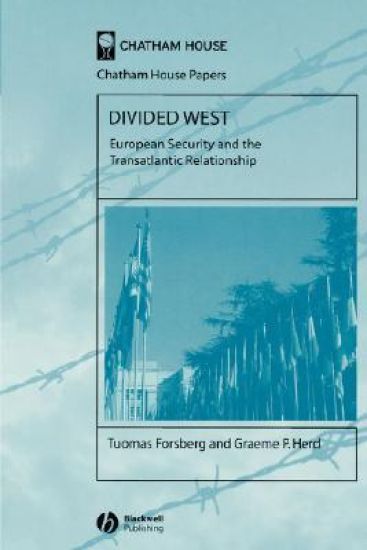
Divided West

Divided West

Tuomas Forsberg; Graeme Herd

Wiley-Blackwell (an imprint of John Wiley Sons Ltd)
2006
nidottu
This book analyses the genesis and process through which transatlantic strategic dissonance now defines a divided West. It contends that constructive strategic dissonance has the potential to best manage a complex and pressing global security agenda. Reflects on the bitter disputes that have crystallized across the Atlantic after 9/11 and the rise of terrorist, WMD and failed state threats. Structured around the concepts of ‘Atlantic’, ‘Core’, ‘New’ ‘Non-aligned’ and ‘Periphery’ Europe that have emerged in the wake of these disputes. Identifies the trends and factors that have driven and could further propel the Euro-Atlantic security community towards different futures. Analyses the security policy implications of each scenario for states within this region.
Divided West

Divided West

Tuomas Forsberg; Graeme Herd

Wiley-Blackwell (an imprint of John Wiley Sons Ltd)
2006
sidottu
This book analyses the genesis and process through which transatlantic strategic dissonance now defines a divided West. It contends that constructive strategic dissonance has the potential to best manage a complex and pressing global security agenda. Reflects on the bitter disputes that have crystallized across the Atlantic after 9/11 and the rise of terrorist, WMD and failed state threats. Structured around the concepts of ‘Atlantic’, ‘Core’, ‘New’ ‘Non-aligned’ and ‘Periphery’ Europe that have emerged in the wake of these disputes. Identifies the trends and factors that have driven and could further propel the Euro-Atlantic security community towards different futures. Analyses the security policy implications of each scenario for states within this region.
Östersjön : En geopolitisk historia

Östersjön : En geopolitisk historia

Tobias Boestad; Axel Boltenberg; Hugo Bromley; Christian Bueger; Boguslaw Dybas; Kjell Engelbrekt; Tuomas Forsberg; Kristian Gerner; Peter Haldén; Martin Hall; Mats Hallenberg; Kurt Villads Jensen; Jonas Kjellén; Peter Krönvik; Henrik Meinander; Justyna Wubs Mrozewicz; Morten Nordhagen Ottosen; Magnus Pettersson; Johan Rönnby; Brendan Simms; Veronika Slakaityte; Izabela Surwillo; Peteris Vanags; Rolf Fabricius Warming

Bokförlaget Stolpe
2026
sidottu
Östersjön är mer än bara ett innanhav – det är en historisk geopolitisk skådeplats. Från vikingatidens sjöfart till dagens Natodominerade område har detta bräckta hav varit en livsnerv för folk och länder i norra Europa. Östersjön har fungerat som en knutpunkt för ekonomiska och politiska relationer genom Hansans dominans under medeltiden, stormaktstidens strider mellan Sverige, Polen-Litauen och Ryssland, samt de dramatiska skiften som följde i spåren av Napoleonkrigen, de båda världskrigen och kalla kriget. Östersjön har även visat sig vara en plats för samarbete. Efter Sovjetunionens fall har regionen präglats av integration och tillväxt – en utveckling som nu utmanas av nya geopolitiska spänningar. Hur kan regionen komma att påverkas av energiflöden, klimatförändringar och militärstrategier? I denna omfattande antologi samlas bidrag av ledande forskare inom bland annat historia, statsvetenskap och internationella relationer för att kartlägga de drivande krafter som format Östersjöregionen från 1200-talet fram till i dag. Boken finns även i engelsk utgåva, The Baltic Sea - A Geopolitical History.
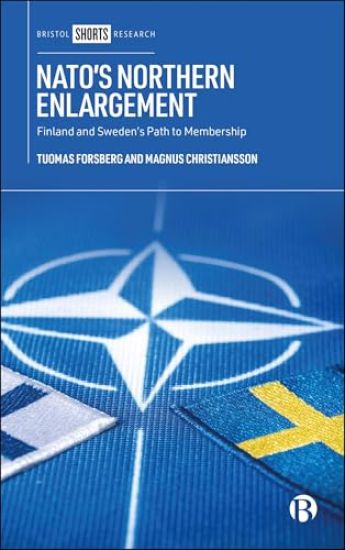
NATO’s Northern Enlargement

NATO’s Northern Enlargement

Tuomas Forsberg; Magnus Christiansson

Bristol University Press
2025
sidottu
Europe’s security environment was fundamentally altered by Russia’s invasion of Ukraine which gave fresh impetus to states to apply for NATO membership. This book, written by leading experts on European defence, analyses NATO’s northern expansion, detailing the unique dynamics that forged Finland and Sweden’s path to NATO membership. The book uses resources in Swedish, Finnish and English to offer a balanced study of both political and military aspects of NATO enlargement. Exploring the pressing issues that NATO will need to tackle, particularly in Northern Europe, the book considers the potential repercussions the newest round of NATO enlargement will have on European and global security.
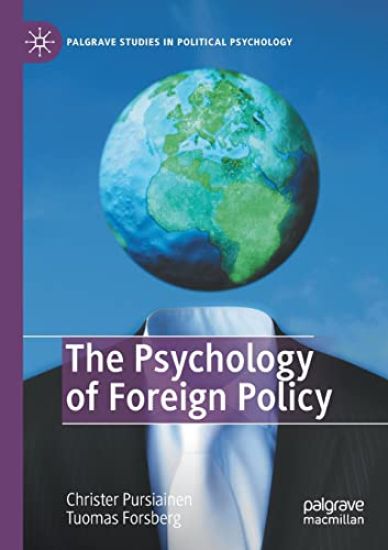
The Psychology of Foreign Policy

The Psychology of Foreign Policy

Christer Pursiainen; Tuomas Forsberg

Springer Nature Switzerland AG
2022
nidottu
This book focuses on foreign policy decision-making from the viewpoint of psychology. Psychology is always present in human decision-making, constituted by its structural determinants but also playing its own agency-level constitutive and causal roles, and therefore it should be taken into account in any analysis of foreign policy decisions. The book analyses a wide variety of prominent psychological approaches, such as bounded rationality, prospect theory, belief systems, cognitive biases, emotions, personality theories and trust to the study of foreign policy, identifying their achievements and added value as well as their limitations from a comparative perspective. Understanding how leaders in world politics act requires us to consider recent advances in neuroscience, psychology and behavioral economics. As a whole, the book aims at better integrating various psychological theories into the study of international relations and foreign policy analysis, as partial explanations themselves but also as facets of more comprehensive theories. It also discusses practical lessons that the psychological approaches offer since ignoring psychology can be costly: decision-makers need to be able reflect on their own decision-making process as well as the perspectives of the others. Paying attention to the psychological factors in international relations is necessary for better understanding the microfoundations upon which such agency is based.
The Psychology of Foreign Policy

The Psychology of Foreign Policy

Christer Pursiainen; Tuomas Forsberg

Springer Nature Switzerland AG
2021
sidottu
This book focuses on foreign policy decision-making from the viewpoint of psychology. Psychology is always present in human decision-making, constituted by its structural determinants but also playing its own agency-level constitutive and causal roles, and therefore it should be taken into account in any analysis of foreign policy decisions. The book analyses a wide variety of prominent psychological approaches, such as bounded rationality, prospect theory, belief systems, cognitive biases, emotions, personality theories and trust to the study of foreign policy, identifying their achievements and added value as well as their limitations from a comparative perspective. Understanding how leaders in world politics act requires us to consider recent advances in neuroscience, psychology and behavioral economics. As a whole, the book aims at better integrating various psychological theories into the study of international relations and foreign policy analysis, as partial explanations themselves but also as facets of more comprehensive theories. It also discusses practical lessons that the psychological approaches offer since ignoring psychology can be costly: decision-makers need to be able reflect on their own decision-making process as well as the perspectives of the others. Paying attention to the psychological factors in international relations is necessary for better understanding the microfoundations upon which such agency is based.