Kirjojen hintavertailu. Mukana 12 390 323 kirjaa ja 12 kauppaa.

Kirjailija

Twan Basten

Kirjat ja teokset yhdessä paikassa: 2 kirjaa, julkaisuja vuosilta 2019-2020, suosituimpien joukossa System-Scenario-based Design Principles and Applications. Vertaile teosten hintoja ja tarkista saatavuus suomalaisista kirjakaupoista.

2 kirjaa

Kirjojen julkaisuhaarukka 2019-2020.

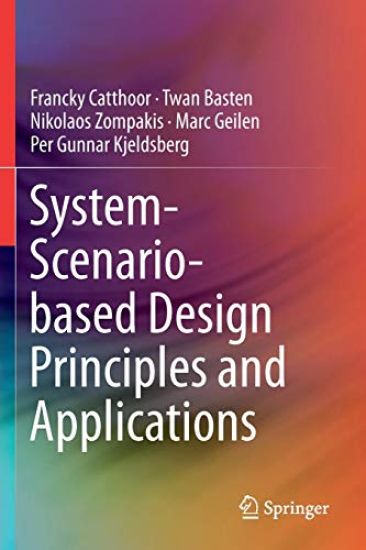
System-Scenario-based Design Principles and Applications

System-Scenario-based Design Principles and Applications

Francky Catthoor; Twan Basten; Nikolaos Zompakis; Marc Geilen; Per Gunnar Kjeldsberg

Springer Nature Switzerland AG
2020
nidottu
This book introduces a generic and systematic design-time/run-time methodology for handling the dynamic nature of modern embedded systems, without adding large safety margins in the design. The techniques introduced can be utilized on top of most existing static mapping methodologies to deal effectively with dynamism and to increase drastically their efficiency. This methodology is based on the concept of system scenarios, which group system behaviors that are similar from a multi-dimensional cost perspective, such as resource requirements, delay, and energy consumption. Readers will be enabled to design systems capable to adapt to current inputs, improving system quality and/or reducing cost, possibly learning on-the-fly during execution.Provides an effective solution to deal with dynamic system designIncludes a broad survey of the state-of-the-art approaches in this domainEnables readers to design for substantial cost improvements (e.g. energy reductions), by exploiting system scenariosDemonstrates how the methodology has been applied effectively on various, real design problems in the embedded system context
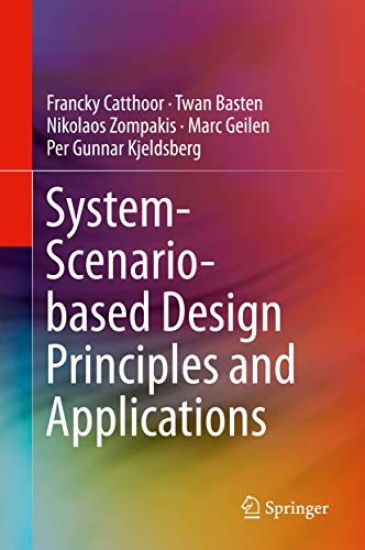
System-Scenario-based Design Principles and Applications

System-Scenario-based Design Principles and Applications

Francky Catthoor; Twan Basten; Nikolaos Zompakis; Marc Geilen; Per Gunnar Kjeldsberg

Springer Nature Switzerland AG
2019
sidottu
This book introduces a generic and systematic design-time/run-time methodology for handling the dynamic nature of modern embedded systems, without adding large safety margins in the design. The techniques introduced can be utilized on top of most existing static mapping methodologies to deal effectively with dynamism and to increase drastically their efficiency. This methodology is based on the concept of system scenarios, which group system behaviors that are similar from a multi-dimensional cost perspective, such as resource requirements, delay, and energy consumption. Readers will be enabled to design systems capable to adapt to current inputs, improving system quality and/or reducing cost, possibly learning on-the-fly during execution.Provides an effective solution to deal with dynamic system designIncludes a broad survey of the state-of-the-art approaches in this domainEnables readers to design for substantial cost improvements (e.g. energy reductions), by exploiting system scenariosDemonstrates how the methodology has been applied effectively on various, real design problems in the embedded system context