Kirjojen hintavertailu. Mukana 12 595 353 kirjaa ja 12 kauppaa.
Kirjailija
Tyson Yunkaporta
Kirjat ja teokset yhdessä paikassa: 12 kirjaa, julkaisuja vuosilta 2021-2026, suosituimpien joukossa Snake Talk. Vertaile teosten hintoja ja tarkista saatavuus suomalaisista kirjakaupoista.
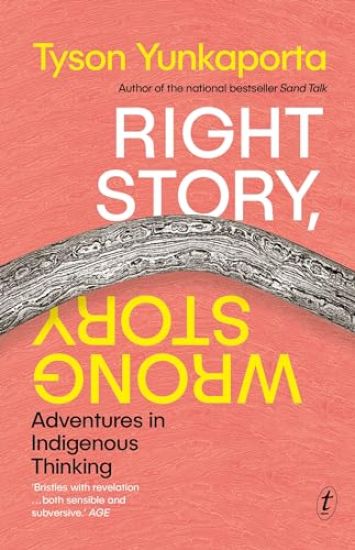
Continuing the work of the award-winning Sand Talk, Tyson Yunkaporta casts an Indigenous lens on contemporary society, challenging us to face conflict and embrace conversation to find our way onto the right track. With Right Story, Wrong Story, Apalech Clan member Tyson Yunkaporta, from far north Queensland, tackles the divisions that prevent us from talking to one another. Yunkaporta invites us to confront life's biggest questions and arms us with the tools we need to really listen, and to open our minds to change based upon our connections with others. He makes this point through discussions with a diverse range of people across social and political divides including: liberal economistsmemorization expertsFrisian ecologistsand Elders who are wood carvers, mathematicians, and storytellers.Building upon the Indigenous tradition of "yarning" to weave our individual narratives into the great narrative that includes us all across any and all differences, Yunkaporta argues that story is at the heart of everything. But what is right or wrong story?
Anne Poelina; Donna Bagnall; Mary Graham; Ross Timmulbar Williams; Tyson Yunkaporta; Chels Marshall; Shola Anthony Diop; Nadeem Samnakay; Michelle Maloney; Michael Davis
This groundbreaking book delves into the lived experiences and collective wisdom of Indigenous communities impacted by colonialism. Through collaborations with non-Indigenous colleagues, this book seeks to inform current legal practices and advocate for a transformative shift toward justice, equity, and the recognition of First Law and Earth-centered law.By presenting Indigenous stories as case studies and incorporating the collective wisdom gained through extensive discussions and exchanges with non-Indigenous colleagues, the authors highlight the ways in which Australian law falls short in upholding holistic principles and fails to align with First Law and Earth-centered law. The book invites readers to consider alternative legal futures that are rooted in respect, justice, and the well-being of both Indigenous peoples and the natural environment. Through its thought-provoking analysis, literature reviews, and insights from Indigenous leaders, this book servesas a powerful resource for legal practitioners, policymakers, scholars, and anyone passionate about social justice and environmental sustainability. The book aims to ignite meaningful dialogue and inspire concrete actions to address the historical injustices faced by Indigenous peoples while fostering a more inclusive and equitable legal framework for the generations to come.
Continuing the work of the award-winning Sand Talk, Tyson Yunkaporta casts an Indigenous lens on contemporary society, challenging us to face conflict and embrace conversation to find our way onto the right track. With Right Story, Wrong Story, Apalech Clan member Tyson Yunkaporta, from far north Queensland, tackles the divisions that prevent us from talking to one another. Yunkaporta invites us to confront life's biggest questions and arms us with the tools we need to really listen, and to open our minds to change based upon our connections with others. He makes this point through discussions with a diverse range of people across social and political divides including: liberal economistsmemorization expertsFrisian ecologistsand Elders who are wood carvers, mathematicians, and storytellers.Building upon the Indigenous tradition of "yarning" to weave our individual narratives into the great narrative that includes us all across any and all differences, Yunkaporta argues that story is at the heart of everything. But what is right or wrong story?
Anne Poelina; Donna Bagnall; Mary Graham; Ross Timmulbar Williams; Tyson Yunkaporta; Chels Marshall; Shola Anthony Diop; Nadeem Samnakay; Michelle Maloney; Michael Davis
This groundbreaking book delves into the lived experiences and collective wisdom of Indigenous communities impacted by colonialism. Through collaborations with non-Indigenous colleagues, this book seeks to inform current legal practices and advocate for a transformative shift toward justice, equity, and the recognition of First Law and Earth-centered law.By presenting Indigenous stories as case studies and incorporating the collective wisdom gained through extensive discussions and exchanges with non-Indigenous colleagues, the authors highlight the ways in which Australian law falls short in upholding holistic principles and fails to align with First Law and Earth-centered law. The book invites readers to consider alternative legal futures that are rooted in respect, justice, and the well-being of both Indigenous peoples and the natural environment. Through its thought-provoking analysis, literature reviews, and insights from Indigenous leaders, this book servesas a powerful resource for legal practitioners, policymakers, scholars, and anyone passionate about social justice and environmental sustainability. The book aims to ignite meaningful dialogue and inspire concrete actions to address the historical injustices faced by Indigenous peoples while fostering a more inclusive and equitable legal framework for the generations to come.
Challenge the old paradigm of rewards and feedback, and ignite real motivation from within.In the complex worlds of business and entrepreneurship, change agents deal with formidable challenges to build effective systems. From resistance to change to refining the art of leadership theory, the modern practice for motivating individuals has ensured that humans no longer think for themselves or question what they are told. The popular psychology of using rewards, punishment, and feedback undermines not just our personal growth but the very fabric of life and living systems.We must stop doubling down on the old ways of doing things and adopt a radically different idea about education, motivation, and change.Award-winning author and business disruptor Carol Sanford urgently proposes a smarter, faster, and deeper key to unlock a future of profound creativity and success. Drawing lessons from First Nations cultures, ancient wisdom, and quantum science, Sanford offers how we can ignite a revolution in our consciousness, influencing everything from personal decisions to cultural change. No More Gold Stars allows you to challenge prevailing theories, promote a holistic understanding of education and change, and redefine the way we approach our work and the results we seek.In this highly engaging guide, explore: Six disciplines fostering independent thinking-a fundamental shift in how we educate and lead change.An illustrative case story showcasing transformative change in businesses, communities, and cultures.Intermezzo exercises-your guides to hands-on exploration of innovative ideas.Developmental practices for effective change leadership-a start-up for people seeking a new way to navigate complex business decisions.A revolutionary approach to challenging and transforming the old system of conditioning and control-shaping human-focused organizations for more extraordinary outcomes.Carol Sanford offers a highly innovative, experience-based, and practical antidote to outdated models. If you want to make a difference in your field and achieve extraordinary results, this book is your guide. Let No More Gold Stars lead you on a journey to regenerate your capacity to think for yourself and inspire change today.
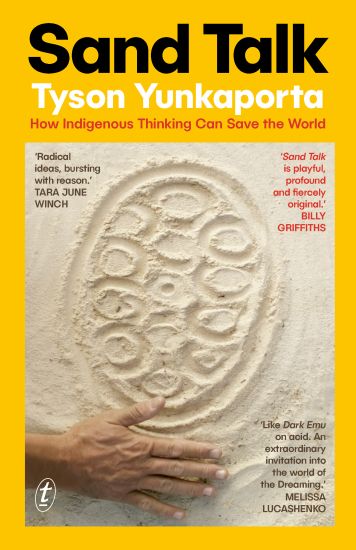
A paradigm-shifting book in the vein of Sapiens that brings a crucial Indigenous perspective to historical and cultural issues of history, education, money, power, and sustainability--and offers a new template for living.As an indigenous person, Tyson Yunkaporta looks at global systems from a unique perspective, one tied to the natural and spiritual world. In considering how contemporary life diverges from the pattern of creation, he raises important questions. How does this affect us? How can we do things differently?In this thoughtful, culturally rich, mind-expanding book, he provides answers. Yunkaporta's writing process begins with images. Honoring indigenous traditions, he makes carvings of what he wants to say, channeling his thoughts through symbols and diagrams rather than words. He yarns with people, looking for ways to connect images and stories with place and relationship to create a coherent world view, and he uses sand talk, the Aboriginal custom of drawing images on the ground to convey knowledge. In Sand Talk, he provides a new model for our everyday lives. Rich in ideas and inspiration, it explains how lines and symbols and shapes can help us make sense of the world. It's about how we learn and how we remember. It's about talking to everyone and listening carefully. It's about finding different ways to look at things.Most of all it's about a very special way of thinking, of learning to see from a native perspective, one that is spiritually and physically tied to the earth around us, and how it can save our world.Sand Talk include 22 black-and-white illustrations that add depth to the text.