Kirjojen hintavertailu. Mukana 12 390 323 kirjaa ja 12 kauppaa.

Kirjailija

Uddipana Goswami

Kirjat ja teokset yhdessä paikassa: 6 kirjaa, julkaisuja vuosilta 2013-2024, suosituimpien joukossa Where We Come from, Where We Go. Vertaile teosten hintoja ja tarkista saatavuus suomalaisista kirjakaupoista.

6 kirjaa

Kirjojen julkaisuhaarukka 2013-2024.

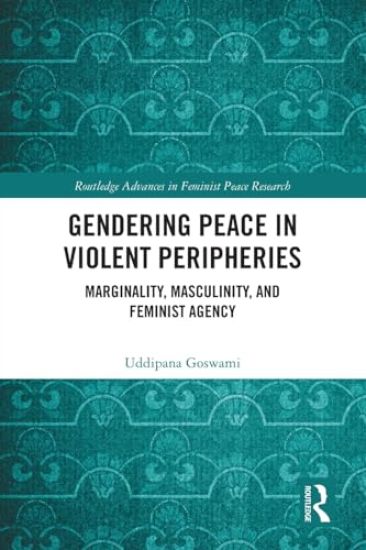
Gendering Peace in Violent Peripheries

Gendering Peace in Violent Peripheries

Uddipana Goswami

TAYLOR FRANCIS LTD
2024
nidottu
This book forwards Assam (and Northeast India) as a specific location for studying operations of gendered power in multi-ethnic, conflict-habituated geopolitical peripheries globally. In the shifting and relational margins of such peripheral societies, power and agency are constantly negotiated and in flux. Notions of masculinity are redefined in an interlaced environment of militarization, hyper-masculinization, and gendered violence. These interconnections inform victimhood and agency among the most vulnerable marginalized constituencies – namely, women and migrants. By centering the marginalized in its inquiry, the book analyzes obstacles to achieving positive, organic peace based on cooperation and mutual healing. The tools used to perpetuate an endless cycle of violence that makes conflict a habit – a way of life – are identified in order to enable resistance against them from within the margins. Such resistance must be based on reflexivity and strategic, cautious radicalism. This involves critically interrogating the inherent connections between engendered pasts and feminist futures, local changes and global contexts, as well as between small, incremental changes and big shifts impacting entire societies, nations, and global orders.This book will be of much interest to students of ethnic conflict, conflict resolution, feminist peace, and Asian/South Asian politics.
Gendering Peace in Violent Peripheries

Gendering Peace in Violent Peripheries

Uddipana Goswami

TAYLOR FRANCIS LTD
2022
sidottu
This book forwards Assam (and Northeast India) as a specific location for studying operations of gendered power in multi-ethnic, conflict-habituated geopolitical peripheries globally. In the shifting and relational margins of such peripheral societies, power and agency are constantly negotiated and in flux. Notions of masculinity are redefined in an interlaced environment of militarization, hyper-masculinization, and gendered violence. These interconnections inform victimhood and agency among the most vulnerable marginalized constituencies – namely, women and migrants. By centering the marginalized in its inquiry, the book analyzes obstacles to achieving positive, organic peace based on cooperation and mutual healing. The tools used to perpetuate an endless cycle of violence that makes conflict a habit – a way of life – are identified in order to enable resistance against them from within the margins. Such resistance must be based on reflexivity and strategic, cautious radicalism. This involves critically interrogating the inherent connections between engendered pasts and feminist futures, local changes and global contexts, as well as between small, incremental changes and big shifts impacting entire societies, nations, and global orders.This book will be of much interest to students of ethnic conflict, conflict resolution, feminist peace, and Asian/South Asian politics.
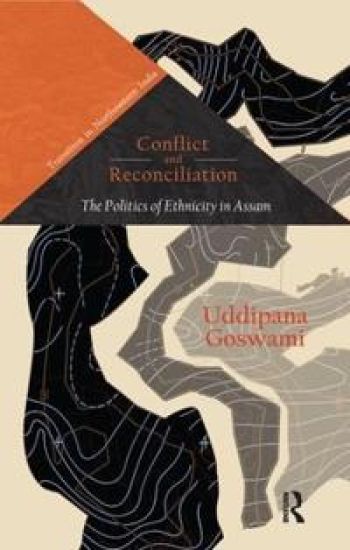
Conflict and Reconciliation

Conflict and Reconciliation

Uddipana Goswami

Routledge India
2015
nidottu
Diverging from reductionist studies of Northeast India and its multifarious conflicts, this book presents an exclusive and intricate, empirical and theoretical study of Assam as a conflict zone. It traces the genesis and evolution of the ethnic and nationalistic politics in the state, and explores how this gave birth to nativist and militant movements. It further discusses how the State’s responses seem to have exacerbated rather than mitigated the conflict situation. The author proposes ethnic reconciliation as an effective way out of the current chaos, and finds the key in examining the relations between three communities (Axamiya, Bodo and Koch) from Bodoland, the most violent region of Assam. She stresses upon the need to redefine ‘Axamiya’, an issue of much discord in Assam’s ethnic politics since the modern-day formulation of the Axamiya nation. The book will prove essential to scholars and students of peace and conflict studies, sociology, political science, and history, as also to policy-makers and those interested in Northeast India.
No Ghosts in This City

No Ghosts in This City

Uddipana Goswami

Zubaan
2014
nidottu
The powerful short stories in this collection are set against - and frequently driven by - the picturesque yet often violent backdrop of Assam, a province in India's northeast. In one, a young man attempts to escape the confines of middle-class aspirations, only to be brought up against the futility of rebellion. Another finds a mother sharing her daughter's pain when social inhibitions finally catch up with her. Others consider the bloody effects of violence: one sees a young girl lose her tongue to the horrors of conflict, while another depicts the destruction of carefully managed ethnic harmony. All are shot through with a desire to understand, to attempt to explore if not explain, the violence and brutality that have long plagued the beautiful land of Assam and left it populated with ghosts.
Conflict and Reconciliation

Conflict and Reconciliation

Uddipana Goswami

Routledge India
2013
sidottu
Diverging from reductionist studies of Northeast India and its multifarious conflicts, this book presents an exclusive and intricate, empirical and theoretical study of Assam as a conflict zone. It traces the genesis and evolution of the ethnic and nationalistic politics in the state, and explores how this gave birth to nativist and militant movements. It further discusses how the State’s responses seem to have exacerbated rather than mitigated the conflict situation. The author proposes ethnic reconciliation as an effective way out of the current chaos, and finds the key in examining the relations between three communities (Axamiya, Bodo and Koch) from Bodoland, the most violent region of Assam. She stresses upon the need to redefine ‘Axamiya’, an issue of much discord in Assam’s ethnic politics since the modern-day formulation of the Axamiya nation. The book will prove essential to scholars and students of peace and conflict studies, sociology, political science, and history, as also to policy-makers and those interested in Northeast India.