Kirjojen hintavertailu. Mukana 12 595 353 kirjaa ja 12 kauppaa.

Kirjailija

Ujjwal Maulik

Kirjat ja teokset yhdessä paikassa: 9 kirjaa, julkaisuja vuosilta 2010-2025, suosituimpien joukossa Multiobjective Genetic Algorithms for Clustering. Vertaile teosten hintoja ja tarkista saatavuus suomalaisista kirjakaupoista.

9 kirjaa

Kirjojen julkaisuhaarukka 2010-2025.

Multiobjective Genetic Algorithms for Clustering

Multiobjective Genetic Algorithms for Clustering

Ujjwal Maulik; Sanghamitra Bandyopadhyay; Anirban Mukhopadhyay

Springer-Verlag Berlin and Heidelberg GmbH Co. K
2014
nidottu
This is the first book primarily dedicated to clustering using multiobjective genetic algorithms with extensive real-life applications in data mining and bioinformatics. The authors first offer detailed introductions to the relevant techniques – genetic algorithms, multiobjective optimization, soft computing, data mining and bioinformatics. They then demonstrate systematic applications of these techniques to real-world problems in the areas of data mining, bioinformatics and geoscience. The authors offer detailed theoretical and statistical notes, guides to future research, and chapter summaries.The book can be used as a textbook and as a reference book by graduate students and academic and industrial researchers in the areas of soft computing, data mining, bioinformatics and geoscience.
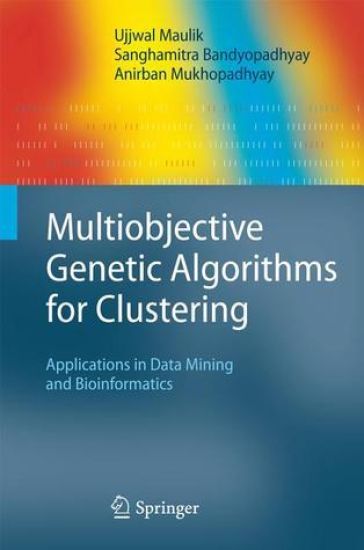
Multiobjective Genetic Algorithms for Clustering

Multiobjective Genetic Algorithms for Clustering

Ujjwal Maulik; Sanghamitra Bandyopadhyay; Anirban Mukhopadhyay

Springer-Verlag Berlin and Heidelberg GmbH Co. K
2011
sidottu
This is the first book primarily dedicated to clustering using multiobjective genetic algorithms with extensive real-life applications in data mining and bioinformatics. The authors first offer detailed introductions to the relevant techniques – genetic algorithms, multiobjective optimization, soft computing, data mining and bioinformatics. They then demonstrate systematic applications of these techniques to real-world problems in the areas of data mining, bioinformatics and geoscience. The authors offer detailed theoretical and statistical notes, guides to future research, and chapter summaries.The book can be used as a textbook and as a reference book by graduate students and academic and industrial researchers in the areas of soft computing, data mining, bioinformatics and geoscience.
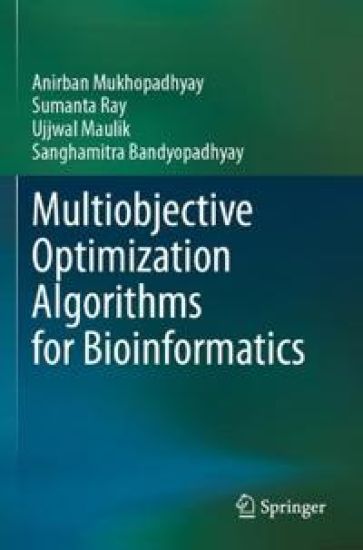
Multiobjective Optimization Algorithms for Bioinformatics

Multiobjective Optimization Algorithms for Bioinformatics

Anirban Mukhopadhyay; Sumanta Ray; Ujjwal Maulik; Sanghamitra Bandyopadhyay

Springer
2025
nidottu
This book provides an updated and in-depth introduction to the application of multiobjective optimization techniques in bioinformatics. In particular, it presents multiobjective solutions to a range of complex real-world bioinformatics problems. The authors first provide a comprehensive yet concise and self-contained introduction to relevant preliminary methodical constructions such as genetic algorithms, multiobjective optimization, data mining and several challenges in the bioinformatics domain. This is followed by several systematic applications of these techniques to real-world bioinformatics problems in the areas of gene expression and network biology. The book also features detailed theoretical and mathematical notes to facilitate reader comprehension. The book offers a valuable asset for a broad range of readers - from undergraduate to postgraduate, and as a textbook or reference work. Researchers and professionals can use the book not only to enrich their knowledge of multiobjective optimization and bioinformatics, but also as a comprehensive reference guide to applying and devising novel methods in bioinformatics and related domains.
Multiobjective Optimization Algorithms for Bioinformatics

Multiobjective Optimization Algorithms for Bioinformatics

Anirban Mukhopadhyay; Sumanta Ray; Ujjwal Maulik; Sanghamitra Bandyopadhyay

SPRINGER VERLAG, SINGAPORE
2024
sidottu
This book provides an updated and in-depth introduction to the application of multiobjective optimization techniques in bioinformatics. In particular, it presents multiobjective solutions to a range of complex real-world bioinformatics problems. The authors first provide a comprehensive yet concise and self-contained introduction to relevant preliminary methodical constructions such as genetic algorithms, multiobjective optimization, data mining and several challenges in the bioinformatics domain. This is followed by several systematic applications of these techniques to real-world bioinformatics problems in the areas of gene expression and network biology. The book also features detailed theoretical and mathematical notes to facilitate reader comprehension. The book offers a valuable asset for a broad range of readers – from undergraduate to postgraduate, and as a textbook or reference work. Researchers and professionals can use the book not only to enrich their knowledge of multiobjective optimization and bioinformatics, but also as a comprehensive reference guide to applying and devising novel methods in bioinformatics and related domains.
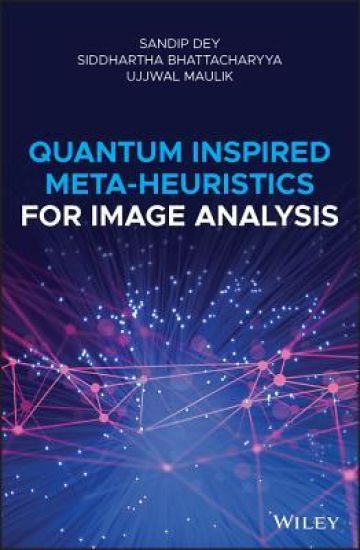
Quantum Inspired Meta-heuristics for Image Analysis

Quantum Inspired Meta-heuristics for Image Analysis

Sandip Dey; Siddhartha Bhattacharyya; Ujjwal Maulik

Wiley-Blackwell
2019
sidottu
Introduces quantum inspired techniques for image analysis for pure and true gray scale/color images in a single/multi-objective environment This book will entice readers to design efficient meta-heuristics for image analysis in the quantum domain. It introduces them to the essence of quantum computing paradigm, its features, and properties, and elaborates on the fundamentals of different meta-heuristics and their application to image analysis. As a result, it will pave the way for designing and developing quantum computing inspired meta-heuristics to be applied to image analysis. Quantum Inspired Meta-heuristics for Image Analysis begins with a brief summary on image segmentation, quantum computing, and optimization. It also highlights a few relevant applications of the quantum based computing algorithms, meta-heuristics approach, and several thresholding algorithms in vogue. Next, it discusses a review of image analysis before moving on to an overview of six popular meta-heuristics and their algorithms and pseudo-codes. Subsequent chapters look at quantum inspired meta-heuristics for bi-level and gray scale multi-level image thresholding; quantum behaved meta-heuristics for true color multi-level image thresholding; and quantum inspired multi-objective algorithms for gray scale multi-level image thresholding. Each chapter concludes with a summary and sample questions. Provides in-depth analysis of quantum mechanical principlesOffers comprehensive review of image analysisAnalyzes different state-of-the-art image thresholding approachesDetailed current, popular standard meta-heuristics in use todayGuides readers step by step in the build-up of quantum inspired meta-heuristicsIncludes a plethora of real life case studies and applicationsFeatures statistical test analysis of the performances of the quantum inspired meta-heuristics vis-à-vis their conventional counterparts Quantum Inspired Meta-heuristics for Image Analysis is an excellent source of information for anyone working with or learning quantum inspired meta-heuristics for image analysis.
Quantum Inspired Computational Intelligence

Quantum Inspired Computational Intelligence

Siddhartha Bhattacharyya; Ujjwal Maulik; Paramartha Dutta

Morgan Kaufmann Publishers In
2016
nidottu
Quantum Inspired Computational Intelligence: Research and Applications explores the latest quantum computational intelligence approaches, initiatives, and applications in computing, engineering, science, and business. The book explores this emerging field of research that applies principles of quantum mechanics to develop more efficient and robust intelligent systems. Conventional computational intelligence—or soft computing—is conjoined with quantum computing to achieve this objective. The models covered can be applied to any endeavor which handles complex and meaningful information.
Soft Computing for Image and Multimedia Data Processing

Soft Computing for Image and Multimedia Data Processing

Siddhartha Bhattacharyya; Ujjwal Maulik

Springer-Verlag Berlin and Heidelberg GmbH Co. K
2016
nidottu
Proper analysis of image and multimedia data requires efficient extraction and segmentation techniques. Among the many computational intelligence approaches, the soft computing paradigm is best equipped with several tools and techniques that incorporate intelligent concepts and principles. This book is dedicated to object extraction, image segmentation, and edge detection using soft computing techniques with extensive real-life application to image and multimedia data. The authors start with a comprehensive tutorial on the basics of brain structure and learning, and then the key soft computing techniques, including evolutionary computation, neural networks, fuzzy sets and fuzzy logic, and rough sets. They then present seven chapters that detail the application of representative techniques to complex image processing tasks such as image recognition, lighting control, target tracking, object extraction, and edge detection. These chapters follow a structured approach with detailed explanations of the problems, solutions, results, and conclusions. This is both a standalone textbook for graduates in computer science, electrical engineering, system science, and information technology, and a reference for researchers and engineers engaged with pattern recognition, image processing, and soft computing.
Soft Computing for Image and Multimedia Data Processing

Soft Computing for Image and Multimedia Data Processing

Siddhartha Bhattacharyya; Ujjwal Maulik

Springer-Verlag Berlin and Heidelberg GmbH Co. K
2013
sidottu
Proper analysis of image and multimedia data requires efficient extraction and segmentation techniques. Among the many computational intelligence approaches, the soft computing paradigm is best equipped with several tools and techniques that incorporate intelligent concepts and principles. This book is dedicated to object extraction, image segmentation, and edge detection using soft computing techniques with extensive real-life application to image and multimedia data. The authors start with a comprehensive tutorial on the basics of brain structure and learning, and then the key soft computing techniques, including evolutionary computation, neural networks, fuzzy sets and fuzzy logic, and rough sets. They then present seven chapters that detail the application of representative techniques to complex image processing tasks such as image recognition, lighting control, target tracking, object extraction, and edge detection. These chapters follow a structured approach with detailed explanations of the problems, solutions, results, and conclusions. This is both a standalone textbook for graduates in computer science, electrical engineering, system science, and information technology, and a reference for researchers and engineers engaged with pattern recognition, image processing, and soft computing.
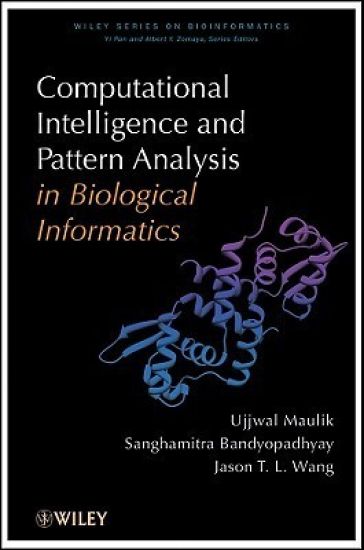
Computational Intelligence and Pattern Analysis in Biology Informatics

Computational Intelligence and Pattern Analysis in Biology Informatics

Ujjwal Maulik; Sanghamitra Bandyopadhyay; Jason T. Wang

John Wiley Sons Inc
2010
sidottu
An invaluable tool in Bioinformatics, this unique volume provides both theoretical and experimental results, and describes basic principles of computational intelligence and pattern analysis while deepening the reader's understanding of the ways in which these principles can be used for analyzing biological data in an efficient manner. This book synthesizes current research in the integration of computational intelligence and pattern analysis techniques, either individually or in a hybridized manner. The purpose is to analyze biological data and enable extraction of more meaningful information and insight from it. Biological data for analysis include sequence data, secondary and tertiary structure data, and microarray data. These data types are complex and advanced methods are required, including the use of domain-specific knowledge for reducing search space, dealing with uncertainty, partial truth and imprecision, efficient linear and/or sub-linear scalability, incremental approaches to knowledge discovery, and increased level and intelligence of interactivity with human experts and decision makers Chapters authored by leading researchers in CI in biology informatics.Covers highly relevant topics: rational drug design; analysis of microRNAs and their involvement in human diseases.Supplementary material included: program code and relevant data sets correspond to chapters.