Kirjojen hintavertailu. Mukana 12 595 353 kirjaa ja 12 kauppaa.

Kirjailija

Ulrich Beck

Kirjat ja teokset yhdessä paikassa: 44 kirjaa, julkaisuja vuosilta 1974-2024, suosituimpien joukossa Conversations with Ulrich Beck. Vertaile teosten hintoja ja tarkista saatavuus suomalaisista kirjakaupoista.

44 kirjaa

Kirjojen julkaisuhaarukka 1974-2024.

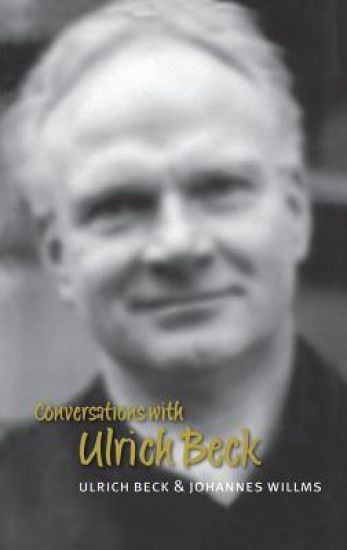
Conversations with Ulrich Beck

Conversations with Ulrich Beck

Ulrich Beck; Johannes Willms

Polity Press
2003
nidottu
In this new book, Ulrich Beck and the journalist Johannes Willms engage in a series of accessible conversations that reveal and explore the key elements in Beck’s thought. Ulrich Beck, one of the most important and influential contemporary social thinkers, reveals and expands his work in a series of conversations with journalist Johannes Willms. These conversations shed new light onto the major themes in Beck’s work and provide an insight into some of the commitments and beliefs that they rest upon. Includes new thinking on the risk society and on globalisation, themes that have put him at the forefront of contemporary debates. Witten in a clear and lucid way and thus ideal for anyone seeking to come to grips with Beck’s work.
Conversations with Ulrich Beck

Conversations with Ulrich Beck

Ulrich Beck; Johannes Willms

Polity Press
2003
sidottu
In this new book, Ulrich Beck and the journalist Johannes Willms engage in a series of accessible conversations that reveal and explore the key elements in Beck’s thought. Ulrich Beck, one of the most important and influential contemporary social thinkers, reveals and expands his work in a series of conversations with journalist Johannes Willms. These conversations shed new light onto the major themes in Beck’s work and provide an insight into some of the commitments and beliefs that they rest upon. Includes new thinking on the risk society and on globalisation, themes that have put him at the forefront of contemporary debates. Witten in a clear and lucid way and thus ideal for anyone seeking to come to grips with Beck’s work.
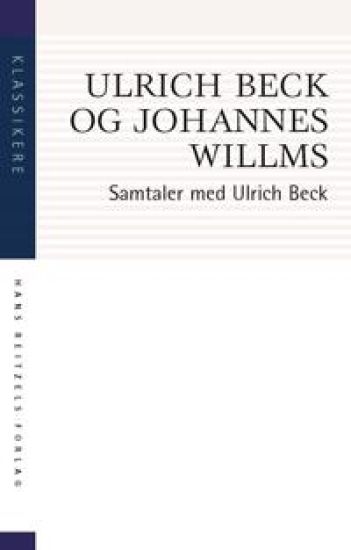
Samtaler med Ulrich Beck

Samtaler med Ulrich Beck

Ulrich Beck; Johannes Willms

Gyldendal
2022
nidottu
Denne bog er en letlæst sammenfatning – i interviewform – af hovedtankerne i Ulrich Becks forfatterskab, som de har udviklet sig fra og med bogen Risikosamfundet og frem til i dag. Bogen rummer desuden vigtige præciseringer af en række af de mest centrale begreber og analyser i Becks samtidsdiagnose, fx den misforståelse, at individualisering i Becks forstand slet og ret skulle være ensbetydende med øget individuel frihed. For nye læsere kan bogen fungere som en god, samlet introduktion til Becks tanker, mens den vil være et nyttigt supplement til den læser, der kender forfatterskabet i forvejen, idet Frihed eller kapitalisme ligger i forlængelse af Risikosamfundet og Fagre nye arbejdsverden. Emnerne, der tages op, spænder fra en definition af det andet moderne over en diskussion af globaliseringen til en tematisering af ’frihed eller kapitalisme’. Samtaler med Ulrich Beck udkom første gang på dansk i 2002 og genudgives nu i Hans Reitzels Forlags serie Klassikere.
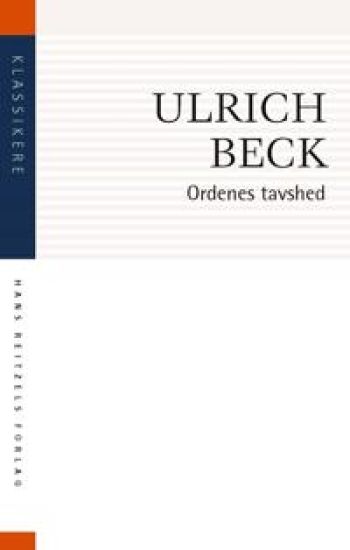
Ordenes tavshed

Ordenes tavshed

Ulrich Beck

Gyldendal
2022
nidottu
I denne lille bog – en tale til den russiske Duma – fremlægger den tyske samfundsforsker Ulrich Beck sine refleksioner over terrorangrebet i New York den 11. september 2001. Disse overvejelser sætter Beck i relation til sin teori om risikosamfundet. Ordenes tavshed udkom første gang på dansk i 2002 og genudgives nu på dansk i Hans Reitzels Forlags serie Klassikere.
Risksamhället

Risksamhället

Ulrich Beck

Bokförlaget Daidalos
2018
nidottu
Ulrichs Becks grundläggande tes är att vi inte bör tänka oss endast en möjlig form av modernitet och modernisering, utan flera olika. Idag är vi "på väg in i en annan modernitet" (vilket är undertiteln till Risikogesellschaft) än den som de klassiska sociologerna Marx, Weber och Durkheim beskrev. Beck är därför inte bara kritisk till de traditionella samhällstänkare som enbart ser en form av modernitet utan också till de postmoderna sociologer som hävdat att vi har lämnat det moderna bakom oss. Det är istället, hävdar han, modernitetens egen inbyggda logik som gör att vi håller på att övergå från ett industrisamhälle till ett risksamhälle. Beck har skapat något man skulle kunna kalla ekologisk sociologi eller sociologisk ekologi. ... I industrisamhället uppfattades miljöförstöring som en bieffekt som man kunde ignorera eller övervinna genom fortsatt och klokare industrialisering. I risksamhället råder däremot "bieffekternas herravälde", det vill säga miljöförstöringen och de enorma risker för liv och hälsa som de innebär blir bestämmande för hela samhällslogiken. En av den samtida sociologins bästa näsor för nya och viktiga samhällsproblem och samhällsförändringar.
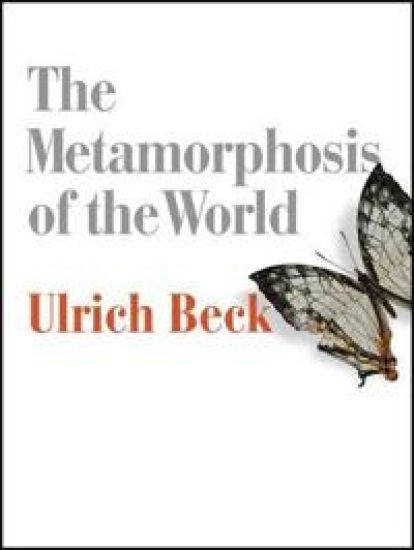
The Metamorphosis of the World

The Metamorphosis of the World

Ulrich Beck

Polity Press
2017
nidottu
We live in a world that is increasingly difficult to understand. It is not just changing: it is metamorphosing. Change implies that some things change but other things remain the same capitalism changes, but some aspects of capitalism remain as they always were. Metamorphosis implies a much more radical transformation in which the old certainties of modern society are falling away and something quite new is emerging. To grasp this metamorphosis of the world it is necessary to explore the new beginnings, to focus on what is emerging from the old and seek to grasp future structures and norms in the turmoil of the present. Take climate change: much of the debate about climate change has focused on whether or not it is really happening, and if it is, what we can do to stop or contain it. But this emphasis on solutions blinds us to the fact that climate change is an agent of metamorphosis. It has already altered our way of being in the world the way we live in the world, think about the world and seek to act upon the world through our actions and politics. Rising sea levels are creating new landscapes of inequality drawing new world maps whose key lines are not traditional boundaries between nation-states but elevations above sea level. It is creating an entirely different way of conceptualizing the world and our chances of survival within it.The theory of metamorphosis goes beyond theory of world risk society: it is not about the negative side effects of goods but the positive side effects of bads. They produce normative horizons of common goods and propel us beyond the national frame towards a cosmopolitan outlook.
The Metamorphosis of the World

The Metamorphosis of the World

Ulrich Beck

Polity Press
2016
sidottu
We live in a world that is increasingly difficult to understand. It is not just changing: it is metamorphosing. Change implies that some things change but other things remain the same capitalism changes, but some aspects of capitalism remain as they always were. Metamorphosis implies a much more radical transformation in which the old certainties of modern society are falling away and something quite new is emerging. To grasp this metamorphosis of the world it is necessary to explore the new beginnings, to focus on what is emerging from the old and seek to grasp future structures and norms in the turmoil of the present. Take climate change: much of the debate about climate change has focused on whether or not it is really happening, and if it is, what we can do to stop or contain it. But this emphasis on solutions blinds us to the fact that climate change is an agent of metamorphosis. It has already altered our way of being in the world the way we live in the world, think about the world and seek to act upon the world through our actions and politics. Rising sea levels are creating new landscapes of inequality drawing new world maps whose key lines are not traditional boundaries between nation-states but elevations above sea level. It is creating an entirely different way of conceptualizing the world and our chances of survival within it.The theory of metamorphosis goes beyond theory of world risk society: it is not about the negative side effects of goods but the positive side effects of bads. They produce normative horizons of common goods and propel us beyond the national frame towards a cosmopolitan outlook.
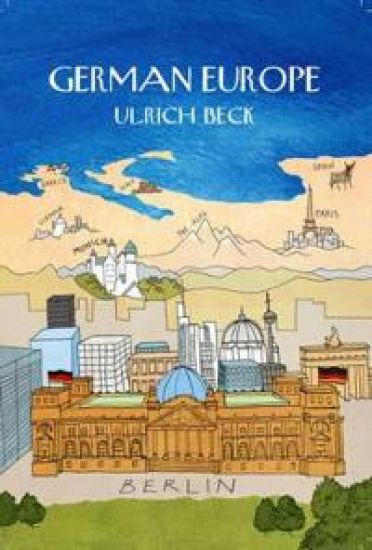
German Europe

German Europe

Ulrich Beck

Polity Press
2014
nidottu
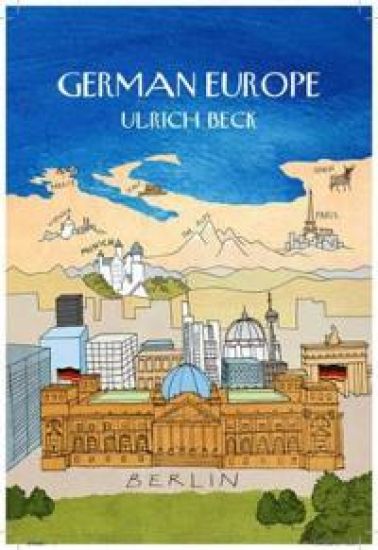
The euro crisis is tearing Europe apart. But the heart of the matter is that, as the crisis unfolds, the basic rules of European democracy are being subverted or turned into their opposite, bypassing parliaments, governments and EU institutions. Multilateralism is turning into unilateralism, equality into hegemony, sovereignty into the dependency and recognition into disrespect for the dignity of other nations. Even France, which long dominated European integration, must submit to Berlin’s strictures now that it must fear for its international credit rating. How did this happen? The anticipation of the European catastrophe has already fundamentally changed the European landscape of power. It is giving birth to a political monster: a German Europe. Germany did not seek this leadership position - rather, it is a perfect illustration of the law of unintended consequences. The invention and implementation of the euro was the price demanded by France in order to pin Germany down to a European Monetary Union in the context of German unification. It was a quid pro quo for binding a united Germany into a more integrated Europe in which France would continue to play the leading role. But the precise opposite has happened. Economically the euro turned out to be very good for Germany, and with the euro crisis Chancellor Angela Merkel became the informal Queen of Europe. The new grammar of power reflects the difference between creditor and debtor countries; it is not a military but an economic logic. Its ideological foundation is ‘German euro nationalism’ - that is, an extended European version of the Deutschmark nationalism that underpinned German identity after the Second World War. In this way the German model of stability is being surreptitiously elevated into the guiding idea for Europe. The Europe we have now will not be able to survive in the risk-laden storms of the globalized world. The EU has to be more than a grim marriage sustained by the fear of the chaos that would be caused by its breakdown. It has to be built on something more positive: a vision of rebuilding Europe bottom-up, creating a Europe of the citizen. There is no better way to reinvigorate Europe than through the coming together of ordinary Europeans acting on their own behalf.
Distant Love

Distant Love

Ulrich Beck; Elisabeth Beck-Gernsheim

Polity Press
2013
nidottu
Love and family life in the global age: grandparents in Salonika and their grandson in London speak together every evening via Skype. A U.S. citizen and her Swiss husband fret over large telephone bills and high travel costs. A European couple can finally have a baby with the help of an Indian surrogate mother. In their new book, Ulrich Beck and Elisabeth Beck-Gernsheim investigate all types of long-distance relationships, marriages and families that stretch across countries, continents and cultures. These long-distance relationships comprise so many different forms of what they call ‘world families’, by which they mean love and intimate relationships between individuals living in, or coming from, different countries or continents. In all their various forms these world families share one feature in common: they are the focal point in which different aspects of the globalized world become embodied in the personal lives of individuals. Whether they like it or not, lovers and relatives in these families find themselves confronting the world in the inner space of their own lives. The conflicts between the developed and developing worlds come to the surface in world families- they acquire faces and names, creating confusion, surprise, anger, joy, pleasure and pain at the heart of everyday life. This path-breaking book will appeal to a wide readership interested in the changing character of love in our times.
Distant Love

Distant Love

Ulrich Beck; Elisabeth Beck-Gernsheim

Polity Press
2013
sidottu
Love and family life in the global age: grandparents in Salonika and their grandson in London speak together every evening via Skype. A U.S. citizen and her Swiss husband fret over large telephone bills and high travel costs. A European couple can finally have a baby with the help of an Indian surrogate mother. In their new book, Ulrich Beck and Elisabeth Beck-Gernsheim investigate all types of long-distance relationships, marriages and families that stretch across countries, continents and cultures. These long-distance relationships comprise so many different forms of what they call ‘world families’, by which they mean love and intimate relationships between individuals living in, or coming from, different countries or continents. In all their various forms these world families share one feature in common: they are the focal point in which different aspects of the globalized world become embodied in the personal lives of individuals. Whether they like it or not, lovers and relatives in these families find themselves confronting the world in the inner space of their own lives. The conflicts between the developed and developing worlds come to the surface in world families- they acquire faces and names, creating confusion, surprise, anger, joy, pleasure and pain at the heart of everyday life. This path-breaking book will appeal to a wide readership interested in the changing character of love in our times.
German Europe

German Europe

Ulrich Beck

Polity Press
2013
sidottu
The euro crisis is tearing Europe apart. But the heart of the matter is that, as the crisis unfolds, the basic rules of European democracy are being subverted or turned into their opposite, bypassing parliaments, governments and EU institutions. Multilateralism is turning into unilateralism, equality into hegemony, sovereignty into the dependency and recognition into disrespect for the dignity of other nations. Even France, which long dominated European integration, must submit to Berlin’s strictures now that it must fear for its international credit rating. How did this happen? The anticipation of the European catastrophe has already fundamentally changed the European landscape of power. It is giving birth to a political monster: a German Europe. Germany did not seek this leadership position - rather, it is a perfect illustration of the law of unintended consequences. The invention and implementation of the euro was the price demanded by France in order to pin Germany down to a European Monetary Union in the context of German unification. It was a quid pro quo for binding a united Germany into a more integrated Europe in which France would continue to play the leading role. But the precise opposite has happened. Economically the euro turned out to be very good for Germany, and with the euro crisis Chancellor Angela Merkel became the informal Queen of Europe. The new grammar of power reflects the difference between creditor and debtor countries; it is not a military but an economic logic. Its ideological foundation is ‘German euro nationalism’ - that is, an extended European version of the Deutschmark nationalism that underpinned German identity after the Second World War. In this way the German model of stability is being surreptitiously elevated into the guiding idea for Europe. The Europe we have now will not be able to survive in the risk-laden storms of the globalized world. The EU has to be more than a grim marriage sustained by the fear of the chaos that would be caused by its breakdown. It has to be built on something more positive: a vision of rebuilding Europe bottom-up, creating a Europe of the citizen. There is no better way to reinvigorate Europe than through the coming together of ordinary Europeans acting on their own behalf.
Twenty Observations on a World in Turmoil
Translated by Ciaran Cronin. The world is a state of turmoil. From the financial crisis to the chaos in the eurozone, from the Arab uprisings to protests in Athens, Barcelona, New York and elsewhere, many of the familiar frameworks are collapsing and we have to find new ways to orient ourselves in a world undergoing rapid change. Of course, it is necessary for political leaders to address local issues and react to people’s specific demands, but without a cosmopolitan outlook, such a reaction is likely to be inadequate. Ulrich Beck’s Twenty-one Observations on a World in Turmoil is a demonstration of cosmopolitan politics in practice. It is more than a mirror: it is a magnifying glass that brings into focus the processes that are transforming our world and highlights the great challenges we face today. ‘Global domestic politics’, the concept introduced and developed by Beck, is much more than a political theory, a philosophical utopia (or dystopia), a governance programme or a mental state: it is the reality of our times. Beck turns the argument that ‘global domestic politics’ is an unrealistic ideology on its head, arguing that it is the proponents of the national who are the idealists. They view reality through the obsolete lenses of the nation-state and thus cannot see the profound global changes that are transforming our reality. Global domestic politics is therefore a perspective, a political reality and a normative idea. And it is the critical theory of our times since it challenges the most profound truths which we hold dear: the truths of the nation.
Twenty Observations on a World in Turmoil
Translated by Ciaran Cronin. The world is a state of turmoil. From the financial crisis to the chaos in the eurozone, from the Arab uprisings to protests in Athens, Barcelona, New York and elsewhere, many of the familiar frameworks are collapsing and we have to find new ways to orient ourselves in a world undergoing rapid change. Of course, it is necessary for political leaders to address local issues and react to people’s specific demands, but without a cosmopolitan outlook, such a reaction is likely to be inadequate. Ulrich Beck’s Twenty-one Observations on a World in Turmoil is a demonstration of cosmopolitan politics in practice. It is more than a mirror: it is a magnifying glass that brings into focus the processes that are transforming our world and highlights the great challenges we face today. ‘Global domestic politics’, the concept introduced and developed by Beck, is much more than a political theory, a philosophical utopia (or dystopia), a governance programme or a mental state: it is the reality of our times. Beck turns the argument that ‘global domestic politics’ is an unrealistic ideology on its head, arguing that it is the proponents of the national who are the idealists. They view reality through the obsolete lenses of the nation-state and thus cannot see the profound global changes that are transforming our reality. Global domestic politics is therefore a perspective, a political reality and a normative idea. And it is the critical theory of our times since it challenges the most profound truths which we hold dear: the truths of the nation.
Weltrisikogesellschaft

Weltrisikogesellschaft

Ulrich Beck

SUHRKAMP VERLAG
2011
pokkari
Ulrich Beck bringt die Gegenwart auf den Punkt: Zwanzig Jahre nach dem Weltbestseller Risikogesellschaft erneuert und erweitert er seine Zeitdiagnostik zur Weltrisikogesellschaft. Damals gab es die RAF, heute al-Qaida; damals fürchteten wir die Folgen von Tschernobyl, heute sagen Wissenschaftler eine Klimakatastrophe voraus. Finanzkrisen vernichten weltweit Existenzen, die Risiken durchdringen alle Lebensbereiche. Zugleich aber eröffnen sich neue Chancen zur Gestaltung der Welt: Schluß mit dem Schüren von Ängsten und der Ablösung von bürgerlicher Freiheit durch Sicherheit! Für eine aufgeklärte "kosmopolitische Realpolitik"!
A God of One's Own

A God of One's Own

Ulrich Beck

Polity Press
2010
nidottu
Religion posits one characteristic as an absolute: faith. Compared to faith, all other social distinctions and sources of conflict are insignificant. The New Testament says: 'We are all equal in the sight of God'. To be sure, this equality applies only to those who acknowledge God's existence. What this means is that alongside the abolition of class and nation within the community of believers, religion introduces a new fundamental distinction into the world the distinction between the right kind of believers and the wrong kind. Thus overtly or tacitly, religion brings with it the demonization of believers in other faiths. The central question that will decide the continued existence of humanity is this: How can we conceive of a type of inter-religious tolerance in which loving one's neighbor does not imply war to the death, a type of tolerance whose goal is not truth but peace? Is what we are experiencing at present a regression of monotheistic religion to a polytheism of the religious spirit under the heading of 'a God of one's own'? In Western societies, where the autonomy of the individual has been internalized, individual human beings tend to feel increasingly at liberty to tell themselves little faith stories that fit their own lives to appoint 'Gods of their own'. However, this God of their own is no longer the one and only God who presides over salvation by seizing control of history and empowering his followers to be intolerant and use naked force.
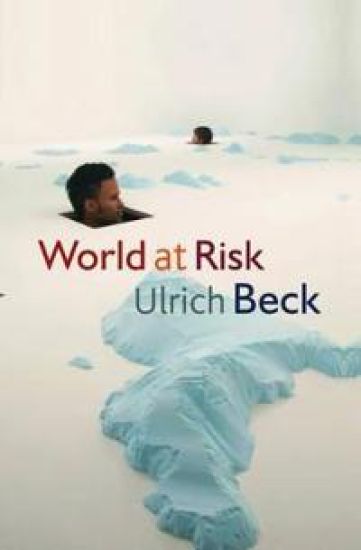
World at Risk

World at Risk

Ulrich Beck

Polity Press
2008
sidottu
Twenty years ago Ulrich Beck published Risk Society, a book that called our attention to the dangers of environmental catastrophes and changed the way we think about contemporary societies. During the last two decades, the dangers highlighted by Beck have taken on new forms and assumed ever greater significance. Terrorism has shifted to a global arena, financial crises have produced worldwide consequences that are difficult to control and politicians have been forced to accept that climate change is not idle speculation. In short, we have come to see that today we live in a world at risk. A new feature of our world risk society is that risk is produced for political gain. This political use of risk means that fear creeps into modern life. A need for security encroaches on our liberty and our view of equality. However, Beck is anything but an alarmist and believes that the anticipation of catastrophe can fundamentally change global politics. We have the opportunity today to reconfigure power in terms of what Beck calls a 'cosmopolitan material politics’. World at Risk is a timely and far-reaching analysis of the structural dynamics of the modern world, the global nature of risk and the future of global politics by one of the most original and exciting social thinkers writing today.
World at Risk

World at Risk

Ulrich Beck

Polity Press
2008
nidottu
Twenty years ago Ulrich Beck published Risk Society, a book that called our attention to the dangers of environmental catastrophes and changed the way we think about contemporary societies. During the last two decades, the dangers highlighted by Beck have taken on new forms and assumed ever greater significance. Terrorism has shifted to a global arena, financial crises have produced worldwide consequences that are difficult to control and politicians have been forced to accept that climate change is not idle speculation. In short, we have come to see that today we live in a world at risk. A new feature of our world risk society is that risk is produced for political gain. This political use of risk means that fear creeps into modern life. A need for security encroaches on our liberty and our view of equality. However, Beck is anything but an alarmist and believes that the anticipation of catastrophe can fundamentally change global politics. We have the opportunity today to reconfigure power in terms of what Beck calls a 'cosmopolitan material politics’. World at Risk is a timely and far-reaching analysis of the structural dynamics of the modern world, the global nature of risk and the future of global politics by one of the most original and exciting social thinkers writing today.