Kirjailija
Ulrich Brand
Kirjat ja teokset yhdessä paikassa: 15 kirjaa, julkaisuja vuosilta 2008-2025, suosituimpien joukossa Radikale Alternativen. Vertaile teosten hintoja ja tarkista saatavuus suomalaisista kirjakaupoista.
15 kirjaa
Kirjojen julkaisuhaarukka 2008-2025.
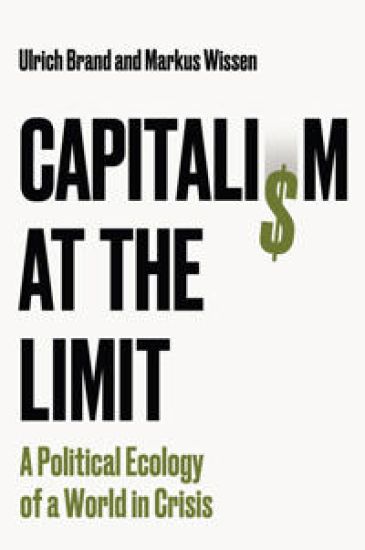
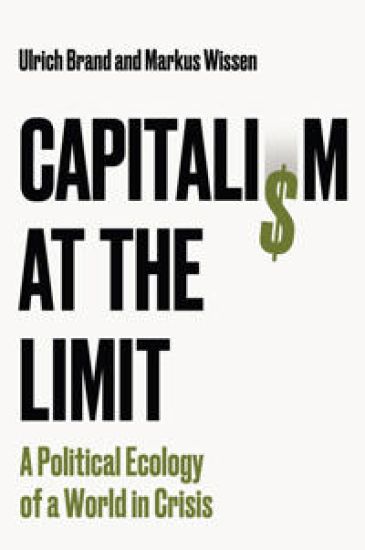
Capitalism is hitting the buffers. Unable to handle the various crises that its inherent logic of growth, profit and competition has produced, capitalism has led the world into a state of emergency - with the authoritarian right on the rise globally and progressive forces unable to realise the transformations needed to secure the future prosperity of people and planet. ‘The old is dying and the new cannot be born’ Gramsci said. We are caught between forces agitating for fundamental change, green capitalist modernizers and fierce defenders of the status quo. How did this happen and what is to be done? In this new book, Ulrich Brand and Markus Wissen, authors of the acclaimed The Imperial Mode of Living, trace how capitalism has reached its very limits. Alongside the mutually reinforcing environmental, geopolitical, and social crises we face, they analyse the struggles that will determine the fate of humanity. Critiquing dominant pathways - from green capitalism to authoritarian and anti-ecological policies - that reinforce the Global North’s imperial mode of living, the authors offer a fairer alternative based on solidarity and collective self-limitation. Capitalism at the Limit is a clear-sighted look at the dynamics driving the critical conflicts of our time.
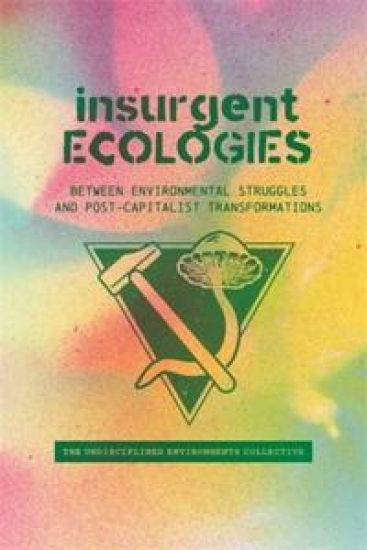
We are living through a world-rattling ecological inflection point, with an unprecedented consensus that capitalism is leading humanity into a social and ecological catastrophe and that everything needs to change, and fast. Thankfully, radical environmental movements have forced the question of “system change” to the centre of the political agenda to make way for a just and livable world. Insurgent Ecologies takes readers on an inspiring journey across key sites of ecological crisis and contestation, showing how revolutionary politics can emerge from the convergences between place-based, often disconnected struggles. These engaging essays speak to longstanding debates in political ecology around how to advance transformations in, against and beyond capitalism. The collection starts from the belief that the environmental struggles taking place across the Global South and North are a necessary component of such transformations. The book presents unique stories of the visions and strategies of struggles organized around sovereignty, land, climate, feminisms and labour, written by scholar-activists rooted in territories around the globe, offering locally grounded yet global perspectives. Each story reflects on how to build solidarity and comradeship across diverse struggles and how new political subjects and transformative collective projects for social-ecological justice are created.
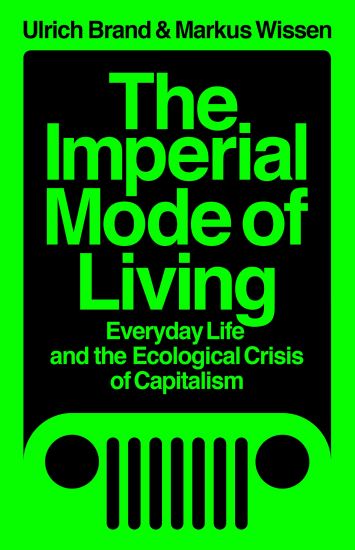
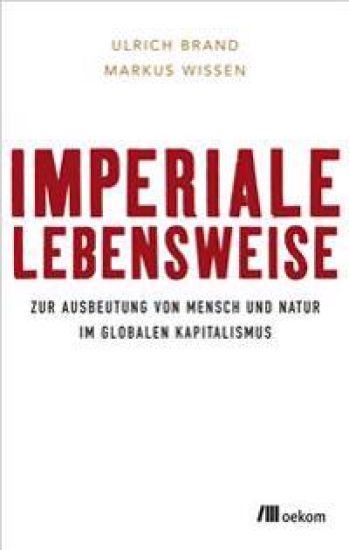
With the concept of the Imperial Mode of Living, Brand and Wissen highlight the fact that capitalism implies uneven development as well as a constant and accelerating universalisation of a Western mode of production and living. The logic of liberal markets since the 19thCentury, and especially since World War II, has been inscribed into everyday practices that are usually unconsciously reproduced. The authors show that they are a main driver of the ecological crisis and economic and political instability.The Imperial Mode of Living implies that people's everyday practices, including individual and societal orientations, as well as identities, rely heavily on the unlimited appropriation of resources; a disproportionate claim on global and local ecosystems and sinks; and cheap labour from elsewhere. This availability of commodities is largely organised through the world market, backed by military force and/or the asymmetric relations of forces as they have been inscribed in international institutions. Moreover, the Imperial Mode of Living implies asymmetrical social relations along class, gender and race within the respective countries. Here too, it is driven by the capitalist accumulation imperative, growth-oriented state policies and status consumption. The concrete production conditions of commodities are rendered invisible in the places where the commodities are consumed. The imperialist world order is normalized through the mode of production and living.
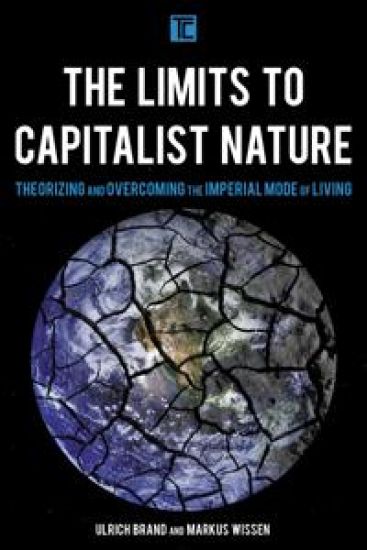
The book provides for a historical-materialist understanding of the multiple crises of capitalism, focusing on the ecological crisis and its interaction with other crisis phenomena (financial crisis, crisis of democracy, economic crisis). Drawing on political ecology, Gramscian theory of hegemony, critical state theory and the regulation approach, it introduces the concept of an imperial mode of living in order to better understand the everyday practices and perceptions as well as the social relations of forces and institutional constellations that facilitate environmentally destructive patterns of production and consumption. Furthermore, it develops a historical-materialist critique of the green economy concept that has been propagated in recent years as a solution not only for the ecological but also for the economic crisis. Finally, the book proposes a democratisation of societal nature relations as a way out of the crisis that requires overcoming capitalist property relations and the exclusive forms of controlling nature guaranteed by them.
Globalization, the Human Condition and Sustainable Development in the Twenty-first Century
Arno Tausch; Almas Heshmati; Ulrich Brand
Anthem Press
2013
nidottu
‘Globalization, the Human Condition and Sustainable Development in the Twenty-first Century: Cross-national Perspectives and European Implications’ is a cross-national, 175-nation-based exploration of the deep crisis in which Europe currently finds itself. Investigating the effects of dependency theory and world-systems theory upon the global success of eight dimensions of development – including democracy, environmental sustainability, employment, social cohesion, high-quality tertiary education and gender justice – this study argues that the current European crisis has been precipitated by the pro-globalist policies of the European Commission, and that in the near future these policies threaten to enter Europe into a destructive ‘race to the bottom’.
Globalization, the Human Condition and Sustainable Development in the Twenty-first Century
Arno Tausch; Almas Heshmati; Ulrich Brand
Anthem Press
2012
sidottu
‘Globalization, the Human Condition and Sustainable Development in the Twenty-first Century: Cross-national Perspectives and European Implications’ is a cross-national, 175-nation-based exploration of the deep crisis in which Europe currently finds itself. Investigating the effects of dependency theory and world-systems theory upon the global success of eight dimensions of development – including democracy, environmental sustainability, employment, social cohesion, high-quality tertiary education and gender justice – this study argues that the current European crisis has been precipitated by the pro-globalist policies of the European Commission, and that in the near future these policies threaten to enter Europe into a destructive ‘race to the bottom’.
Conflicts in Environmental Regulation and the Internationalisation of the State
Ulrich Brand; Christoph Görg; Joachim Hirsch; Markus Wissen
Routledge
2010
nidottu
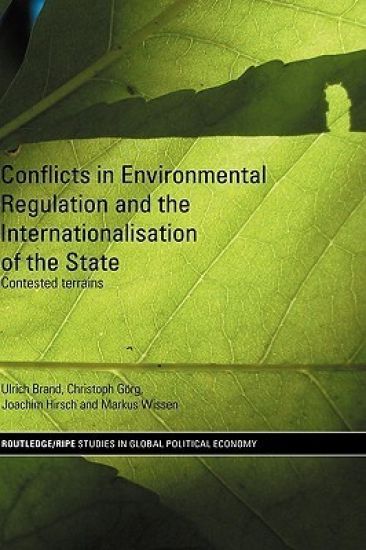
This book examines the global regulation of biodiversity politics through the UN UNConvention on Biological Diversity (CBD), the WTO and other international treaties. Using historical-materialist state and regulation theory, it assesses how the discourse and politics of sustainable development have contributed to the internationalisation of the state. The authors argue that sustainable development, far from being a fixed concept, is a conceptual terrain on which different and conflicting symbolisations of and solutions responses to of the ecological crisis struggle for hegemony. Furthermore, it shows that the international multilateral environmental organisations agreements are not at all a means to counteract neoliberal globalisation but, on the contrary, form an integral part of the ongoing transformation process. Focussing on the UN Convention on Biological DiversityCBD, the FAO International Treaty on Plant Genetic Resources for Food and Agriculture and the Agreement on Trade-related Aspects of Intellectual Property Rights (TRIPS) in the World Trade Organisation, this co-authored volume addresses the following issues: state theory, regulation theory and International Political Economy biodiversity protection and valorisation of genetic resources access to genetic resources and sharing of benefits which arise out of its use enforcement of intellectual property rights and their impact on biodiversity.This book will be of interest to students and scholars of international politics, international political economy, environmental studies, development studies and political ecology.
Conflicts in Environmental Regulation and the Internationalisation of the State
Ulrich Brand; Christoph Görg; Joachim Hirsch; Markus Wissen
Routledge
2008
sidottu
This book examines the global regulation of biodiversity politics through the UN UNConvention on Biological Diversity (CBD), the WTO and other international treaties. Using historical-materialist state and regulation theory, it assesses how the discourse and politics of sustainable development have contributed to the internationalisation of the state. The authors argue that sustainable development, far from being a fixed concept, is a conceptual terrain on which different and conflicting symbolisations of and solutions responses to of the ecological crisis struggle for hegemony. Furthermore, it shows that the international multilateral environmental organisations agreements are not at all a means to counteract neoliberal globalisation but, on the contrary, form an integral part of the ongoing transformation process. Focussing on the UN Convention on Biological DiversityCBD, the FAO International Treaty on Plant Genetic Resources for Food and Agriculture and the Agreement on Trade-related Aspects of Intellectual Property Rights (TRIPS) in the World Trade Organisation, this co-authored volume addresses the following issues: state theory, regulation theory and International Political Economy biodiversity protection and valorisation of genetic resources access to genetic resources and sharing of benefits which arise out of its use enforcement of intellectual property rights and their impact on biodiversity.This book will be of interest to students and scholars of international politics, international political economy, environmental studies, development studies and political ecology.