Kirjojen hintavertailu. Mukana 12 595 353 kirjaa ja 12 kauppaa.

Kirjailija

Ulrich Steger

Kirjat ja teokset yhdessä paikassa: 16 kirjaa, julkaisuja vuosilta 1988-2010, suosituimpien joukossa Greening Chinese Business. Vertaile teosten hintoja ja tarkista saatavuus suomalaisista kirjakaupoista.

16 kirjaa

Kirjojen julkaisuhaarukka 1988-2010.

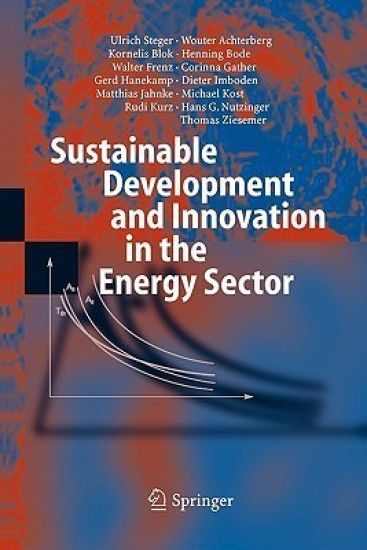
Sustainable Development and Innovation in the Energy Sector

Sustainable Development and Innovation in the Energy Sector

Ulrich Steger; Wouter Achterberg; Kornelis Blok; Henning Bode; Walter Frenz; Corinna Gather; Gerd Hanekamp; Dieter Imboden; Matthias Jahnke; Michael Kost; Rudi Kurz; Hans Gottfried Nutzinger; Thomas Ziesemer

Springer-Verlag Berlin and Heidelberg GmbH Co. K
2010
nidottu
Almost every energy scenario assumes an enormous growth in the demand for energy in the coming decades. Meanwhile, at international conferences and other venues, the primary concern is massive reduction of greenhouse gas emissions, especially of the CO2 produced by fossil-fuel energy consumption. Experts also point out the political risk of depending on petroleum and remind us of the fact that resources are not inexhaustible. This timely book explores: how these conflicting scenarios could be reconciled; how can we shape a more sustainable energy system from the existing one; and possible technological progress and innovations to enable a brighter future. It also addresses the reality that there exists no consensus on the extent to which innovations can really contribute to reconciling ever-growing energy consumption, availability of resources and the environment, and the structural demands on any energy system.
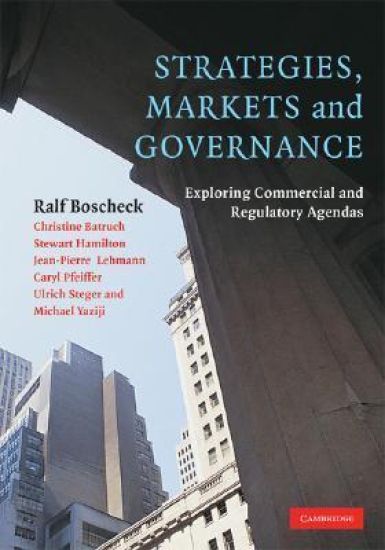
Strategies, Markets and Governance

Strategies, Markets and Governance

Ralf Boscheck; Christine Batruch; Stewart Hamilton; Jean-Pierre Lehmann; Caryl Pfeiffer; Ulrich Steger; Michael Yaziji

Cambridge University Press
2008
sidottu
Strategies, Markets and Governance addresses governance concerns at firm, industry, country and international levels. How do regulatory authorities deal with new business models, organizational structures and blurring market relations? What limits regulatory control and what are the implications of corporate self-regulation? What drives the spread of new regulation and what limits its effectiveness? How does 'the organized public' shape political and corporate interests and what is its legitimacy and impact on business? How do corporate strategies turn tighter regulation into profit opportunities, deliver public benefits in the face of predatory states and when is exit the only option left? The contributing authors are leading researchers on governance and public policy, and present assessments of these questions in a variety of institutional and international contexts. The book is ideally suited to advanced students of business, public policy and business regulation, as well as practitioners and policy makers.
Sustainable Development and Innovation in the Energy Sector

Sustainable Development and Innovation in the Energy Sector

Ulrich Steger; Wouter Achterberg; Kornelis Blok; Henning Bode; Walter Frenz; Corinna Gather; Gerd Hanekamp; Dieter Imboden; Matthias Jahnke; Michael Kost; Rudi Kurz; Hans Gottfried Nutzinger; Thomas Ziesemer

Springer-Verlag Berlin and Heidelberg GmbH Co. K
2004
sidottu
Almost every energy scenario assumes an enormous growth in the demand for energy in the coming decades. Meanwhile, at international conferences and other venues, the primary concern is massive reduction of greenhouse gas emissions, especially of the CO2 produced by fossil-fuel energy consumption. Experts also point out the political risk of depending on petroleum and remind us of the fact that resources are not inexhaustible. This timely book explores: how these conflicting scenarios could be reconciled; how can we shape a more sustainable energy system from the existing one; and possible technological progress and innovations to enable a brighter future. It also addresses the reality that there exists no consensus on the extent to which innovations can really contribute to reconciling ever-growing energy consumption, availability of resources and the environment, and the structural demands on any energy system.
Greening Chinese Business

Greening Chinese Business

Lu Wei; Fang Zhaoben; Ulrich Steger

Greenleaf Publishing
2003
sidottu
This work analyses and interprets Chinese managers' perceptions of environmental management and regulatory enforcement practices in Chinese enterprises. Most importantly, it identifies the bottlenecks to environmental protection in Chinese firms, and presents a roadmap of how they can be overcome.
Wirksamkeit strategischer Frühaufklärung

Wirksamkeit strategischer Frühaufklärung

Alexander Nick; Ulrich Steger

Gabler Verlag
2008
nidottu
Geleitwort In einem turbulenten Unternehmensumfeld ist die Fähigkeit, Unsicherheit zu handhaben, ein wesentlicher Erfolgsfaktor. Strategische Frühaufklärung stellt für Unternehmen die Mögli- keit dar, diskontinuierliche Entwicklungen in einer zunehmend komplex-dynamischen Umwelt zu antizipieren. Auf diese Weise sollen latente Chancen und Gefahren identifiziert werden. Das in der Theorie seit langem diskutierte Konzept der strategischen Frühaufklärung stößt in der Praxis auf Defizite, sowohl in der Anwendung als auch bei der darauf folgenden Nutzung der gewonnenen Erkenntnisse. Bei dieser doppelten Implementierungslücke setzt die Arbeit von Alexander Nick an. Sie erkundet damit Neuland, da es an empirischen Studien mangelt, die nach den Ursachen für die geringe Verbreitung fragen und somit die Implementierun- problematik in der Praxis untersuchen. Dem Verfasser gelingt es, ein überzeugendes komp- mentäres Forschungsdesign aufzusetzen, mit dem wichtige empirische Ergebnisse generiert werden. Wohl überlegt wird ein qualitatives Vorgehen gewählt, bei dem einerseits Aktivitäten strategischer Frühaufklärung in zehn europäischen Großunternehmen betrachtet werden und andererseits mit Hilfe einer longitudinalen Studie ein konkretes Frühaufklärungsprojekt zum Thema Pervasive Computing über zwei Jahre in einem Technologiekonzern begleitet wird. Alexander Nick beantwortet die zentralen Fragen der Studie überzeugend. Er entwirft einen anschaulichen Analyserahmen und zeigt prozessuelle, strukturelle und kontextuelle Erfolgsf- toren auf, die die Wirksamkeit strategischer Frühaufklärung beeinflussen. Die Ergebnisse der Fallstudie bieten eine Fundgrube sowohl für die Praxis als auch für die Wissenschaft, da es dem Verfasser gelingt, die Herausforderungen undLösungsansätze gewinnbringend aufzu- reiten.
Business Logic for Sustainability

Business Logic for Sustainability

Aileen Ionescu-Somers; Ulrich Steger

Palgrave Macmillan
2008
sidottu
The food and beverage industry is vital to the global economy, but in a society increasingly concerned with sustainable development, it is facing new challenges. This book presents the results of a research project focused on the management challenges that sustainable development presents to presents to food and beverage companies.
Business Logic for Sustainability

Business Logic for Sustainability

Aileen Ionescu-Somers; Ulrich Steger

Palgrave Macmillan
2008
nidottu
The food and beverage industry is vital to the global economy, but in a society increasingly concerned with sustainable development, it is facing new challenges. This book presents the results of a research project focused on the management challenges that sustainable development presents to presents to food and beverage companies.
Die Regulierung elektrischer Netze

Die Regulierung elektrischer Netze

Ulrich Steger; Ulrich Büdenbender; Eberhard Feess; Dieter Nelles

Springer-Verlag Berlin and Heidelberg GmbH Co. K
2008
sidottu
Die zuverlässige Versorgung einer hoch technisierten Gesellschaft mit elektrischer Energie ist von enormer Bedeutung. Der Bedarf an unterbrechungsfreiem Strom wächst beständig; gleichzeitig sind Forderungen nach Wirtschaftlichkeit, Effizienz, Kostengerechtigkeit und nicht zuletzt Umweltschutz zu erfüllen. Hinzu kommt, dass grundlegend veränderte rechtliche Rahmenbedingungen in Deutschland und Europa Netzbetreiber vor große Herausforderungen stellen: Die Netze müssen langfristig ausgebaut werden, um einen EU-weiten Strombinnenmarkt gewährleisten zu können. Kurz- bis mittelfristig ist durch Koordination mit anderen Netzbetreibern sicherzustellen, dass trotz neuer Transportfunktionen der Netze gravierende Stromausfälle ausbleiben. Die vorliegende Studie präsentiert das Resultat einer interdisziplinären Forschungsarbeit, die Ursachen von Instabilitäten, wesentlich beeinflusst durch den Trend zu einer weitergehenden Integration der europäischen Stromnetze, untersucht und die Verlässlichkeit der Energieversorgungsnetze reflektiert. Die Studie richtet sich mit konkreten Empfehlungen zu Investitions-, Sicherheits-, Effizienz- und Qualitätsaspekten der elektrischen Netze an Wissenschaft, Wirtschaft, Politik und die interessierte Öffentlichkeit. Ziel ist es, für anstehende politische Entscheidungen sowie administrative und unternehmerische Maßnahmen eine wertvolle Entscheidungsgrundlage zu bieten. So wird durch die fachübergreifende Analyse der netzwirtschaftlichen Pflichten und ihrer Regulierung eine Lücke in der wissenschaftlichen Betrachtung geschlossen und Impulse für die weitere Gestaltung der Elektrizitätsnetzwirtschaft gegeben.
Managing Complexity in Global Organizations

Managing Complexity in Global Organizations

Ulrich Steger; Wolfgang Amann; Martha L. Maznevski

John Wiley Sons Inc
2007
nidottu
This book delivers new IMD insights on an emerging challenge - how to deal with overwhelming complexity. Global organizations face a complex decision-making environment. On one side, diversity of cultures, customers, competitors and regulations creates complexity; on the other, competitive pressures cause expanding countries to extract more synergies across products and regions. In such a climate, a new way of thinking, acting and organizing is needed beyond the familiar ‘control’ mindset. Drawing together insights from across the expert faculty, Managing Complexity in the Global Organization presents IMD’s framework on how to understand complexity and its four key drivers (diversity; interdependence; ambiguity and flux), along with solutions on specific issues in a variety of functions, industries and markets. The focus is on providing practical solutions based on real-life examples.
Corporate Diplomacy

Corporate Diplomacy

Ulrich Steger

John Wiley Sons Inc
2002
sidottu
"Ulrich Steger’s new book, Corporate Diplomacy, opens the door to a new perception of what responsible and sustainable leadership is all about and broadens our vision to better grasp the complexity of the global agenda." —Jürgen Dormann, Chairman of the Supervisory Board of Aventis SA "This book is a timely reminder that we are all sitting in the same boat, whether we represent business, NGOs or government: we all carry a joint, yet differentiated responsibility for the fate of future generations. For me it is also a stark manifestation of the fact that diplomacy simply understood as defence strategy, or a tactic to camouflage discord, is not sustainable. Corporate diplomacy hinges on the social and environmental responsibility and the credibility of a company, as much as it is about explaining and positioning its business case." —Dr Claude Martin, Director General, WWF International "Ulrich Steger deals with the challenges of how to communicate efficiently with public networks, whether they are governments, unions, NGOs, the press or the general public, both in normal times and in times of corporate crises. The IMD background of Ulrich Steger guarantees that we are not exposed to theory but to well researched and structured practice." —Hans-Dietrich Winkhaus, Chairman of the Supervisory Board of Deutsche Telekom, former CEO of Henkel "Whatever happens with globalization, corporate diplomacy will be a twenty-first century growth area, and Ulrich Steger is particularly well qualified to explore the emerging agenda and get under the skin of the new breed of corporate diplomats. But read this book well. Above all, understand the competing styles of diplomacy - from 'Nice Guy' through to 'Stealth Bomber' - before you take the plunge." —John Elkington, Co-founder and Chairman of SustainAbility "Rather than traversing the familiar ground of 'corporate social responsibility', Corporate Diplomacy charts a new course, more appropriate to the turbulent and uncertain waters that lie ahead. With the anti-globalization wave on the rise, and its associated swarm of internet-savvy NGOs, organized criminals, and global terrorists, 'managing stakeholders' will no longer be sufficient. More important will be the development of a corporate 'early warning system' that seeks out weak signals, engages extreme views, and engenders open-mindedness. In this book, Steger has provided both the strategic logic and the tools to chart this course." —Professor Stuart Hart, Director, Center for Sustainable Enterprise, Kenan-Flagler Business School, University of North Carolina "Corporate Diplomacy deals with a topic that has become highly relevant for corporations: how companies should best address a public policy agenda which increasingly includes sustainability issues outside the traditional role of business to create wealth and jobs. The book offers valuable insights and advice to corporate management on how to fulfil this new diplomatic role." —Björn Stigson, President, World Business Council for Sustainable Development (WBCSD)
Managing Outside Pressure

Managing Outside Pressure

Matthias Winter; Ulrich Steger

John Wiley Sons Inc
1998
sidottu
"The value of Managing Outside Pressure is that, not only is it a handbook on issues identification and issues management, but it provokes thoughts about the evolution into reputation management." C.A.J. Herkströter Chairman of the Committee of Managing Directors of the Royal Dutch/Shell Group of Companies "We have learned a that a company needs to establish and promote a dialogue with all its stakeholders. In brief: you can only realize what you can communicate. Against this background, I find this book to be very helpful in identifying and assessing issues that have the potential to develop into corporate crises." Jürgen Dorman CEO of Hoechst Corporation "You don’t have to be a giant like Nike, Shell or Texaco to come unstuck as campaigners spotlight your real (or perceived) corporate weakness. Winter and Steger provide excellent advice on how to predict and manage external pressures. Remember, though, the real trick is to use such pressures to drive internal change." John Elkington Chairman, SustaiAbility; author, Cannibals with Forks: The triple bottom line of 21st century business "Brand and reputation are ever more important for value creation. Matthias Winter and Ulrich Steger launch a powerful new tool to manage reputation. It arms managers with a smart detector for potential public sparks or powder kegs. It offers options to keep them safely apart and rather design win-win solutions." Claude Fussler Vice-President for the Environment, Dow Europe
The Strategic Dimensions of Environmental Management

The Strategic Dimensions of Environmental Management

Ulrich Steger; Ralph Meima

Palgrave Macmillan
1998
sidottu
Ecology has become an integral part of the strategic context in which corporations operate. This book examines fully the strategic issues, concepts and tools which managers must understand to sustain their own business competitiveness as society evolves toward a new definition of progress. In addition, it is argued that strategic environmental management provides an excellent learning context for the development of more general competitive capabilities.
The Strategic Dimensions of Environmental Management

The Strategic Dimensions of Environmental Management

Ulrich Steger; Ralph Meima

Palgrave Macmillan
1998
nidottu
Ecology has become an integral part of the strategic context in which corporations operate. This book examines fully the strategic issues, concepts and tools which managers must understand to sustain their own business competitiveness as society evolves toward a new definition of progress. In addition, it is argued that strategic environmental management provides an excellent learning context for the development of more general competitive capabilities.
Erdgas ante portas?

Erdgas ante portas?

Ulrich Steger

Gabler
1992
nidottu
1. Kapitel: Einleitung Welche Zukunftsaussichten ergeben sich fur die westeuropaische, insbesondere fur die bundesdeutsche Gaswirtschaft vor dem Hintergrund der zunehmenden Schaden an der naturlichen Umwelt durch die Energienutzung? Wo beginnen sich erste Ansatze einer Kritik am Status quo der Gaswirtschaft abzuzeichnen und wie k6nnte diese auf die 6kologische Herausforderung adaquat reagieren? Die vorliegende Arbeit stellt den Versuch dar, den Zusammenhang der Fragen aufzu- zeigen, urn einen Ausgangspunkt fur ihre Beantwortung zu finden. Besondere Aufmerk- samkeit wird dem Faktor "Unsicherheit" auf den Energiemarkten und innerhalb der Energiepolitik zuteil. Fur die Er6rterung wurden jungere energie-und vor allem gaswirtschaftliche Publika- tionen, soweit diese sich mit der Thematik befassen, untersucht. 2. Kapitel: Status quo-Analyse: Entwickiung und gegenwiirtiger Stand der bundesdeutschen Gaswirtschaft Die Entwicklung des bundesdeutschen Erdgasverbrauchs uber die beiden letzten Jahr- zehnte ist durch ein rapides Ansteigen des Erdgasverbrauchs wahrend der 70er Jahre von 18,1 Mill. t SKE im Jahre 1970 auf 63,6 Mill. t SKE im Jahre 1980 (gemessen in Anteilen am gesamten Primarenergieverbrauch: von 5,4 % auf 16,3 %) und danach durch Schwankungen urn diese obere Niveaulinie gekennzeichnet. Diese Entwicklung vollzog sich parallel bzw. war Teil einer grundlegenden Veranderung im Energieverbrauch, die sich im wesentlichen einmal durch die "Entkoppelung" von Primarenergieverbrauch und Wirtschaftswachstum, d.h. steigendes Bruttosozialprodukt und ein stagnierendes oder nur geringfugiges Wachstum des Primarenergieverbrauchs, zum anderen durch die Veranderung in der Zusammensetzung der Primarenergietrager, weniger Kohle, rucklaufiger Mineral6lanteil und deutlich gestiegener Beitrag der Kern- energie, charakterisieren liillt.
Umwelt Management

Umwelt Management

Ulrich Steger

Gabler
1988
nidottu
Wer je die Frankfurter Buchmesse durchwanderte, dem mtiBten tiefe Zweifel gekommen sein, ob die weitere Vermehrung von Btichern noch Sinn macht. 1st der Punkt zunehmenden Ertrages nicht Iangst tiberschritten, die weitere Informationstiberflutung nicht eine be- sonders subtile Form der Umweltverschmutzung? Solche, fUr einen Autor ketzerische Gedanken verscheuchte mein Verleger mit dem pragmatischen Hinweis, daB die Quantitat der Bti- cher noch nichts tiber die Qualitlit, geschweige denn die Relevanz von Btichern aussagt. Und ein Buch tiber Umweltmanagement gebe es noch nicht, mtisse also geschrieben werden. Nun kann ich mich pragmatischen Argumenten schwer entziehen. Denn in der Tat: In der angeschwollenen Literatur tiber Umwelt- okonomie kommt die Unternehmung nicht vor. Selbst in so ver- dienstvollen Btichern wie Lutz Wickes "Umweltokonomie", das doch immerhin ein Pllidoyer fUr mehr marktorientierte Umweltpoli- tik ist, wird das Unternehmensverhalten nicht analysiert. Es is- wie fUr die ganze tibrige Literatur - eine "black-box". Obwohl fast jedermann tiberzeugt ist, daB gerade die Unternehmen und ihr Ver- halten positiv wie negativ eine entscheidende Bedeutung fUr den Umweltschutz haben, entstanden in den letzten 15 lahren noch nicht einmal ein Dutzend Bticher tiber Unternehmen und Umwelt- schutz, mehr als die Hlilfte davon Dissertationen, kaum ein Buch sttitzt sich auf empirisches Material. Kurz gesagt: Ein Standard- werk tiber Unternehmen und deren Verhliltnis zum Umweltschutz ist tiberflillig. Denn ohne Kenntnis der Reaktionen von Unterneh- men zum Beispiel auf die Instrumente der staatlichen Umwelt- schutzpolitik kann es keine rationale und effektive Umweltstrategie geben.