Kirjojen hintavertailu. Mukana 12 390 323 kirjaa ja 12 kauppaa.

Kirjailija

Umberto Eco

Kirjat ja teokset yhdessä paikassa: 161 kirjaa, julkaisuja vuosilta 1975-2026, suosituimpien joukossa Sylvie. Vertaile teosten hintoja ja tarkista saatavuus suomalaisista kirjakaupoista.

161 kirjaa

Kirjojen julkaisuhaarukka 1975-2026.

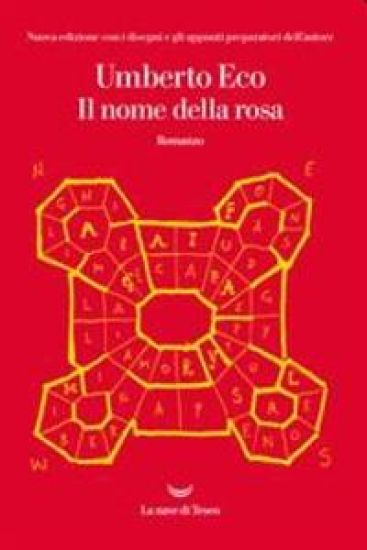
Il nome della rosa

Il nome della rosa

Umberto Eco

Bompiani
2020
pokkari
Un'abbazia medievale isolata. Una comunità di monaci sconvolta da una serie di delitti. Un frate francescano che indaga i misteri di una biblioteca inaccessibile. Un nuova edizione con i disegni e gli appunti preparatori dell'autore.
Italjantsy u sebja doma. Italija nostra. Kniga 1
Izdatelstvo SLOVO/SLOVO prodolzhaet seriju publitsistiki Umberto Eko, nachatuju v 2018 godu s izdanija sbornika "Kak puteshestvovat s lososem", stavshego bestsellerom. V serii vyshli: "Supermen dlja mass", "Rastitelnaja pamjat, ili pochemu kniga pomnit vse", "Nabrosok novogo kota i drugie nesereznye veschi", "Chernyj jaschik i drugie nenuzhnye veschi". V etoj knige sobrany gazetnye i zhurnalnye stati legendarnogo Umberto Eko o razlichnykh storonakh italjanskogo kulturnogo (i ne tolko) obikhoda i tekh stran, kotorye v toj ili inoj mere povlijali na kulturu Italii. Teksty, podobrannye samim avtorom i rasskazyvajuschie o sobytijakh v politicheskoj, obschestvennoj i kulturnoj zhizni strany, proniknuty svojstvennym Umberto Eko jumorom i besposchadnym skepsisom po otnosheniju k vechnym nedostatkam povsednevnoj zhizni rodiny. Khotja eti esse byli napisany i opublikovany v veduschikh italjanskikh periodicheskikh izdanijakh v kontse 1960 - nachale 1970-kh godov, oni i po sej den ne utratili svoej aktualnosti, a vo mnogikh iz nikh Eko predugadal sobytija nashikh dnej.
Shest progulok v literaturnykh lesakh
Shest lektsij, prochitannykh Umberto Eko v 1994 godu v Garvardskom universitete, posvjascheny probleme vzaimootnoshenij literatury i realnosti, avtora i teksta. Spetsialist po semiotike, krupnejshij pisatel nashego vremeni i vnimatelnyj, vsejadnyj chitatel vystupajut v etoj knige v odnom litse.
Shest progulok v literaturnykh lesakh
Shest lektsij, prochitannykh Umberto Eko v 1994 godu v Garvardskom universitete, posvjascheny probleme vzaimootnoshenij literatury i realnosti, avtora i teksta. Spetsialist po semiotike, krupnejshij pisatel nashego vremeni i vnimatelnyj, vsejadnyj chitatel vystupajut v etoj knige v odnom litse.
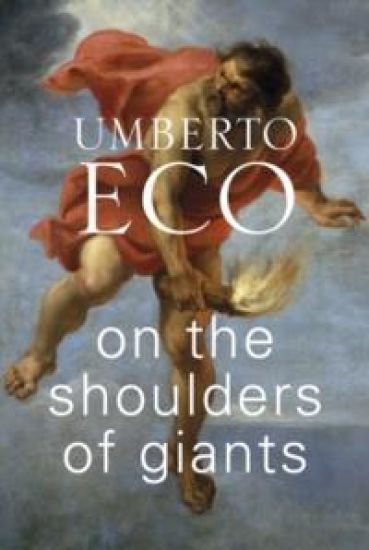
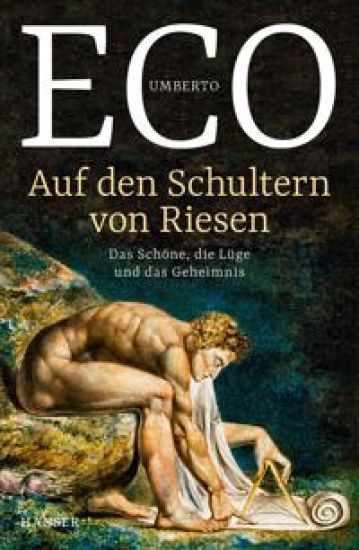
On the Shoulders of Giants

On the Shoulders of Giants

Umberto Eco

Random House UK
2019
sidottu
The final collection of essays from the internationally acclaimed and bestselling author of The Name of the Rose and The Prague Cemetery, on the subjects of art and culture. In this collection of essays we find Umberto Eco's perennial areas of interest explored in a lively and engaging style, accompanied by beautiful reproductions of the art he discusses. In these wide-ranging pieces he explores the roots of our civilization, changing ideas of beauty, our obsession with conspiracies and the emblematic heroes of the great narrative, amongst other fascinating topics. Umberto Eco was one of the most influential, and entertaining, intellectuals of the last century, as well as being a critically acclaimed and bestselling writer of both fiction and non-fiction.
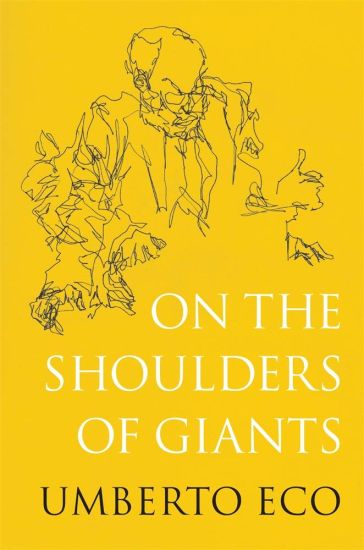
On the Shoulders of Giants

On the Shoulders of Giants

Umberto Eco

Belknap Press
2019
sidottu
A posthumous collection of essays by one of our greatest contemporary thinkers that provides a towering vision of Western culture. In Umberto Eco's first novel, The Name of the Rose, Nicholas of Morimondo laments, "We no longer have the learning of the ancients, the age of giants is past " To which the protagonist, William of Baskerville, replies: "We are dwarfs, but dwarfs who stand on the shoulders of those giants, and small though we are, we sometimes manage to see farther on the horizon than they." On the Shoulders of Giants is a collection of essays based on lectures Eco famously delivered at the Milanesiana Festival in Milan over the last fifteen years of his life. Previously unpublished, the essays explore themes he returned to again and again in his writing: the roots of Western culture and the origin of language, the nature of beauty and ugliness, the potency of conspiracies, the lure of mysteries, and the imperfections of art. Eco examines the dynamics of creativity and considers how every act of innovation occurs in conversation with a superior ancestor. In these playful, witty, and breathtakingly erudite essays, we encounter an intellectual who reads comic strips, reflects on Heraclitus, Dante, and Rimbaud, listens to Carla Bruni, and watches Casablanca while thinking about Proust. On the Shoulders of Giants reveals both the humor and the colossal knowledge of a contemporary giant.
Libraries: Candida Höfer

Libraries: Candida Höfer

Umberto Eco

Prestel Publishing
2019
sidottu
This striking book shows the world's most beautiful libraries through Candida H fer's mesmerizing photographs. No one photographs spaces quite like Candida H fer and no one has captured better the majesty, stillness, and eloquence of libraries. Traveling around the world, H fer shows the exquisite beauty to be found in order, repetition, and form--rows of books, lines of desks, soaring shelves, and even stacks of paper create patterns that are both hypnotic and soothing. Photographed with a large-format camera and a small aperture, these razor-sharp images of the Pierpont Morgan Library in New York, the Escorial in Spain, Villa Medici in Rome, the Hamburg University library, the Bibliotheque Nationale de France in Paris, and the Museo Archeologico in Madrid, to name a few, communicate more than just the superb architecture. Glowing with subtle color and natural light, H fer's photographs, while devoid of people, shimmer with life and remind us again and again that libraries are more than just repositories for books. Umberto Eco's essay about his own attachment to libraries is the perfect introduction to an otherwise wordless, but sublimely reverent journey.
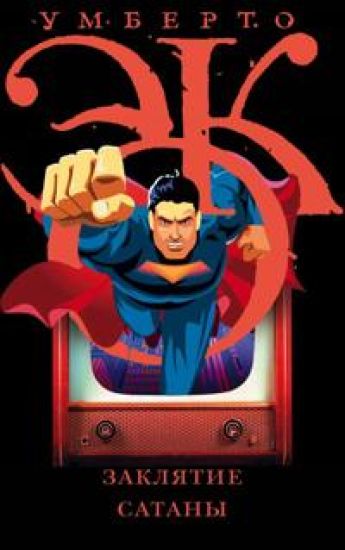
Zakljatie satany

Zakljatie satany

Umberto Eco

Ast
2018
sidottu
"Zakljatie Satany" - sbornik luchshikh statej, publikovavshikhsja s 2000 po 2015 god v formate avtorskoj kolonki, kotoruju vel Eko v izvestnom milanskom zhurnale L'Espresso. Sto semdesjat chetyre originalnykh, ostroumnykh i glubokikh teksta na samye raznye temy: ot Aristotelja, srednevekovoj literatury i tvorchestva Zhulja Verna do tvittera, televidenija i sostojanija "tekuchego obschestva". Pri etom, o chem by ni pisal Eko, vse ego teksty neobychajno zlobodnevny i imejut samoe prjamoe otnoshenie k sovremennosti, na kotoruju velikij italjanets vsegda reagiroval molnienosno, ostro, s fenomenalnym umeniem vychlenjat iz potoka vremeni vse samoe vazhnoe i bezoshibochno predskazyvat buduschee. Eto poslednjaja kniga umershego v 2016 godu Umberto Eko, material dlja kotoroj on otbiral sam.
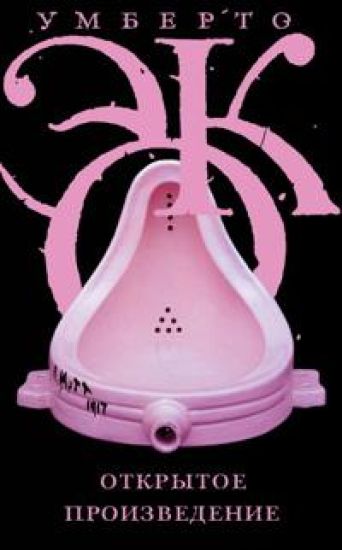
Otkrytoe proizvedenie

Otkrytoe proizvedenie

Umberto Eco

Ast
2018
sidottu
Umberto Eko - znamenityj italjanskij pisatel, avtor mirovykh bestsellerov "Imja rozy" i "Majatnik Fuko", laureat krupnejshikh literaturnykh premij, osnovatel nauchnykh i khudozhestvennykh zhurnalov, spetsialist po semiotike, istorik kultury. Ego trudy perevedeny na sorok jazykov. Ocherki, vkljuchennye v etu knigu, rodilis iz doklada "Problema otkrytogo proizvedenija", prochitannogo na XII Mezhdunarodnom filosofskom kongresse v 1958 g. V 1962 g. oni pojavilis pod zagolovkom "Otkrytoe proizvedenie" i byli dopolneny obstojatelnym issledovaniem, posvjaschennym poetike Dzhojsa, gde avtor pytalsja prosledit razvitie etogo khudozhnika. Nastojaschij sbornik prodolzhaet seriju nauchnykh rabot Umberto Eko, izdannykh na russkom jazyke.
Poiski sovershennogo jazyka v evropejskoj kulture
Umberto Eko podkhodit k teme stanovlenija Evropy v osoboj, svojstvennoj lish emu manere. Vsemirno izvestnyj spetsialist po semiotike i teorii informatsii obraschaetsja k kljuchevoj probleme vzaimoponimanija mezhdu zhiteljami Evropy. Nuzhen li dlja etogo vseobschij jazyk? I esli nuzhen, to kakoj?Eko rassmatrivaet dolguju i uvlekatelnuju istoriju poiskov, kotorye na protjazhenii stoletij predprinimalis v etom napravlenii: ot prajazyka Adama i Vavilonskogo smeshenija narechij, cherez kabbalisticheskie izyskanija i "Velikoe iskusstvo" Rajmunda Lullija, magicheskie i filosofskie jazyki - k "estestvennym" proektam XIX-XX vekov, vkljuchaja znamenityj esperanto.Perevodchik: Miroljubova AnastasijaRedaktor: Kononov Aleksandr
Chronicles of a Liquid Society

Chronicles of a Liquid Society

Umberto Eco

Random House UK
2018
pokkari
Umberto Eco was an international cultural superstar. A celebrated essayist as well as novelist, in this, his last collection, he explores many aspects of the modern world with irrepressible curiosity and wisdom written in his uniquely ironic voice. Written by Eco as articles for his regular column in l'Espresso magazine, he brings his dazzling erudition, incisiveness and keen sense of the everyday to bear on topics such as popular culture and politics, unbridled individualism, conspiracies, the old and the young, mobile phones, mass media, racism, good manners and the crisis in ideological values. It is a final gift to his readers - astute, witty and illuminating.
Chronicles of a Liquid Society

Chronicles of a Liquid Society

Umberto Eco

Harpervia
2018
nidottu
A posthumous collection of essays by internationally renowned essayist, literary critic, philosopher, and author of The Name of the Rose--"one of the most influential thinkers of our time" (Los Angeles Times)In his final collection of works, celebrated essayist and novelist Umberto Eco observes the changing world around him with irrepressible curiosity and profound wisdom. He sees with fresh eyes the upheaval in ideological values, the crises in politics, and the unbridled individualism that have become the backdrop of our lives--a "liquid" society in which it's not easy to find a polestar, though stars and starlets abound. In these pieces, written for his regular column in L'Espresso magazine, Eco brings his dazzling erudition and keen sense of the everyday to bear on topics such as popular culture and politics, being seen, conspiracies, the old and the young, new technologies, mass media, racism, and good manners. It is a final gift to his readers--astute, witty, and illuminating.
Contra el fascismo / Eternal Fascism
Las catorce claves de Umberto Eco para reconocer el fascismo: un manifiesto urgente. Un genio inagotable, voraz, que construye y deconstruye sin cesar, de inteligencia deslumbrante y humor stica cuando hace falta. .-Mercedes Monmany, ABC Uno de los pensadores m s influyentes de nuestro tiempo. .-Los Angeles Times El fascismo eterno a n nos rodea, aunque lleve traje de paisano. Puede volver en cualquier momento, aunque se disfrace de las formas m s inocuas. Nuestro deber es detectarlo, quitarle la m scara y denunciar en voz alta cada una de sus gestas. En esta conferencia dirigida a los alumnos de una universidad norteamericana en 1995, Umberto Eco alertaba frente a la sombra alargada de un fen meno que no se restringe al mbito pol tico ni tiene fecha de caducidad, porque tras un r gimen y una ideolog a hay siempre un cierto modo de pensar y de sentir, un sustrato cultural que puede ser el germen de una nueva ola fascista. El gran pensador de nuestro tiempo, aquel que nos ense a reflexionar antes de pensar , nos ofrece catorce claves para reconocer el fantasma del fascismo eterno y nos brinda instrumentos para que el presente y el futuro no se parezcan a nuestro peor pasado. ENGLISH DESCRIPTION Umberto Eco's fourteen clues for recognizing fascism: an urgent manifesto. "A tireless, fierce genius, who constructs and deconstructs endlessly, with dazzling and even humorous intelligence when needed." -Mercedes Monmany, ABC "One of the most influential thinkers of our time." -Los Angeles Times "Eternal fascism still surrounds us, it's just in civilian clothes. It can return at any time, although it comes in the most innocent disguises. Our duty is to detect it, unmask it, and loudly condemn every aspect of it." In this conference delivered to U.S. university students in 1995, Umberto Eco warned against the elongated shadow of a phenomenon that is not relegated only to politics, nor with an expiration date, because behind a regime and an ideology there is always a certain line of thought and feeling, a cultural substrate that can be the seed of a new wave of fascism. The great thinker of our time, who taught us to "reflect before thinking," gives us fourteen clues to recognize the specter of "eternal fascism" and offers us tools so that the present and the future do not resemble our worst past.