Kirjojen hintavertailu. Mukana 12 657 676 kirjaa ja 12 kauppaa.
Kirjailija
Unknown Author
Kirjat ja teokset yhdessä paikassa: 92 kirjaa, julkaisuja vuosilta 1863-2026, suosituimpien joukossa The Life and Miracles of Saint Philomena: Virgin and Martyr. Vertaile teosten hintoja ja tarkista saatavuus suomalaisista kirjakaupoista.
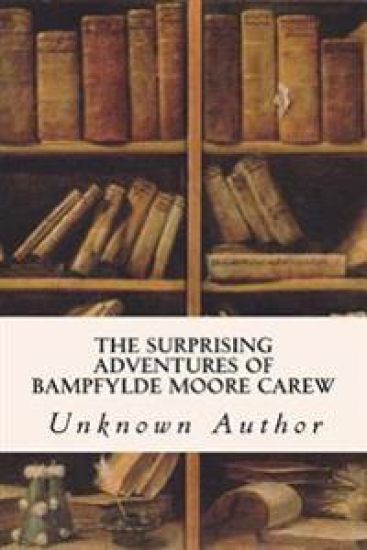
The Surprising Adventures of Bampfylde Moore Carew includes the following chapters: King of the Beggars; containing his Life, a Dictionary of the Cant Language, and many Entertaining Particulars of that Extraordinary Man. Bampfylde Moore Carew (1693-1759) was an English rogue, vagabond and impostor, who claimed to be King of the Beggars. The Life and Adventures of Bampfylde Moore Carew was first published in 1745. Although it states that the contents were "noted by himself during his passage to America" and it is likely facts were supplied by Carew, the author was probably Robert Goadby, a printer in Sherborne, Dorset, who published an early edition in 1749. It has been suggested that Carew dictated his memoirs to Mrs. Goadby. The Life and Adventures continued to be a best seller throughout the next hundred years in numerous editions as books and chapbooks. He became a nationally known character, appealing to a provincial audience. One edition of his life was printed in Hull in 1785. How much of the Life is true is impossible now to know. Carew certainly travelled and is likely to have indulged in minor crimes but many stories seem too fantastic or literary to be true. It appealed to the market for mild 'rogue' literature and many editions included a canting dictionary. The public found The Life appealing: an educated man from a good family who spent his life ingeniously and audaciously outwitting the establishment, including people who should have recognised him and without ever doing anything really bad. Carew seemingly settled in Bickleigh towards the end of his life. This may have been because of an offer of support from his relative, Sir Thomas Carew of Bickerton, winning a lottery, or because of age and weariness. Some editions of The Life and Adventures suggest Carew reflected with sadness on how 'idly' he had spent his life, perhaps making a racy story acceptable by adding a moral ending. Carew died at Bickleigh in 1759, leaving a daughter.
Originally entitled "The True Teaching of Philosophy Concerning the Generation of Metals and their True Origin", this alchemical manuscript lists no specific author, first being rendered in the 1400s and providing a largely philosophical counterpart to the more hands-on approach of much Renaissance era alchemical lore. Credited to a random Sage instead of a named individual, it may instead be part of a collective philosophical tradition. Through the theories and philosophy here listed, alchemy is said to be quite literally possible, both with transmutation and other practices.
The Philosophical Merlin is an interesting early British effort at utilizing the fortune teller tradition (a number of 18th century systems of prognostication.) With some such texts claiming a Napoleonic origin, this particular work claims to be able to cast the general nativity of the user. This astrological sign they exist under according to the book supposedly governs their life and allows them to predict what affairs are best to delve into. An altogether dated but fascinating occult system.
The Grimorium Verum (sometimes spelled Grimoirium) is one of the most diabolical black magic works ever crafted within the occult. From summoning Beelzebub and Lucifer to using the head of a dead man and some beans to summon a demon and gain invisibility, much of its content is purely demonic in nature. Infamous for such content it enjoyed hefty circulation in the era of works like the Petit Albert and Grand Grimoire.
Andrew Lang (31 March 1844 - 20 July 1912) was a Scots poet, novelist, literary critic, and contributor to the field of anthropology. He is best known as a collector of folk and fairy tales. The Andrew Lang lectures at the University of St Andrews are named after him. This book is a part of his short stories collection and efforts has been made to present the stories beautifully to the avid readers.
Andrew Lang (31 March 1844 - 20 July 1912) was a Scots poet, novelist, literary critic, and contributor to the field of anthropology. He is best known as a collector of folk and fairy tales. The Andrew Lang lectures at the University of St Andrews are named after him. This book is a part of his short stories collection and efforts has been made to present the stories beautifully to the avid readers.