Kirjojen hintavertailu. Mukana 12 595 353 kirjaa ja 12 kauppaa.

Kirjailija

Uri Bialer

Kirjat ja teokset yhdessä paikassa: 4 kirjaa, julkaisuja vuosilta 1990-2020, suosituimpien joukossa Between East and West. Vertaile teosten hintoja ja tarkista saatavuus suomalaisista kirjakaupoista.

4 kirjaa

Kirjojen julkaisuhaarukka 1990-2020.

Israeli Foreign Policy

Israeli Foreign Policy

Uri Bialer

Indiana University Press
2020
pokkari
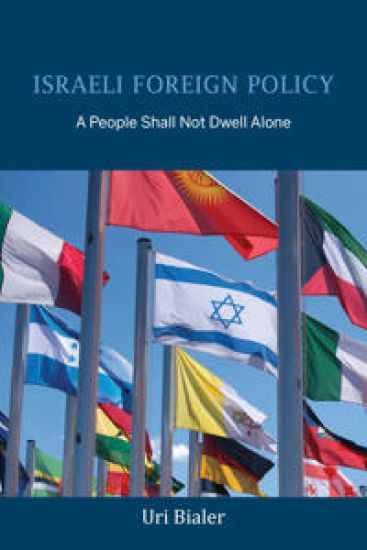
Uri Bialer lays a foundation for understanding the principal aspects of Israeli foreign policy from the early days of the state's existence to the Oslo Accords. He presents a synthetic reading of sources, many of which are recently declassified official documents, to cover Israeli foreign policy over a broad chronological expanse. Bialer focuses on the objectives of Israel's foreign policy and its actualization, especially as it concerned immigration policy, oil resources, and the procurement of armaments. In addition to identifying important state actors, Bialer highlights the many figures who had no defined diplomatic roles but were influential in establishing foreign policy goals. He shows how foreign policy was essential to the political, economic, and social well-being of the state and how it helped to deal with Israel's most intractable problem, the resolution of the conflict with Arab states and the Palestinians.
Israeli Foreign Policy

Israeli Foreign Policy

Uri Bialer

Indiana University Press
2020
sidottu
Uri Bialer lays a foundation for understanding the principal aspects of Israeli foreign policy from the early days of the state's existence to the Oslo Accords. He presents a synthetic reading of sources, many of which are recently declassified official documents, to cover Israeli foreign policy over a broad chronological expanse. Bialer focuses on the objectives of Israel's foreign policy and its actualization, especially as it concerned immigration policy, oil resources, and the procurement of armaments. In addition to identifying important state actors, Bialer highlights the many figures who had no defined diplomatic roles but were influential in establishing foreign policy goals. He shows how foreign policy was essential to the political, economic, and social well-being of the state and how it helped to deal with Israel's most intractable problem, the resolution of the conflict with Arab states and the Palestinians.
Between East and West

Between East and West

Uri Bialer

Cambridge University Press
2008
pokkari
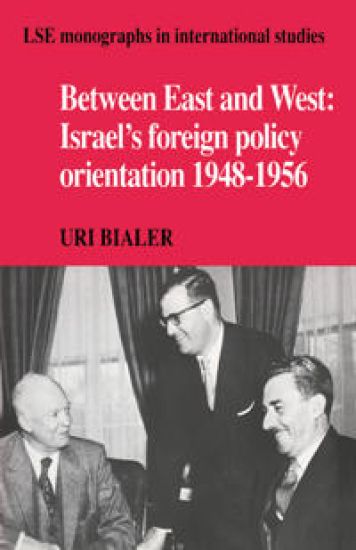
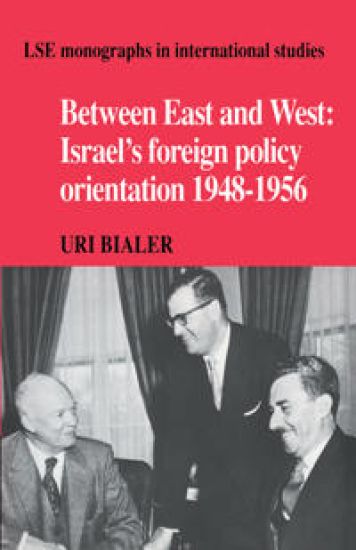
Israel's political allegiance to the West is unquestioned. In the early years after 1948, however, the direction of Israel's foreign policy remained uncertain. In this important book Dr Bialer describes the internal debates within the Israeli political parties, and particularly the highly ideological labour movement, on the choices between pro-Soviet, pro-Western or non-aligned foreign policies. Making use of declassified documents, the author has carried out extensive research in the State Archives and other archives, and his account is based overwhelmingly on primary sources. This book examines the ideological components of these debates as well as the more material motivation factors, such as dependence on US aid, trade links with the Soviet bloc, the reliance on Czech arms supplies and the degree of freedom allowed to the Soviet and East European Jewish communities to emigrate to Israel. Dr Bialer concludes that there was no alternative strategy for Israel to adopt; the tilt towards the West was inevitable. This book provides valuable material for comparative research on the foreign policies and security relationships of small states in the international system immediately after the Second World War.
Between East and West

Between East and West

Uri Bialer

Cambridge University Press
1990
sidottu
Israel’s political allegiance to the West is today unquestioned. In the early years after 1948, however, the direction of Israel’s foreign policy remained uncertain. In this important book Dr Bialer describes the internal debates within the Israeli political parties, and particularly the highly ideological labour movement, on the choices between pro-Soviet, pro-Western or non-aligned foreign policies. Making use of recently declassified documents, the author has carried out extensive research in the State Archives and other archives, and his account is based overwhelmingly on primary sources. This book examines the ideological components of these debates as well as the more material motivation factors, such as dependence on US aid, trade links with the Soviet bloc, the reliance on Czech arms supplies and the degree of freedom allowed to the Soviet and East European Jewish communities to emigrate to Israel. Dr Bialer concludes that there was no alternative strategy for Israel to adopt; the tilt towards the West was inevitable. This book offers an instructive, historic perspective on the crucial policies pursued by current Israeli administrations. It also provides valuable material for comparative research on the foreign policies and security relationships of small states in the international system immediately after the Second World War.