Kirjojen hintavertailu. Mukana 12 507 024 kirjaa ja 12 kauppaa.

Kirjailija

V.A. Goldade

Kirjat ja teokset yhdessä paikassa: 3 kirjaa, julkaisuja vuosilta 2002-2010, suosituimpien joukossa Plastics for Corrosion Inhibition. Vertaile teosten hintoja ja tarkista saatavuus suomalaisista kirjakaupoista.

3 kirjaa

Kirjojen julkaisuhaarukka 2002-2010.

Plastics for Corrosion Inhibition

Plastics for Corrosion Inhibition

V.A. Goldade; L.S. Pinchuk; A.V. Makarevich; V.N. Kestelman

Springer-Verlag Berlin and Heidelberg GmbH Co. K
2010
nidottu
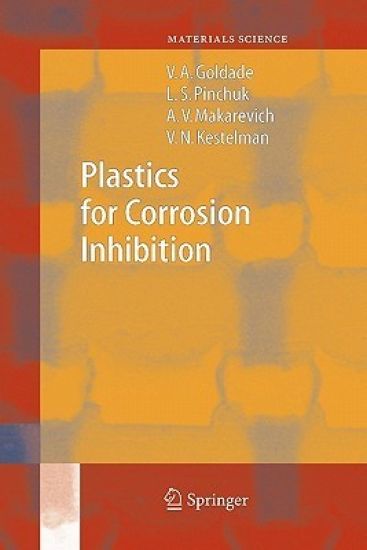
One of the key problems of failure-free operation of machinery is prevention of corrosion. The global scale of modern production makes this problem even more critical. At the beginning of the 21st century industrial contami- tion and the corrosion-active nature of the environment reached a level such that corrosive damage of materials became commensurate with their prod- tion volume and expenditure on anticorrosion protection of machines became comparable with investments in basic production. Anticorrosion techniques changed from being an auxiliary service to industrial enterprises into a dev- oping, scienti?cally intensive and generously ?nanced branch of production. Polymers occupy a very speci?c place amongst anticorrosion techniques. Polymers combine good chemical resistance with impermeability to di?- ent media and unusual deformation characteristics. The main principle of their application as anticorrosion means is the creation of a tight barrier that insulates metal machine parts or constructions from corrosion agents. The advantages of polymers allow the creation of such a barrier at minimal cost,providingprotectionoftheworkingmachinesfromcorrosion,combining their manufacture with preservation and decreasing the cost of anticorrosion. This is one of the main reasons why world production of polymer materials increased by almost 50% in the past decade.
Plastics for Corrosion Inhibition

Plastics for Corrosion Inhibition

V.A. Goldade; L.S. Pinchuk; A.V. Makarevich; V.N. Kestelman

Springer-Verlag Berlin and Heidelberg GmbH Co. K
2005
sidottu
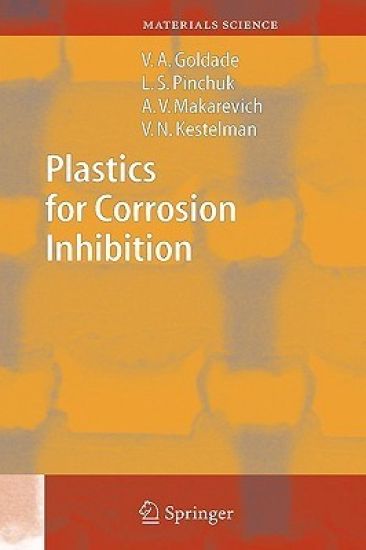
One of the key problems of failure-free operation of machinery is prevention of corrosion. The global scale of modern production makes this problem even more critical. At the beginning of the 21st century industrial contami- tion and the corrosion-active nature of the environment reached a level such that corrosive damage of materials became commensurate with their prod- tion volume and expenditure on anticorrosion protection of machines became comparable with investments in basic production. Anticorrosion techniques changed from being an auxiliary service to industrial enterprises into a dev- oping, scienti?cally intensive and generously ?nanced branch of production. Polymers occupy a very speci?c place amongst anticorrosion techniques. Polymers combine good chemical resistance with impermeability to di?- ent media and unusual deformation characteristics. The main principle of their application as anticorrosion means is the creation of a tight barrier that insulates metal machine parts or constructions from corrosion agents. The advantages of polymers allow the creation of such a barrier at minimal cost,providingprotectionoftheworkingmachinesfromcorrosion,combining their manufacture with preservation and decreasing the cost of anticorrosion. This is one of the main reasons why world production of polymer materials increased by almost 50% in the past decade.
Melt Blowing

Melt Blowing

Leonid S. Pinchuk; V.A. Goldade; A.V. Makarevich; Vladimir N. Kestelman

Springer-Verlag Berlin and Heidelberg GmbH Co. K
2002
sidottu
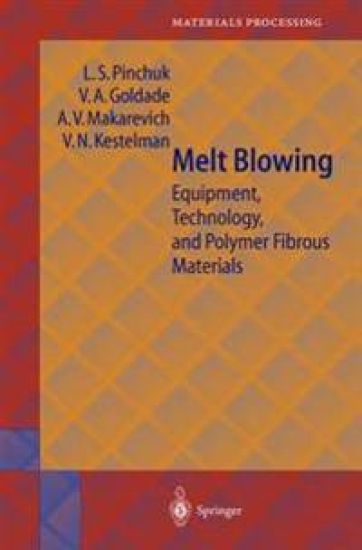
This book is devoted to a nontraditional class of materials which are manufactured by the melt-blowing process - i.e. by extrusion of polymer melt followed by fiber stretching with a gas stream. For the first time extensive data on classical and modern modifications of this technology are generalized and a review is given of extrusion head dies and subsidiary equipment. The text examines the structure and main properties of melt-blown materials as conditioned by peculiarities of overheated polymer melt spraying in an oxidizing medium. Information is given about filtering mechanisms and the main types of polymer fibrous filtering materials: electret, magnetic, adsorptional, bactericidic, and about carriers of microorganisms in biofilters. Social and ecological aspects of the application of melt-blown materials are analyzed.