Kirjojen hintavertailu. Mukana 12 187 991 kirjaa ja 12 kauppaa.

Kirjailija

V.I. Babitsky

Kirjat ja teokset yhdessä paikassa: 8 kirjaa, julkaisuja vuosilta 2000-2012, suosituimpien joukossa Dynamics and Control of Machines. Vertaile teosten hintoja ja tarkista saatavuus suomalaisista kirjakaupoista.

Mukana myös kirjoitusasut: V. I. Babitsky

8 kirjaa

Kirjojen julkaisuhaarukka 2000-2012.

Dynamics and Control of Machines

Dynamics and Control of Machines

V.K. Astashev; V.I. Babitsky; M.Z. Kolovsky

Springer-Verlag Berlin and Heidelberg GmbH Co. K
2012
nidottu
Basic models and concepts of machine dynamics and motion control are presented in the order of the principal steps of machine design. The machine is treated as a coupled dynamical system, including drive, mechanisms and controller, to reveal its behavior at different regimes through the interaction of its units under dynamic and processing loads. The main dynamic effects in machines are explained. The influence of component compliances on accuracy, stability and efficiency of the machines is analyzed. Methods for decreasing internal and external vibration activity of machines are described. The dynamic features of digital control are considered. Special attention is given to machines with intense dynamic behavior: resonant and hand-held percussion ones. Targeted to engineers as well as to lecturers and advanced students.
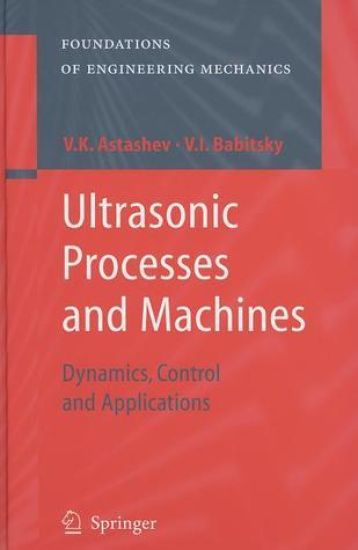
Ultrasonic Processes and Machines

Ultrasonic Processes and Machines

V.K. Astashev; V. I. Babitsky

Springer-Verlag Berlin and Heidelberg GmbH Co. K
2010
nidottu
I don’t mind your thinking slowly, I mind your publishing faster than you think. Wolfgang Pauli (1900-1958) Technologies that use high frequency (ultrasonic) vibration to intensify processes are gaining wide recognition in scienti?c and industrial envir- ments. By superimposing high frequency vibration, the basic mechanical - haviour of many processesand materialsis seen to be transformed.This leads to the developmentof newmachines and processeswith advancedcharacter- tics. Despite the fact that ultrasonic technology has been employed for many years, there is no generalised understanding of ultrasonic machines and p- cesses.Theirdesignanddevelopmenthasmainlybeenachievedusingheuristic methods based on linear acoustical considerations. This book is intended to bridge the gap between the theory and prac- cal use of ultrasonic technology. It presents generalised foundations for the dynamics and control of ultrasonic processing systems. The main concept presented is to consider ultrasonic systems as special kinds of vibratory - chines that function by exploiting nonlinear dynamic processes. This assumes coupled considerations between the ultrasonic vibration’s in?uence on the processes, and the consequence of the transformed processing loads on the excitation and control of the working tools’ vibration. Analysis is conducted in a uni?ed manner and is based on structural and frequency methods that have become well established in engineering practice. These methods are adjusted by the authors for the application to nonlinear ultrasonic systems.
Dynamics and Control of Machines

Dynamics and Control of Machines

V.K. Astashev; V.I. Babitsky; M.Z. Kolovsky

Springer-Verlag Berlin and Heidelberg GmbH Co. K
2000
sidottu
Basic models and concepts of machine dynamics and motion control are presented in the order of the principal steps of machine design. The machine is treated as a coupled dynamical system, including drive, mechanisms and controller, to reveal its behavior at different regimes through the interaction of its units under dynamic and processing loads. The main dynamic effects in machines are explained. The influence of component compliances on accuracy, stability and efficiency of the machines is analyzed. Methods for decreasing internal and external vibration activity of machines are described. The dynamic features of digital control are considered. Special attention is given to machines with intense dynamic behavior: resonant and hand-held percussion ones. Targeted to engineers as well as to lecturers and advanced students.
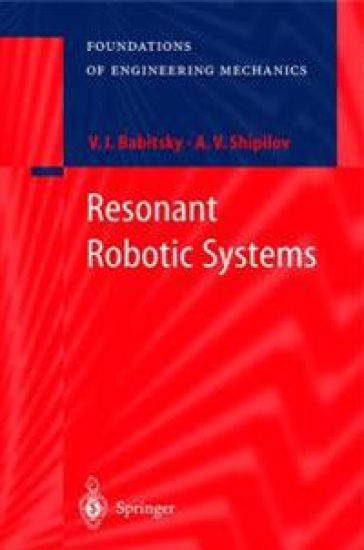
Resonant Robotic Systems

Resonant Robotic Systems

V. I. Babitsky; Alexander Shipilov

Springer-Verlag Berlin and Heidelberg GmbH Co. K
2010
nidottu
Especially designed as self-sustaining oscillating systems, resonant robotic systems use the natural modes of oscillation of electromechanical modules for their movements. In fact, manipulator systems built on these principles demonstrate record-breaking characteristics in performance. The authors summarize the results and experience of research on, and development of, resonant robotic systems. For the readers convenience, a presentation of design concepts is followed by solutions to new dynamical and control problems. The book is intended for designers, researchers and graduate students.
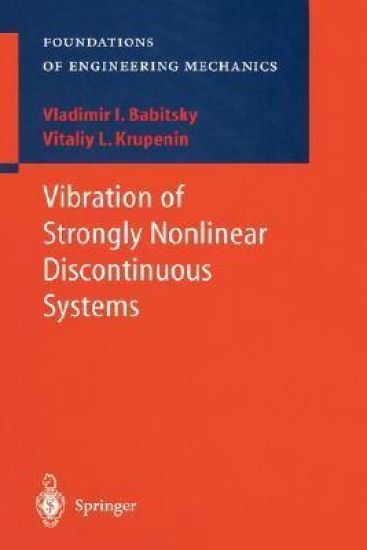
Vibration of Strongly Nonlinear Discontinuous Systems

Vibration of Strongly Nonlinear Discontinuous Systems

V.I. Babitsky; V.L. Krupenin

Springer-Verlag Berlin and Heidelberg GmbH Co. K
2010
nidottu
Among the wide diversity of nonlinear mechanical systems, it is possible to distinguish a representative class of the systems which may be characterised by the presence of threshold nonlinear positional forces. Under particular configurations, such systems demonstrate a sudden change in the behaviour of elastic and dissipative forces. Mathematical study of such systems involves an analysis of equations of motion containing large-factored nonlinear terms which are associated with the above threshold nonlinearity. Due to this, we distinguish such discontinuous systems from the much wider class of essentially nonlinear systems, and define them as strongly nonlinear systems'. The vibration occurring in strongly nonlinear systems may be characterised by a sudden and abrupt change of the velocity at particular time instants. Such a vibration is said to be non-smooth. The systems most studied from this class are those with relaxation (Van Der Pol, Andronov, Vitt, Khaikhin, Teodorchik, etc. [5,65,70,71,98,171,181]), where the non-smooth vibration usually appears due to the presence of large nonconservative nonlinear forces. Equations of motion describing the vibration with relaxation may be written in such a manner that the highest derivative is accompanied by a small parameter. The methods of integration of these equations have been developed by Vasilieva and Butuzov [182], Volosov and Morgunov [190], Dorodnitsin [38], Zheleztsov [201], Mischenko and Rozov [115], Pontriagin [137], Tichonov [174,175], etc. In a system with threshold nonlinearity, the non-smooth vibration occurs due to the action of large conservative forces. This is distinct from a system with relaxation.
Ultrasonic Processes and Machines

Ultrasonic Processes and Machines

V.K. Astashev; V. I. Babitsky

Springer-Verlag Berlin and Heidelberg GmbH Co. K
2007
sidottu
I don’t mind your thinking slowly, I mind your publishing faster than you think. Wolfgang Pauli (1900-1958) Technologies that use high frequency (ultrasonic) vibration to intensify processes are gaining wide recognition in scienti?c and industrial envir- ments. By superimposing high frequency vibration, the basic mechanical - haviour of many processesand materialsis seen to be transformed.This leads to the developmentof newmachines and processeswith advancedcharacter- tics. Despite the fact that ultrasonic technology has been employed for many years, there is no generalised understanding of ultrasonic machines and p- cesses.Theirdesignanddevelopmenthasmainlybeenachievedusingheuristic methods based on linear acoustical considerations. This book is intended to bridge the gap between the theory and prac- cal use of ultrasonic technology. It presents generalised foundations for the dynamics and control of ultrasonic processing systems. The main concept presented is to consider ultrasonic systems as special kinds of vibratory - chines that function by exploiting nonlinear dynamic processes. This assumes coupled considerations between the ultrasonic vibration’s in?uence on the processes, and the consequence of the transformed processing loads on the excitation and control of the working tools’ vibration. Analysis is conducted in a uni?ed manner and is based on structural and frequency methods that have become well established in engineering practice. These methods are adjusted by the authors for the application to nonlinear ultrasonic systems.
Resonant Robotic Systems

Resonant Robotic Systems

V. I. Babitsky; Alexander Shipilov

Springer-Verlag Berlin and Heidelberg GmbH Co. K
2003
sidottu
Especially designed as self-sustaining oscillating systems, resonant robotic systems use the natural modes of oscillation of electromechanical modules for their movements. In fact, manipulator systems built on these principles demonstrate record-breaking characteristics in performance. The authors summarize the results and experience of research on, and development of, resonant robotic systems. For the readers convenience, a presentation of design concepts is followed by solutions to new dynamical and control problems. The book is intended for designers, researchers and graduate students.
Vibration of Strongly Nonlinear Discontinuous Systems

Vibration of Strongly Nonlinear Discontinuous Systems

V.I. Babitsky; V.L. Krupenin

Springer-Verlag Berlin and Heidelberg GmbH Co. K
2001
sidottu
Among the wide diversity of nonlinear mechanical systems, it is possible to distinguish a representative class of the systems which may be characterised by the presence of threshold nonlinear positional forces. Under particular configurations, such systems demonstrate a sudden change in the behaviour of elastic and dissipative forces. Mathematical study of such systems involves an analysis of equations of motion containing large-factored nonlinear terms which are associated with the above threshold nonlinearity. Due to this, we distinguish such discontinuous systems from the much wider class of essentially nonlinear systems, and define them as strongly nonlinear systems'. The vibration occurring in strongly nonlinear systems may be characterised by a sudden and abrupt change of the velocity at particular time instants. Such a vibration is said to be non-smooth. The systems most studied from this class are those with relaxation (Van Der Pol, Andronov, Vitt, Khaikhin, Teodorchik, etc. [5,65,70,71,98,171,181]), where the non-smooth vibration usually appears due to the presence of large nonconservative nonlinear forces. Equations of motion describing the vibration with relaxation may be written in such a manner that the highest derivative is accompanied by a small parameter. The methods of integration of these equations have been developed by Vasilieva and Butuzov [182], Volosov and Morgunov [190], Dorodnitsin [38], Zheleztsov [201], Mischenko and Rozov [115], Pontriagin [137], Tichonov [174,175], etc. In a system with threshold nonlinearity, the non-smooth vibration occurs due to the action of large conservative forces. This is distinct from a system with relaxation.