Kirjojen hintavertailu. Mukana 12 595 353 kirjaa ja 12 kauppaa.

Kirjailija

V. Kerry Smith

Kirjat ja teokset yhdessä paikassa: 12 kirjaa, julkaisuja vuosilta 1986-2022, suosituimpien joukossa The Economics of Environmental Risk. Vertaile teosten hintoja ja tarkista saatavuus suomalaisista kirjakaupoista.

12 kirjaa

Kirjojen julkaisuhaarukka 1986-2022.

The Economics of Environmental Risk

The Economics of Environmental Risk

V. Kerry Smith

Edward Elgar Publishing Ltd
2022
sidottu
Featuring real world examples of how risk information affects public choices, The Economics of Environmental Risk expertly demonstrates that policymakers need to consider how people learn about those risks. Offering insights into examples such as hazardous waste, radon, smoking, hurricanes and terrorist threats over the past four decades, this intuitive book illustrates environmental risks and the choices made to mitigate the potential effects.Providing a deep dive into how public policies and information affect private choices, this book highlights the successes and failings of these choices, recognising how decisions made can have an influence on the hazards that are faced. It also focuses on important lessons to be learnt by officials providing information on risk and designing policies for managing them. Further consideration is also given to how experts understand these risks and how the public interprets the information provided.Scholars and students of public policy, risk analysis and environmental and resource economics will value the useful examples found in this informative volume. Policymakers in risk and insurance, and risk management programs will also find this an instructive guide on the ever-changing environmental risks we face.
Valuing Natural Assets

Valuing Natural Assets

Raymond J. Kopp; V. Kerry Smith

CRC Press
2017
sidottu
Assessing natural resource damages often requires the use of nonmarket valuation techniques that were developed for use in benefit-cost analyses. Natural resource damage assessment dramatically changes the context for applying them. Two aspects of this context are especially important. First, damages are to be measured by the monetary value of the losses people experience, including their use and nonuse values, because of injuries to natural resources---a process requiring careful delineation of how the injuries connect to the resource's services. Second, a single identified entry---not generalized, anonymous taxpayers---must pay damages based on what is measured, and evaluations of the measurement techniques take place not in agency meeting rooms but in courtrooms.Contributors to Valuing Natural Assets examine the ways in which requirements for damage assessment change how the measures are used, presented, received, and defended. Drawing upon their personal involvement with the process and the research issues it has raised---both in providing analysis for defendants or plaintiffs in damage assessment cases and in writing for academic journals---their chapters reflect individual research programs that temper the rigorous demands of scholarship with the equally demanding standards of litigation.
Technical Change, Relative Prices, and Environmental Resource Evaluation
Originally published in 1974, Technical Change, Relative Prices, and Environmental Resource Evaluation explores the relationship between natural environmental resources and the differential implications of technological change and relative price appreciation. Smith claims that price is linked to technological progress and comments on the economic issues surrounding this. This title will be of interest to students of Environmental Studies and Economics.
Environmental Resources and Applied Welfare Economics
This book, first published in 1988, provides an overview of the diverse work that was being done in applied and theoretical environmental and resource economics. Some essays reflect upon the background of the work of John Krutilla, one of the founders of Resources for the Future and a leading scholar of environmental economics, and the development of the field to date. Other essays examine and convey findings on particular resource problems and theoretical issues and resource policies and the practice of applied welfare economics. This title will be of interest to students of economics and environmental studies.
Technical Change, Relative Prices, and Environmental Resource Evaluation
Originally published in 1974, Technical Change, Relative Prices, and Environmental Resource Evaluation explores the relationship between natural environmental resources and the differential implications of technological change and relative price appreciation. Smith claims that price is linked to technological progress and comments on the economic issues surrounding this. This title will be of interest to students of Environmental Studies and Economics.
Environmental Resources and Applied Welfare Economics
This book, first published in 1988, provides an overview of the diverse work that was being done in applied and theoretical environmental and resource economics. Some essays reflect upon the background of the work of John Krutilla, one of the founders of Resources for the Future and a leading scholar of environmental economics, and the development of the field to date. Other essays examine and convey findings on particular resource problems and theoretical issues and resource policies and the practice of applied welfare economics. This title will be of interest to students of economics and environmental studies.
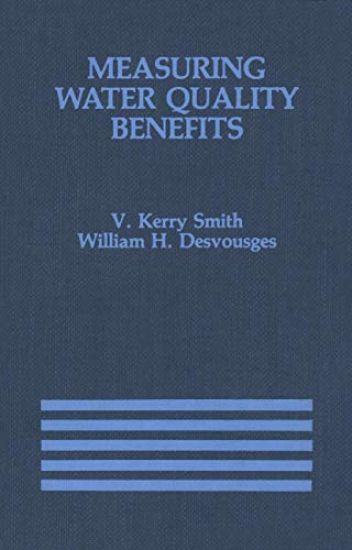
Measuring Water Quality Benefits

Measuring Water Quality Benefits

V. Kerry Smith; William H. Desvousges

Springer
2011
nidottu
Almost 5 years ago we began working together on research for the U.S. Environmental Protec­ tion Agency (EPA) to measure the benefits of water quality regulations. EPA had awarded a contract to Research Triangle Inst~ute (RTIl in response to a proposal that Bill wrote on measuring these benefits. After meeting with the EPA project officer, Dr Ann Fisher, the basic outlines of what would become this research were framed. Upon the suggestion of Bob Anderson, then chief of the Benefits Branch at EPA, we selected the Monongahela River as the focal point of a case study that would compare alternative benefit measurement approaches. Exactly how this case study would be done remained vague, but Ann urged that there be a survey and that nonuse benefits be included in the question­ naire design. Of course, Bill agreed. At the same time, Kerry was independently working on a review article that tied together some of the loose threads in the option value literature. He had also been thinking about how to measure option value, as well as working on ways to generalize the travel cost approach for estimating benefits of site attributes. Glenn Morris at RTI suggested that Bill have lunch with him and Kerry and that they could talk about Bill's research to see if there were any mutual interest. Over the lunch and Bill's ever present dessert in a Chapel Hill restaurant, we found out just how much we have in common.
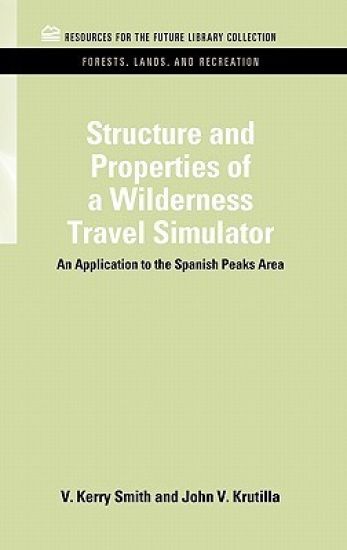
Structure and Properties of a Wilderness Travel Simulator

Structure and Properties of a Wilderness Travel Simulator

V. Kerry Smith; John V. Krutilla

Resources for the Future Press (RFF Press)
2011
sidottu
First Published in 2011. This is Volume 10 of in a set of ten titles on Resources for the Future Library Collection Forests, Lands and Recreation. The research on which this monograph is based was stimulated by some ideas presented in George Stankey's A Strategy for the Definition and Management of Wilderness Quality and the conceptual model presented in a paper by Anthony Fisher and John Krutilla entitled, Determination of Optimal Capacity of Resource-Based Recreation Facilities. This study explores in an effort to develop operational means of determining optimal capacity of intended low-density recreation facilities was ( 1 ) to establish the empirical relation between the benefits enjoyed during a wilderness outing as a function, among other things, of the number of other parties encountered, and (2) a means of estimating the expected frequency of encounters as a function of the intensity of use of any wilderness area.
The Smoking Puzzle

The Smoking Puzzle

Frank A. Sloan; V. Kerry Smith; Donald H. Taylor

Harvard University Press
2003
sidottu
How do smokers evaluate evidence that smoking harms health? Some evidence suggests that smokers overestimate health risks from smoking. This book challenges this conclusion. The authors find that smokers tend to be overly optimistic about their longevity and future health if they quit later in life. Older adults' decisions to quit smoking require personal experience with the serious health impacts associated with smoking. Smokers over fifty revise their risk perceptions only after experiencing a major health shock--such as a heart attack. But less serious symptoms, such as shortness of breath, do not cause changes in perceptions. Waiting for such a jolt to occur is imprudent. The authors show that well-crafted messages about how smoking affects quality of life can greatly affect current perceptions of smoking risks. If smokers are informed of long-term consequences of a disease, and if they are told that quitting can indeed come too late, they are able to evaluate the risks of smoking more accurately, and act accordingly.
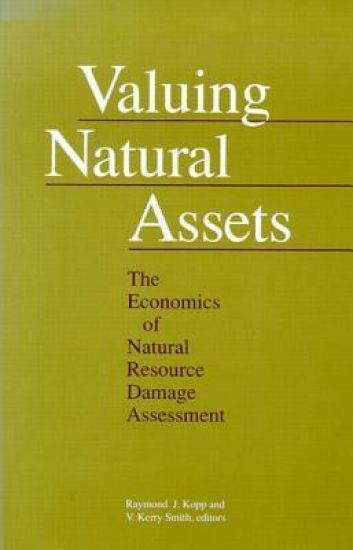
Valuing Natural Assets

Valuing Natural Assets

Raymond J. Kopp; V. Kerry Smith

Resources for the Future Press (RFF Press)
1993
nidottu
Assessing natural resource damages often requires the use of nonmarket valuation techniques that were developed for use in benefit-cost analyses. Natural resource damage assessment dramatically changes the context for applying them. Two aspects of this context are especially important. First, damages are to be measured by the monetary value of the losses people experience, including their use and nonuse values, because of injuries to natural resources---a process requiring careful delineation of how the injuries connect to the resource's services. Second, a single identified entry---not generalized, anonymous taxpayers---must pay damages based on what is measured, and evaluations of the measurement techniques take place not in agency meeting rooms but in courtrooms. Contributors to Valuing Natural Assets examine the ways in which requirements for damage assessment change how the measures are used, presented, received, and defended. Drawing upon their personal involvement with the process and the research issues it has raised---both in providing analysis for defendants or plaintiffs in damage assessment cases and in writing for academic journals---their chapters reflect individual research programs that temper the rigorous demands of scholarship with the equally demanding standards of litigation.
Measuring Water Quality Benefits

Measuring Water Quality Benefits

V. Kerry Smith; William H. Desvousges

Kluwer Academic Publishers
1986
sidottu
Almost 5 years ago we began working together on research for the U.S. Environmental Protec­ tion Agency (EPA) to measure the benefits of water quality regulations. EPA had awarded a contract to Research Triangle Inst~ute (RTIl in response to a proposal that Bill wrote on measuring these benefits. After meeting with the EPA project officer, Dr Ann Fisher, the basic outlines of what would become this research were framed. Upon the suggestion of Bob Anderson, then chief of the Benefits Branch at EPA, we selected the Monongahela River as the focal point of a case study that would compare alternative benefit measurement approaches. Exactly how this case study would be done remained vague, but Ann urged that there be a survey and that nonuse benefits be included in the question­ naire design. Of course, Bill agreed. At the same time, Kerry was independently working on a review article that tied together some of the loose threads in the option value literature. He had also been thinking about how to measure option value, as well as working on ways to generalize the travel cost approach for estimating benefits of site attributes. Glenn Morris at RTI suggested that Bill have lunch with him and Kerry and that they could talk about Bill's research to see if there were any mutual interest. Over the lunch and Bill's ever present dessert in a Chapel Hill restaurant, we found out just how much we have in common.