Kirjailija
V.R. Ramachandra Dikshitar
Kirjat ja teokset yhdessä paikassa: 7 kirjaa, julkaisuja vuosilta 2007-2026, suosituimpien joukossa Origin and Spread of the Tamils. Vertaile teosten hintoja ja tarkista saatavuus suomalaisista kirjakaupoista.
Mukana myös kirjoitusasut: V R Ramachandra Dikshitar
7 kirjaa
Kirjojen julkaisuhaarukka 2007-2026.
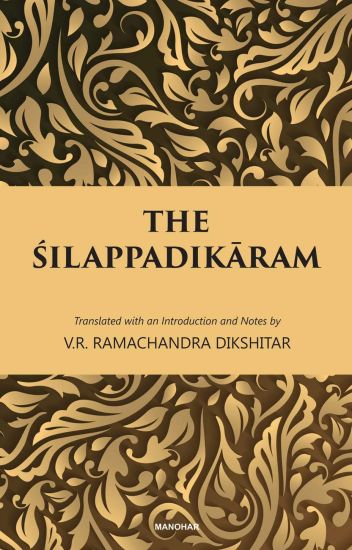
This translation of the ancient Tamil epic poem by Ilango Adigal, speculated to be written in the second century ad, was first published in 1935. It was part of a project to bring to light the priceless literary treasures of Tamil for non-Tamil readers. There is no doubt of the excellence of this epic about Kovalan, a young merchant and Kannaki, his virtuous wife. Kovalan had set out for Madura to dispose of an anklet to raise the capital needed to pursue a trade. In the bazaar he meets a state goldsmith. The latter had stolen the queen’s anklet similar to the one on Kovalan’s hands and reports to the king that he had found the thief. He is arrested and executed. Kannaki comes to Madura to prove her husband's innocence. The Pandyan king dies of remorse realizing his mistake. Kannaki, to avenge her husband's death tears off one breast and throws it at the city of Madura which goes up in flames.In ancient Tamil Sangam tradition, the book contains exceptional descriptions of the rivers like the Vaigai and Kaveri, cities like Puhar and Madura, technical accounts of different dance forms, celebration of marriages, the intermingling of Greek, Arab and Tamil peoples – all affording?data?for?the?reconstruction?of?ancient?Tamil?society.
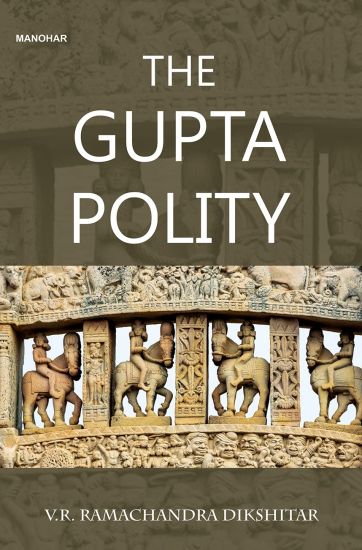
The Gupta Polity is a companion volume to the author's The Mauryan Polity. Divided into seven sections, it presents a comprehensive history of?the?Gupta?dynasty.The Gupta period is known for its golden age of literary compositions, and the author begins with a literary history of the period. The administrative structure within the political sphere, including the central powers, the provincial government, frontier region policy, and various other administrative systems are covered next. Furthermore, the establishment of military forces, officials, councils, offices, and ethical practices of the army, as well as economic practices and the legal system are discussed. There is discussion on religious history, which is the most important aspect as it talks about the popularity of sects within Hinduism like Vaishnavism, Shaivism, Shakti and Surya cults, and the accounts?of?Buddhism?and?Jainism?during?the?Gupta?period.

The principal branch of ?aktism, the Lalit? cult, is a revered form of worship of Durg?. The book is based on the Lalitop?khy?na, a section within the Brahm?]n]da Pur?]na. Lalitop?khy?na, also known as Lalit? M?h?tmaya, is one of the most ancient of the eighteen Pur?]nas and is a form of dialogue between the sages, Agastya and Hayagr?va, an incarnation?of?Vi]s]nu. The work covers the history of ?aktism through the ages, the popularity of Durg? worship and other forms of ?akti cults, the inter-relation?of??akti?with?Tantricism,?and?its?philosophical?aspects.The volume will be valuable to scholars of Hinduism, particularly those?interested?in?Tantricism?and??aktism.
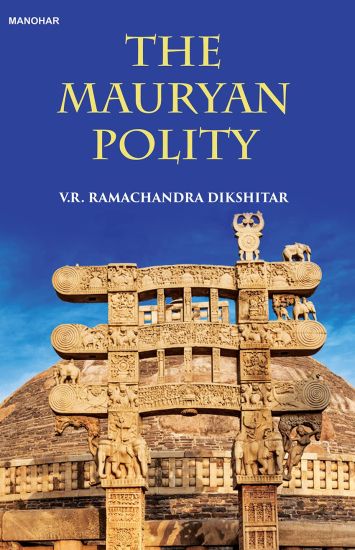
In The Mauryan Polity the author has examined the extent and char-acter of the Mauryan Empire, its central administration, and local and provincial governments, and concludes with a chapter on religion in the Mauryan State. He also has shown the similarity in the inscriptions in A?oka's edicts and Kau_til?yan polity by comparing the two. By way of new interpretations suggested for different terms and passages of the edicts, the author holds that one can reconstruct the political history of A?oka and his predecessors, and based on such reconstruction, he has attempted to establish the character of the government of that era.The work is an amplification of five lectures delivered by the author at the University of Madras in 1929-30. The volume is based on three main sources: Artha?h?stra by Kau_t?lya, inscriptions on A?oka's edicts and the surviving fragments of Megasthenes' work, Indika. The author has critically examined the authenticity of his three main sources of information and maintains that Kau_t?lya's work and A?oka's edicts are highly reliable; the fragments of Megasthenes' work have been used to supplement?the?primary?sources.The author has referred to several other sources such as translations by McCrindle, and Cowell and Thomas, and others; journals and reports including those of the ASI, of the Bombay Historical Society, of the Royal Asiatic Society of both London and Bengal, among numerous others; as well as several works that include those of Buhler, K.V.R. Aiyangar, Vincent?Smith,?Cunningham,?Sir?Henry?Maine,?Rapson,?and?others.