Kirjojen hintavertailu. Mukana 12 459 402 kirjaa ja 12 kauppaa.

Kirjailija

Valerie M. Babb

Kirjat ja teokset yhdessä paikassa: 4 kirjaa, julkaisuja vuosilta 1998-2026, suosituimpien joukossa Whiteness Visible. Vertaile teosten hintoja ja tarkista saatavuus suomalaisista kirjakaupoista.

4 kirjaa

Kirjojen julkaisuhaarukka 1998-2026.

Whiteness Visible

Whiteness Visible

Valerie M. Babb

New York University Press
1998
sidottu
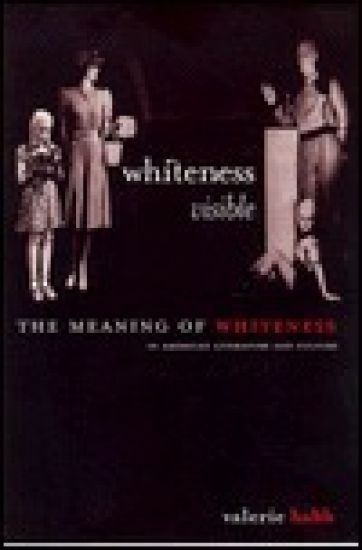
In Whiteness Visible, Valerie Babb investigates the history, values, rituals, and shared consciousness that created whiteness in the United States, as well as the representations that sustain its influence on both cultural and literary vision. Babb formulates an understanding of whiteness by tracing its literary and cultural evolution, enlisting diverse sources from, among others, the Han dynasty, Aristotle's Politica, and excerpts from the recollections of white indentured servants. Babb's textual analysis begins by surveying the construction of whiteness in early American writings and material culture, and continues through literature of the nineteenth century, surveying whiteness in texts commonly acknowledged as standards in U.S. literature--The Last of the Mohicans and Moby Dick. She then investigates representations of whiteness in a variety of late- nineteenth and early-twentieth century cultural creations, among them immigrant autobiographies, World's Fair expositions, and etiquette books. Babb convincingly illustrates the ways in which a variety of cultural creations combine to help shape the concept of universal whiteness. Whiteness Visible boldly claims that we can only understand the full significance of race and the ways in which it influences cultural understanding and cultural creation in the United States when we interrogate whiteness and make it visible.
Black Georgetown Remembered

Black Georgetown Remembered

Kathleen Menzie Lesko; Valerie M. Babb; Carroll R. Gibbs

GEORGETOWN UNIVERSITY PRESS
2026
pokkari
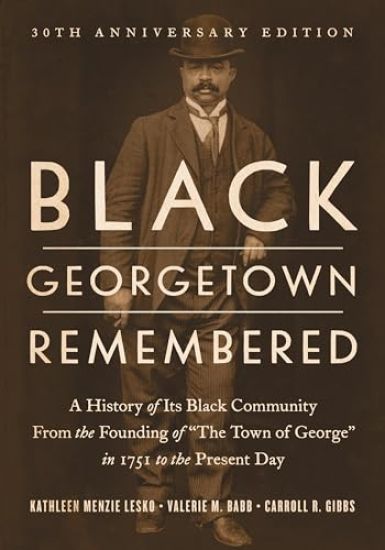
Georgetown's little-known Black heritage shaped a Washington, DC, community long associated with white power and privilege. Black Georgetown Remembered reveals a rich but little-known history of the Georgetown Black community from the colonial period to the present. Drawing on primary sources, including oral interviews with past and current residents and extensive research in church and historical society archives, the authors record the hopes, dreams, disappointments, and successes of a vibrant neighborhood as it persevered through slavery and segregation, war and peace, prosperity and depression. This thirtieth anniversary edition of Black Georgetown Remembered, first published in 1991, features more than two hundred illustrations, including portraits of prominent community leaders, sketches, maps, and nineteenth-century and contemporary photographs. A new chapter includes a conversation with former and current Georgetown residents reflecting on the community, past and present. Black Georgetown Remembered is a compelling and inspiring journey through more than two hundred years of history. A one-of-a-kind book, it invites readers to share in the lives, dreams, aspirations, struggles, and triumphs of real people, to join them in their churches, at home, and on the street, and to consider how the unique heritage of this neighborhood intersects and contributes to broader themes in African American and Washington, DC, history and urban studies.
Black Georgetown Remembered

Black Georgetown Remembered

Kathleen Menzie Lesko; Valerie M. Babb; Carroll R. Gibbs

Georgetown University Press
2022
sidottu
Georgetown's little-known Black heritage shaped a Washington, DC, community long associated with white power and privilege.Black Georgetown Remembered reveals a rich but little-known history of the Georgetown Black community from the colonial period to the present. Drawing on primary sources, including oral interviews with past and current residents and extensive research in church and historical society archives, the authors record the hopes, dreams, disappointments, and successes of a vibrant neighborhood as it persevered through slavery and segregation, war and peace, prosperity and depression.This thirtieth anniversary edition of Black Georgetown Remembered, first published in 1991, features more than two hundred illustrations, including portraits of prominent community leaders, sketches, maps, and nineteenth-century and contemporary photographs. A new chapter includes a conversation with former and current Georgetown residents reflecting on the community, past and present.Black Georgetown Remembered is a compelling and inspiring journey through more than two hundred years of history. A one-of-a-kind book, it invites readers to share in the lives, dreams, aspirations, struggles, and triumphs of real people, to join them in their churches, at home, and on the street, and to consider how the unique heritage of this neighborhood intersects and contributes to broader themes in African American and Washington, DC, history and urban studies.
Whiteness Visible

Whiteness Visible

Valerie M. Babb

New York University Press
1998
pokkari
In Whiteness Visible, Valerie Babb investigates the history, values, rituals, and shared consciousness that created whiteness in the United States, as well as the representations that sustain its influence on both cultural and literary vision. Babb formulates an understanding of whiteness by tracing its literary and cultural evolution, enlisting diverse sources from, among others, the Han dynasty, Aristotle's Politica, and excerpts from the recollections of white indentured servants. Babb's textual analysis begins by surveying the construction of whiteness in early American writings and material culture, and continues through literature of the nineteenth century, surveying whiteness in texts commonly acknowledged as standards in U.S. literature--The Last of the Mohicans and Moby Dick. She then investigates representations of whiteness in a variety of late- nineteenth and early-twentieth century cultural creations, among them immigrant autobiographies, World's Fair expositions, and etiquette books. Babb convincingly illustrates the ways in which a variety of cultural creations combine to help shape the concept of universal whiteness. Whiteness Visible boldly claims that we can only understand the full significance of race and the ways in which it influences cultural understanding and cultural creation in the United States when we interrogate whiteness and make it visible.