Kirjojen hintavertailu. Mukana 12 390 323 kirjaa ja 12 kauppaa.

Kirjailija

Valerie Sherer Mathes

Kirjat ja teokset yhdessä paikassa: 12 kirjaa, julkaisuja vuosilta 1997-2026, suosituimpien joukossa Amelia Stone Quinton and the Women's National Indian Association Volume 2. Vertaile teosten hintoja ja tarkista saatavuus suomalaisista kirjakaupoista.

12 kirjaa

Kirjojen julkaisuhaarukka 1997-2026.

Amelia Stone Quinton and the Women's National Indian Association Volume 2

Amelia Stone Quinton and the Women's National Indian Association Volume 2

Valerie Sherer Mathes; Lori Jacobson

UNIVERSITY OF OKLAHOMA PRESS
2026
nidottu
This first full account of Amelia Stone Quinton (1833–1926) and the organization she cofounded, the Women’s National Indian Association (WNIA), offers a nuanced insight into the intersection of gender, race, religion, and politics in our shared history. Author Valerie Sherer Mathes shows how Quinton, like Helen Hunt Jackson, was a true force for reform and progress who was nonetheless constrained by the assimilationist convictions of her time. The WNIA, which Quinton cofounded with Mary Lucinda Bonney in 1879, was organized expressly to press for a “more just, protective, and fostering Indian policy,” but also to promote the assimilation of the Indian through Christianization and “civilization.” Charismatic and indefatigable, Quinton garnered support for the WNIA’s work by creating strong working relationships with leaders of the main reform groups, successive commissioners of Indian affairs, secretaries of the interior, and prominent congressmen. The WNIA’s powerful network of friends formed a hybrid organization: religious in its missionary society origins but also political, using its powers to petition and actively address public opinion. Mathes follows the organization as it evolved from its initial focus on evangelizing Indian women—and promoting Victorian society’s ideals of “true womanhood”—through its return to its missionary roots, establishing over sixty missionary stations, supporting physicians and teachers, and building houses, chapels, schools, and hospitals. With reference to Quinton’s voluminous writings—including her letters, speeches, and newspaper articles—as well as to WNIA literature, Mathes draws a complex picture of an organization that at times ignored traditional Indian practices and denied individual agency, even as it provided dispossessed and impoverished people with health care and adequate housing. And at the center of this picture we find Quinton, a woman and reformer of her time.
Charles C. Painter

Charles C. Painter

Valerie Sherer Mathes

UNIVERSITY OF OKLAHOMA PRESS
2022
nidottu
Charles Cornelius Coffin Painter (1833–89), clergyman turned reformer, was one of the foremost advocates and activists in the late-nineteenth-century movement to reform U.S. Indian policy. Very few individuals possessed the influence Painter wielded in the movement, and Painter himself published numerous pamphlets for the Indian Rights Association (IRA) on the Southern Utes, Eastern Cherokees, California Indians, and other Native peoples. Yet this is the first book to fully consider his unique role and substantial contribution. Born in Virginia, Painter spent most of his life in Great Barrington, Massachusetts, commuting to New York City and Washington, D.C., initially as an agent of the American Missionary Association (AMA), later as an appointed member of the Board of Indian Commissions (BIC), and, most significant, as the Indian Rights Association’s D.C. agent. In these capacities he lobbied presidents and Congress for reform, conducted extensive investigations on reservations, and shaped deliberations in such reform bodies as the BIC and the influential Lake Mohonk conferences. Mining an extraordinary wealth of archival material, Valerie Sherer Mathes crafts a compelling account of Painter as a skilled negotiator with Indians and policymakers and as a tireless investigator who traveled to far-flung reservations, corresponded with countless Indian agents, and drafted scrupulously researched reports on his findings. Recounted in detail, his many adventures and behind-the-scenes activities—promoting education, striving to prevent the removal of the Southern Utes from Colorado, investigating reservation fraud, working to save the Piegans of Montana from starvation—afford a clear picture of Painter’s importance to the overall reform effort to incorporate Native Americans into the fabric of American life. No other book so effectively captures the day-to-day and exhausting work of a single individual on the front lines of reform. Like most of his fellow advocates, Painter was an unapologetic assimilationist, a man of his times whose story is a key chapter in the history of the Indian reform movement.
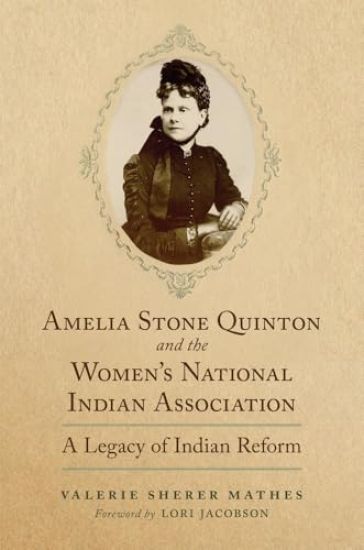
Amelia Stone Quinton and the Women's National Indian Association

Amelia Stone Quinton and the Women's National Indian Association

Valerie Sherer Mathes; Lori Jacobson

UNIVERSITY OF OKLAHOMA PRESS
2022
sidottu
This first full account of Amelia Stone Quinton (1833–1926) and the organization she cofounded, the Women’s National Indian Association (WNIA), offers a nuanced insight into the intersection of gender, race, religion, and politics in our shared history. Author Valerie Sherer Mathes shows how Quinton, like Helen Hunt Jackson, was a true force for reform and progress who was nonetheless constrained by the assimilationist convictions of her time. The WNIA, which Quinton cofounded with Mary Lucinda Bonney in 1879, was organized expressly to press for a “more just, protective, and fostering Indian policy,” but also to promote the assimilation of the Indian through Christianization and “civilization.” Charismatic and indefatigable, Quinton garnered support for the WNIA’s work by creating strong working relationships with leaders of the main reform groups, successive commissioners of Indian affairs, secretaries of the interior, and prominent congressmen. The WNIA’s powerful network of friends formed a hybrid organization: religious in its missionary society origins but also political, using its powers to petition and actively address public opinion. Mathes follows the organization as it evolved from its initial focus on evangelizing Indian women—and promoting Victorian society’s ideals of “true womanhood”—through its return to its missionary roots, establishing over sixty missionary stations, supporting physicians and teachers, and building houses, chapels, schools, and hospitals. With reference to Quinton’s voluminous writings—including her letters, speeches, and newspaper articles—as well as to WNIA literature, Mathes draws a complex picture of an organization that at times ignored traditional Indian practices and denied individual agency, even as it provided dispossessed and impoverished people with health care and adequate housing. And at the center of this picture we find Quinton, a woman and reformer of her time.
Charles C. Painter

Charles C. Painter

Valerie Sherer Mathes

University of Oklahoma Press
2020
sidottu
Charles Cornelius Coffin Painter (1833-89), clergyman turned reformer, was one of the foremost advocates and activists in the late-nineteenth-century movement to reform U.S. Indian policy. Very few individuals possessed the influence Painter wielded in the movement, and Painter himself published numerous pamphlets for the Indian Rights Association (IRA) on the Southern Utes, Eastern Cherokees, California Indians, and other Native peoples. Yet this is the first book to fully consider his unique role and substantial contribution. Born in Virginia, Painter spent most of his life in Great Barrington, Massachusetts, commuting to New York City and Washington, D.C., initially as an agent of the American Missionary Association (AMA), later as an appointed member of the Board of Indian Commissions (BIC), and most significant, as the Indian Rights Association's D.C. agent. In these capacities he lobbied presidents and Congress for reform, conducted extensive investigations on reservations, and shaped deliberations in such reform bodies as the BIC and the influential Lake Mohonk conferences. Mining an extraordinary wealth of archival material, Valerie Sherer Mathes crafts a compelling account of Painter as a skilled negotiator with Indians and policymakers and as a tireless investigator who traveled to far-flung reservations, corresponded with countless Indian agents, and drafted scrupulously researched reports on his findings. Recounted in detail, his many adventures and behind-the-scenes activities - promoting education, striving to prevent the removal of the Southern Utes from Colorado, investigating reservation fraud, working to save the Piegans of Montana from starvation - afford a clear picture of Painter's importance to the overall reform effort to incorporate Native Americans into the fabric of American life. No other book so effectively captures the day-to-day and exhausting work of a single individual on the front lines of reform. Like most of his fellow advocates, Painter was an unapologetic assimilationist, a man of his times whose story is a key chapter in the history of the Indian reform movement.
Reservations, Removal, and Reform

Reservations, Removal, and Reform

Valerie Sherer Mathes; Phil Brigandi

University of Oklahoma Press
2018
sidottu
Inseparable from the history of the Indians of Southern California is the role of the Indian agent - a government functionary whose chief duty was, according to the Office of Indian Affairs, to ""induce his Indian to labor in civilized pursuits."" Offering a portrait of the Mission Indian agents of the late nineteenth and early twentieth centuries, Reservations, Removal, and Reform reveals how individual agents interpreted this charge, and how their actions and attitudes affected the lives of the Mission Indians of Southern California. This book tells the story of the government agents, both special and regular, who served the Mission Indians from 1850 to 1903, with an emphasis on seven regular agents who served from 1878 to 1903. Relying on the agents' reports and correspondence as well as newspaper articles and court records, authors Valerie Sherer Mathes and Phil Brigandi create a vivid picture of how each man - each a political appointee tasked with implementing ever-changing policies crafted in far-off Washington, D.C. - engaged with the issues and events confronting the Mission Indians, from land tenure and water rights to education, law enforcement, and health care. Providing a balanced, comprehensive view of the world these agents temporarily inhabited and the people they were called to serve, Reservations, Removal, and Reform deepens and broadens our understanding of the lives and history of the Indians of Southern California.
Divinely Guided

Divinely Guided

Valerie Sherer Mathes

Texas Tech Press,U.S.
2012
nidottu
Founded in Philadelphia in 1879, the WNIA devoted seventy years to working among Native women. Bucking society’s narrow sense of women’s appropriate sphere, WNIA members across the U.S. built homes, missionary cottages, schools, and chapels, and sponsored teachers and physicians—all with a strong dose of Christianity. Though goals of forced assimilation were as unrealistic as they were unsuccessful, WNIA’s contributions to the welfare of Native women were hardly insignificant, especially in California. In the north, they worked at the Round Valley and Hoopa Reservations and realized their most unusual undertaking—the funding of the Greenville Indian Industrial School. In the south they worked with the Native mission populations, where cultural similarities and greater proximity fostered unprecedented cooperation among WNIA workers. Amelia Stone Quinton, longtime WNIA president and editor of The Indian’s Friend, provides a consistent narrative thread, as does Helen Hunt Jackson in the chapters on Southern California. Even after Jackson’s death, her spiritual presence and the impact of her novel Ramona guided WNIA membership. Mathes’s recovery of WNIA history, supported by a wealth of documentation, reveals much about an era’s sense of sphere, service, and sisterhood.
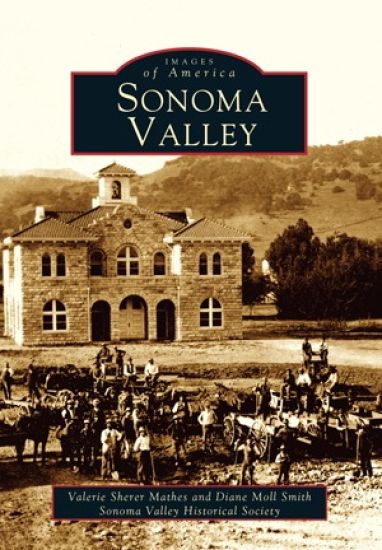
Sonoma Valley

Sonoma Valley

Valerie Sherer Mathes; Diane Moll Smith

Arcadia Publishing (SC)
2004
nidottu
California's Wine Country, its rolling hills studded with ancient oaks and laced with vines. Tourists flock to the charming, historic towns in the Valley of the Moon, from Kenwood in the north to Schellville in the south. The town of Sonoma may be the birthplace of the State of California. Its central plaza, designed as a parade ground by Mexican general Mariano Vallejo and still ringed by mid-19th century buildings, was the site of the 1846 Bear Flag Revolt. Since 1823, when Mission San Francisco Solano, the last link in the long chain of California missions, was established here, to the famous present-day wineries, restaurants, and shops, Sonoma Valley has been treasured by residents and visitors alike.
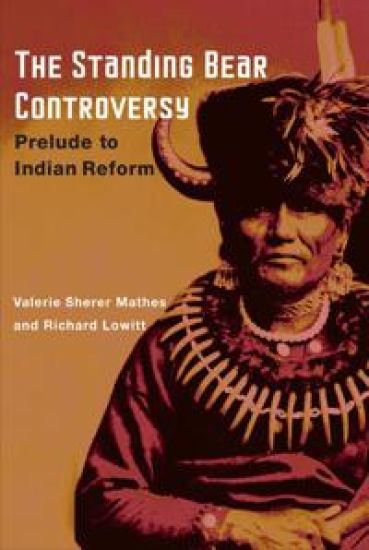
The Standing Bear Controversy

The Standing Bear Controversy

Valerie Sherer Mathes; Richard Lowitt

University of Illinois Press
2003
sidottu
In the spring of 1877 government officials forcibly removed members of the Ponca tribe from their homelands in the southeastern corner of Dakota territory, relocating them in the Indian Territory in Oklahoma. When Ponca Chief Standing Bear attempted to lead a group of his people home he was arrested, detained, and put on trial. In this book Valerie Sherer Mathes and Richard Lowitt examine how the national publicity surrounding the trial of Chief Standing Bear, as well as a speaking tour by the chief and others, brought the plight of his tribe, and of tribespeople across America, to the attention of the general public, serving as a catalyst for the nineteenth-century Indian reform movement. As the authors show, the eventual ramifications of the removal, flight, and trial of Standing Bear were extensive, and included the rise of an organized humanitarian reform movement, significant changes in the administration of Indian affairs, and the passage of the General Allotment Act in 1887. This is the first full-length study of the Standing Bear trial and its consequences, and Mathes and Lowitt draw on a vast array of manuscript, diary, and journalistic sources in order to chronicle the events of 1877, as well as the effect the trial had on broader American popular opinion, on the federal government, and finally on the Native American population as a whole.
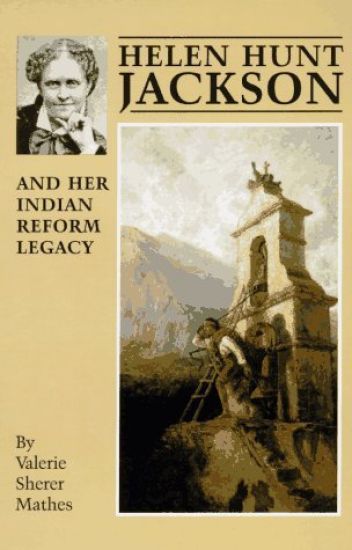
Helen Hunt Jackson and Her Indian Reform Legacy

Helen Hunt Jackson and Her Indian Reform Legacy

Valerie Sherer Mathes

University of Oklahoma Press
1997
nidottu
Helen Hunt Jackson and Her Indian Reform Legacy is a detailed account of the last six years of Jackson's life (1879-1885), when she struggled to promote the rights of American Indians displaced and dispossessed by the U.S. government. Valerie Sherer Mathes places Jackson's work within the larger nineteenth-century Indian rights movement and details her crusade of traveling, writing, and lobbying government officials. Jackson's efforts culminated in the publication of A Century of Dishonor, an indictment of the government's Indian policy, and the novel Ramona, a sympathetic portrayal of the plight of California's Mission Indians. Her influence was felt immediately in the actions of subsequent reform workers in the Women's National Indian Association, the Indian Rights Association, and the Lake Mohonk Conference.