Kirjojen hintavertailu. Mukana 12 595 353 kirjaa ja 12 kauppaa.

Kirjailija

Vanessa R Sasson

Kirjat ja teokset yhdessä paikassa: 7 kirjaa, julkaisuja vuosilta 2009-2027, suosituimpien joukossa The Fourth Wife. Vertaile teosten hintoja ja tarkista saatavuus suomalaisista kirjakaupoista.

Mukana myös kirjoitusasut: Vanessa R. Sasson

7 kirjaa

Kirjojen julkaisuhaarukka 2009-2027.

The Fourth Wife

The Fourth Wife

Vanessa R. Sasson

BLOOMSBURY PUBLISHING PLC
2027
sidottu
Vanessa Sasson brings early Buddhist history to life in this captivating retelling of Ajatasattu, the Magadhan king infamous for having imprisoned his father to take the throne and who later confesses to the Buddha, hoping for some reprieve from his now ongoing nightmares and regret. Drawing on her deep knowledge of Buddhist sources, Sasson presents Ajatasattu’s story as a great human tragedy that reflects the fundamental teachings of the Buddhist Dharma. She tells Ajatasattu’s story through the eyes of a fictional fourth wife, a vantage point that also enables the reader to imagine what women’s lives may have been like during the time of the historical Buddha. Sasson confronts the reader with painfully contemporary questions of how to live with tyranny, how to reckon with intergenerational trauma, and how to face the inevitability of karma. Her prose renders the ancient world with vivid emotional depth. The book opens with a short introduction focused on the role of storytelling in Buddhist history. It then follows with the narrative retelling of Ajatasattu’s story, and ends with extensive endnotes that provide readers with a window into how Sasson drew on the classical sources, how the sources relate to each other, and give readers the tools required to reconstruct a story that belongs to ancient India.
The Gathering

The Gathering

Vanessa R Sasson

EQUINOX PUBLISHING LTD
2023
sidottu
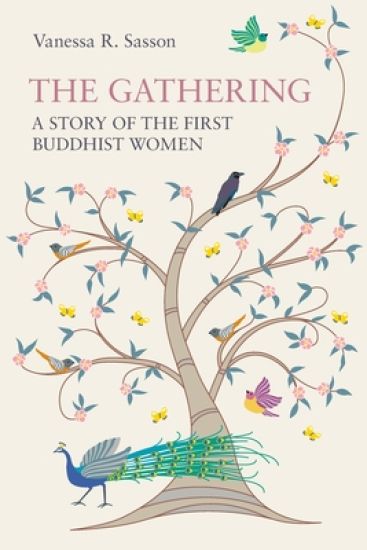
Sasson's new book is a retelling of the story of the women's request for ordination. Inspired in particular by the Therigatha and building on years of research and experience in the field, Sasson follows Vimala, Patachara, Bhadda Kundalakesa, and many others as they walk through the forest to request full access to the tradition. The Buddha's response to this request is famously complicated and multi-faceted; he eventually accepts women into the Order, but attaches specific and controversial conditions (garudhammas). Sasson invites us to think about who these first Buddhist women might have been, what they hoped to achieve, and what these conditions might have meant to them thereafter. By shaping her research into a story, Sasson invites readers to imagine a world that continues to inspire and complicate Buddhist narrative to this day.
The Gathering

The Gathering

Vanessa R Sasson

EQUINOX PUBLISHING LTD
2023
pokkari
Sasson's new book is a retelling of the story of the women's request for ordination. Inspired in particular by the Therigatha and building on years of research and experience in the field, Sasson follows Vimala, Patachara, Bhadda Kundalakesa, and many others as they walk through the forest to request full access to the tradition. The Buddha's response to this request is famously complicated and multi-faceted; he eventually accepts women into the Order, but attaches specific and controversial conditions (garudhammas). Sasson invites us to think about who these first Buddhist women might have been, what they hoped to achieve, and what these conditions might have meant to them thereafter. By shaping her research into a story, Sasson invites readers to imagine a world that continues to inspire and complicate Buddhist narrative to this day.
Yasodhara and the Buddha

Yasodhara and the Buddha

Vanessa R. Sasson

Bloomsbury Academic
2021
nidottu
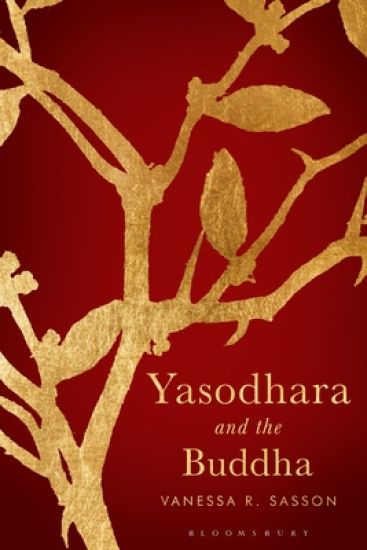
By combining the spirit of fiction with the fabulism of Indian mythology and in-depth academic research, Vanessa R. Sasson shares the evocative story of the Buddha from the perspective of a forgotten woman: Yasodhara, the Buddha’s wife. Although often marginalized, Yasodhara’s narrative here comes to life. Written with a strong feminist voice, we encounter Yasodhara as a fiercely independent, passionate and resilient individual. We witness her joys and sorrows, her expectations and frustrations, her fairy-tale wedding, and her overwhelming devastation at the departure of her beloved.It is through her eyes that we witness Siddhattha’s slow transformation, from a sheltered prince to a deeply sensitive young man. On the way, we see how the gods watch over the future Buddha from the clouds, how the king and his ministers try to keep the suffering of the world from him and how he eventually renounces the throne, his wife and newly-born son to seek enlightenment. Along with a foreword from Wendy Doniger, the book includes a scholarly introduction to Yasodhara’s narrative and offers extensive notes along with study questions, to help readers navigate the traditional literature in a new way, making this an essential book for anyone wanting to learn about Buddhist narratives.
Yasodhara and the Buddha

Yasodhara and the Buddha

Vanessa R. Sasson

Bloomsbury Academic
2021
sidottu
By combining the spirit of fiction with the fabulism of Indian mythology and in-depth academic research, Vanessa R. Sasson shares the evocative story of the Buddha from the perspective of a forgotten woman: Yasodhara, the Buddha’s wife. Although often marginalized, Yasodhara’s narrative here comes to life. Written with a strong feminist voice, we encounter Yasodhara as a fiercely independent, passionate and resilient individual. We witness her joys and sorrows, her expectations and frustrations, her fairy-tale wedding, and her overwhelming devastation at the departure of her beloved.It is through her eyes that we witness Siddhattha’s slow transformation, from a sheltered prince to a deeply sensitive young man. On the way, we see how the gods watch over the future Buddha from the clouds, how the king and his ministers try to keep the suffering of the world from him and how he eventually renounces the throne, his wife and newly-born son to seek enlightenment. Along with a foreword from Wendy Doniger, the book includes a scholarly introduction to Yasodhara’s narrative and offers extensive notes along with study questions, to help readers navigate the traditional literature in a new way, making this an essential book for anyone wanting to learn about Buddhist narratives.
Imagining the Fetus

Imagining the Fetus

Jane Marie Law; Vanessa R Sasson

Oxford University Press Inc
2009
nidottu
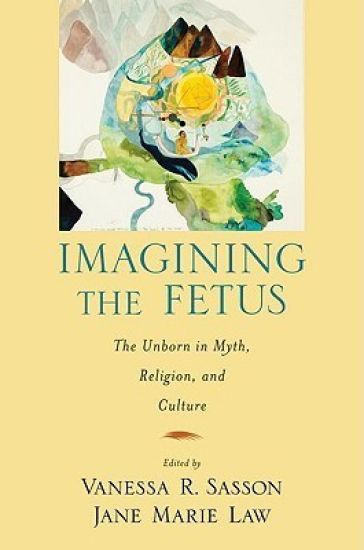
In contemporary Western culture, the word "fetus" introduces either a political subject or a literal, medicalized entity. Neither of these frameworks does justice to the vast array of religious literature and oral traditions from cultures around the world in which the fetus emerges as a powerful symbol or metaphor. This volume presents essays that explore the depiction of the fetus in the world's major religious traditions, finding some striking commonalities as well as intriguing differences. Among the themes that emerge is the tendency to conceive of the fetus as somehow independent of the mother's body -- as in the case of the Buddha, who is described as inhabiting a palace while gestating in the womb. On the other hand, the fetus can also symbolically represent profound human needs and emotions, such as the universal experience of vulnerability. The authors note how the advent of the fetal sonogram has transformed how people everywhere imagine the unborn today, giving rise to a narrow range of decidedly literal questions about personhood, gender, and disability.
Imagining the Fetus

Imagining the Fetus

Jane Marie Law; Vanessa R Sasson

Oxford University Press Inc
2009
sidottu
In contemporary Western culture, the word "fetus" introduces either a political subject or a literal, medicalized entity. Neither of these frameworks does justice to the vast array of religious literature and oral traditions from cultures around the world in which the fetus emerges as a powerful symbol or metaphor. This volume presents essays that explore the depiction of the fetus in the world's major religious traditions, finding some striking commonalities as well as intriguing differences. Among the themes that emerge is the tendency to conceive of the fetus as somehow independent of the mother's body -- as in the case of the Buddha, who is described as inhabiting a palace while gestating in the womb. On the other hand, the fetus can also symbolically represent profound human needs and emotions, such as the universal experience of vulnerability. The authors note how the advent of the fetal sonogram has transformed how people everywhere imagine the unborn today, giving rise to a narrow range of decidedly literal questions about personhood, gender, and disability.