Kirjojen hintavertailu. Mukana 12 390 323 kirjaa ja 12 kauppaa.

Kirjailija

Vartan Gregorian

Kirjat ja teokset yhdessä paikassa: 6 kirjaa, julkaisuja vuosilta 2004-2016, suosituimpien joukossa Islam. Vertaile teosten hintoja ja tarkista saatavuus suomalaisista kirjakaupoista.

6 kirjaa

Kirjojen julkaisuhaarukka 2004-2016.

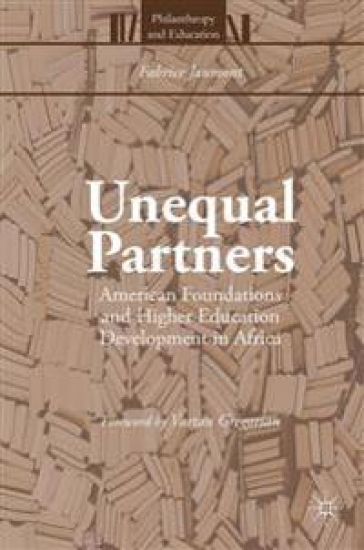
Unequal Partners

Unequal Partners

Fabrice Jaumont; Vartan Gregorian

Palgrave Macmillan
2016
sidottu
This book offers a nuanced analysis of a US-led foundation initiative of uncommon ambition, featuring seven foundations with a shared commitment to strengthen capacity in higher education in Sub-Saharan African universities. The book examines the conditions under which philanthropy can be effective, the impasses that foundations often face, and the novel context in which philanthropy operates today. This study therefore assesses the shifting grounds on which higher education globally is positioned and the role of global philanthropy within these changing contexts. This is especially important in a moment where higher education is once again recognized as a driver of development and income growth, where knowledge economies requiring additional levels of education are displacing economies predicated on manufacturing, and in a context where higher education itself appears increasingly precarious and under dramatic pressures to adapt to new conditions.
Unequal Partners

Unequal Partners

Fabrice Jaumont; Vartan Gregorian

Palgrave Macmillan
2016
nidottu
This book offers a nuanced analysis of a US-led foundation initiative of uncommon ambition, featuring seven foundations with a shared commitment to strengthen capacity in higher education in Sub-Saharan African universities. The book examines the conditions under which philanthropy can be effective, the impasses that foundations often face, and the novel context in which philanthropy operates today. This study therefore assesses the shifting grounds on which higher education globally is positioned and the role of global philanthropy within these changing contexts. This is especially important in a moment where higher education is once again recognized as a driver of development and income growth, where knowledge economies requiring additional levels of education are displacing economies predicated on manufacturing, and in a context where higher education itself appears increasingly precarious and under dramatic pressures to adapt to new conditions.
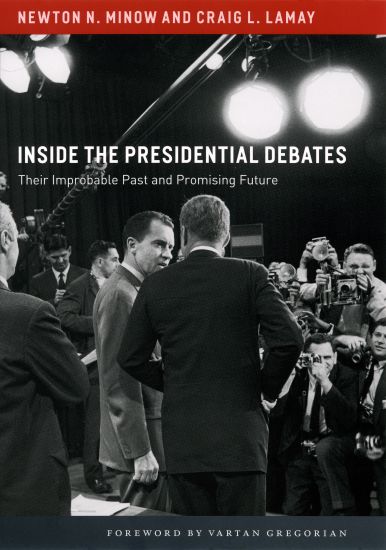
Inside the Presidential Debates

Inside the Presidential Debates

Newton N. Minow; Craig L. LaMay; Vartan Gregorian

University of Chicago Press
2016
nidottu
Newton Minow's long engagement with the world of television began nearly fifty years ago when President Kennedy appointed him chairman of the Federal Communications Commission. As its head, Minow would famously dub TV a vast wasteland, thus inaugurating a career dedicated to reforming television to better serve the public interest. Since then, he has been chairman of PBS and on the board of CBS and elsewhere, but his most lasting contribution remains his leadership on televised presidential debates. He was assistant counsel to Illinois governor Adlai Stevenson when Stevenson first proposed the idea of the debates in 1960; he served as cochair of the presidential debates in 1976 and 1980; and he helped create and is currently vice chairman of the Commission on Presidential Debates, which has organized the debates for the last two decades. Written with longtime collaborator Craig LaMay, this fascinating history offers readers for the first time a genuinely inside look into the origins of the presidential debates and the many battles both legal and personal that have determined who has been allowed to debate and under what circumstances. The authors do not dismiss the criticism of the presidential debates in recent years but do come down solidly in favor of them, arguing that they are one of the great accomplishments of modern American electoral politics. As they remind us, the debates were once unique in the democratic world, are now emulated across the globe, and they offer the public the only real chance to see the candidates speak in direct response to one another in a discussion of major social, economic, and foreign policy issues. Looking to the challenges posed by third-party candidates and the emergence of new media such as YouTube, Minow and LaMay ultimately make recommendations for the future, calling for the debates to become less formal, with candidates allowed to question each other and citizens allowed to question candidates directly. They also explore the many ways in which the Internet might serve to broaden the debates' appeal and informative power. Whether it's Clinton or Obama vs. McCain, Inside the Presidential Debates will be welcomed in 2008 by anyone interested in where this crucial part of our democracy is headed and how it got there.
Earning My Degree

Earning My Degree

David Gardner; Vartan Gregorian

University of California Press
2005
sidottu
David Pierpont Gardner was president of one of the world's most distinguished centers of higher learning - the nine-campus University of California - from 1983 to 1992. In this remarkably candid and lively memoir he provides an insider's account of what it was like for a very private, reflective man to live an extremely public life as leader of one of the most complex and controversial institutions in the country. "Earning My Degree" is a portrait of uncommon leadership and courage and a chronicle of how these traits shaped a treasured, and sometimes mystifying, American institution. Before his tenure as president, Gardner spent seven years at the University of California, Santa Barbara, during a tumultuous era of culture wars, ethnic division, and anti-Vietnam War protests, leaving his post as vice chancellor to serve as vice president of the University of California from 1971 to 1973. In 1973 he was named president of the University of Utah, and while there he chaired the National Commission on Excellence in High Education, which authored "A Nation at Risk", regarded today as the twentieth century's most telling report on the condition of American public schools. As president of the University of California, he contended with intense controversies over affirmative action, animal rights, AIDS research, weapons labs, divestment in South Africa, and much more. This memoir recounts his experiences with these and other issues and describes his dealings with the diverse cast of characters who influence the university: U.S. presidents, governors, legislators, regents, chancellors, faculty, staff, students, alumni, and donors. The epilogue of "Earning My Degree" is a thoughtful and engaging account of the ten years since Gardner's retirement that includes his personal views about what has truly mattered in his life.
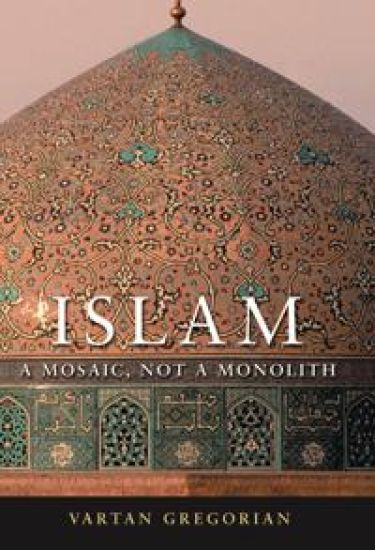
Islam

Islam

Vartan Gregorian

Brookings Institution
2004
nidottu
After World War II, leading western powers focused their attention on fighting the "Red Menace," Communism. Today, as terrorist activity is increasingly linked to militant Islamism, some politicians and scholars fear a "Green Menace," a Pan-Islamic totalitarian movement fueled by monolithic religious ideology. Such fears have no foundation in history, according to Vartan Gregorian. In this succinct, powerful survey of Islam, Gregorian focuses on Muslim diversity and division, portraying the faith and its people as a mosaic, not a monolith. The book begins with an accessible overview of Islam's tenets, institutions, evolution, and historical role. Gregorian traces its origins and fundamental principles, from Muhammad's call to faith nearly 1,400 years ago to the defeat of the Ottoman Empire in World War I, and the subsequent abolition of the Caliphate. He focuses particular attention on the intense struggle between modernists and traditionalists, interaction between religion and nationalism, and key developments that have caused bitter divisions among Muslim nations and states: the partitions of Palestine, the break up and Islamization of Pakistan, the 1978 revolution in Iran, and the 1979 Soviet invasion of Afghanistan. Today Islamist views range across the entire spectra of religious and political thought, and Islamism is anything but a unified movement. While religious extremists have attempted to form a confederacy of like-minded radicals in many countries, much of the Muslim population lives in relatively modern, secular states. Gregorian urges Westerners to distinguish between activist Islamist parties, which promote —sometimes violently —Islam as an ideology in a theocratic state, and Islamic parties, whose traditional members want their secular political systems to co-exist with the moral principles of their religion. Gregorian emphasizes the importance of religion in today's world and urges states,societies, and intellectuals to intervene in order to prevent Islam--as well as other religions--from becoming the political tool of various parties and states. He recommends continuing dialogues between modernist and traditionalist Muslims, as well as among the educated, secular elite and their clerical counterparts. He also urges U.S.-led efforts to engage and better understand the diversity of Muslim communities in the United States and the world. Lamenting widespread U.S. ignorance of the world's fastest-growing religion, Gregorian calls on "enlightened citizens" to promote international understanding, tolerance, and peace.
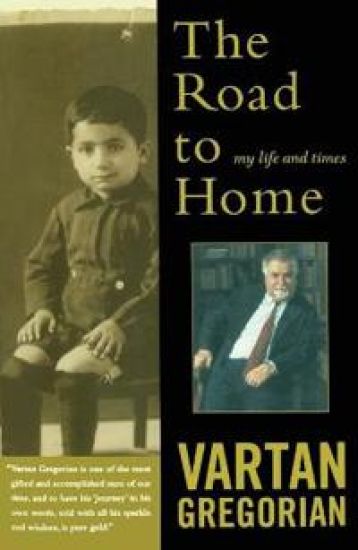
The Road to Home

The Road to Home

Vartan Gregorian

Simon Schuster
2004
pokkari
From his youth as a Christian Armenian in Muslim Tabriz, to the President of Carnegie Corporation in New York, these intriguing memoirs narrate a life full of interest, world culture, and inspiration, emphasizing the role of education in his life, detailing his professional and personal losses and successes, and profiling the exceptional people he has met along the way. Reprint. 15,000 first printing.