Kirjailija
Vernon Kellogg
Kirjat ja teokset yhdessä paikassa: 13 kirjaa, julkaisuja vuosilta 2007-2020, suosituimpien joukossa Herbert Hoover. Vertaile teosten hintoja ja tarkista saatavuus suomalaisista kirjakaupoista.
13 kirjaa
Kirjojen julkaisuhaarukka 2007-2020.
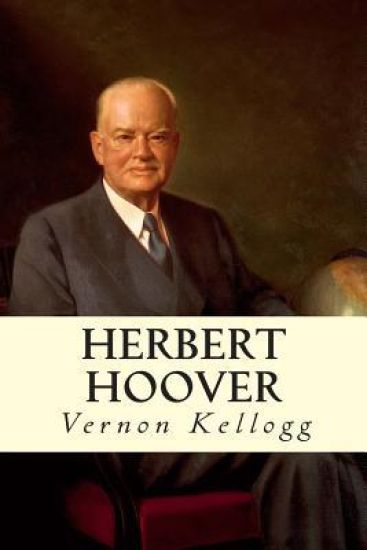
Herbert Hoover, by Vernon Kellogg, is a classic US president biography. Herbert Clark Hoover (August 10, 1874 - October 20, 1964) was an American engineer, businessman and politician who served as the 31st President of the United States from 1929 to 1933 during the Great Depression. A Republican, as Secretary of Commerce in the 1920s he introduced themes of efficiency in the business community and provided government support for standardization, efficiency and international trade. As president from 1929 to 1933, his domestic programs were overshadowed by the onset of the Great Depression. Hoover was defeated in a landslide election in 1932 by Democratic Franklin D. Roosevelt, who promised a New Deal. After this loss, Hoover became staunchly conservative, and advocated against Roosevelt's New Deal policies. Claiming to be the first student from Stanford University, Hoover would go on to a successful mining engineer career around the globe until he retired in 1912-he is the only president to have known Mandarin Chinese. In the First World War, Hoover built an international reputation as a humanitarian by leading relief efforts in Belgium during the war, and in Eastern Europe afterwards. He headed the U.S. Food Administration during World War I. His reputation as a progressive businessman fighting for efficiency and elimination of waste was built by his service as an atypically prominent Secretary of Commerce (1921-1928). Hoover was a leader in the Efficiency Movement, which held that every institution public and private was riddled with unsuspected inefficiencies. They all could be improved by experts who could identify the problems and solve them. He also believed in the importance of volunteerism and of the role of individuals in society and the economy. In the presidential election of 1928, Hoover easily won the Republican nomination, despite having no elected-office experience. Although Hoover never raised the religious issue, some of his supporters mobilized anti-Catholic sentiment against his opponent Al Smith. This, combined with Hoover's "lily-white southern strategy" which insulted African Americans who had before "Redemption" been the main and in some cases only GOP base in the South, led to an unprecedented swing toward the GOP within the then-Democratic "Solid South". Consequently, Hoover defeated Smith in a landslide, becoming the first Californian and Western President. Hoover's tenure was defined by his response to the Wall Street Crash of 1929 which struck less than eight months after he took office. He introduced large-scale government public works projects such as the Hoover Dam, but believed private initative could lead to recovery better than government stimulus; historians see Hoover's economic policies as too limited to deal with the economic crisis. Hoover called on industry to keep wages high while scapegoating Mexican Americans and Mexican immigrants for the downturn. Hoover championed the mass ethnic cleansing campaign known as the Mexican Repatriation, where between five hundred thousand and two million Mexican Americans and immigrants were deported to Mexico-a supermajority were citizens, with an estimated sixty percent being natural-born citizens. The construction of the Hoover Dam and the Repatriation both ended in 1936, after Hoover left office. In 1930, Hoover reluctantly approved the Smoot-Hawley Tariff to balance the budget, which sent foreign trade spiralling down and is seen by historians to have worsened the economy, which fell further. The unemployment rate reached 25%, with heavy industry, mining and wheat and cotton farming hit especially hard. This downward spiral continued, while Hoover expressed consistent optimism about the economy. The burgeoning homeless population lived in shantytowns called Hoovervilles. The Depression, along with his support for the unpopular prohibition of alcohol, set the stage for Hoover's overwhelming defeat in 1932.
Reproduction of the original: The Man and His Work by Vernon Kellogg
Reproduction of the original: The Man and His Work by Vernon Kellogg


Nuova or the New Bee A Story for Children of Five to Fifty
Vernon Kellogg
Createspace Independent Publishing Platform
2015
nidottu

Herbert Hoover: The Man and His Works
Vernon Kellogg
Createspace Independent Publishing Platform
2014
nidottu

Headquarters Nights: A Record of Conversations and Experiences at the Headquarters of the German Army in France and Belgium
Vernon Kellogg
Literary Licensing, LLC
2014
nidottu
Headquarters Nights: A Record Of Conversations And Experiences At The Headquarters Of The German Army In France And Belgium
Vernon Kellogg
Literary Licensing, LLC
2014
sidottu
Headquarters Nights is a book written by Vernon Kellogg, which is a record of his conversations and experiences at the headquarters of the German Army in France and Belgium during World War I. Kellogg was an American biologist and humanitarian who was sent by the American government to Europe to assist with relief efforts for civilians affected by the war. While in Europe, Kellogg was granted access to the German Army's headquarters, where he had the opportunity to observe and interact with high-ranking officers and officials. The book is divided into chapters, each of which focuses on a specific topic or experience. Kellogg writes about his impressions of the German Army's leadership, their tactics and strategies, and their attitudes towards the war and their enemies. He also describes his interactions with individual officers, including the infamous General Erich Ludendorff, and shares his observations of the daily life and routines of the headquarters staff. Throughout the book, Kellogg provides a unique perspective on the German Army and its operations during the war. He offers insights into the mindset and motivations of the German leadership, as well as the challenges and difficulties they faced on the battlefield. At the same time, he also provides a glimpse into the human side of the war, sharing stories of individual soldiers and civilians he encountered during his time in Europe. Overall, Headquarters Nights is a fascinating and insightful account of one man's experiences at the heart of the German Army during World War I. It offers a rare glimpse into the inner workings of one of the most powerful military forces of the time, as well as a unique perspective on the human toll of the war.This Is A New Release Of The Original 1917 Edition.This scarce antiquarian book is a facsimile reprint of the old original and may contain some imperfections such as library marks and notations. Because we believe this work is culturally important, we have made it available as part of our commitment for protecting, preserving, and promoting the world's literature in affordable, high quality, modern editions, that are true to their original work.
The National Research Council: The International Organization of Scientific Research
Vernon Kellogg; George Ellery Hale; Waldo G. Leland
Literary Licensing, LLC
2013
sidottu
The book ""The National Research Council: The International Organization Of Scientific Research"" by Vernon Kellogg is a comprehensive account of the National Research Council (NRC), which is a United States-based organization that serves as a hub for scientific research and development. The book delves into the history of the NRC and its role in advancing scientific research and technological innovation. The author provides an in-depth analysis of the NRC's structure, functions, and contributions to the scientific community. He also explores the NRC's collaborations with international organizations and its efforts to promote global scientific cooperation. The book is divided into several chapters, each of which focuses on a different aspect of the NRC's work. The author provides detailed information on the NRC's research programs, funding mechanisms, and policy initiatives. He also examines the NRC's role in shaping science education and training programs in the United States.Overall, ""The National Research Council: The International Organization Of Scientific Research"" is a valuable resource for anyone interested in the history and development of scientific research in the United States. The book provides a comprehensive overview of the NRC's work and its impact on the scientific community.Also Includes The International Union Of Academics And The American Council Of Learned Societies. International Conciliation, No. 154, September, 1920.This scarce antiquarian book is a facsimile reprint of the old original and may contain some imperfections such as library marks and notations. Because we believe this work is culturally important, we have made it available as part of our commitment for protecting, preserving, and promoting the world's literature in affordable, high quality, modern editions, that are true to their original work.
The National Research Council: The International Organization of Scientific Research
Vernon Kellogg; George Ellery Hale; Waldo G. Leland
Literary Licensing, LLC
2013
nidottu