

Kirjailija
Vesa Oittinen
Kirjat ja teokset yhdessä paikassa: 6 kirjaa, julkaisuja vuosilta 1994-2025, suosituimpien joukossa Spinozistische Dialektik. Vertaile teosten hintoja ja tarkista saatavuus suomalaisista kirjakaupoista.
6 kirjaa
Kirjojen julkaisuhaarukka 1994-2025.
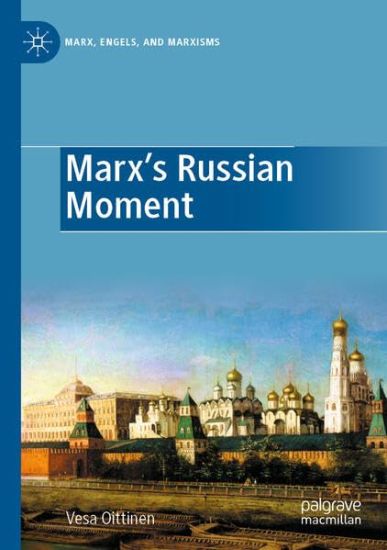
This book discusses Marx’s relations with Russia, which have always been ambivalent. In his youth, and indeed a good way into the 1860s, Marx might even be called a “Russophobe.” Around 1870, however, his views on Russia undergo a change; he becomes acquainted with a new kind of Russian radical and revolutionary movement and begins to study Russian. It becomes clear that Marx begins to feel that Russia is some kind of a “touchstone” for his theories. Offering a new and original interpretation of Marx’s theoretical development, Marx’s Russian Moment analyzes the following themes: Marx’s concept of ideology (as developed in the German Ideology) and its fortunes in Russia; Marx’s encounter with Bakunin and Russian nihilism; Marx’s and Engels’s studies of primitive societies; Engels’s views of the developmental perspectives of small Slavic nations; and Marx’s views on Finland, the Russian Grand Duchy. Considering these topics as “case studies,” Oittinen argues that Marx’s encounter with Russia substantially influenced Marx’s (and Engels’s) views not just on current political and economic matters but also on a philosophical and methodological level.

This book discusses Marx’s relations with Russia, which have always been ambivalent. In his youth, and indeed a good way into the 1860s, Marx might even be called a “Russophobe.” Around 1870, however, his views on Russia undergo a change; he becomes acquainted with a new kind of Russian radical and revolutionary movement and begins to study Russian. It becomes clear that Marx begins to feel that Russia is some kind of a “touchstone” for his theories. Offering a new and original interpretation of Marx’s theoretical development, Marx’s Russian Moment analyzes the following themes: Marx’s concept of ideology (as developed in the German Ideology) and its fortunes in Russia; Marx’s encounter with Bakunin and Russian nihilism; Marx’s and Engels’s studies of primitive societies; Engels’s views of the developmental perspectives of small Slavic nations; and Marx’s views on Finland, the Russian Grand Duchy. Considering these topics as “case studies,” Oittinen argues that Marx’s encounter with Russia substantially influenced Marx’s (and Engels’s) views not just on current political and economic matters but also on a philosophical and methodological level.
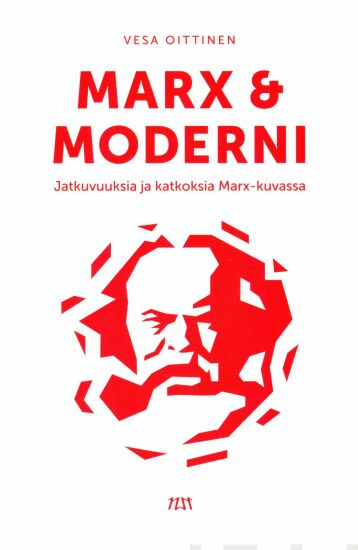
Marx ja moderniJatkuvuuksia ja katkoksia Marx-kuvassaMarx on kuopattu moneen kertaan. Yhtä monta kertaa hän on noussut uudelleen parrasvaloihin. Finanssikriisi käynnisti Marx-tutkimuksen viimeisimmän vaiheen, jossa Marxin suomin välinein tartutaan globalisoitumiseen, digitalisoitumiseen ja ekologiaan. Syntymässä on uudenlainen marxismi, joka yrittää vastata uusiin haasteisiin ja uusiin kysymyksiin.Vesa Oittisen Marx ja moderni kertoo, mitä annettavaa Marxilla on nykymaailmalle ja miten Marx jatkaa valistusajattelun perinnettä. Marxin taloustieteellisestä lähtökohdasta ei tingitä: marxilaisen perinteen antoisuus kumpuaa juuri oivalluksesta, ettei kapitalismi ole paras eikä luonnollinen vaihtoehto. Vesa Oittinen (s. 1951) on pitkän linjan Marx-tutkija, professori ja Karl Marx -seuran puheenjohtaja.

The radical Russian philosopher, politician, utopian novelist and social scientist Aleksandr Bogdanov (1873-1928) is a controversial figure: for some, the "rival of Lenin" and founder of an alternative current in Bolshevism, which might have turned the course of history if he had succeeded; for others, an utopist with "wild" ideas in social sciences, culture as well as medicine; some, finally, see in Bogdanov a precursor of cybernetics and scientific management of society. All these aspects of the many-faceted person of Bogdanov are discussed in this volume, which contains the materials of an international symposium held at the Aleksanteri Institute in 2006, with some later additions. The contributions of scholars from Russia, Germany, Italy, France and Finland give an overall picture and open some unexpected new views on the literary and scientific work of a Russian scholar, whose work was neglected for a long time in his native country.ContributorsGeorgii GloveliWladislaw HedelerGalina IsakovaSvetlana NeretinaAleksandr OgurtsovVesa OittinenSimona PoustilnikHans-Christoph RauhJutta ScherrerAleksandr ShushpanovDaniela SteilaIlmari SusiluotoPia Tikka

Im Gefolge des franzosischen Strukturalismus und Poststrukturalismus ist es ublich geworden, Spinoza als einen Anti-Dialektiker und Vorlaufer nietzscheanischer Thematik zu interpretieren. Dieses Buch setzt sich kritisch mit den Spinoza-Deutungen von Althusser, Deleuze und deren Jungern auseinander. Zugleich wird versucht, das Verhaltnis von Hegel und Spinoza genauer als bisher zu bestimmen, um die dialektische Problematik im Werk Spinozas zu umreissen."