Kirjojen hintavertailu. Mukana 12 657 676 kirjaa ja 12 kauppaa.

Kirjailija

Vesa-Pekka Herva

Kirjat ja teokset yhdessä paikassa: 6 kirjaa, julkaisuja vuosilta 2019-2026, suosituimpien joukossa Myyttinen pohjola. Vertaile teosten hintoja ja tarkista saatavuus suomalaisista kirjakaupoista.

6 kirjaa

Kirjojen julkaisuhaarukka 2019-2026.

Myyttinen pohjola

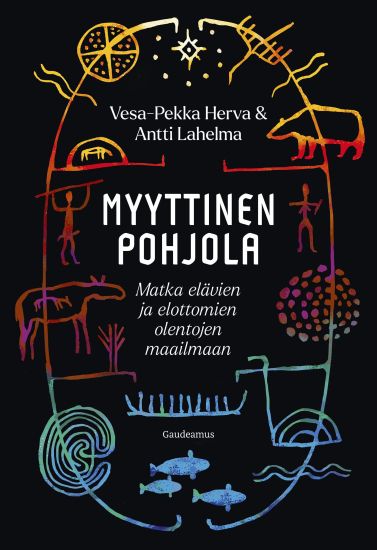
Myyttinen pohjola

Vesa-Pekka Herva; Antti Lahelma

Gaudeamus
2026
sidottu
Metsästäjä muuttuu saalistamakseen eläimeksi, samaani ratsastaa hirvellä vettä pitkin tuonpuoleiseen, aurinko kulkee vaunuissa taivaankannen halki... Rajat elävien ja elottomien olentojen välillä liudentuvat ja ihminen sulautuu osaksi ympäristöä - kaikkeen sisältyy elämän mahdollisuus. Pohjoinen on aina ollut sekä mielikuvituksen, utopioiden että konkreettisen historian näyttämö. Myyttinen pohjola -teos matkaa kivikaudelle asti jäljittäessään pohjoisten kansojen maailmankuvan aineksia ja niiden heijastumia nykypäivään. Se kertoo myös eksoottisena ja taianomaisena nähtyyn pohjoiseen liitetyistä mielikuvista sekä paljastaa yllättäviä yhtäläisyyksiä muinaisen pohjolan ja antiikin ajan eteläisten korkeakulttuurien välillä. Kaiken ytimessä on ihmisen suhde ympäristöönsä. Tarkastelemalla pohjoisten alueiden perinteistä animistis-samanistista suhdetta todellisuuteen teos haastaa myös modernin länsimaisen vastakkainasettelun ihmisen ja luonnon välillä.
Weirding Civilization

Weirding Civilization

Vesa-Pekka Herva; Antti Lahelma

TAYLOR FRANCIS LTD
2025
sidottu
Weirding Civilization examines the irrational foundations of civilization, from the Bronze Age to the Anthropocene. Inspired by Twin Peaks and Lovecraftian horror, it reveals how weirdness – disorienting, monstrous, and ambivalent – has shaped human society since the rise of the first complex civilizations.Taking ‘weirding’ as its conceptual lens, the book examines hallmarks of civilization such as urbanism, money, and writing, uncovering their layered and often non-rational nature. While the concept of weirding has gained traction across disciplines, from literature studies to climate science, this book applies it systematically to early civilizations for the first time. Weirdness emerges as ruptures in experienced reality, arising from the complex interplay between humans and non-humans. The book explores how civilization has unfolded in relation to hidden, invisible, and unknown dimensions of reality. Accessible and thought-provoking, it broadens conceptual horizons, offering fresh insights into the past and present while inviting readers to embrace that which resists categorization. With a primary focus on Europe and the Near East, it also addresses global questions of modernity, technology, and cultural imagination.This book is essential for archaeologists, anthropologists, and historians studying complex societies as well as for readers fascinated by unconventional approaches to history and civilization. It appeals to anyone seeking to disrupt conventional understandings of humanity’s development.
Weirding Civilization

Weirding Civilization

Vesa-Pekka Herva; Antti Lahelma

TAYLOR FRANCIS LTD
2025
nidottu
Weirding Civilization examines the irrational foundations of civilization, from the Bronze Age to the Anthropocene. Inspired by Twin Peaks and Lovecraftian horror, it reveals how weirdness – disorienting, monstrous, and ambivalent – has shaped human society since the rise of the first complex civilizations.Taking ‘weirding’ as its conceptual lens, the book examines hallmarks of civilization such as urbanism, money, and writing, uncovering their layered and often non-rational nature. While the concept of weirding has gained traction across disciplines, from literature studies to climate science, this book applies it systematically to early civilizations for the first time. Weirdness emerges as ruptures in experienced reality, arising from the complex interplay between humans and non-humans. The book explores how civilization has unfolded in relation to hidden, invisible, and unknown dimensions of reality. Accessible and thought-provoking, it broadens conceptual horizons, offering fresh insights into the past and present while inviting readers to embrace that which resists categorization. With a primary focus on Europe and the Near East, it also addresses global questions of modernity, technology, and cultural imagination.This book is essential for archaeologists, anthropologists, and historians studying complex societies as well as for readers fascinated by unconventional approaches to history and civilization. It appeals to anyone seeking to disrupt conventional understandings of humanity’s development.
Weirding Landscapes

Weirding Landscapes

Vesa-Pekka Herva; Aki Hakonen; Roger Norum; Oula Seitsonen; Markus Fjellström

Springer International Publishing AG
2025
sidottu
This open access book investigates human-environment relations in the context of the anthropocenic Arctic. Through an archaeological and anthropological study of landscape, it wields “weirding” – a creative mode of engagement with the world – as a means of coming to terms with the stranger, experiential dimensions of a planet populated by diverse non-human entities often bearing monstrous characteristics. Such entities are exemplified by climate change itself, at once human-induced and a force of its own volition that maintains an elusive “presence” as a co-inhabitant of the Anthropocene. The book focuses on the landscape of Ritnicohkka, a fjell in Sápmi, Finnish Lapland. Ritnicohkka is erstwhile home to a diminutive “glacier”, whose “weird”, anomalous characteristics crowned the fjell until it several years ago melted into history. Taking a broadly autoethnographic approach, it considers perceptions of, and affective experiences in, this rough and relatively remote, “otherworldly” environment, discussing diverse ways of encountering and relating to the Arctic in the context of scientific fieldwork.
Northern Archaeology and Cosmology

Northern Archaeology and Cosmology

Vesa-Pekka Herva; Antti Lahelma

Routledge
2019
sidottu
In its analysis of the archaeologies and histories of the northern fringe of Europe, this book provides a focus on animistic–shamanistic cosmologies and the associated human–environment relations from the Neolithic to modern times. The North has fascinated Europeans throughout history, as an enchanted world of natural and supernatural marvels: a land of light and dark, of northern lights and the midnight sun, of witches and magic and of riches ranging from amber to oil. Northern lands conflate fantasies and realities.Rich archaeological, historical, ethnographic and folkloric materials combine in this book with cutting-edge theoretical perspectives drawn from relational ontologies and epistemologies, producing a fresh approach to the prehistory and history of a region that is pivotal to understanding Europe-wide processes, such as Neolithization and modernization. This book examines the mythical and actual northern worlds, with northern relational modes of perceiving and engaging with the world on the one hand and the ‘place’ of the North in European culture on the other.This book is an indispensable read for scholars of archaeology, anthropology, cultural studies and folklore in northern Europe, as well as researchers interested in how the North is intertwined with developments in the broader European and Eurasian world. It provides a deep-time understanding of globally topical issues and conflicting interests, as expressed by debates and controversies around Arctic resources, nature preservation and indigenous rights.
Northern Archaeology and Cosmology

Northern Archaeology and Cosmology

Vesa-Pekka Herva; Antti Lahelma

Routledge
2019
nidottu
In its analysis of the archaeologies and histories of the northern fringe of Europe, this book provides a focus on animistic–shamanistic cosmologies and the associated human–environment relations from the Neolithic to modern times. The North has fascinated Europeans throughout history, as an enchanted world of natural and supernatural marvels: a land of light and dark, of northern lights and the midnight sun, of witches and magic and of riches ranging from amber to oil. Northern lands conflate fantasies and realities.Rich archaeological, historical, ethnographic and folkloric materials combine in this book with cutting-edge theoretical perspectives drawn from relational ontologies and epistemologies, producing a fresh approach to the prehistory and history of a region that is pivotal to understanding Europe-wide processes, such as Neolithization and modernization. This book examines the mythical and actual northern worlds, with northern relational modes of perceiving and engaging with the world on the one hand and the ‘place’ of the North in European culture on the other.This book is an indispensable read for scholars of archaeology, anthropology, cultural studies and folklore in northern Europe, as well as researchers interested in how the North is intertwined with developments in the broader European and Eurasian world. It provides a deep-time understanding of globally topical issues and conflicting interests, as expressed by debates and controversies around Arctic resources, nature preservation and indigenous rights.