Kirjojen hintavertailu. Mukana 12 595 353 kirjaa ja 12 kauppaa.

Kirjailija

Vicki L. Ruiz

Kirjat ja teokset yhdessä paikassa: 7 kirjaa, julkaisuja vuosilta 1987-2016, suosituimpien joukossa Cannery Women, Cannery Lives. Vertaile teosten hintoja ja tarkista saatavuus suomalaisista kirjakaupoista.

7 kirjaa

Kirjojen julkaisuhaarukka 1987-2016.

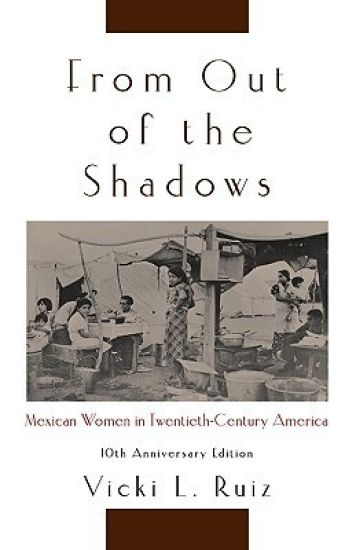
From Out of the Shadows

From Out of the Shadows

Vicki L. Ruiz

Oxford University Press Inc
2009
sidottu
In From Out of the Shadows, historian Vicki L. Ruiz provides the first full study of Mexican-American women in the 20th century, in a narrative that is greatly enhanced by Ruiz's skillful use of interviews and personal stories, capturing a vivid sense of the Mexicana experience in the United States. For this new edition, Ruiz includes a preface that continues the story of the Mexicana experience in the United States, as well as the growth of the field of Latina history. The book begins with the first wave of Mexican women crossing the border from Mexico early in our century. She reveals that between 1910 and 1930, over one million Mexican men and women (perhaps as much as ten percent of Mexico's population) migrated "al otro lado." Ruiz illuminates attempts to Americanize the Mexicanas, especially by Protestant groups, whose efforts by and large failed; the women instead relied on their own community groups--mutualistas (mutual aid societies), parish organizations, auxiliaries, and labor unions--to help them assimilate. We also read about the tensions that arose between generations, as the parents tried to rein in young daughters eager to adopt American ways--forbidding the use of makeup and insisting that teenage girls attend a dance, a movie, or even a church function with a chaperone, usually their mothers. Perhaps most important, the book highlights the various forms of political protest initiated by Mexican-American women, including civil rights activity and protests against the war in Vietnam. What emerges from the book finally is a portrait of a very distinctive culture in America, one that has slowly gathered strength in the last 95 years. From Out of the Shadows is an important addition to the largely undocumented history of Mexican-American women in our century.
From Out of the Shadows

From Out of the Shadows

Vicki L. Ruiz

Oxford University Press Inc
2008
nidottu
From Out of the Shadows was the first full study of Mexican-American women in the twentieth century. Beginning with the first wave of Mexican women crossing the border early in the century, historian Vicki L. Ruiz reveals the struggles they have faced and the communities they have built. In a narrative enhanced by interviews and personal stories, she shows how from labor camps, boxcar settlements, and urban barrios, Mexican women nurtured families, worked for wages, built extended networks, and participated in community associations--efforts that helped Mexican Americans find their own place in America. She also narrates the tensions that arose between generations, as the parents tried to rein in young daughters eager to adopt American ways. Finally, the book highlights the various forms of political protest initiated by Mexican-American women, including civil rights activity and protests against the war in Vietnam. For this new edition of From Out of the Shadows, Ruiz has written an afterword that continues the story of the Mexicana experience in the United States, as well as outlines new additions to the growing field of Latina history.
Latina Legacies

Latina Legacies

Vicki L. Ruiz; Virginia Sánchez Korrol

Oxford University Press Inc
2005
sidottu
An extraordinary exploration of Latinas in the United States from the 1800s to the present, this collection of narrative biographies documents the lives of fifteen remarkable individuals who witnessed, defined, defied, and wrote about the forces that shaped their lives. This anthology profiles Victoria Reid, Maria Amparo Ruiz de Burton, Maria Gertrudis Barcelo, Loreta Janeta Velazquez, Luisa Capetillo, Lola Rodriguez de Tio, Teresa Urrea, Adelina Otero Warren, Jovita Gonzalez Mireles, Pura Belpre, Luisa Moreno, Carmen Miranda, Antonia Pantoja, Ana Mendieta, and Dolores Huerta.
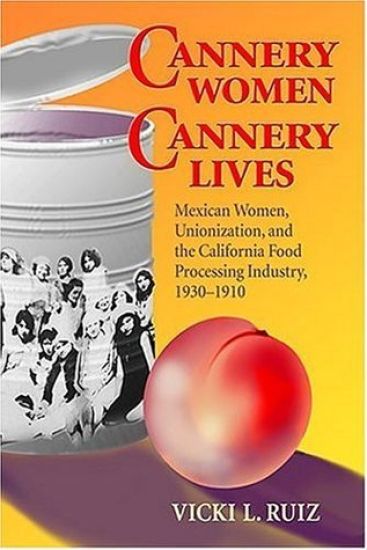
Cannery Women, Cannery Lives

Cannery Women, Cannery Lives

Vicki L. Ruiz

University of New Mexico Press
1987
nidottu
Women have been the mainstay of the gruelling, seasonal canning industry for over a century. This book is a collective biography. Thousands of Mexicana and Mexican American women working in canneries in southern California established effective, democratic trade union locals run by local members. These rank-and-file activists skilfully managed union affairs, including negotiating such benefits as maternity leave, company-provided day care, and paid holidays -- in some cases better benefits than they enjoy today. The dramatic and turbulent history of their union is a major contribution to the new labour history.
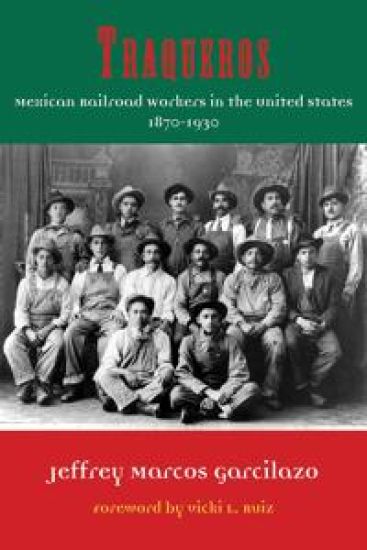
Traqueros

Traqueros

Jeffrey Marcos GarcÍlazo; Vicki L. Ruiz

University of North Texas Press,U.S.
2016
nidottu
Perhaps no other industrial technology changed thecourse of Mexican history in the United States andMexico as much as the arrival of the railroads. Tensof thousands of Mexicans worked for the railroadsin the United States, especially in the Southwest andMidwest. Extensive Mexican American settlementsappeared throughout the lower and upper Midwestas the result of the railroad. Jeffrey Marcos Garcílazoprovides the first and only comprehensive history ofMexican railroad workers across the United States.“Traqueros is the first large-scale investigation ofthe substance and breadth of traqueros’ experiencesat work and in their ‘boxcar’ communities. . . .[Garcilazo’s] years of dedicated research haveyielded an intimate yet comprehensive portraitof Mexican immigrant track men and theircommunities.”—Journal of American History“Garcilazo has made a powerful contribution tothe historiography of the railroads as well as thehistory of Mexican workers in the United States. .. . [I]t is refreshing at a time when analyses of therise of big business and railroads operate at a levelof abstraction that has left the picks and shovels ofcommon laborers barely discernible. Traqueros arean invisible labor force no longer.”—H-SHGAPE,H-Net Review
Traqueros

Traqueros

Jeffrey Marcos Garcilazo; Vicki L. Ruiz

University of North Texas Press,U.S.
2013
sidottu
Perhaps no other industrial technology changed the course of Mexican history in the United States—and Mexico—than did the coming of the railroads. Tens of thousands of Mexicans worked for the railroads in the United States, especially in the Southwest and Midwest. Construction crews soon became railroad workers proper, along with maintenance crews later. Extensive Mexican American settlements appeared throughout the lower and upper Midwest as the result of the railroad. The substantial Mexican American populations in these regions today are largely attributable to 19th- and 20th-century railroad work. Only agricultural work surpassed railroad work in terms of employment of Mexicans.The full history of Mexican American railroad labor and settlement in the United States had not been told, however, until Jeffrey Marcos Garcílazo’s groundbreaking research in Traqueros. Garcílazo mined numerous archives and other sources to provide the first and only comprehensive history of Mexican railroad workers across the United States, with particular attention to the Midwest. He first explores the origins and process of Mexican labor recruitment and immigration and then describes the areas of work performed. He reconstructs the workers’ daily lives and explores not only what the workers did on the job but also what they did at home and how they accommodated and/or resisted Americanization. Boxcar communities, strike organizations, and “traquero culture” finally receive historical acknowledgment. Integral to his study is the importance of family settlement in shaping working class communities and consciousness throughout the Midwest.
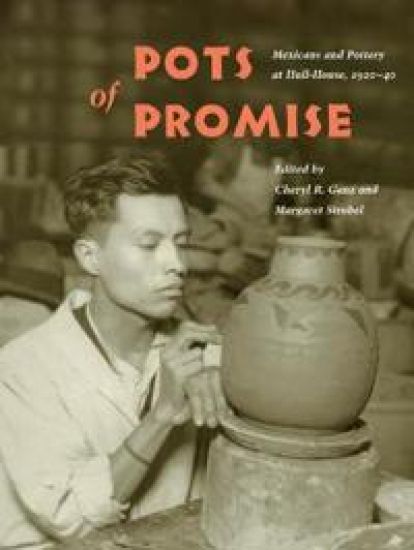
Pots of Promise

Pots of Promise

Margaret Strobel; Vicki L. Ruiz

University of Illinois Press
2004
nidottu
Pots of Promise delves into the Hull-House arts programs of the 1920s and 1930s and the pottery program at the commercial Hull-House Kilns. Four in-depth essays stand side-by-side with 131 color and black-and-white photographs, many of them previously unpublished, to reveal the untold story of Mexicans in the Hull-House colonia, at one time the largest Mexican settlement in Chicago. Contributors: David A. Badillo, Cheryl R. Ganz, Peggy Glowacki, and Rick A. López