Kirjojen hintavertailu. Mukana 12 390 323 kirjaa ja 12 kauppaa.

Kirjailija

Vicky Duckworth

Kirjat ja teokset yhdessä paikassa: 15 kirjaa, julkaisuja vuosilta 2010-2022, suosituimpien joukossa Doing your Research Project in the Lifelong Learning Sector. Vertaile teosten hintoja ja tarkista saatavuus suomalaisista kirjakaupoista.

15 kirjaa

Kirjojen julkaisuhaarukka 2010-2022.

Transformative Teaching and Learning in Further Education

Transformative Teaching and Learning in Further Education

Rob Smith; Vicky Duckworth

Bristol University Press
2022
nidottu
Based on the Transforming Lives research project, this book explores the transformative power of further education. The book outlines a timely and critical approach to educational research and practice, and draws extensively on the testimonies of students and teachers to construct a model of transformative teaching and learning. It critiques reductive ‘skills’ policies in further education and illuminates the impact colleges and lifelong learning have on social justice outcomes for individuals, their families and communities. For trainee teachers, teachers, leaders, researchers and policy makers alike, the book presents a persuasive argument for transformative approaches to teaching and learning, and highlights the often unmeasured and under-appreciated holistic social benefits of further education.
Transformative Teaching and Learning in Further Education

Transformative Teaching and Learning in Further Education

Rob Smith; Vicky Duckworth

Bristol University Press
2022
sidottu
Based on the Transforming Lives research project, this book explores the transformative power of further education. The book outlines a timely and critical approach to educational research and practice, and draws extensively on the testimonies of students and teachers to construct a model of transformative teaching and learning. It critiques reductive ‘skills’ policies in further education and illuminates the impact colleges and lifelong learning have on social justice outcomes for individuals, their families and communities. For trainee teachers, teachers, leaders, researchers and policy makers alike, the book presents a persuasive argument for transformative approaches to teaching and learning, and highlights the often unmeasured and under-appreciated holistic social benefits of further education.
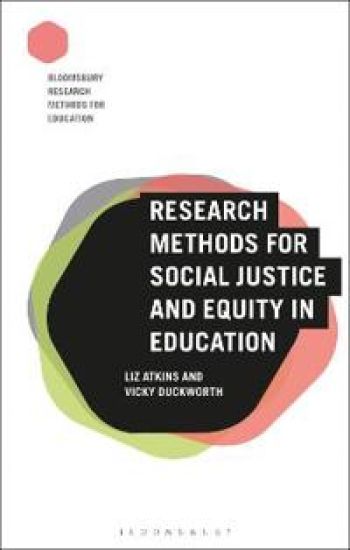
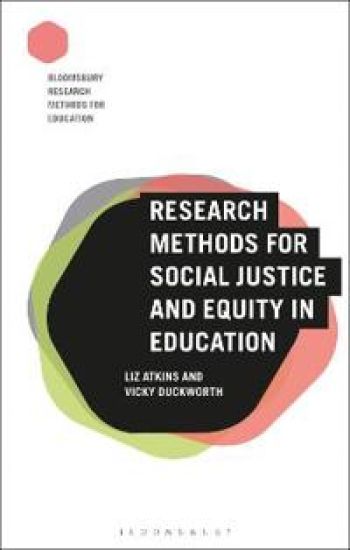
Research Methods for Social Justice and Equity in Education

Research Methods for Social Justice and Equity in Education

Liz Atkins; Vicky Duckworth

Bloomsbury Academic
2019
nidottu
Research Methods for Social Justice and Equity in Education offers researchers a full understanding of very important concepts, showing how they can be used a means to develop practical strategies for undertaking research that makes a difference to the lives of marginalised and disadvantaged learners. It explores different conceptualisations of social justice and equity, and leads the reader through a discussion of what their implications are for undertaking educational research that is both moral and ethical and how it can be enacted in the context of their chosen research method and a variety of others, both well-known and more innovative. The authors draw on real, practical examples from a range of educational contexts, including early childhood, special and inclusive education and adult education, and cultures located in both western and developing nations in order to exemplify how researchers can use methods which contribute to the creation of more equitable education systems. In this way, the authors provide a global perspective of the contrasting and creative ways in which researchers reflect on and integrate principles of social justice in their methods and their methodological decision making.It encourages the reader to think critically about their own research by asking key questions, such as: what contribution can research for equity and social justice make to new and emerging methods and methodologies? And how can researchers implement socially just research methods from a position of power? This book concludes by proposing a range of methods and methodologies which researchers can use to challenge inequality and work towards social justice, offering a springboard from which they can further their own studies.
Research Methods for Social Justice and Equity in Education

Research Methods for Social Justice and Equity in Education

Liz Atkins; Vicky Duckworth

Bloomsbury Academic
2019
sidottu
Research Methods for Social Justice and Equity in Education offers researchers a full understanding of very important concepts, showing how they can be used a means to develop practical strategies for undertaking research that makes a difference to the lives of marginalised and disadvantaged learners. It explores different conceptualisations of social justice and equity, and leads the reader through a discussion of what their implications are for undertaking educational research that is both moral and ethical and how it can be enacted in the context of their chosen research method and a variety of others, both well-known and more innovative. The authors draw on real, practical examples from a range of educational contexts, including early childhood, special and inclusive education and adult education, and cultures located in both western and developing nations in order to exemplify how researchers can use methods which contribute to the creation of more equitable education systems. In this way, the authors provide a global perspective of the contrasting and creative ways in which researchers reflect on and integrate principles of social justice in their methods and their methodological decision making.It encourages the reader to think critically about their own research by asking key questions, such as: what contribution can research for equity and social justice make to new and emerging methods and methodologies? And how can researchers implement socially just research methods from a position of power? This book concludes by proposing a range of methods and methodologies which researchers can use to challenge inequality and work towards social justice, offering a springboard from which they can further their own studies.
Learning Trajectories, Violence and Empowerment amongst Adult Basic Skills Learners
Learning Trajectories, Violence and Empowerment amongst Adult Basic Skills Learners offers deep insights into the lives of marginalised communities and the link between learning, literacy and violence, not previously carried out in-depth in a small scale study. It breaks the negative stereo-types of adults who struggle to read and write, who are often labelled and stigmatised by dominant discourses, and in doing so exposes why and how Basic Skills Learners often find themselves in marginal positions. The structural inequalities many face from childhood to adulthood across the private and public domains of their lives are revealed and probed, thus challenging neo-liberalism claims of an apparently egalitarian social field. The learners’ narratives expose the contradiction, complexities and ambivalences they experience in their daily lives, and how they try to make sense of them from their structural positioning as basic skills learners in a society based on inequality of opportunity and choice. Applying a feminist, qualitative, longitudinal, ethnographic and participatory approach, the book offers a critical perspective, drawing on Bourdieu’s work as the theoretical framework, as well as using a range of feminist, sociologists of education, literature on the ethics of care and critical literacy pedagogy, including the New Literacy Studies. The author’s personal position as an ’insider’ with ‘insider knowledge’ of marginalised communities is also woven throughout the chapters and offers insights into the struggles, conformity and resistance faced by the participants in the study. The book contributes to the debate on the impact of violence on learning and its link to class, gender and basic skills as well opening up a discussion on the power of a critical curriculum to empower people across the domains of their lives. It will be valuable reading for trainee teachers, teachers, education and sociology students, postgraduate students, as well as literacy specialists, researchers, academics, policy makers and managers of public services.
Adult Literacy Policy and Practice

Adult Literacy Policy and Practice

Vicky Duckworth; Gordon Ade-Ojo

Palgrave Pivot
2015
sidottu
This book explores the gradual evolution of Adult literacy policy from the 1970s using philosophical, sociological and economic frames of reference from a range of perspectives to highlight how priorities have changed. It also offers an alternative curriculum; a transformative model that presents a more socially just different value position.
Teaching and Training Vocational Learners

Teaching and Training Vocational Learners

Steve Ingle; Vicky Duckworth

Learning Matters Ltd
2013
nidottu
If you are teaching or training to teach vocational learners across the further education and skills sector or in the workplace, this is your essential guide. Teaching and Training Vocational Learners is a focused text written to support those who are working with vocational learners, taking into account the specific needs of this group. It provides practical advice and guidance to help you to shape your approach to teaching, learning and assessment. It has comprehensive coverage of the learning you need to prepare you to teach. Throughout, the authors offer a range of exciting and practical examples to help you to expand your 'vocational teaching toolkit'. Included are lesson plans, assessment grids, assignment briefs, ideas to engage employers, help on marking vocational evidence, planning trips and visits and much more.
Teaching and Training Vocational Learners

Teaching and Training Vocational Learners

Steve Ingle; Vicky Duckworth

Learning Matters Ltd
2013
sidottu
If you are teaching or training to teach vocational learners across the further education and skills sector or in the workplace, this is your essential guide. Teaching and Training Vocational Learners is a focused text written to support those who are working with vocational learners, taking into account the specific needs of this group. It provides practical advice and guidance to help you to shape your approach to teaching, learning and assessment. It has comprehensive coverage of the learning you need to prepare you to teach. Throughout, the authors offer a range of exciting and practical examples to help you to expand your 'vocational teaching toolkit'. Included are lesson plans, assessment grids, assignment briefs, ideas to engage employers, help on marking vocational evidence, planning trips and visits and much more.
Learning Trajectories, Violence and Empowerment amongst Adult Basic Skills Learners
Learning Trajectories, Violence and Empowerment amongst Adult Basic Skills Learners offers deep insights into the lives of marginalised communities and the link between learning, literacy and violence, not previously carried out in-depth in a small scale study. It breaks the negative stereo-types of adults who struggle to read and write, who are often labelled and stigmatised by dominant discourses, and in doing so exposes why and how Basic Skills Learners often find themselves in marginal positions. The structural inequalities many face from childhood to adulthood across the private and public domains of their lives are revealed and probed, thus challenging neo-liberalism claims of an apparently egalitarian social field. The learners’ narratives expose the contradiction, complexities and ambivalences they experience in their daily lives, and how they try to make sense of them from their structural positioning as basic skills learners in a society based on inequality of opportunity and choice. Applying a feminist, qualitative, longitudinal, ethnographic and participatory approach, the book offers a critical perspective, drawing on Bourdieu’s work as the theoretical framework, as well as using a range of feminist, sociologists of education, literature on the ethics of care and critical literacy pedagogy, including the New Literacy Studies. The author’s personal position as an ’insider’ with ‘insider knowledge’ of marginalised communities is also woven throughout the chapters and offers insights into the struggles, conformity and resistance faced by the participants in the study. The book contributes to the debate on the impact of violence on learning and its link to class, gender and basic skills as well opening up a discussion on the power of a critical curriculum to empower people across the domains of their lives. It will be valuable reading for trainee teachers, teachers, education and sociology students, postgraduate students, as well as literacy specialists, researchers, academics, policy makers and managers of public services.
How to be a Brilliant FE Teacher

How to be a Brilliant FE Teacher

Vicky Duckworth

Routledge
2013
sidottu
How to be a Brilliant FE Teacher is a straightforward, friendly guide to being an effective and innovative teacher in post-compulsory education. Focussing on practical advice drawn from the author’s extensive and successful personal experience of both teaching and training teachers, it offers sound guidance, underpinned by the latest research, theory and policy in the field.Structured around the questions that all new teachers and lecturers ask in their first teaching post, it is an introduction to both essential teaching skills and what to expect from working in this exciting, fast-paced sector. Key chapters cover: The learners – who they are, diversity and motivation;What will actually happen – organising teaching, technology and resources;How to keep your students’ interest – understanding and responding to learning styles;How will I know if they’ve learned it? – assessment and feedback;Making sure it’s working – student evaluation, reflecting on and improving practice.Packed throughout with information about where to find the best materials and resources to support your teaching, this book also offers sensible advice on balancing home and life, working effectively with your colleagues and progressing in your career.How to be a Brilliant FE Teacher will be a source of support and inspiration for all those embarking on their initial training and first post in the sector, as well as qualified professionals looking for reassuring, fresh ideas.
How to be a Brilliant FE Teacher

How to be a Brilliant FE Teacher

Vicky Duckworth

Routledge
2013
nidottu
How to be a Brilliant FE Teacher is a straightforward, friendly guide to being an effective and innovative teacher in post-compulsory education. Focussing on practical advice drawn from the author’s extensive and successful personal experience of both teaching and training teachers, it offers sound guidance, underpinned by the latest research, theory and policy in the field.Structured around the questions that all new teachers and lecturers ask in their first teaching post, it is an introduction to both essential teaching skills and what to expect from working in this exciting, fast-paced sector. Key chapters cover: The learners – who they are, diversity and motivation;What will actually happen – organising teaching, technology and resources;How to keep your students’ interest – understanding and responding to learning styles;How will I know if they’ve learned it? – assessment and feedback;Making sure it’s working – student evaluation, reflecting on and improving practice.Packed throughout with information about where to find the best materials and resources to support your teaching, this book also offers sensible advice on balancing home and life, working effectively with your colleagues and progressing in your career.How to be a Brilliant FE Teacher will be a source of support and inspiration for all those embarking on their initial training and first post in the sector, as well as qualified professionals looking for reassuring, fresh ideas.
Understanding Behaviour 14+

Understanding Behaviour 14+

Vicky Duckworth; Karen Flanagan; Karen McCormack; Jonathan Tummons

Open University Press
2012
nidottu
Dealing with challenging behaviour is normally the number one concern of trainee teachers and even more so for those who are training to work with pupils age 14+ whether within a secondary school context or post-compulsory college context. The aim of this book is to help the reader approach behavioural problems through meaningful self evaluation and reflection. This will equip the practitioner with the skills required to implement change within problematic relationships and environments and to explore a range of possible reasons as to 'why students behave in the way they do'. It challenges existing paradigms in order to break down barriers; substituting and encouraging professional responsibility for promoting positive relationships rather than the passive acceptance of unwanted behaviours, or a reliance on a culture of 'blame'.The idea is to move away from thinking about difficult or 'bad' students towards thinking about difficult relationships or environments. This process of change already allows the practitioner to reflect in a far more constructive and objective manner. This process of reflection and evaluation also allows the practitioner to acknowledge their own feelings in this process. Whilst there are strategies that can help in a reactive sense to situations and behaviours as they occurs such as body language and proxemics there are no 'quick fixes' to deal with what are extremely complicated and complex relationships and situations. This is where a solution-focused approach can be helpful as it is brief and effective. It can be brief because it is future-focused and because it works with the strengths of those who come by making the best use of their resources, and it can bring about lasting change because it aims to build solutions rather than solve problems i.e. identifying small baby steps towards a bigger end goal. Thus this approach, whilst initially daunting, allows the practitioner to be freed of the shackles of 'labels' that are neither helpful nor constructive and instead becomes a powerful tool for transforming negative learning environments.
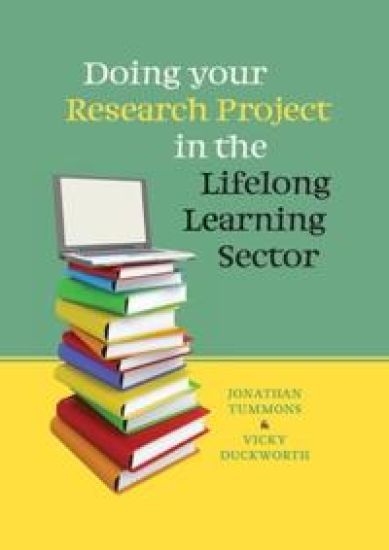
Doing your Research Project in the Lifelong Learning Sector

Doing your Research Project in the Lifelong Learning Sector

Jonathan Tummons; Vicky Duckworth

Open University Press
2012
nidottu
This book guides student researchers through the different stages of small-scale or practitioner research, a common component of study for students training to work in the lifelong learning sector. The authors look at the entire research journey, from planning a research topic and framing research questions, through the process of data collection and analysis, to writing up and presentation. Using a step-by-step approach the book tackles common thorny issues such as:Understanding the different genres of researchDiscussion of qualitative and quantitative approaches to researchThe importance of forming research questions and of locating them within current research literatureHow to do a literature reviewDealing with permissions, access and ethicsThe nuts and bolts of research methods Interpreting data and writing up research findingsTogether with case studies and examples of real-life research projects that have been completed by the authors’ own students, this book tackles research in a student-friendly and accessible style, carefully unpacking and defining the different terms, concepts and theories that students need to know when beginning research for the first time.This book is essential reading for students who are training to work in the lifelong learning sector or practitioners who are undertaking CPD to maintain their license to practice. “Many teachers training in the lifelong learning sector, as well as those going on to do foundation, honours and masters degrees in education, find the prospect of carrying out educational research for the first time daunting. Thus far, they have been reliant on generic educational research textbooks. Jonathan Tummons’ and Vicky Duckworth’s excellent work now guides them clearly and supportively through the research journey in a way which is underpinned by the authors’ deep understanding of both the sector and nature of the challenge of the research task to the student, using an informal and accessible written style.”Andy Armitage, Head of the Department of Post-Compulsory Education at Canterbury Christ Church University, UK“This book combines sound practical advice with an exploration of the philosophical and methodological concepts underpinning educational research. Often drawing on the authors’ own experiences, it makes a convincing case for the practitioner as researcher and draws clear and appropriate attention to the purposes, uses and dissemination of small scale research.”Susan Wallace, Professor of Continuing Education, Nottingham Trent University, UK
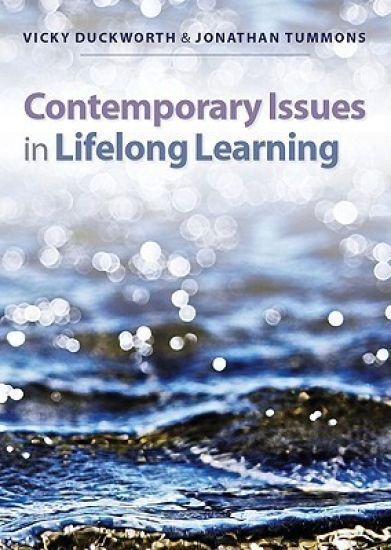
Contemporary Issues in Lifelong Learning

Contemporary Issues in Lifelong Learning

Vicky Duckworth; Jonathan Tummons

Open University Press
2010
nidottu
This book provides an up-to-date and critical analysis of contemporary issues and debates in the lifelong learning sector (LLS)The themes are presented in an accessible format, and are underpinned by recent research as well as policy analysis. The authors examine significant issues in the LLS today including inclusive practice, the employability agenda, the curriculum in the LLS and research-led teaching. There are practical strategies and reflective tasks that encourage readers to become critical, questioning practitioners. Other helpful features include:Learning outcomes at the beginning of each chapterLinks to QTLS standardsCase studies End of chapter summariesFurther reading and useful websitesIt is essential reading for trainees on QTLS programmes and is also important reading for education students and qualified staff undertaking CPD.
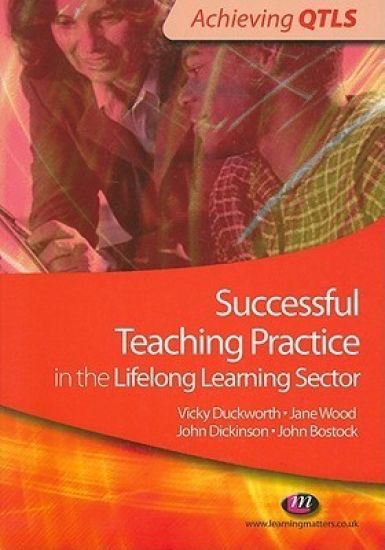
Successful Teaching Practice in the Lifelong Learning Sector

Successful Teaching Practice in the Lifelong Learning Sector

Vicky Duckworth; Jane Wood; John Bostock; John Dickinson

Learning Matters Ltd
2010
nidottu
This book provides clear guidance on how to approach initial teaching experience, how to plan effective sessions, how to work well with your mentor and how to make the most out of your new career. Through focusing on the real-life experiences of both in-service and pre-service trainee teachers, it offers the opportunity to reflect on and learn from an array of diverse teaching practice experiences from a wide range of vocational areas including construction, hair and beauty, early years, psychology, performing arts, law, English, Skills for Life and engineering.