Kirjojen hintavertailu. Mukana 12 136 436 kirjaa ja 12 kauppaa.

Kirjailija

Victor Brombert

Kirjat ja teokset yhdessä paikassa: 13 kirjaa, julkaisuja vuosilta 1986-2023, suosituimpien joukossa Stendhal. Vertaile teosten hintoja ja tarkista saatavuus suomalaisista kirjakaupoista.

13 kirjaa

Kirjojen julkaisuhaarukka 1986-2023.

Stendhal

Stendhal

Victor Brombert

University of Chicago Press
2017
nidottu
Victor Brombert is a lion in the study of French literature, and in this classic of literary criticism, he turns his clear and perspicacious gaze on the works of one of its greatest authors Stendhal. Best remembered for his novels The Red and the Black and The Charterhouse of Parma, Stendhal is a writer of extraordinary insight into psychology and the many shades of individual and political liberty. Brombert has spent a lifetime reading and teaching Stendhal and here, by focusing on the seemingly contradictory themes of inner freedom and outer constraint within Stendhal's writings, he offers a revealing analysis of both his work and his life. For Brombert, Stendhal's work is deeply personal; elsewhere, he has written about the myriad connections between Stendhal's ironic inquiries into identity and his own boyhood in France on the brink of World War II. Proceeding via careful and nuanced readings of passages from Stendhal's fiction and autobiography, Brombert pays particular attention to style, tone, and meaning. Paradoxically, Stendhal's heroes often feel most free when in prison, and in a statement of stunning relevance for our contemporary world, Brombert contends that Stendhal is far clearer than any writer before him on the "crisis and contradictions of modern humanism that ...render political freedom illusory." Featuring a new introduction in which Brombert explores his earliest encounters with Stendhal the beginnings of his "affair" during a year spent as a Fulbright scholar in Rome Stendhal remains a spirited, elegant, and resonant account.
The Pensive Citadel

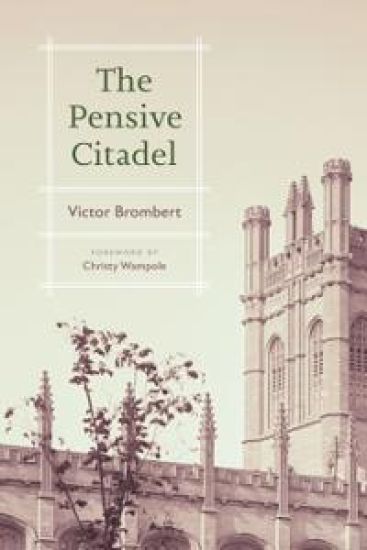
The Pensive Citadel

Victor Brombert; Christy Wampole

THE UNIVERSITY OF CHICAGO PRESS
2023
sidottu
A reflective volume of essays on literature and literary study from a storied professor. In The Pensive Citadel, Victor Brombert looks back on a lifetime of learning within a university world greatly altered since he entered Yale on the GI Bill in the 1940s. Yet for all that has changed, much of Brombert’s long experience as a reader and teacher is richly familiar: the rewards of rereading, the joy of learning from students, and most of all the insight to be found in engaging works of literature. The essays gathered here range from meditations on laughter and jealousy to new appreciations of Brombert’s lifelong companions Shakespeare, Montaigne, Voltaire, and Stendhal. A veteran of D-day and the Battle of the Bulge who witnessed history’s worst nightmares firsthand, Brombert nevertheless approaches literature with a lightness of spirit, making the case for intellectual mobility and openness to change. The Pensive Citadel is a celebration of a life lived in literary study, and of what can be learned from attending to the works that form one’s cultural heritage.
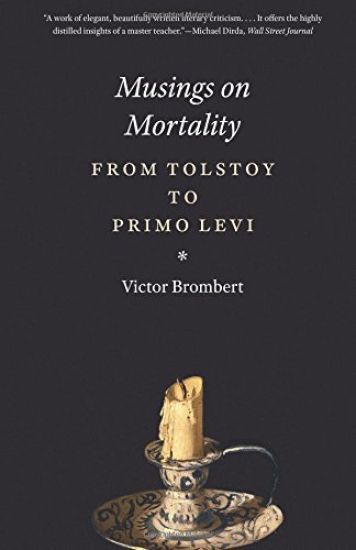
Musings on Mortality

Musings on Mortality

Victor Brombert

University of Chicago Press
2015
nidottu
\u201cAll art and the love of art,\u201d Victor Brombert writes at the beginning of the deeply personal Musings on Mortality, \u201callow us to negate our nothingness.\u201d As a young man returning from World War II, Brombert came to understand this truth as he immersed himself in literature. Death can be found everywhere in literature, he saw, but literature itself is on the side of life. With delicacy and penetrating insight, Brombert traces the theme of mortality in the work of a group of authors who wrote during the past century and a half, teasing out and comparing their views of death as they emerged from vastly different cultural contexts. Leo Tolstoy, Thomas Mann, Franz Kafka, Virginia Woolf, Albert Camus, Giorgio Bassani, J. M. Coetzee, and Primo Levi—these are the writers whose works Brombert plumbs, illuminating their views on the meaning of life and the human condition. But there is more to their work, he shows, than a pervasive interest in mortality: they wrote not only of physical death but also of the threat of moral and spiritual death—and as the twentieth century progressed, they increasingly reflected on the traumatic events of their times and the growing sense of a collective historical tragedy. He probes the individual struggle with death, for example, through Tolstoy's Ivan Ilych and Mann's Aschenbach, while he explores the destruction of whole civilizations in Bassani, Camus, and Primo Levi. For Kafka and Woolf, writing seems to hold the promise of salvation, though that promise is seen as ambiguous and even deceptive, while Coetzee, writing about violence and apartheid South Africa, is deeply concerned with a sense of disgrace. Throughout the book, Brombert roots these writers' reflections in philosophical meditations on mortality. Ultimately, he reveals that by understanding how these authors wrote about mortality, we can grasp the full scope of their literary achievement and vision. Drawing deeply from the well of Brombert's own experience, Musings on Mortality is more than mere literary criticism: it is a moving and elegant book for all to learn and live by.
Musings on Mortality

Musings on Mortality

Victor Brombert

University of Chicago Press
2013
sidottu
All art and the love of art," Victor Brombert writes at the beginning of Musings on Mortality, "allow us to negate our nothingness." As a young man returning from World War II, Brombert came to understand this truth as he immersed himself in literature. Death can be found everywhere in literature, he saw, but literature itself is on the side of life. With delicacy and insight, Brombert traces the theme of mortality in the work of a group of authors who wrote during the past century and a half, teasing out and comparing their views of death as they emerged from different cultural contexts. Leo Tolstoy, Thomas Mann, Franz Kafka, Virginia Woolf, Albert Camus, Giorgio Bassani, J. M. Coetzee, and Primo Levi-these are the writers whose works Brombert plumbs, illuminating their views on the meaning of life and the human condition. But there is more to their work, he shows, than a pervasive interest in mortality: they wrote not only of physical death but also of the threat of moral and spiritual death - and as the twentieth century progressed, they increasingly reflected on the traumatic events of their times. He probes the individual struggle with death, for example, through Tolstoy's Ivan Ilych and Mann's Aschenbach, while he explores the destruction of whole civilizations in Bassani, Camus, and Primo Levi. Throughout the book, Brombert roots these writers' reflections in philosophical meditations on mortality. Ultimately, he reveals that by understanding how these authors wrote about mortality, we can grasp the full scope of their literary achievement and vision. Drawing deeply from the well of Brombert's own experience, Musings on Mortality is more than mere literary criticism: it is a moving and elegant book for all to learn and live by.
Symbol and Symbolism: Yale French Studies, No. 9

Symbol and Symbolism: Yale French Studies, No. 9

Kenneth Cornell; Victor Brombert; Neal Oxenhandler

Literary Licensing, LLC
2011
sidottu
Symbol and Symbolism: Yale French Studies, No. 9 is a scholarly book edited by Kenneth Cornell that explores the use of symbols in literature, art, and culture. The book features a collection of essays by various authors that examine the ways in which symbols are used to convey meaning, evoke emotions, and create connections between different aspects of human experience. The essays cover a range of topics, including the use of symbols in medieval literature, the symbolism of color in art, and the role of symbols in modernist literature. The book also includes a comprehensive introduction by the editor that provides an overview of the history and theory of symbolism. This book is a valuable resource for scholars and students of literature, art, and cultural studies who are interested in understanding the complex ways in which symbols shape our understanding of the world around us.Additional Editor Is Melvin Friedman. Articles Include Sartre And The Self-Inflicted Wound By Kenneth Douglas; Racine's Symbolism By John C. Lapp; The Balcony Of Charles Baudelaire By Neal Oxenhandler; Prufrock And Maude, From Plot To Symbol By W. K. Wimsatt, And Many More.This scarce antiquarian book is a facsimile reprint of the old original and may contain some imperfections such as library marks and notations. Because we believe this work is culturally important, we have made it available as part of our commitment for protecting, preserving, and promoting the world's literature in affordable, high quality, modern editions, that are true to their original work.
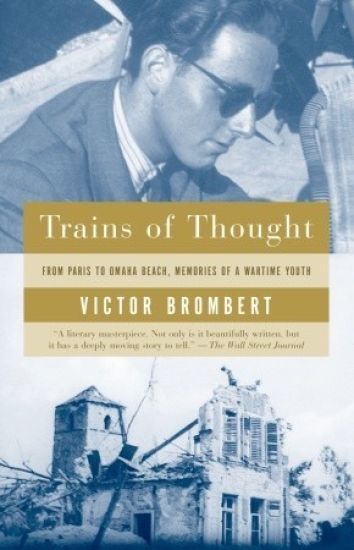
Trains of Thought: Paris to Omaha Beach, Memories of a Wartime Youth
In an unforgettable addition to the literature of memoir, one of America's preeminent literary scholars tells his story of coming of age in France during the buildup to the Second World War. As a Jewish youth in France during the 1930s, Victor Brombert's heady explorations of sex and love were cut short by the rise of Nazi power and the Vichy Regime. His family narrowly escaped to New York, where Brombert joined the U.S. Army, only to return to Europe to fight on the beaches of Normandy and in the Battle of the Bulge. As he shuttles between the stations of his life, Brombert's narrative recaptures the textures of childhood, the horrors of war, and his own discovery of a sustaining passion for literature. By turns melancholy and erotic, his memoir is also a meditation on memory itself, and a Proustian re-creation of a lost time and place.
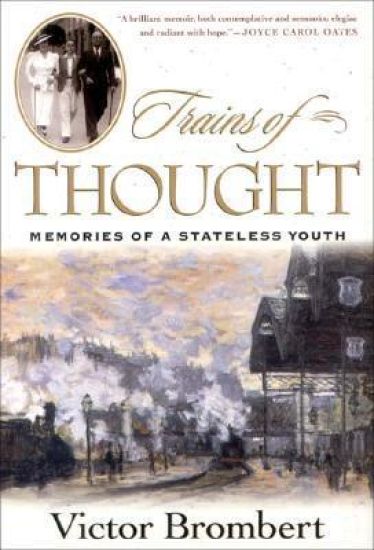
Trains of Thought

Trains of Thought

Victor Brombert

WW Norton Co
2002
sidottu
Paris in the 1930s—melancholy, erotic, intensely politicized—provides the poetic beginning for this remarkable autobiography by one of America's most renowned literary scholars. In Trains of Thought Victor Brombert recaptures the story of his youth in a Proustian reverie, recalling, with a rare combination of humor and tenderness, his childhood in France, his family's escape to America during the Vichy regime, his experiences in the U.S. Army from the invasion of Normandy to the occupation of Berlin, and his discovery of his scholarly vocation. In shimmering prose, Brombert evokes his upbringing in Paris's upper-middle-class 16th arrondissement, a world where "the sweetness of things" masked the class tensions and political troubles that threatened the stability of the French democracy. Using the train as a metaphor to describe his personal journey, Brombert recalls his boyhood enchantment with railway travel—even imagining that he had been conceived on a sleeper. But the young Brombert sensed that "the poetry of the railroad also had its darker side, for there was the turmoil of departures, the terror . . . of being pursued by a gigantic locomotive, the nightmare of derailments, or of being trapped in a tunnel." With time, Brombert became acutely aware of the grimmer aspects of life around him—the death of his sister, Nora, on an operating table, the tragic disappearance of his boyhood love, Dany, with her infant child, and the mounting cries of "Sale Juif," or "dirty Jew," that grew from a whisper into a thundering din as the decade drew to a close. The invasion of May 1940 dispelled the optimistic belief, shared by most of the French nation, that the horrors that had descended on Germany could never happen to them. The family was forced to flee from Paris, first to Nice, then to Spain, and finally across the Atlantic on a banana freighter to America. Discovering the excitement of New York, Brombert nonetheless hoped to return to France in an American uniform once the United States entered the war. He joined the U.S. Army in 1943, and soon found himself with General Patton's old "Hell-on-Wheels" division at Omaha Beach, then in Paris at the time of its liberation, and later at the Battle of the Bulge. The final chapter concludes with Brombert's return to America, his enrollment at Yale University, and the beginning of a literary voyage whose origins are poignantly captured in this coming-of-age story. Trains of Thought is a virtuosic accomplishment, and a memoir that is likely to become a classic account of both memory and experience.
In Praise of Antiheroes

In Praise of Antiheroes

Victor Brombert

University of Chicago Press
2001
nidottu
Through critical readings of key works of modern European literature, Victor Brombert shows how a new kind of hero - the antihero - has arisen to replace the toppled heroic model. The works of Buchner, Gogol, Dostoevsky, Flaubert, Svevo, Hasek, Frisch, Camus and Levi are examined.
In Praise of Antiheroes

In Praise of Antiheroes

Victor Brombert

University of Chicago Press
1999
sidottu
Through critical readings of key works of modern European literature, Victor Brombert shows how a new kind of hero - the antihero - has arisen to replace the toppled heroic model. Though they fail, by design, to live up to conventional expectations of mythic heroes, antiheroes are not necessarily "failures." They display different kinds of courage more in tune with our time and our needs: deficiency translated into strength, failure experienced as honesty, dignity achieved through humiliation. Brombert explores these paradoxes in the works of Buchner, Gogol, Dostoevsky, Flaubert, Svevo, Hasek, Frisch, Camus, and Levi. Coming from diverse cultural and linguistic traditions, these writers all use the figure of the antihero to question handed-down assumptions, to re-examine moral categories, and to raise issues of survival and renewal embodying the spirit of an uneasy age.
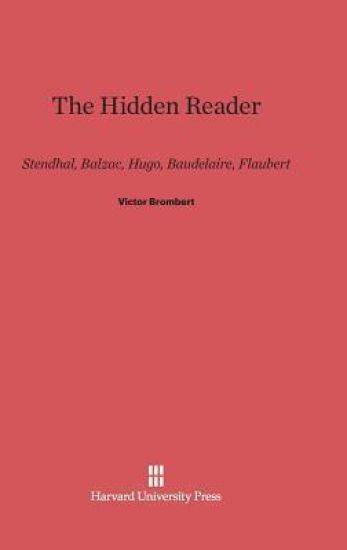
The Hidden Reader

The Hidden Reader

Victor Brombert

Harvard University Press
1988
sidottu
Victor Brombert is an unrivaled interpreter of French literature; and the writers he considers in this latest book are ones with whom he has a long acqualntance. These essays--eleven of them appearing in English for the first time and some totally new--give us an acute analysis of the major figures of the nineteenth century and a splendid lesson in criticism. Brombert shows how a text works--its structure and narrative devices, and the symbolic function of characters, episodes, words--and he highlights the distinctive postures and styles of each writer. He gives us a sense of the hidden inner text as well as the techniques writers have devised to lead their readers to the discovery of what is hidden. With wonderful subtlety he unravels the reader's participatory response, whether it be Hugo reading Shakespeare, Sartre reading Hugo, Stendhal reading Rousseau, T. S. Eliot misreading Baudelaire, or Baudelaire, Balzac, and Flaubert reading their own sensibilities. This book is a sterling example of the finest kind of literary criticism--wise, intelligent, responsive, sympathetic--that reveals central aspects of the creative process and returns the reader joyfully to the texts themselves.