Kirjojen hintavertailu. Mukana 12 595 353 kirjaa ja 12 kauppaa.

Kirjailija

Victor Fan

Kirjat ja teokset yhdessä paikassa: 6 kirjaa, julkaisuja vuosilta 2015-2022, suosituimpien joukossa Extraterritoriality. Vertaile teosten hintoja ja tarkista saatavuus suomalaisista kirjakaupoista.

6 kirjaa

Kirjojen julkaisuhaarukka 2015-2022.

Cinema Illuminating Reality

Cinema Illuminating Reality

Victor Fan

UNIVERSITY OF MINNESOTA PRESS
2022
sidottu
A new critical approach to cinema and media based on Buddhism as a philosophical discourse How can a philosophical discourse generated in Asia help us reframe and renew cinema and media theory? Cinema Illuminating Reality provides a possible way to do this by using Buddhist ideas to examine the intricate relationship between technicity and consciousness in the cinema. The resulting dialogue between Buddhism and Euro-American philosophy is the first of its kind in film and media studies.Victor Fan examines cinema’s ontology and ontogenetic formation and how such a formational process produces knowledge, political agency, and in-aesthetics. Buddhism allows Fan to deconstruct binary thinking and reimagine media as an ecology, rethinking cinema in relational terms between the human and the machine. Along the way, Fan considers a wide variety of case studies from around the globe, while paying special attention to how contemporary Tibeto-Sinophone filmmakers have adopted relational thinking to detail ways of rebuilding a world that appears to be beyond repair.From Chinese queer cinema to a reexamination of Japanese master Ozu’s work and its historical reception to Christian Petzold’s 2018 existential thriller Transit, CinemaIlluminating Reality forges a remarkable path between Buddhist studies and cinema studies, casting vital new light on both of these important subjects.
Cinema Illuminating Reality

Cinema Illuminating Reality

Victor Fan

UNIVERSITY OF MINNESOTA PRESS
2022
nidottu
A new critical approach to cinema and media based on Buddhism as a philosophical discourse How can a philosophical discourse generated in Asia help us reframe and renew cinema and media theory? Cinema Illuminating Reality provides a possible way to do this by using Buddhist ideas to examine the intricate relationship between technicity and consciousness in the cinema. The resulting dialogue between Buddhism and Euro-American philosophy is the first of its kind in film and media studies.Victor Fan examines cinema’s ontology and ontogenetic formation and how such a formational process produces knowledge, political agency, and in-aesthetics. Buddhism allows Fan to deconstruct binary thinking and reimagine media as an ecology, rethinking cinema in relational terms between the human and the machine. Along the way, Fan considers a wide variety of case studies from around the globe, while paying special attention to how contemporary Tibeto-Sinophone filmmakers have adopted relational thinking to detail ways of rebuilding a world that appears to be beyond repair.From Chinese queer cinema to a reexamination of Japanese master Ozu’s work and its historical reception to Christian Petzold’s 2018 existential thriller Transit, CinemaIlluminating Reality forges a remarkable path between Buddhist studies and cinema studies, casting vital new light on both of these important subjects.
??

??

Victor Fan

Dixie W Publishing Corporation
2021
pokkari
后院隔了一片树林,面临着一个小湖。每天早上,大批的鸟雀盘旋林间。麻雀叽喳不停,画眉婉转鸣唱,知更鸟嘀咕着,蓝慳鸟翅膀一闪,如电如露。在湖边,加拿大雁一家子在堤岸上踱着方步。夜里,偶有猫头鹰在远处的树荫里咕哝着。存在主义哲学家罗兰-巴特说过一句意味深长的话;一只鸟笼在等待着一只鸟。确实,是有被豢养在鸟笼中的鸟雀,但是绝大多数的鸟儿还是享受着生命最大的奖赏--自由。我们人类生来也是自由的,却无时无刻不在枷锁之中。有形的,无形的鸟笼多不胜数,出身的鸟笼,教育的鸟笼,职业的鸟笼,家庭的鸟笼,贫富贵贱的鸟笼。整个社会就是一只大鸟笼,我们尽在其中。你循规蹈矩,就喂你点小米杂粮。如果你想遁笼而去,那么,饿死有份。这本小书描述了五个像鸟一样在人生中掠过的女人,也曾头顶一片明亮的天空,也曾向往着自由地翱翔,享受生命。只是很快地被风雨折翅,被命运的雷电所击落。人生不可言说。有时我想,如果真有来生,做只鸟也没什么不好。
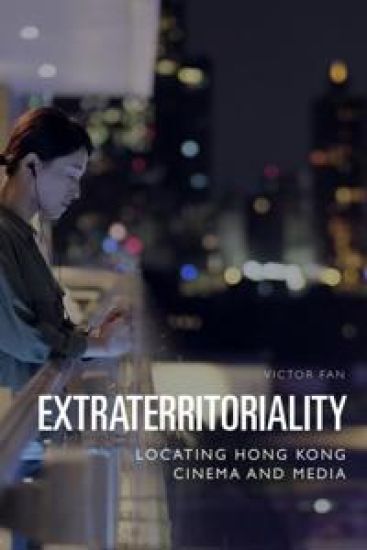
Extraterritoriality

Extraterritoriality

Victor Fan

Edinburgh University Press
2021
nidottu
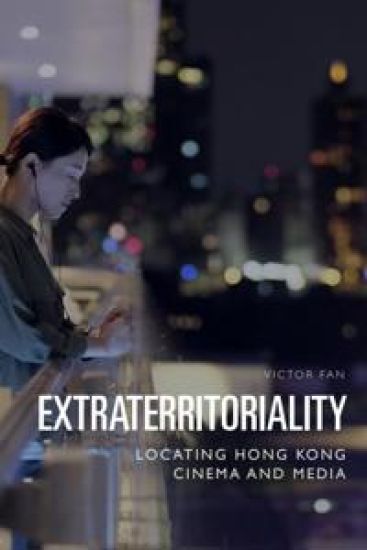
Examining how Hong Kong filmmakers, spectators and critics wrestled with this perturbation between the Leftist Riots (1967) and the aftermath of the Umbrella Movement (2014), this book traces how Hong Kong's extraterritoriality has been framed: in its position of being doubly occupied and doubly abandoned by contesting juridical, political, linguistic and cultural forces. Extraterritoriality scrutinises creative works in mainstream cinema, independent films, television, video artworks and documentaries especially those by marginalised artists actively rewriting and reconfiguring how Hong Kong cinema and media are to be defined and located.
Extraterritoriality

Extraterritoriality

Victor Fan

Edinburgh University Press
2019
sidottu
Examining how Hong Kong filmmakers, spectators and critics wrestled with this perturbation between the Leftist Riots (1967) and the aftermath of the Umbrella Movement (2014), this book traces how Hong Kong's extraterritoriality has been framed: in its position of being doubly occupied and doubly abandoned by contesting juridical, political, linguistic and cultural forces. Extraterritoriality scrutinises creative works in mainstream cinema, independent films, television, video artworks and documentaries especially those by marginalised artists actively rewriting and reconfiguring how Hong Kong cinema and media are to be defined and located.
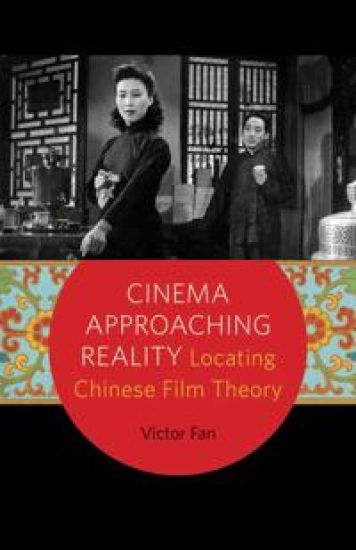
Cinema Approaching Reality

Cinema Approaching Reality

Victor Fan

University of Minnesota Press
2015
nidottu
In Cinema Approaching Reality, Victor Fan brings together, for the first time, Chinese and Euro-American film theories and theorists to engage in critical debates about film in Shanghai and Hong Kong from the 1920s through 1940s. His point of departure is a term popularly employed by Chinese film critics during this period, bizhen, often translated as “lifelike” but best understood as “approaching reality.” What these Chinese theorists mean, in Fan’s reading, is that the cinematographic image is not a form of total reality, but it can allow spectators to apprehend an effect as though they had been there at the time when an event actually happened. Fan suggests that the phrase “approaching reality” can help to renegotiate an aporia (blind spot) that influential French film critic AndrÉ Bazin wrestled with: the cinematographic image is a trace of reality, yet reality is absent in the cinematographic image, and the cinema makes present this absence as it reactivates the passage of time. Fan enriches Bazinian cinematic ontology with discussions on cinematic reality in Republican China and colonial Hong Kong, putting Western theorists-from Bazin and Kracauer to Baudrillard, Agamben, and Deleuze-into dialogue with their Chinese counterparts. The result is an eye-opening exploration of the potentialities in approaching cinema anew, especially in the photographic materiality following its digital turn.