Kirjailija
Victor H. Mair
Kirjat ja teokset yhdessä paikassa: 17 kirjaa, julkaisuja vuosilta 1983-2026, suosituimpien joukossa The True History of Tea. Vertaile teosten hintoja ja tarkista saatavuus suomalaisista kirjakaupoista.
Mukana myös kirjoitusasut: Victor H Mair
17 kirjaa
Kirjojen julkaisuhaarukka 1983-2026.

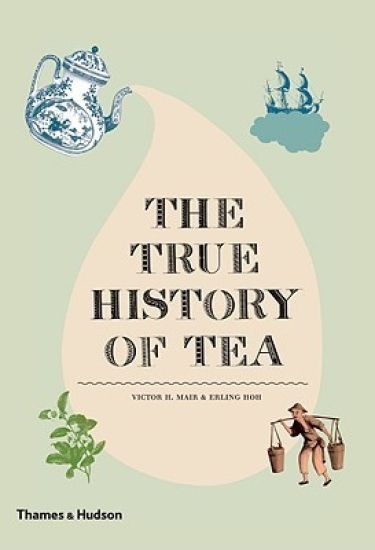
This is the remarkable story of tea and its uses from ancient times to the present. The narrative takes the reader from the jungles of Southeast Asia to the splendour of the Tang and Song Dynasties in China, from the tea ceremony aesthetics of medieval Japan to the fabled tea and horse trade of Central Asia, from the advent of Britain’s love affair with tea to the tea party that sparked the American Revolution. Throughout the centuries, tea has inspired artists, enhanced religious experience, played a pivotal role in the emergence of world trade, and helped trigger major wars. No other drink has touched the lives of so many people in so many different ways. The True History of Tea brings all these disparate strands together in an erudite tale full of quirky facts and unexpected byways, celebrating the common heritage of a beverage we have all come to love.

Tun-huang Popular Narratives presents authoritative translations of four vernacular Chinese stories, taken from fragmentary texts usually referred to as pien-wen or 'transformation texts'. Dating from the late T'ang (618–907) and Five Dynasties (907–959) periods, the texts were discovered early last century in a cave at Tun-huang, in Chinese Central Asia. However, written down in an early colloquial language by semi-literate individuals and posing formidable philological problems, the texts have not been studied critically before. Nevertheless they represent the only surviving primary evidence of a widespread and flourishing world of popular entertainment during these centuries. The tales deal with both religious (mostly Buddhist) and secular themes, and make exciting and vivid reading.
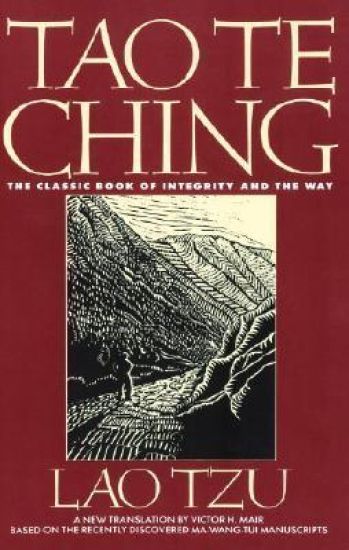
A landmark translation of one of the most popular works of world literture, this edition of the Tao Te Ching is based on the Ma-wang-tui manuscripts.
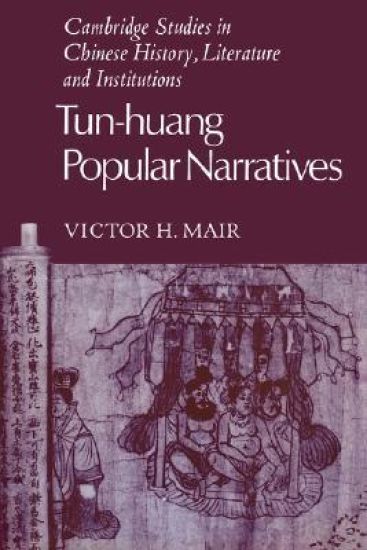
Tun-huang Popular Narratives presents authoritative translations of four vernacular Chinese stories, taken from fragmentary texts usually referred to as pien-wen or 'transformation texts'. Dating from the late T'ang (618–907) and Five Dynasties (907–959) periods, the texts were discovered early last century in a cave at Tun-huang, in Chinese Central Asia. However, written down in an early colloquial language by semi-literate individuals and posing formidable philological problems, the texts have not been studied critically before. Nevertheless they represent the only surviving primary evidence of a widespread and flourishing world of popular entertainment during these centuries. The tales deal with both religious (mostly Buddhist) and secular themes, and make exciting and vivid reading.
The most authoritative and entertaining history of tea ever published, written with verve to engage a wide readership. For the first time in a popular history of tea, the ancient Chinese, Japanese, Tibetan, Mongolian, Persian and Arabic annals have been thoroughly consulted and carefully sifted. The resulting narrative takes the reader from the jungles of Southeast Asia to the splendour of the Tang and Song dynasties, from the tea ceremony aesthetics of medieval Japan to the fabled tea and horse trade of Central Asia, from the advent of Britain’s love affair with tea to the tea party that helped spark the American Revolution. The True History of Tea celebrates the common heritage of a beverage we all love and plays a crucial part in dismantling that obsolete dictum: East is East, and West is West, and never the twain shall meet.
World--renowned scholar of Chinese history Victor H. Mair teams up with journalist Erling Hoh to spill the tea on this remarkable beverage and its uses, from ancient times to the present and from East to West. This accessible and entertaining history of tea makes use of the Chinese, Japanese, Tibetan, and Mongolian annals to explore the subject in rich historical detail. The resulting narrative travels from the jungles of Southeast Asia to the splendor of the arrival of the first European vessels in Far Eastern waters. Through the centuries, tea has inspired artists, enhanced religious experience, played a pivotal role in the emergence of world trade, and triggered cataclysmic events that altered the course of humankind. How did green tea become the national beverage of Morocco? And who was the beautiful Emma Hart, immortalized by George Romney in his painting The Tea-maker of Edgware Road? No other drink has touched the daily lives of so many people in so many different ways. The True History of Tea brings these disparate aspects together in a compelling tale that combines scholarship with an eye for the quirky, offbeat paths that tea has strayed upon during its long voyage. It celebrates the common heritage of a beverage we have all come to love, and plays a crucial part in the work of dismantling that obsolete dictum: East is East, and West is West, and never the twain shall meet.
Early Globalism and Chinese Literature
Yuanfei Wang; Victor H. Mair
Cambridge University Press
2026
sidottu
Exploring 'early globalism and Chinese literature' through the lens of 'literary diffusion,' this Element analyzes two primary forms. The first is Buddhist literary diffusion, whose revolutionary impact on Chinese language and literature is illustrated through scriptural translation, transformation texts, and 'journey to the West' stories. The second, facilitated diffusion, engages with the maritime world, traced through the seafaring journey of Cinderella stories and the totalizing worldview in literature on Zheng He's voyages. The authors contend that early global literary diffusion left a lasting imprint on Chinese language, literature, and culture. This title is also available as Open Access on Cambridge Core.
Early Globalism and Chinese Literature
Yuanfei Wang; Victor H. Mair
Cambridge University Press
2026
nidottu
Exploring 'early globalism and Chinese literature' through the lens of 'literary diffusion,' this Element analyzes two primary forms. The first is Buddhist literary diffusion, whose revolutionary impact on Chinese language and literature is illustrated through scriptural translation, transformation texts, and 'journey to the West' stories. The second, facilitated diffusion, engages with the maritime world, traced through the seafaring journey of Cinderella stories and the totalizing worldview in literature on Zheng He's voyages. The authors contend that early global literary diffusion left a lasting imprint on Chinese language, literature, and culture. This title is also available as Open Access on Cambridge Core.
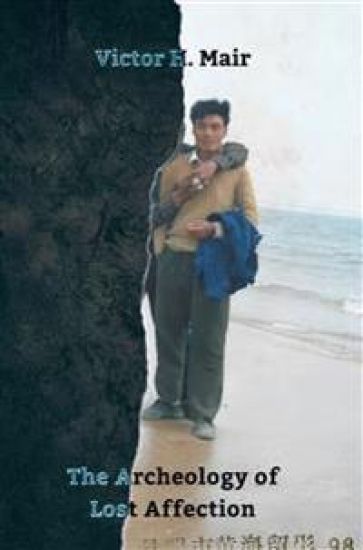
Three photographs, discarded in the dust outside Qumul train station, Xinjiang, each carefully torn to remove one man while preserving the other.For the American scholar who picks them up they present an irresistible challenge. Who, when, and why? What is the story behind these artifacts of the modern age?This reconstruction, a creative investigation based on careful detective work, is The Archeology of Lost Affection.Victor H. Mair is a world-renowned sinologist and an expert on both the Dunhuang manuscripts and the Tarim mummies. Since 1979 he has been part of the faculty at the University of Pennsylvania, where he is Professor of Chinese Language and Literature.
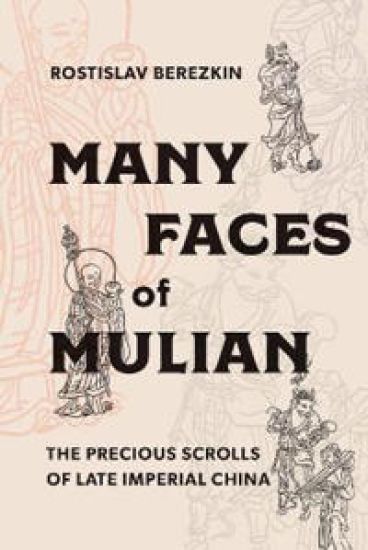
The story of Mulian rescuing his mother's soul from hell has evolved as a narrative over several centuries in China, especially in the baojuan (precious scrolls) genre. This genre, a prosimetric narrative in vernacular language, first appeared around the fourteenth century and endures as a living tradition. In exploring the evolution of the Mulian story, Rostislav Berezkin illuminates changes in the literary and religious characteristics of the genre. He also examines material from other forms of Chinese literature and from modern performances of baojuan, tracing their transformation from tools of Buddhist proselytizing to sectarian propaganda to folk ritualized storytelling. Ultimately, he reveals the special features of baojuan as a type of performance literature that had its foundations in multiple literary traditions.
The story of Mulian rescuing his mother's soul from hell has evolved as a narrative over several centuries in China, especially in the baojuan (precious scrolls) genre. This genre, a prosimetric narrative in vernacular language, first appeared around the fourteenth century and endures as a living tradition. In exploring the evolution of the Mulian story, Rostislav Berezkin illuminates changes in the literary and religious characteristics of the genre. He also examines material from other forms of Chinese literature and from modern performances of baojuan, tracing their transformation from tools of Buddhist proselytizing to sectarian propaganda to folk ritualized storytelling. Ultimately, he reveals the special features of baojuan as a type of performance literature that had its foundations in multiple literary traditions.
The significance of Japanese-language scholarship on China cannot be overstated. Yet much of it is largely untapped by China scholars in both the West and China, in part because they are unfamiliar with the Japanese pronunciation of Chinese characters. Even those who know Japanese are frequently frustrated when seeking an obscure reading of a personal or place name. The purpose of this volume is to enable Sinologists and others involved in Chinese studies to access entries in Japanese reference works dealing with China without going through the time-consuming process of looking up characters by radical and stroke. For users of this dictionary, it is a simple matter to find a character by looking it up by its alphabetical pinyin pronunciation. Having located it, the user can go directly to the item in Japanese reference works.The Dictionary includes more than 13,072 entries not only in Chinese characters and their Sino-Japanese (ondoku/onyomi) readings, but also the Japanese (kundoku/kunyomi) readings. The romanized Japanese readings will assist in correctly transcribing Japanese names, such as the names of Japanese publishers and authors, and the technical terms employed by Japanese in their writings on China. These features will also give those familiar with pinyin greater access to material on Japanese history and culture. The ABC Dictionary of Sino-Japanese Readings will be a boon to Sinologists and others interested in the study of China.
Reconfiguring the Silk Road – New Research on East–West Exchange in Antiquity
Victor H. Mair; Jane Hickman; Colin Renfrew
University of Pennsylvania Museum of Archaeology Anthropology
2014
sidottu
From the Bronze Age through the Middle Ages, a network of trade and migration routes brought people from across Eurasia into contact. Their commerce included political, social, and artistic ideas, as well as material goods such as metals and textiles. Reconfiguring the Silk Road offers new research on the earliest trade and cultural interactions along these routes, mapping the spread and influence of Silk Road economies and social structures over time. This volume features contributions by renowned scholars uncovering new discoveries related to populations that lived in the Tarim Basin, the advanced state of textile manufacturing in the region, and the diffusion of domesticated grains across Inner Asia. Other chapters include an analysis of the dispersal of languages across the Eurasian Steppe and a detailed examination of the domestication of the horse in the region. Contextualized with a foreword by Colin Renfrew and introduction by Victor Mair, Reconfiguring the Silk Road provides a new assessment of the intercultural evolution along the steppes and beyond. Contributors: David W. Anthony, Elizabeth Wayland Barber, Dorcas R. Brown, Peter Brown, Michael D. Frachetti, Jane Hickman, Philip L. Kohl, Victor H. Mair, J. P. Mallory, Joseph G. Manning, Colin Renfrew.