

Kirjailija
Victor Klemperer
Kirjat ja teokset yhdessä paikassa: 25 kirjaa, julkaisuja vuosilta 1954-2025, suosituimpien joukossa Paul Heyse von Viktor Klemperer.. Vertaile teosten hintoja ja tarkista saatavuus suomalaisista kirjakaupoista.
25 kirjaa
Kirjojen julkaisuhaarukka 1954-2025.


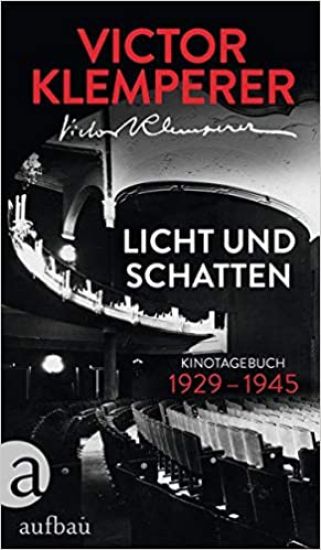
Ljus och skugga : filmdagbok 1929-1945
Victor Klemperer; Johan Klingborg; Knut Elstermann
Glänta Produktion
2025
nidottu
Victor Klemperer är idag antagligen mest känd för sin banbrytande analys av nazismens språkbruk under Tredje riket i boken LTI. I filmdagboken Ljus och skugga framträder han som passionerad och kritisk cineast, men också som tidsvittne till mötet mellan det nya mediet och publiken i övergången mellan stumfilm och ljudfilm. Nationalsocialisternas maktövertagande sammanföll med ljudfilmens tekniska mognad, vilket öppnade för massuggestion i en helt ny skala. Dag för dag synliggör Klemperer hur propagandan oupphörligen flätas in i underhållningsfilmen och hans filmdagbok formar sig till ett obevekligt försvar för konstens och kulturens betydelse i kulturfientliga tider.Dagboksanteckningarna i Ljus och skugga skrevs mellan 1929 och 1945 men utgavs först 2020. Översättningen är gjord av Tommy Andersson, som bland annat också översatt Klemperers LTI. Tredje rikets språk. Litteraturforskaren och kritikern Johan Klingborg har skrivit efterordet.Victor Klemperer (1880--1960) var professor i romanska språk vid tekniska högskolan i Dresden. På svenska finns även hans dagböcker från Hitlertiden, Intill slutet vill jag vittna. Dagböcker 1933--1945 och LTI. Tredje rikets språk. En filologs anteckningsbok.
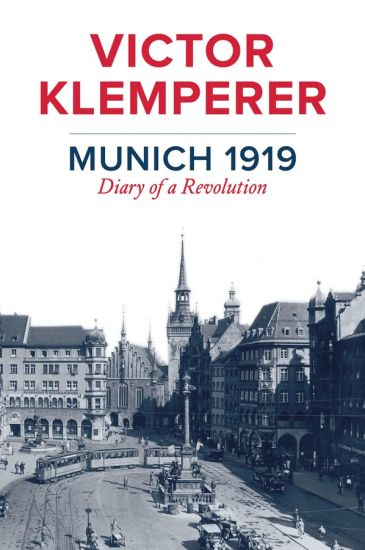
Munich 1919 is a vivid portrayal of the chaos that followed World War I and the collapse of the Munich Council Republic by one of the most perceptive chroniclers of German history. Victor Klemperer provides a moving and thrilling account of what turned out to be a decisive turning point in the fate of a nation, for the revolution of 1918-9 not only produced the first German democracy, it also heralded the horrors to come. With the directness of an educated and independent young man, Klemperer turned his hand to political journalism, writing astute, clever and linguistically brilliant reports in the beleaguered Munich of 1919. He sketched intimate portraits of the people of the hour, including Erich Mühsam, Max Levien and Kurt Eisner, and took the measure of the events around him with a keen eye. These observations are made ever more poignant by the inclusion of passages from his later memoirs. In the midst of increasing persecution under the Nazis he reflected on the fateful year 1919, the growing threat of antisemitism, and the acquaintances he made in the period, some of whom would later abandon him, while others remained loyal. Klemperer's account once again reveals him to be a fearless and deeply humane recorder of German history. Munich 1919 will be essential reading for all those interested in 20th century history, constituting a unique witness to events of the period.
The international bestselling record of a German Jew in Nazi Germany.'Deserves to stand beside the diary of Anne Frank as a day-to-day description of the sufferings of the victims of Hitler's evil regime' EVENING STANDARD'Few English readers will fail to be moved as I was - ultimately to the point of tears' SUNDAY TELEGRAPH'Packed with vivid observation, profound reflection ... they find hope, dignity and even tart humour in the jaws of hell' INDEPENDENT ON SUNDAYA sensation when first published, this is one of the most extraordinary documents of the Nazi period. The son of a rabbi, Klemperer was by 1933 a professor of languages in Dresden. Over the next decade he lost his job, his house and many of his friends, even his cat, as Jews were not allowed to own pets. Saved for much of the war from the Holocaust by his marriage to a gentile, he was able to escape in the aftermath of the Allied bombing of Dresden and survived the remaining months of the war in hiding. Throughout, Klemperer kept a diary, for a Jew in Nazi Germany a daring act in itself. This volume covers the period from the beginnings of the Holocaust to the end of the war, telling the story of Klemperer's increasing isolation, his near miraculous survival, his awareness of the development of the growing Holocaust as friends and associates disappeared, and his narrow escapes from deportation and the Dresden firebombing in 1945.Shocking and moving by turns, it is a remarkable and important document, as powerful and astonishing in its way as Anne Frank's classic.
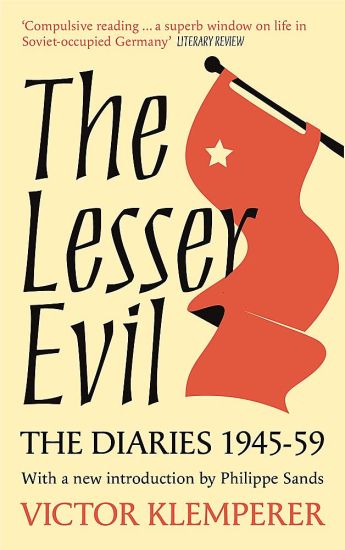
The superb, bestselling diaries of Victor Klemperer, a Jew in Dresden who survived the war - hailed as one of the 20th century's most important chronicles.'Compulsive reading' LITERARY REVIEW 'Deeply engrossing' SPECTATOR'Klemperer's diary deserves to rank alongside that of Anne Frank' SUNDAY TIMES'A vivid and powerful account of a remarkable life' SCOTLAND ON SUNDAYJune 1945. The immediate postwar period produces many shocks and revelations - some people have behaved better than Klemperer had believed, others much worse. His sharp observations are now turned on the East German Communist Party, which he himself joins, and he notes many similarities between Nazi and Communist behaviour. Politics, he comes to believe, is above all the choice of the "lesser evil". He serves in the GDR's People's Chamber and represents East German scholarship abroad. But it is the details of everyday life, and the honesty and directness, that make these bestselling diaries so fascinating.
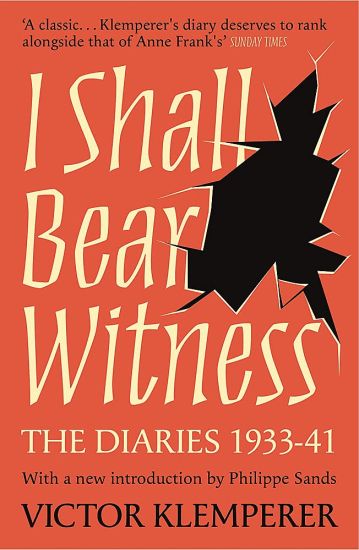
A publishing sensation, the publication of Victor Klemperer's diaries brings to light one of the most extraordinary documents of the Nazi period.'A classic ... Klemperer's diary deserves to rank alongside that of Anne Frank's' SUNDAY TIMES'I can't remember when I read a more engrossing book' Antonia Fraser'Not dissimilar in its cumulative power to Primo Levi's, is a devastating account of man's inhumanity to man' LITERARY REVIEWThe son of a rabbi, Klemperer was by 1933 a professor of languages at Dresden. Over the next decade he, like other German Jews, lost his job, his house and many of his friends.Klemperer remained loyal to his country, determined not to emigrate, and convinced that each successive Nazi act against the Jews must be the last. Saved for much of the war from the Holocaust by his marriage to a gentile, he was able to escape in the aftermath of the Allied bombing of Dresden and survived the remaining months of the war in hiding. Throughout, Klemperer kept a diary. Shocking and moving by turns, it is a remarkable and important account.

LTI: tredje rikets språk
Victor Klemperer; Charlotta Brylla; Otto Fischer
Glänta Produktion
2020
nidottu
Den nazistiska propagandan infiltrerade det vardagliga talet, omformade ordens betydelser och utarmade uttrycksmöjligheterna. Det nya språkbruket åt sig in i människorna och blev en oupplöslig beståndsdel av deras identitet och verklighetsuppfattning. LTI är inte bara ett klarsynt vittnesmål från Hitlers Tyskland, utan också en oumbärlig läsning om förhållandet mellan språk, tanke och makt. Nyutgåva med en genomarbetad översättning av Tommy Andersson och ett utvidgat förord med en nyskriven del av Charlotta Brylla & Otto Fischer. Victor Klemperer (1880-1960) var professor i romanska språk vid tekniska högskolan i Dresden. På svenska finns sedan tidigare hans dagböcker från Hitlertiden, Intill slutet vill jag vittna. Dagböcker 1933-1945.
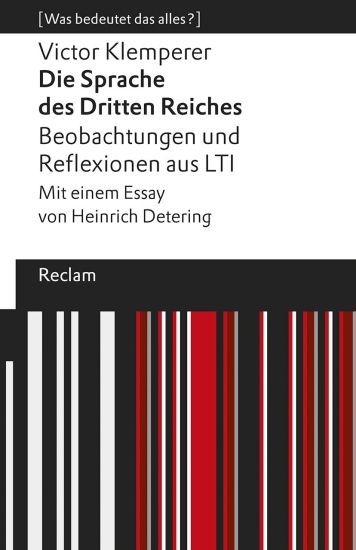
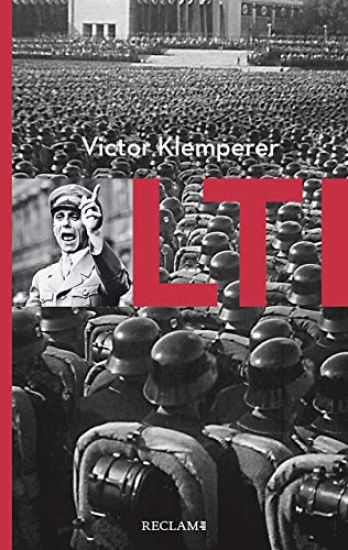
Die Sprache des Dritten Reiches. Beobachtungen und Reflexionen aus LTI
Victor Klemperer
Reclam Philipp Jun.
2020
pokkari
När nazisterna tog makten bodde 4 675 judar i Dresden. I februari 1945 fanns endast 174 i livet. En av dem var litteraturprofessorn Victor Klemperer, som trots att han var jude överlevde nazisttiden och aldrig hamnade i koncentrationsläger.Klemperers dagböcker från Tyskland åren 1933-1945 återger författarens upplevelser vid nedskrivningsögonblicket och har aldrig bearbetats. De skildrar vardagslivet i Hitlers Tyskland med stor detaljrikedom och visar hur nazismen växer från att vara "ett övergående obehag" till att bli ett allomfattande förtryck.Intill slutet vill jag vittna är ett enastående verk och ett av de mest skakande vittnesbörden från Nazi-Tyskland.Ola Larsmo har skrivit ett nytt förord till denna utgåva, som även innehåller Thomas von Vegesacks introduktion från 1999, när dagböckerna utkom första gången på svenska.

Munich 1919 is a vivid portrayal of the chaos that followed World War I and the collapse of the Munich Council Republic by one of the most perceptive chroniclers of German history. Victor Klemperer provides a moving and thrilling account of what turned out to be a decisive turning point in the fate of a nation, for the revolution of 1918-9 not only produced the first German democracy, it also heralded the horrors to come. With the directness of an educated and independent young man, Klemperer turned his hand to political journalism, writing astute, clever and linguistically brilliant reports in the beleaguered Munich of 1919. He sketched intimate portraits of the people of the hour, including Erich Mühsam, Max Levien and Kurt Eisner, and took the measure of the events around him with a keen eye. These observations are made ever more poignant by the inclusion of passages from his later memoirs. In the midst of increasing persecution under the Nazis he reflected on the fateful year 1919, the growing threat of antisemitism, and the acquaintances he made in the period, some of whom would later abandon him, while others remained loyal. Klemperer's account once again reveals him to be a fearless and deeply humane recorder of German history. Munich 1919 will be essential reading for all those interested in 20th century history, constituting a unique witness to events of the period.

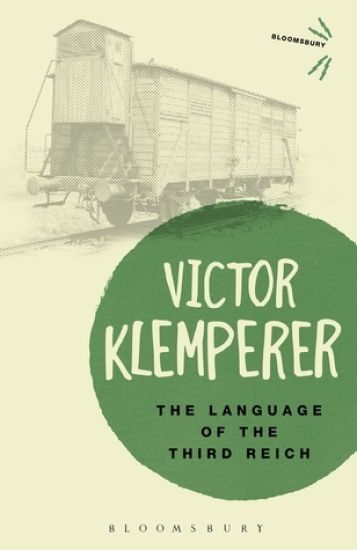
A labourer, journalist and a professor who lived through four successive periods of German political history – from the German Empire, through the Weimar Republic and the Nazi state through to the German Democratic Republic – Victor Klemperer is regarded as one of the most vivid witnesses to a tumultuous century of European history. First published in 1957, The Language of the Third Reich arose from Klemperer's conviction that the language of the Third Reich helped to create its culture. As Klemperer writes: 'It isn't only Nazi actions that have to vanish, but also the Nazi cast of mind, the typical Nazi way of thinking, and its breeding ground: the language of Nazism.'
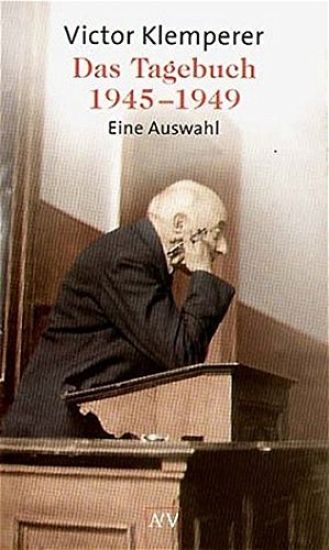
Als zeithistorisches Dokument sind Klemperers Journale einzigartig und wahrhaftig unverzichtbar: Man wird sich künftig keinBildmehr machenkönnenvon der tagtäglichen Realität des Nationalsozialismus, ohne diese Tagebücher zu kennen. Die Weltwoche Klemperers Tagebücher gehören fortan zu den bleibenden Zeugnissen deutscher Geschichte und Kultur. Spiegel Spezial Hier hat die Geschichte selbst gewissermaßen mitgeschrieben und dem Geschriebenen etwas von ihrer Übermacht mitgeteilt. Nicht zuletzt darauf beruht die unerwartete Wirkung, die seit dem Erscheinen dieser Aufzeichnungen festzustellen ist. Frankfurter Allgemeine Zeitung Es ist ein ganz außergewöhnliches Werk, wahrscheinlich, neben dem Tagebuch der Anne Frank, das bedeutendste, das sich aus jener finsteren Epoche erhalten hat. (...) Die Tagebücher, in denen genaueste Beobachtungsgabe, sprachliche Meisterschaft und menschliche Größe sich aufs glücklichste vereinen, stellen alles in den Schatten, was jemals über die Zeit des Nationalsozialismus geschrieben wurde. Die Zeit Klemperers unter Todesgefahr geschriebene Notizen besitzen eine Authentizität, eine dramatische Nähe zum Zerfall der deutschen Gesellschaft, wie sie auch bedeutende Geschichtswerke nur selten erreichen. Diese Tagesberichte über die Hölle eines Terrorstaates legen in der Tat "Zeugnis ab" vom Leben der Opfer. Frankfurter Rundschau Wie erlebten die Zeitgenossen den Holocaust? Was konnten sie wissen, sehen, hören? Klemperers Tagebuch beantwortet solche Fragen, die von jeder Generation neu gestellt werden. Er, der als Jude geborene, zwangsemeritierte Professor, löste mit seinen täglichen Notizen, deren Entdeckungen den sicheren Tod bedeutet hätte, eine selbstgesetzte Chronistenpflicht ein: Er wollte der Geschichtsschreiber der Katastrophe sein und Zeugnis ablegen für die Zeit danach. Tag für Tag hielt er im "Judenhaus" fest, was er beobachtete und erlebte: den täglichen Terror mit Razzien, ständig neuen Verboten und Schikanen, gelegentlich auch Gesten der Solidarität von Unbekannten, und er schrieb auf, was ihm zugetragen wurde: Gerüchte, politische Witze, Berichte von Frontsoldaten. Sein minutiöser Bericht ist ein einmaliges Dokument über den Alltag der Judenverfolgung - mitten in einer deutschen Großstadt. Die Texte des Bandes werden ergänzt durch Vorschläge für die Unterrichtsgestaltung.