Kirjailija
Victor Serge
Kirjat ja teokset yhdessä paikassa: 21 kirjaa, julkaisuja vuosilta 2004-2026, suosituimpien joukossa Birth Of Our Power. Vertaile teosten hintoja ja tarkista saatavuus suomalaisista kirjakaupoista.
21 kirjaa
Kirjojen julkaisuhaarukka 2004-2026.
Dans Le Tropique et le Nord, Victor Serge met en sc ne des destins pris entre exil, engagement politique et d sillusion. Du soleil trompeur des tropiques aux rigueurs du Nord, les personnages affrontent l' preuve de l'id ologie, de la r pression et de la solitude int rieure. travers une narration tendue et lucide, le roman explore les fractures morales de l'homme confront l'Histoire et aux syst mes qui broient les consciences. Un texte puissant et grave, o l'exp rience r volutionnaire se heurte la r alit humaine.
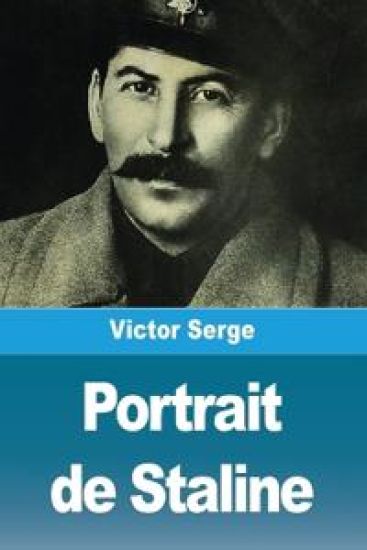
Dans Portrait de Staline, Victor Serge propose une analyse lucide et courageuse de la figure de Staline et du syst me de pouvoir qu'il incarne. T moin direct de la r volution russe et de sa d rive autoritaire, l'auteur dresse un portrait sans complaisance du dictateur, r v lant les m canismes de la terreur, de la propagande et de la concentration du pouvoir. Plus qu'un simple portrait individuel, l'ouvrage claire la logique politique et morale du stalinisme. Un texte essentiel, la fois t moignage historique et mise en garde universelle.
What Every Radical Should Know About State Repression
Victor Serge
SEVEN STORIES PRESS,U.S.
2024
nidottu
This classic manual on repression by revolutionary activist Victor Serge offers fascinating anecdotes about the tactics of police provocateurs and an analysis of the documents of the Tsarist secret police in the aftermath of the Russian revolution. With a new introduction by Howard Zinn collaborator, Anthony Arnove. "Victor Serge is one of the unsung heroes of a corrupt century." --Adam Hochschild, author of King Leopold's Ghost As we approach the 100th anniversary of Victor Serge's (1926) classic expos of political repression, the specter of fear as a tool of political repression is chillingly familiar to us in world increasingly threatened by totalitarianism. Serge's expos of the surveillance methods used by the Czarist police reads like a spy thriller. An irrepressible rebel, Serge wrote this manual for political activists, describing the structures of state repression and how to dodge them--including how to avoid being followed, what to do if arrested, and tips on securing correspondence. He also explains how such repression is ultimately ineffective. "Repression can really only live off fear. But is fear enough to remove need, thirst for justice, intelligence, reason, idealism...? Relying on intimidation, the reactionaries forget that they will cause more indignation, more hatred, more thirst for martyrdom, than real fear. They only intimidate the weak; they exasperate the best forces and temper the resolution of the strongest." --Victor Serge
A story of displacement and resistance during the early days of the Nazi occupation of France. Last Times, Victor Serge's epic novel of the Fall of France is based--like much of his fiction--on first-hand experience. The author was an eyewitness to the last days of Paris (June 1940) and joined the chaotic mass exodus south to the unoccupied zone on foot with nothing but his manuscripts. He found himself trapped in Marseille under the Vichy government, a persecuted, stateless Russian, and participated in the early French Resistance before escaping on the last ship to the Americas in 1941. Exiled in Mexico City, Serge poured his recent experience into a fast-moving, gripping novel aimed at an American audience, and it was published in New York in 1946. Along with sharply drawn characters, dramatic scenes, and physical action, the novel presents a compelling evocation of the atmosphere of that time and place, based on keen observation and an enormous talent for description. It's a near-forgotten classic of the era. Serge creates a haunting panorama of a near-deserted Paris abandoned by the government. The reader follows his protagonists, anti-fascist refugees, through the last days of Europe's deserted cultural capital as the sound of gunfire moves into the suburbs. With them, the reader joins the flood of Belgian and French refugees fleeing south on foot, in cars loaded with household goods, on bikes, pushing carts and prams under the strafing Stukas. Serge next brings to life wartime Marseille, its great harbor closed by the war, with its undergrounds, rackets and prostitution, its Vichy officialdom and fascist Militias, its collaborationists, its early resisters, its crowds of desperate refugees competing for the last visa and the last berth on the last--hoped-for--ship to the new world.
Available for the first time, Victor Serge's intimate account of the last decade of his life gives a vivid look into the Franco-Russian revolutionary's life, from his liberation from Stalin's Russia to his "Mexico Years," when he wrote his greatest works. Victor Serge's Notebooks provide an intensely personal account of the last decade of the legendary Franco-Russian writer and revolutionary. They evoke Popular Front France, the fall of Paris, the "Surrealist Ch teau" in Marseilles, and the flight to the New World. They are replete with vivid life portraits (Gide, Breton, Saint-Exup ry, L vi-Strauss), and moving evocations of fallen revolutionary comrades (Gramsci, Nin, Radek, Trotsky) and of doomed colleagues among the Soviet writers (Fedin, Pilniak, Mandelstam, Gorky). Serge's Mexican notebooks provide a fascinating account of his exploration of pre-Columbian cultures and portray political and cultural figures in Mexico City, from the exiles' psychoanalytic circle, to painters like Dr. Atl and Leonora Carrington and poets like Octavio Paz. These writings paint a vivid self-portrait and convey the intense loneliness Serge also felt in these years, cut off as he was from Europe, deprived of a political platform, prey to angina attacks, and anxiously in love with a younger woman.
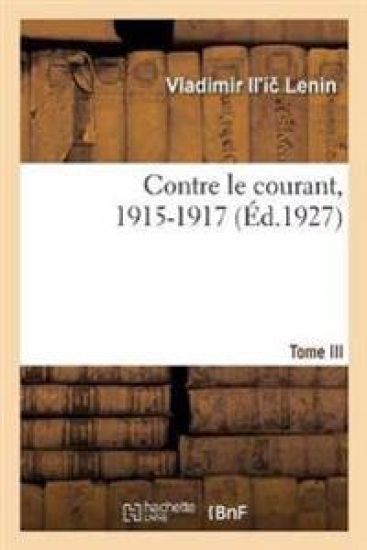
Contre Le Courant. Tome II. 1915-1917
Vladimir Il I Lenin; Grigorij Evseevi Zinov Ev; Victor Serge; Maurice Parijanine
Hachette Livre - BNF
2018
pokkari
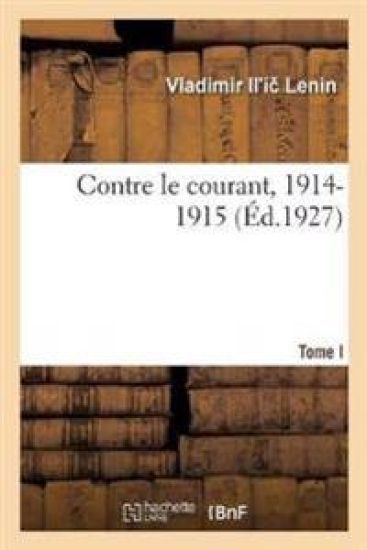
Contre Le Courant. Tome I. 1914-1915
Vladimir Il I Lenin; Grigorij Evseevi Zinov Ev; Victor Serge; Maurice Parijanine
Hachette Livre - BNF
2018
pokkari
Victor Serge (1890-1947) played many parts, as he recounted in his indelible Memoirs of a Revolutionary. The son of anti-czarist exiles in Brussels, Serge was a young anarchist in Paris; a syndicalist rebel in Barcelona; a Bolshevik in Petrograd; a Comintern agent in Central Europe; a comrade of Trotsky's; a friend of writers like Andrei Bely, Boris Pilnyak, and Andre Breton; a prisoner of Stalin; a dissident Marxist in exile in Mexico . . . A novelist, a literary critic, a political journalist, and a historian of the Russian Revolution, Serge was also a formidable poet. In A Blaze in a Desert: Selected Poems, Victor Serge bears witness to decades of revolutionary upheavals in Europe and the advent of totalitarian rule; many of the poems were written during the "immense shipwreck" of Stalin's ascendancy. In poems datelined Petrograd, Orenburg, Paris, Marseille, the Caribbean, and Mexico, Serge composed elegies for the fallen who, like him, endured prison, exile, and bitter disappointment in the revolutions of the first half of the twentieth century: Night falls, the boat pulls in, stop singing. Exile relights its captive lampson the shore of time. A Blaze in a Desert comprises Victor Serge's sole published book of poetry, Resistance (1938), his unpublished manuscript Messages (1946), and his last poem, "Hands" (1947).
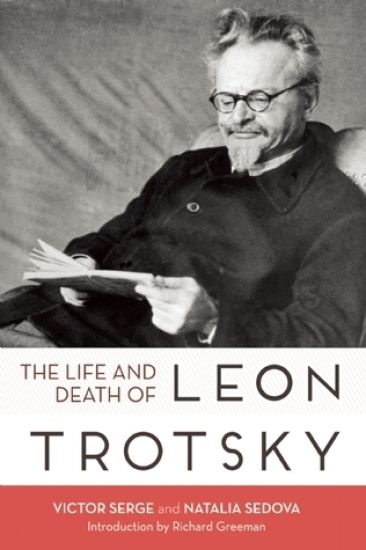
Life And Death Of Leon Trotsky
Victor Serge; Richard Greeman; Natalia Ivanovna Sedova
Haymarket Books
2016
nidottu
The Life and Death of Leon Trotsky provides an invaluable picture of Leon Trotsky's intimate experience as both a leader of, and outcast exile from, the Russian Revolution. Victor Serge and Natalia Sedova's portrait brings Trotsky's extraordinary life to life in a new way, while Richard Greemanùs introduction offers fresh context.
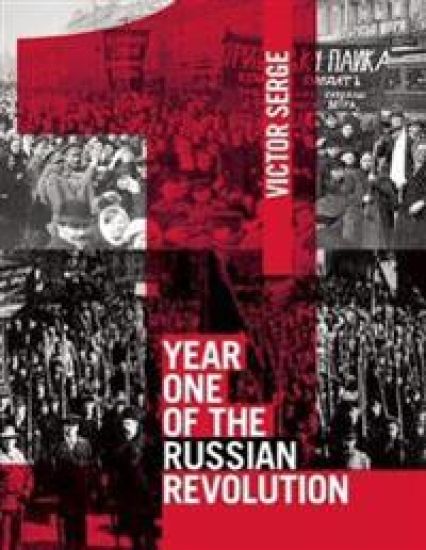
An extraordinary account of the first year of the Russian Revolution, written by its most keen firsthand observer. Serge exposes the heart of the vital first year of the most important working class revolution in history.
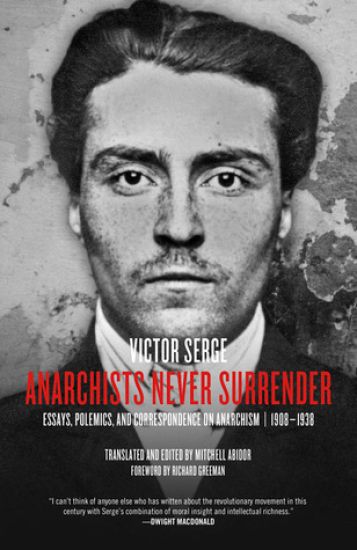
Providing a complete picture of Victor Serge s relationship to anarchist action and doctrine, this volume contains writings going back to his teenage years in Brussels, where he became influenced by the doctrine of individualist anarchism. At the heart of the anthology are key articles written soon after his arrival in Paris in 1909, when he became editor of the newspaper "l'anarchie." In these articles Serge develops and debates his own radical thoughts, arguing the futility of mass action and embracing illegalism. Serge s involvement with the notorious French group of anarchist armed robbers, the Bonnot Gang, landed Serge in prison for the first time in 1912. The book includes both his prison correspondence with his anarchist comrade Emile Armand and articles written immediately after his release. The book also includes several articles and letters written by Serge after he had left anarchism behind and joined the Russian Bolsheviks in 1919. Here Serge analyzed anarchism and the ways in which he hoped anarchism would leaven the harshness and dictatorial tendencies of Bolshevism. Included here are writings on anarchist theory and history, Bakunin, the Spanish revolution, and the Kronstadt uprising. "Anarchists Never Surrender" anthologizes Victor Serge s previously unavailable texts on anarchism and fleshes out the portrait of this brilliant writer and thinker, a man I. F. Stone called one of the moral figures of our time. "
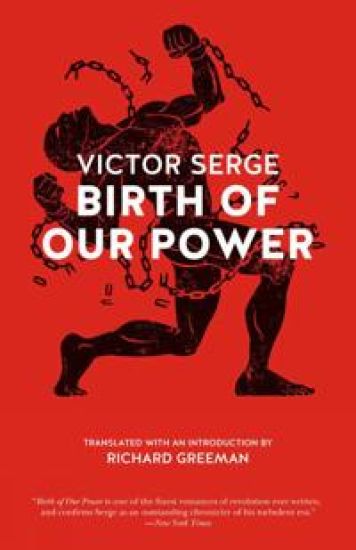
"Birth of Our Power" is an epic novel set in Spain, France, and Russia during the heady revolutionary years 1917-1919. Serge's tale begins in the spring of 1917, the third year of mass slaughter in the blood-and-rain-soaked trenches of World War I, when the flames of revolution suddenly erupt in Russia and Spain. Although the Spanish uprising eventually fizzles, in Russia the workers, peasants, and common soldiers are able to take power and hold it. Serge's "tale of two cities" is constructed from the opposition between Barcelona, the city "we" could not take, and Petrograd, the starving, beleaguered capital of the Russian Revolution besieged by counter-revolutionary Whites. Between the romanticism of radicalized workers awakening to their own power in a sun-drenched Spanish metropolis to the grim reality of workers clinging to power in Russia's dark, frozen revolutionary outpost. The novel was composed a decade after the revolution in Leningrad, where Serge was living in semicaptivity because of his declared opposition to Stalin's dictatorship over the revolution.
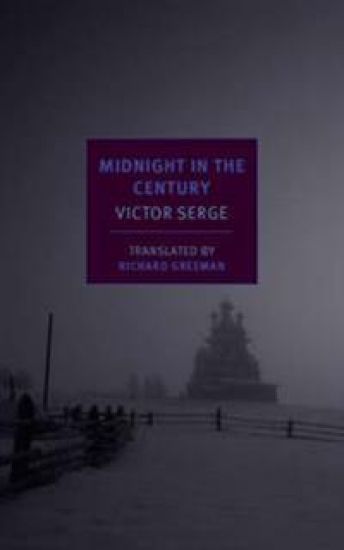
In 1933, Victor Serge was arrested by Stalin's police, interrogated, and held in solitary confinement for more than eighty days. Released, he spent two years in exile in remote Orenburg. These experiences were the inspiration for Midnight in the Century, Serge's searching novel about revolutionaries living in the shadow of Stalin's betrayal of the revolution. Among the exiles gathered in the town of Chenor, or Black-Waters, are the granite-faced Old Bolshevik Ryzhik, stoic yet gentle Varvara, and Rodion, a young, self-educated worker who is trying to make sense of the world and history. They struggle in the unlikely company of Russian Orthodox Old Believers who are also suffering for their faith. Against unbelievable odds, the young Rodion will escape captivity and find a new life in the wild. Surviving the dark winter night of the soul, he rediscovers the only real, and most radical, form of resistance: hope.
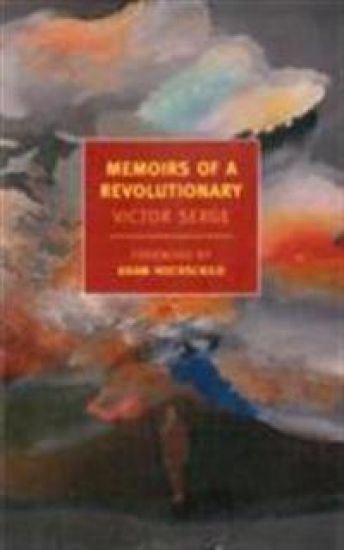
A New York Review Books Original Victor Serge is one of the great men of the 20th century --and one of its great writers too. He was an anarchist, an agitator, a revolutionary, an exile, a historian of his times, as well as a brilliant novelist, and in Memoirs of a Revolutionary he devotes all his passion and genius to describing this extraordinary--and exemplary--career. Serge tells of his upbringing among exiles and conspirators, of his involvement with the notorious Bonnot Gang and his years in prison, of his role in the Russian Revolution, and of the Revolution's collapse into despotism and terror. Expelled from the Soviet Union, Serge went to Paris, where he evaded the KGB and the Nazis before fleeing to Mexico. Memoirs of a Revolutionary recounts a thrilling life on the front lines of history and includes vivid portraits not only of Trotsky, Lenin, and Stalin but of countless other figures who struggled to remake the world. Peter Sedgwick's fine translation of Memoirs of a Revolutionary was abridged when first published in 1963. This is the first edition in English to present the entirety of Serge's book.
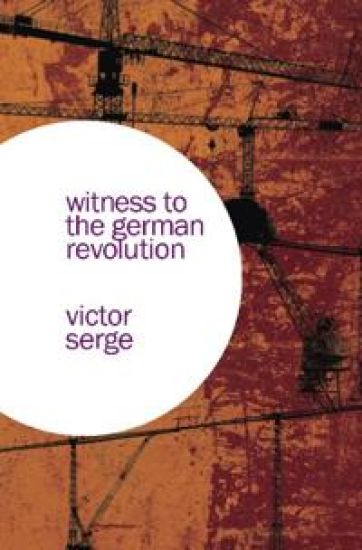
"Serge searingly evokes the epochal hopes and shattering setbacks of a generation of leftists."?Bookforum Following in the wake of the carnage reaped across Europe by world war, German workers undertook a struggle that would prove decisive in determining the course of the entire twentieth century. In 1923 the fledgling Comintern dispatched Victor Serge, with his peerless journalistic skills, to Berlin to expedite the German Revolution and write these moving reports from the battlefront. Victor Serge is best known as a novelist and for his Memoirs of a Revolutionary. Originally a participant in the anarchist movement, Serge became a committed bolshevik upon arrival in Russia in 1919 and lent his considerable talents to the cause of spreading the revolution across Europe. An eloquent critic of tyranny no matter its form, Serge was a leading member of the Left Opposition in its struggle against Stalin, a cause which ultimately resulted in his exile from Russia.
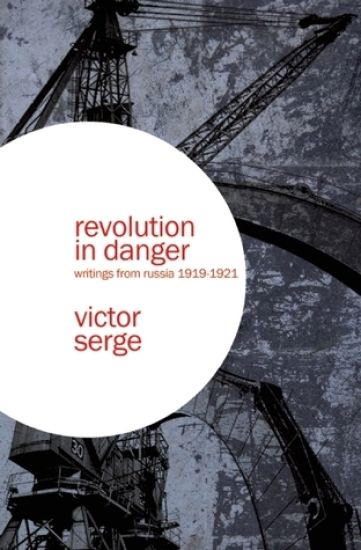
Upon his arrival in Petrograd in 1919, Victor Serge?the great chronicler of the Russian Revolution?found a society nearly shattered by civil war. In these essays he sketches a portrait of the darkest hours faced by the fledgling revolution, defending the new regime against its critics.
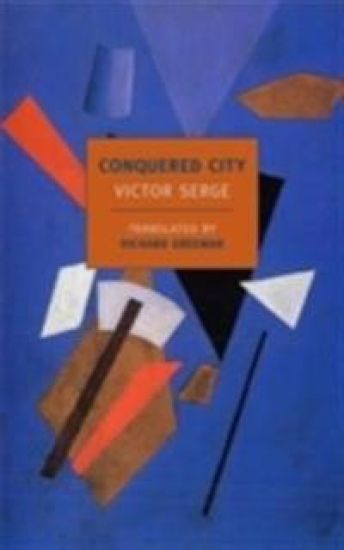
1919-1920: St. Petersburg, city of the czars, has fallen to the Revolution. Camped out in the splendid palaces of the former regime, the city's new masters seek to cement their control, even as the counterrevolutionary White Army regroups. Conquered City, Victor Serge's most unrelenting narrative, is structured like a detective story, one in which the new political regime tracks down and eliminates its enemies--the spies, speculators, and traitors hidden among the mass of common people. Conquered City is about terror: the Red Terror and the White Terror. But mainly about the Red, the Communists who have dared to pick up the weapons of power--police, guns, jails, spies, treachery--in the doomed gamble that by wielding them righteously, they can put an end to the need for terror, perhaps forever. Conquered City is their tragedy and testament.
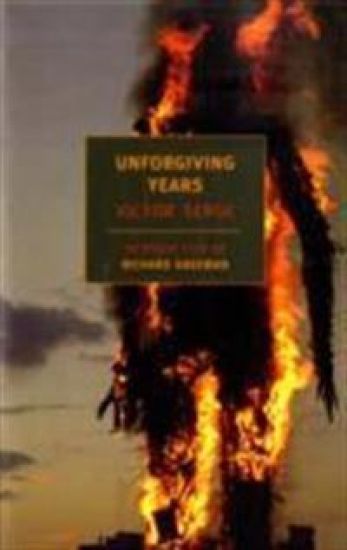
A New York Review Books Original Unforgiving Years is a thrilling and terrifying journey into the disastrous, blazing core of the twentieth century. Victor Serge's final novel, here translated into English for the first time, is at once the most ambitious, bleakest, and most lyrical of this neglected major writer's works. The book is arranged into four sections, like the panels of an immense mural or the movements of a symphony. In the first, D, a lifelong revolutionary who has broken with the Communist Party and expects retribution at any moment, flees through the streets of prewar Paris, haunted by the ghosts of his past and his fears for the future. Part two finds D's friend and fellow revolutionary Daria caught up in the defense of a besieged Leningrad, the horrors and heroism of which Serge brings to terrifying life. The third part is set in Germany. On a dangerous assignment behind the lines, Daria finds herself in a city destroyed by both Allied bombing and Nazism, where the populace now confronts the prospect of total defeat. The novel closes in Mexico, in a remote and prodigiously beautiful part of the New World where D and Daria are reunited, hoping that they may at last have escaped the grim reckonings of their modern era. A visionary novel, a political novel, a novel of adventure, passion, and ideas, of despair and, against all odds, of hope, Unforgiving Years is a rediscovered masterpiece by the author of The Case of Comrade Tulayev.