Kirjojen hintavertailu. Mukana 12 595 353 kirjaa ja 12 kauppaa.

Kirjailija

Victor Turner

Kirjat ja teokset yhdessä paikassa: 13 kirjaa, julkaisuja vuosilta 1970-2017, suosituimpien joukossa Schism and Continuity in an African Society. Vertaile teosten hintoja ja tarkista saatavuus suomalaisista kirjakaupoista.

13 kirjaa

Kirjojen julkaisuhaarukka 1970-2017.

The Ritual Process

The Ritual Process

Victor Turner; Roger Abrahams; Alfred Harris

Routledge
2017
sidottu
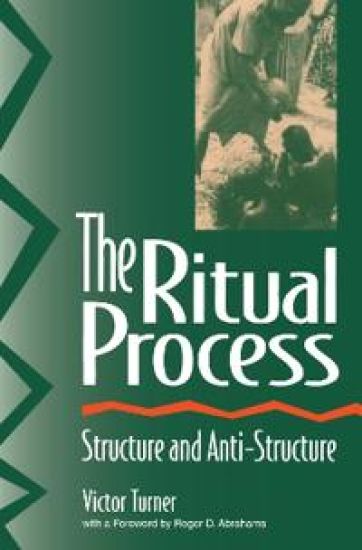
In The Ritual Process: Structure and Anti-Structure, Victor Turner examines rituals of the Ndembu in Zambia and develops his now-famous concept of "Communitas." He characterizes it as an absolute inter-human relation beyond any form of structure.The Ritual Process has acquired the status of a small classic since these lectures were first published in 1969. Turner demonstrates how the analysis of ritual behavior and symbolism may be used as a key to understanding social structure and processes. He extends Van Gennep's notion of the "liminal phase" of rites of passage to a more general level, and applies it to gain understanding of a wide range of social phenomena. Once thought to be the "vestigial" organs of social conservatism, rituals are now seen as arenas in which social change may emerge and be absorbed into social practice.As Roger Abrahams writes in his foreword to the revised edition: "Turner argued from specific field data. His special eloquence resided in his ability to lay open a sub-Saharan African system of belief and practice in terms that took the reader beyond the exotic features of the group among whom he carried out his fieldwork, translating his experience into the terms of contemporary Western perceptions. Reflecting Turner's range of intellectual interests, the book emerged as exceptional and eccentric in many ways: yet it achieved its place within the intellectual world because it so successfully synthesized continental theory with the practices of ethnographic reports."
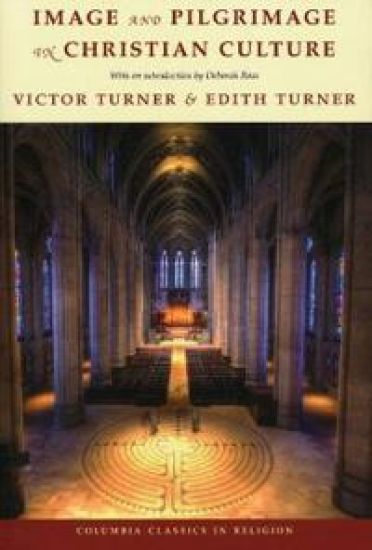
Image and Pilgrimage in Christian Culture

Image and Pilgrimage in Christian Culture

Victor Turner; Edith Turner

Columbia University Press
2011
sidottu
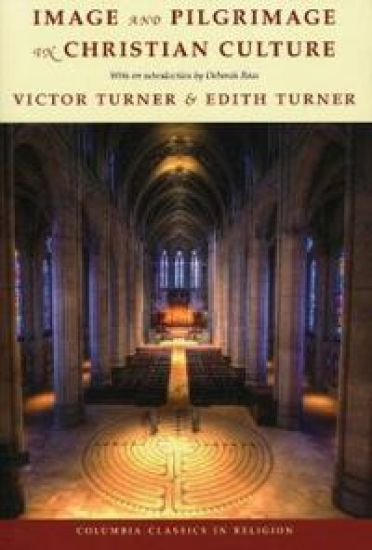
First published in 1978, Image and Pilgrimage in Christian Culture is a classic work examining the theological doctrines, popular notions, and corresponding symbols and images promoting and sustaining Christian pilgrimage. The book examines two major aspects of pilgrimage practice: the significance of context, or the theological conditions giving rise to pilgrimage and the folk traditions enabling worshippers to absorb the meaning of the event; and the images and symbols embodying the experience of pilgrimage and transmitting its visions in varying ways. Retelling its own tales of "mere mortals" confronted by potent visions, such as the man Juan Diego who found redemption with the Lady of Guadalupe and the poor French shepherdess Bernadette whose encounter with the Lady at Lourdes inspired Christians across the globe, this text treats religious visions as both paradox and empowering phenomena, tying them explicitly to the times in which they occurred. Offering vivid vignettes of social history, it extends their importance beyond the realm of the religious to our own conceptions of reality. Extensively revised throughout, this edition includes a new introduction by the theologian Deborah Ross situating the book within the work of Victor and Edith Turner and among the movements of contemporary culture. She addresses the study's legacy within the discipline, especially its hermeneutical framework, which introduced a novel method of describing and interpreting pilgrimage. She also credits the Turners with cementing the link between mysticism, popular devotion, and Christian culture, as well as their recognition of the relationship between pilgrimage and the deep spiritual needs of human beings. She concludes with various critiques of the Turners' work and suggests future directions for research.
Image and Pilgrimage in Christian Culture

Image and Pilgrimage in Christian Culture

Victor Turner; Edith Turner

Columbia University Press
2011
pokkari
First published in 1978, Image and Pilgrimage in Christian Culture is a classic work examining the theological doctrines, popular notions, and corresponding symbols and images promoting and sustaining Christian pilgrimage. The book examines two major aspects of pilgrimage practice: the significance of context, or the theological conditions giving rise to pilgrimage and the folk traditions enabling worshippers to absorb the meaning of the event; and the images and symbols embodying the experience of pilgrimage and transmitting its visions in varying ways. Retelling its own tales of "mere mortals" confronted by potent visions, such as the man Juan Diego who found redemption with the Lady of Guadalupe and the poor French shepherdess Bernadette whose encounter with the Lady at Lourdes inspired Christians across the globe, this text treats religious visions as both paradox and empowering phenomena, tying them explicitly to the times in which they occurred. Offering vivid vignettes of social history, it extends their importance beyond the realm of the religious to our own conceptions of reality. Extensively revised throughout, this edition includes a new introduction by the theologian Deborah Ross situating the book within the work of Victor and Edith Turner and among the movements of contemporary culture. She addresses the study's legacy within the discipline, especially its hermeneutical framework, which introduced a novel method of describing and interpreting pilgrimage. She also credits the Turners with cementing the link between mysticism, popular devotion, and Christian culture, as well as their recognition of the relationship between pilgrimage and the deep spiritual needs of human beings. She concludes with various critiques of the Turners' work and suggests future directions for research.
Das Ritual

Das Ritual

Victor Turner

Campus Verlag GmbH
2005
nidottu
Victor Turner deutet Rituale nicht als Ausdruck von Mythologien, sondern analysiert sie in ihrem unmittelbaren Bedeutungsgehalt für die Mitglieder einer Kultur. Anstatt sich auf die Erforschung "primitiver" Rituale zu beschränken, stellt er in diesem Buch ein nstrumentarium für die Analyse der Rituale "komplexer" Industriegesellschaften bereit. Anhand von zwei Ritualen einer zentralafrikanischen tammesgesellschaft entwickelt er seine Kategorien des Schwellenzustandes (liminality) und der sozialen Gemeinschaft (communitas), welche für die Anthropologie ebenso wie für die allgemeine Gesellschaftstheorie wesentlich wurden.
The Anthropology of Performance

The Anthropology of Performance

Victor Turner

Performing Arts Journals
2001
pokkari
Turner is all over the globe as he addresses issues of cultural performance, carnival, film, theatre, and "performing ethnography" to break new ground in anthropological thinking about event, spectacle, and audience. One of his last writings, "Body, Brain, and Culture" links cerebral neurology and anthropology studies in a fascinating interface.
Schism and Continuity in an African Society

Schism and Continuity in an African Society

Victor Turner

Berg Publishers
1996
sidottu
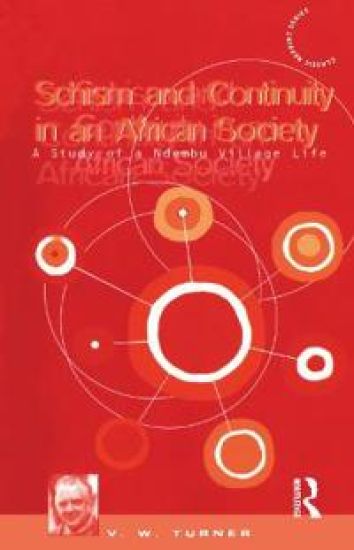
With a new foreword by Bruce Kapferer, Professor of Anthropology, James Cook University- A reprint of the seminal anthropological work of the 1960s. Originally published by Manchester University Press.Victor Turner will be remembered as the anthropologist who developed the concept of the ‘social drama', a method used extensively by anthropologists to describe and analyse the social life of a community. In essence, this technique involves analysing social crises within a community over a period of time in order to gain a better understanding of the key principles that govern the social life of the community.This book -- Turner's first ‘social drama' study -- focuses on the village life of the Ndembu of Zambia who were then under British rule. The social constraints, such as the matrilineally-inherited headmanship system, and the various releases from these constraints, provoked periodic crises which caused great disruption and pain. These crises made visible the contradictions between the principles governing social life and the conflicts experienced between individuals and groups when enforcing these principles. Seven social dramas are discussed - all from one family over a period of twenty years -- each substantiated by sociological and demographic research.
Schism and Continuity in an African Society

Schism and Continuity in an African Society

Victor Turner

Berg Publishers
1996
nidottu
With a new foreword by Bruce Kapferer, Professor of Anthropology, James Cook University- A reprint of the seminal anthropological work of the 1960s. Originally published by Manchester University Press.Victor Turner will be remembered as the anthropologist who developed the concept of the ‘social drama', a method used extensively by anthropologists to describe and analyse the social life of a community. In essence, this technique involves analysing social crises within a community over a period of time in order to gain a better understanding of the key principles that govern the social life of the community.This book -- Turner's first ‘social drama' study -- focuses on the village life of the Ndembu of Zambia who were then under British rule. The social constraints, such as the matrilineally-inherited headmanship system, and the various releases from these constraints, provoked periodic crises which caused great disruption and pain. These crises made visible the contradictions between the principles governing social life and the conflicts experienced between individuals and groups when enforcing these principles. Seven social dramas are discussed - all from one family over a period of twenty years -- each substantiated by sociological and demographic research.
The Ritual Process

The Ritual Process

Victor Turner; Roger Abrahams; Alfred Harris

AldineTransaction
1995
nidottu
In The Ritual Process: Structure and Anti-Structure, Victor Turner examines rituals of the Ndembu in Zambia and develops his now-famous concept of "Communitas." He characterizes it as an absolute inter-human relation beyond any form of structure.The Ritual Process has acquired the status of a small classic since these lectures were first published in 1969. Turner demonstrates how the analysis of ritual behavior and symbolism may be used as a key to understanding social structure and processes. He extends Van Gennep's notion of the "liminal phase" of rites of passage to a more general level, and applies it to gain understanding of a wide range of social phenomena. Once thought to be the "vestigial" organs of social conservatism, rituals are now seen as arenas in which social change may emerge and be absorbed into social practice.As Roger Abrahams writes in his foreword to the revised edition: "Turner argued from specific field data. His special eloquence resided in his ability to lay open a sub-Saharan African system of belief and practice in terms that took the reader beyond the exotic features of the group among whom he carried out his fieldwork, translating his experience into the terms of contemporary Western perceptions. Reflecting Turner's range of intellectual interests, the book emerged as exceptional and eccentric in many ways: yet it achieved its place within the intellectual world because it so successfully synthesized continental theory with the practices of ethnographic reports."
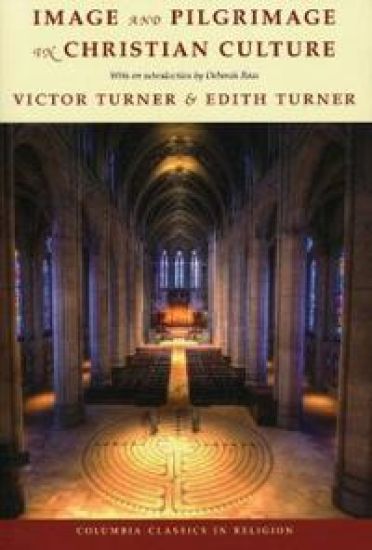
Image and Pilgrimage in Christian Culture

Image and Pilgrimage in Christian Culture

Victor Turner; Edith Turner

Columbia University Press
1995
pokkari
First published in 1978 and hailed by Culture as constituting "an important foreshadowing of issues that have become prominent in more recent anthropology," this classic book, now updated and extensively revised, examines the theological doctrines and popular notions that promote and sustain Christian pilgrimage, including their corresponding symbols and images.
Between Theater and Anthropology

Between Theater and Anthropology

Richard Schechner; Victor Turner

University of Pennsylvania Press
1985
pokkari
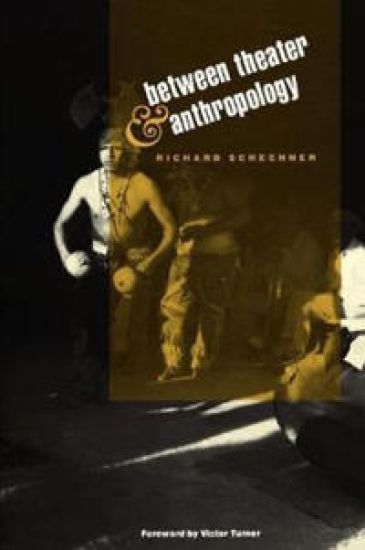
In performances by Euro-Americans, Afro-Americans, Native Americans, and Asians, Richard Schechner has examined carefully the details of performative behavior and has developed models of the performance process useful not only to persons in the arts but to anthropologists, play theorists, and others fascinated (but perhaps terrified) by the multichannel realities of the postmodern world. Schechner argues that in failing to see the structure of the whole theatrical process, anthropologists in particular have neglected close analogies between performance behavior and ritual. The way performances are created-in training, workshops, and rehearsals-is the key paradigm for social process.
Dramas, Fields, and Metaphors

Dramas, Fields, and Metaphors

Victor Turner

Cornell University Press
1975
pokkari
In this book, Victor Turner is concerned with various kinds of social actions and how they relate to, and come to acquire meaning through, metaphors and paradigms in their actors' minds; how in certain circumstances new forms, new metaphors, new paradigms are generated. To describe and clarify these processes, he ranges widely in history and geography: from ancient society through the medieval period to modern revolutions, and over India, Africa, Europe, China, and Meso-America. Two chapters, which illustrate religious paradigms and political action, explore in detail the confrontation between Henry II and Thomas Becket and between Hidalgo, the Mexican liberator, and his former friends. Other essays deal with long-term religious processes, such as the Christian pilgrimage in Europe and the emergence of anti-caste movements in India. Finally, he directs his attention to other social phenomena such as transitional and marginal groups, hippies, and dissident religious sects, showing that in the very process of dying they give rise to new forms of social structure or revitalized versions of the old order.
Revelation and Divination in Ndembu Ritual

Revelation and Divination in Ndembu Ritual

Victor Turner

Cornell University Press
1975
pokkari
The core of this book is a complete description of two important Ndembu rituals of affliction (Chihamba and Kayong'u), and an analysis of the system of ideas underlying more than a dozen modes of divination. Written by an internationally-known social scientist, the book demonstrates how the study of small-scale events may reveal as much about what it means to be a human being in society as do grand macrosocial and macrocultural surveys.Drawing on two and a half years of fieldwork, Victor Turner offers two thorough ethnographic studies of Ndembu revelatory ritual and divinatory techniques, with running commentaries on symbolism by a variety of Ndembu informants. Striking a personal note in the introductory chapter, Turner acknowledges his indebtedness to Ndembu ritualists for alerting him to the theoretical relevance of symbolic action in understanding human societies. He believes that ritual symbols, like botanists' stains, enable us to detect and trace the movement of social processes and relationships that often lie below the level of direct observation.
The Forest of Symbols

The Forest of Symbols

Victor Turner

Cornell University Press
1970
pokkari
A collection of ten of the most brilliant and important essays on ritual yet written. These papers by Victor Turner... are all seminal and distinguished. - American Anthropologist A pioneering work of high quality, this collection of anthropological studies provides one of the most detailed records available for an African society-or indeed for any group-of the semantics of ritual symbolism. It combines unusually detailed ethnographic description, based upon field work among the Ndembu of Zambia, with remarkable theoretical sophistication. Professor Turner describes the ritual phenomena in terms both of practice and of their sociological and psychological implications within a preliterate society. Case histories illustrate the function of ritual in creating community harmony. Data on circumcision rites and medical practices and an essay on color classification have wide implications for comparative analysis. Excellent photographs and useful diagrams complement the text.