Kirjojen hintavertailu. Mukana 12 586 745 kirjaa ja 12 kauppaa.

Kirjailija

Victoria Duckett

Kirjat ja teokset yhdessä paikassa: 3 kirjaa, julkaisuja vuosilta 2015-2023, suosituimpien joukossa Seeing Sarah Bernhardt. Vertaile teosten hintoja ja tarkista saatavuus suomalaisista kirjakaupoista.

3 kirjaa

Kirjojen julkaisuhaarukka 2015-2023.

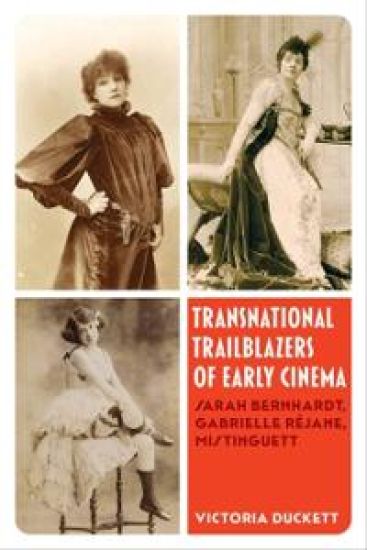
Transnational Trailblazers of Early Cinema

Transnational Trailblazers of Early Cinema

Victoria Duckett

University of California Press
2023
pokkari
A free ebook version of this title is available through Luminos, University of California Press’s Open Access publishing program. Visit www.luminosoa.org to learn more. At the forefront of the entertainment industries of the late nineteenth and early twentieth centuries were singular actors: Sarah Bernhardt, Gabrielle Réjane, and Mistinguett. Talented and formidable women with global ambitions, these performers forged connections with audiences across the world while pioneering the use of film and theatrics to gain international renown. Transnational Trailblazers of Early Cinema traces how these women emerged from the Parisian periphery to become world-famous stars. Building upon extensive archival research in France, England, and the United States, Victoria Duckett argues that, through intrepid business prowess and the use of early multimedia to cultivate their celebrity image, these three artists strengthened ties between countries, continents, and cultures during pivotal years of change.
Seeing Sarah Bernhardt

Seeing Sarah Bernhardt

Victoria Duckett

University of Illinois Press
2015
nidottu
The most famous stage actress of the nineteenth century, Sarah Bernhardt enjoyed a surprising renaissance when the 1912 multi-reel film Queen Elizabeth vaulted her to international acclaim. The triumph capped her already lengthy involvement with cinema while enabling the indefatigable actress to reinvent herself in an era of technological and generational change. Placing Bernhardt at the center of the industry's first two decades, Victoria Duckett challenges the perception of her as an anachronism unable to appreciate film's qualities. Instead, cinema's substitution of translated title cards for her melodic French deciphered Bernhardt for Anglo-American audiences. It also allowed the aging actress to appear in the kinds of longer dramas she could no longer physically sustain onstage. As Duckett shows, Bernhardt contributed far more than star quality. Her theatrical practice on film influenced how the young medium changed the visual and performing arts. Her promoting of experimentation, meanwhile, shaped the ways audiences looked at and understood early cinema. A leading-edge reappraisal of a watershed era, Seeing Sarah Bernhardt tells the story of an icon who bridged two centuries--and changed the very act of watching film.
Seeing Sarah Bernhardt

Seeing Sarah Bernhardt

Victoria Duckett

University of Illinois Press
2015
sidottu
The most famous stage actress of the nineteenth century, Sarah Bernhardt enjoyed a surprising renaissance when the 1912 multi-reel film Queen Elizabeth vaulted her to international acclaim. The triumph capped her already lengthy involvement with cinema while enabling the indefatigable actress to reinvent herself in an era of technological and generational change. Placing Bernhardt at the center of the industry's first two decades, Victoria Duckett challenges the perception of her as an anachronism unable to appreciate film's qualities. Instead, cinema's substitution of translated title cards for her melodic French deciphered Bernhardt for Anglo-American audiences. It also allowed the aging actress to appear in the kinds of longer dramas she could no longer physically sustain onstage. As Duckett shows, Bernhardt contributed far more than star quality. Her theatrical practice on film influenced how the young medium changed the visual and performing arts. Her promoting of experimentation, meanwhile, shaped the ways audiences looked at and understood early cinema. A leading-edge reappraisal of a watershed era, Seeing Sarah Bernhardt tells the story of an icon who bridged two centuries--and changed the very act of watching film.