Kirjojen hintavertailu. Mukana 12 595 353 kirjaa ja 12 kauppaa.
Kirjailija
Vijay P. Singh
Kirjat ja teokset yhdessä paikassa: 38 kirjaa, julkaisuja vuosilta 1996-2026, suosituimpien joukossa Risk and Reliability Analysis. Vertaile teosten hintoja ja tarkista saatavuus suomalaisista kirjakaupoista.
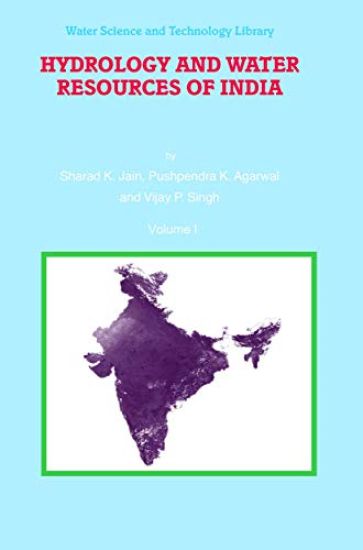
India is endowed with varied topographical features, such as high mountains, extensive plateaus, and wide plains traversed by mighty rivers. Water is an important input in the socio-economic development of a nation. In India, this dependence is even more apparent, as 70% of her population is dependent on agriculture. Divided into four sections the book provides a comprehensive overview of water resources of India. Beginning with a general description of the country, major hydrologic features, such as climate (precipitation, temperature, radiation, etc.), streamflow, groundwater, soil, etc. are discussed. A detailed treatment of all major river basins is provided, which includes description of catchments, tributaries, surface water and ground water, and important water resources projects. This is followed by a discussion on major uses of water in India, major projects, water related problems including environment and water quality, provisions of the constitution of India, interlinking of India rivers, and institutions dealing with water resources. Finally, the last chapter discusses some views on water management policy for India. AudienceThe book should be useful to Water Resources professionals, particularly those with an interest in India, graduate students, researchers, teachers, planners and policy makers.
India is endowed with varied topographical features, such as high mountains, extensive plateaus, and wide plains traversed by mighty rivers. Water is an important input in the socio-economic development of a nation. In India, this dependence is even more apparent, as 70% of her population is dependent on agriculture. Divided into four sections the book provides a comprehensive overview of water resources of India. Beginning with a general description of the country, major hydrologic features, such as climate (precipitation, temperature, radiation, etc.), streamflow, groundwater, soil, etc. are discussed. A detailed treatment of all major river basins is provided, which includes description of catchments, tributaries, surface water and ground water, and important water resources projects. This is followed by a discussion on major uses of water in India, major projects, water related problems including environment and water quality, provisions of the constitution of India, interlinking of India rivers, and institutions dealing with water resources. Finally, the last chapter discusses some views on water management policy for India. AudienceThe book should be useful to Water Resources professionals, particularly those with an interest in India, graduate students, researchers, teachers, planners and policy makers.
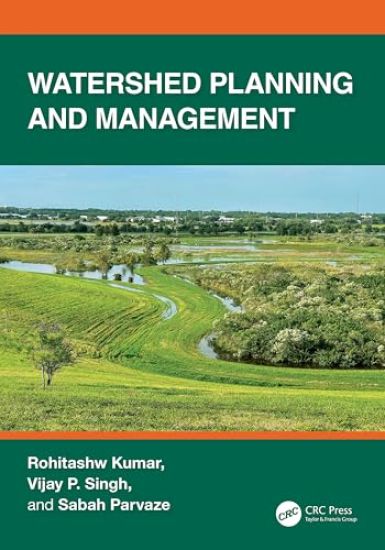
Watershed Planning and Management examines the science, technology, and practice of managing land and water resources through the watershed approach. It integrates hydrology, geomorphology, soil and water conservation, land use planning, socio-economic considerations, and modern tools such as remote sensing and GIS. The book presents an overview of global water resources, followed by fundamental concepts of watersheds, hydrological cycles, and delineation methods. With a balance of theory, methodology, and practice, the book serves as a valuable resource for students, researchers, practitioners, and policymakers. It not only strengthens conceptual understanding but also provides practical insights into implementing watershed projects in diverse geographic regions. Explains watershed concepts from basic hydrology to advanced applications in planning, management, and policy concept designed for optimizing crop yields, and reaping economic and environmental benefits. Focuses on sustainable development and aligns watershed management with environmental conservation, climate resilience, and sustainable agriculture. Explains methods of watershed prioritization, erosion modeling, hydrological budget analysis, and water yield assessment. Includes practical real-world examples to present insights of watershed planning and management for climate change mitigation.
The over-exploitation of groundwater and marked changes in climate over recent decades has led to unacceptable declines in groundwater resources. Under the likely scarcity of available water resources in the near future, it is critical to quantify and manage the available water resources. With increasing demand for potable water for human consumption, agriculture, and industrial uses, the need to evaluate the groundwater development, management, and productivity of aquifers also increases. Laboratory Manual for Groundwater, Wells, and Pumps serves as a valuable resource and provides a multi-disciplinary overview for academics, administrators, scientists, policymakers, and professionals involved in managing sustainable groundwater development programs. It includes practical guidance on the measurement of groundwater flow, soil properties, aquifer properties, wells and their design, as well as the latest state-of-the-art information on pumps and their testing, and groundwater modeling.Features: Covers basics of groundwater engineering, advanced methodologies, and their applications and groundwater modeling Examines groundwater exploration, planning and designing, and methods for formulating strategies for sustainable management and development Serves as a reference for practitioners on practical applications and frequently occurring issues of groundwater investigations, development, and management.
This book provides a state-of-the-art overview of the concepts and methodologies of data and modelling-driven hydrological analyses and their wide range of practical applications. The book is driven by the realisation that science, technology, engineering, and mathematics (STEM) concepts are essential in engineering hydrology to produce well-trained hydrologists. Such hydrologists will be equipped to face future societal challenges that require enhanced information and communication technology tools and integration of technical and non-technical areas. The book contains 12 chapters that introduce the principles of hydrological data analysis and highlight the current and emerging tools and techniques for analysing hydrologic data. The book describes the types of data typically used in hydrological analyses. It highlights the revolutionary technological advancements made toward hydrological data collection, including the use of drones and smartphones. The foremost objective of the book is to present the hydrological data analysis procedures. It explains the steps involved in data analysis for easy understanding of the reader, including students and professionals. This book presents case studies that demonstrate step-by-step procedures involved in typical analysis problems and may guide students and professionals in planning and executing steps to analyse the problem at hand. Case study examples will guide them to understand the intricacies of hydrological data analysis. It provides the readers with a complete package to enrich their understanding of the hydrological data analysis tools and techniques. Subsequently, as well-trained hydrologists, they could execute their learning to meet any specific grand challenge of the twenty-first century.
The Handbook of Applied Hydrologic and Water Resources Engineering examines the planning and design of water supply systems, flood control works, drought mitigation measures, navigation facilities, and hydraulic structures, as well as feasibility and environmental impact studies for various water-related projects. It is based on the experience gained through consultancy in dealing with various water resources issues and problems, teaching, and research. It serves as a useful resource for graduate students and faculty members in civil engineering, agricultural engineering, and water resources engineering, as well as practicing engineers working in civil, environmental, and agricultural fields.
Most complex physical phenomena can be described by nonlinear equations, specifically, differential equations. In water engineering, nonlinear differential equations play a vital role in modeling physical processes. Analytical solutions to strong nonlinear problems are not easily tractable, and existing techniques are problem-specific and applicable for specific types of equations. Exploring the concept of homotopy from topology, different kinds of homotopy-based methods have been proposed for analytically solving nonlinear differential equations, given by approximate series solutions. Homotopy-Based Methods in Water Engineering attempts to present the wide applicability of these methods to water engineering problems. It solves all kinds of nonlinear equations, namely algebraic/transcendental equations, ordinary differential equations (ODEs), systems of ODEs, partial differential equations (PDEs), systems of PDEs, and integro-differential equations using the homotopy-based methods. The content of the book deals with some selected problems of hydraulics of open-channel flow (with or without sediment transport), groundwater hydrology, surface-water hydrology, general Burger’s equation, and water quality.Features: Provides analytical treatments to some key problems in water engineering Describes the applicability of homotopy-based methods for solving nonlinear equations, particularly differential equations Compares different approaches in dealing with issues of nonlinearity
The book focuses broadly on the preliminaries of the canal irrigation systems in India with a focus on their operation, maintenance, and management of the canal systems. The chapters in this book are classified under four sections, viz., (i). preliminaries of the canal irrigation systems, (ii) operation of the canal irrigation systems, (iii) maintenance of the canal irrigation systems, and (iv) management of the canal irrigation systems. The preliminaries of the canal irrigation systems include an integrated view of irrigation and agriculture, irrigation management in India: problems, issues, a brief history, and some lessons, irrigation administration, organizational structure for management of irrigated agriculture, and farmers’ participation. The operation of the canal irrigation systems includes the operation of dams and barrages, canal operation, water distribution planning, measurement of flow and sediment in canals, and performance evaluation of the canal irrigation system, use of groundwater in the canal command area. The canal irrigation systems' maintenance includes dams, barrages, related equipment, canals and related structures, field drainage, diagnostic analysis of canal irrigation system, soil and water quality management, soil moisture, and measurement. The management of the canal irrigation systems includes rehabilitation and modernization and a case study on rehabilitation, conjunctive use management, operation, and maintenance budgeting, and financing. The book is expected to be useful for academicians, water practitioners, scientists, water managers, environmentalists, administrators, NGOs, researchers, and students who are actively involved in the operation, maintenance, and management of the canal irrigation system for addressing the challenges being faced in the irrigated agricultural while addressing issues of canal irrigation systems in South East Asia.
The utilization of successful plasticulture engineering technology can ideally optimize crop yields and provide both economic and environmental benefits, such as reducing the need for water and fertilizer. This book discusses the myriad important aspects of crop production that utilize plastic, such as micro-irrigation, water management, plastic mulch films, protected cultivation and low tunnels, crop covers, canal linings, silage bags, and more. It also examines the latest methods for vertical farming and technological aspects, such as smart agriculture using the internet of things (IoT).The current state of the art, as well as potential future uses,ofplastics isdiscussed in addition to the benefits and limitations of plastics applications in agriculture generally.Features Illustrates application of plastic in protected cultivation, water management, aquaculture, and hi-tech horticulture using innovative technologies to enhance water use efficiency and crop productivity Presents precision farming for climate-resilient technologies Includes real-world examples to present practical insights of plastic engineering for climate change mitigation strategies.Plasticulture Engineering and Technology will serve as a useful resource for students, professionals, and researchers in agriculture and agricultural engineering, hydrology, hydraulics, water resources engineering, irrigation engineering, and environmental science.
This comprehensive textbook combines the theoretical principles of engineering hydrology together with their practical applications, using modern industry-standard software. The textbook is written by the combination of a practitioner of water resources engineering with over 30 years of professional experience and a highly respected academic and recognized world authority in hydrology. Examples are drawn from global case studies, with exercises available online. The book begins with a review of the necessary mathematics and statistical hydrology. The underlying principles of the geographic information systems are discussed. In addition to topics covering fundamental concepts, separate chapters are devoted to reservoir operations, water resources management, climate change, and various methods of optimizing hydrologic models for calibration and validation. This textbook will prove to be indispensable for advanced students in civil, environmental, and agricultural engineering, preparing them to confidently join the industrial sector. It will also be an indispensable reference textbook for practicing engineers, bringing them up to date with modern techniques in applied hydrology.
This book provides a state-of-the-art overview of the concepts and methodologies of data and modelling-driven hydrological analyses and their wide range of practical applications. The book is driven by the realisation that science, technology, engineering, and mathematics (STEM) concepts are essential in engineering hydrology to produce well-trained hydrologists. Such hydrologists will be equipped to face future societal challenges that require enhanced information and communication technology tools and integration of technical and non-technical areas. The book contains 12 chapters that introduce the principles of hydrological data analysis and highlight the current and emerging tools and techniques for analysing hydrologic data. The book describes the types of data typically used in hydrological analyses. It highlights the revolutionary technological advancements made toward hydrological data collection, including the use of drones and smartphones. The foremost objective of the book is to present the hydrological data analysis procedures. It explains the steps involved in data analysis for easy understanding of the reader, including students and professionals. This book presents case studies that demonstrate step-by-step procedures involved in typical analysis problems and may guide students and professionals in planning and executing steps to analyse the problem at hand. Case study examples will guide them to understand the intricacies of hydrological data analysis. It provides the readers with a complete package to enrich their understanding of the hydrological data analysis tools and techniques. Subsequently, as well-trained hydrologists, they could execute their learning to meet any specific grand challenge of the twenty-first century.
The book focuses broadly on the preliminaries of the canal irrigation systems in India with a focus on their operation, maintenance, and management of the canal systems. The chapters in this book are classified under four sections, viz., (i). preliminaries of the canal irrigation systems, (ii) operation of the canal irrigation systems, (iii) maintenance of the canal irrigation systems, and (iv) management of the canal irrigation systems. The preliminaries of the canal irrigation systems include an integrated view of irrigation and agriculture, irrigation management in India: problems, issues, a brief history, and some lessons, irrigation administration, organizational structure for management of irrigated agriculture, and farmers’ participation. The operation of the canal irrigation systems includes the operation of dams and barrages, canal operation, water distribution planning, measurement of flow and sediment in canals, and performance evaluation of the canal irrigation system, use of groundwater in the canal command area. The canal irrigation systems' maintenance includes dams, barrages, related equipment, canals and related structures, field drainage, diagnostic analysis of canal irrigation system, soil and water quality management, soil moisture, and measurement. The management of the canal irrigation systems includes rehabilitation and modernization and a case study on rehabilitation, conjunctive use management, operation, and maintenance budgeting, and financing. The book is expected to be useful for academicians, water practitioners, scientists, water managers, environmentalists, administrators, NGOs, researchers, and students who are actively involved in the operation, maintenance, and management of the canal irrigation system for addressing the challenges being faced in the irrigated agricultural while addressing issues of canal irrigation systems in South East Asia.
Most complex physical phenomena can be described by nonlinear equations, specifically, differential equations. In water engineering, nonlinear differential equations play a vital role in modeling physical processes. Analytical solutions to strong nonlinear problems are not easily tractable, and existing techniques are problem-specific and applicable for specific types of equations. Exploring the concept of homotopy from topology, different kinds of homotopy-based methods have been proposed for analytically solving nonlinear differential equations, given by approximate series solutions. Homotopy-Based Methods in Water Engineering attempts to present the wide applicability of these methods to water engineering problems. It solves all kinds of nonlinear equations, namely algebraic/transcendental equations, ordinary differential equations (ODEs), systems of ODEs, partial differential equations (PDEs), systems of PDEs, and integro-differential equations using the homotopy-based methods. The content of the book deals with some selected problems of hydraulics of open-channel flow (with or without sediment transport), groundwater hydrology, surface-water hydrology, general Burger’s equation, and water quality.Features: Provides analytical treatments to some key problems in water engineering Describes the applicability of homotopy-based methods for solving nonlinear equations, particularly differential equations Compares different approaches in dealing with issues of nonlinearity
The over-exploitation of groundwater and marked changes in climate over recent decades has led to unacceptable declines in groundwater resources. Under the likely scarcity of available water resources in the near future, it is critical to quantify and manage the available water resources. With increasing demand for potable water for human consumption, agriculture, and industrial uses, the need to evaluate the groundwater development, management, and productivity of aquifers also increases. Laboratory Manual for Groundwater, Wells, and Pumps serves as a valuable resource and provides a multi-disciplinary overview for academics, administrators, scientists, policymakers, and professionals involved in managing sustainable groundwater development programs. It includes practical guidance on the measurement of groundwater flow, soil properties, aquifer properties, wells and their design, as well as the latest state-of-the-art information on pumps and their testing, and groundwater modeling.Features: Covers basics of groundwater engineering, advanced methodologies, and their applications and groundwater modeling Examines groundwater exploration, planning and designing, and methods for formulating strategies for sustainable management and development Serves as a reference for practitioners on practical applications and frequently occurring issues of groundwater investigations, development, and management.
Hydraulic geometry describes the relations between stable channel characteristics and discharge and adjustments made by a stream in response to changes in river discharge and sediment load. This book introduces hydraulic geometry and discusses different theories and their applications in river engineering, thus providing a comprehensive summary for hydraulic engineers, as well as graduate students and researchers in fluvial geomorphology and hydraulic and environmental engineering. Topics covered include the basis of power form of hydraulic geometry relations, validity and stability of power relations, state and assumption of equilibrium, variability of exponents, variation of channel width and velocity, and the effect of stream size and river channel patterns.
This textbook provides a comprehensive treatment of irrigation engineering for advanced undergraduates and graduate students. It does not require a background in calculus, hydrology, or hydraulics, offering a one-stop overview of the entire field of study. It includes everything a student of irrigation engineering needs to know: concepts of climate, soils, crops, water quality, hydrology, and hydraulics, as well as their application to design and environmental management. To demonstrate the practical applications of the theories discussed, there are over 300 worked examples and end-of chapter exercises. The exercises allow readers to solve real-world problems and apply the information they've learned to a diverse range of scenarios. To further prepare students for their future careers, each chapter includes many illustrative diagrams and tables containing data to help design irrigation systems. For instructors' use when planning and teaching, a solutions manual can be found online alongside a suite of PowerPoint lecture slides.
The utilization of successful plasticulture engineering technology can ideally optimize crop yields and provide both economic and environmental benefits, such as reducing the need for water and fertilizer. This book discusses the myriad important aspects of crop production that utilize plastic, such as micro-irrigation, water management, plastic mulch films, protected cultivation and low tunnels, crop covers, canal linings, silage bags, and more. It also examines the latest methods for vertical farming and technological aspects, such as smart agriculture using the internet of things (IoT).The current state of the art, as well as potential future uses,ofplastics isdiscussed in addition to the benefits and limitations of plastics applications in agriculture generally.Features Illustrates application of plastic in protected cultivation, water management, aquaculture, and hi-tech horticulture using innovative technologies to enhance water use efficiency and crop productivity Presents precision farming for climate-resilient technologies Includes real-world examples to present practical insights of plastic engineering for climate change mitigation strategies.Plasticulture Engineering and Technology will serve as a useful resource for students, professionals, and researchers in agriculture and agricultural engineering, hydrology, hydraulics, water resources engineering, irrigation engineering, and environmental science.
A multitude of processes in hydrology and environmental engineering are either random or entail random components which are characterized by random variables. These variables are described by frequency distributions. This book provides an overview of different systems of frequency distributions, their properties, and applications to the fields of water resources and environmental engineering. A variety of systems are covered, including the Pearson system, Burr system, and systems commonly applied in economics, such as the D'Addario, Dagum, Stoppa, and Esteban systems. The latter chapters focus on the Singh system and the frequency distributions deduced from Bessel functions, maximum entropy theory, and the transformations of random variables. The final chapter introduces the genetic theory of frequency distributions. Using real-world data, this book provides a valuable reference for researchers, graduate students, and professionals interested in frequency analysis.
This book provides a step-by-step methodology and derivation of deep learning algorithms as Long Short-Term Memory (LSTM) and Convolution Neural Network (CNN), especially for estimating parameters, with back-propagation as well as examples with real datasets of hydrometeorology (e.g. streamflow and temperature) and environmental science (e.g. water quality). Deep learning is known as part of machine learning methodology based on the artificial neural network. Increasing data availability and computing power enhance applications of deep learning to hydrometeorological and environmental fields. However, books that specifically focus on applications to these fields are limited.Most of deep learning books demonstrate theoretical backgrounds and mathematics. However, examples with real data and step-by-step explanations to understand the algorithms in hydrometeorology and environmental science are very rare. This book focuses on the explanation of deep learning techniques and their applications to hydrometeorological and environmental studies with real hydrological and environmental data. This book covers the major deep learning algorithms as Long Short-Term Memory (LSTM) and Convolution Neural Network (CNN) as well as the conventional artificial neural network model.