Kirjojen hintavertailu. Mukana 12 390 323 kirjaa ja 12 kauppaa.

Kirjailija

Vincenzo Memoli

Kirjat ja teokset yhdessä paikassa: 7 kirjaa, julkaisuja vuosilta 2015-2025, suosituimpien joukossa Attitudes Towards Europe Beyond Euroscepticism. Vertaile teosten hintoja ja tarkista saatavuus suomalaisista kirjakaupoista.

7 kirjaa

Kirjojen julkaisuhaarukka 2015-2025.

Public Opinion and Disunity over EU Integration

Public Opinion and Disunity over EU Integration

Danilo Di Mauro; Vincenzo Memoli

TAYLOR FRANCIS LTD
2025
sidottu
This book explores the origins, characteristics, and impact of public support for the European Union (EU) on the process of EU integration.It examines core questions around the dynamics behind the (dis)integration processes, how multidimensional attitudes toward the EU are interrelated, the dimensions and cleavages of party competition, and the public-political elites link in EU policy-making. By simultaneously applying cleavage and post-functionalist theoretical perspectives, the book observes whether the era of multiple crises has changed support for the EU, creating a more polarised public whose attitudes can constrain, favour, or even stop integration and country membership.This book is of key interest to scholars and students of global governance, Euroscepticism, populism, public opinion, democracy, and more generally, European/EU Studies and European Politics.
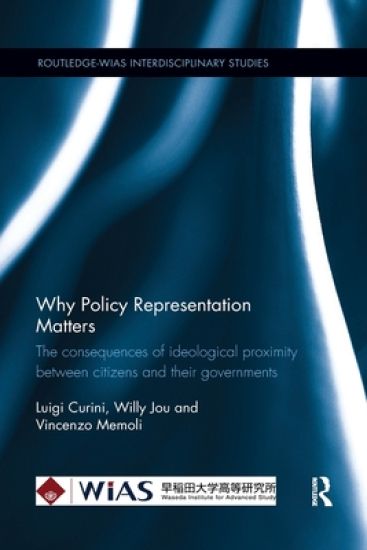
Why Policy Representation Matters

Why Policy Representation Matters

Luigi Curini; Willy Jou; Vincenzo Memoli

Routledge
2019
nidottu
Elections are a fundamental element of democracy, since elected governments reflect voter preferences. At the same time, it is inevitable that policies pursued by any government closely resemble the preferences of some citizens, while alienating others who hold different views. Previous works have examined how institutional settings facilitate or hinder policy proximity between citizens and governments. Building on their findings, the book explores a series of "so what" questions: how and to what extent does the distance between individual and government positions affect citizens' propensity to vote, protest, believe in democracy, and even feel satisfied with their lives?Using cross-national public opinion data, this book is an original scholarly research which develops theoretically grounded hypotheses to test the effect of citizen-government proximity on three dependent variables. After introducing the data (both public opinion surveys and country-level statistics) and the methodology to be used in subsequent chapters, one chapter each is devoted to how proximity or the absence thereof affects political participation, satisfaction with democracy, and happiness. Differences in political attitudes and behavior between electoral winners and losers, and ideological moderates and radicals, are also discussed in depth.
Attitudes Towards Europe Beyond Euroscepticism

Attitudes Towards Europe Beyond Euroscepticism

Danilo Di Mauro; Vincenzo Memoli

Springer International Publishing AG
2018
nidottu
The book addresses the topic of EU legitimacy by exploring the forms, origins and effects of citizens' support to EU institutions. Through examining the wide-ranging levels of support, the authors show how these multi-faceted attitudes cast shade on the outdated, somewhat one-dimensional concept of Euroscepticism. Di Mauro and Memoli not only observe how political issues and the economic crisis affect public opinion, but also demonstrate how national contexts play a crucial role in shaping attitudes towards Europe at any level of support. This volume shows how the lack of accountability in the EU system makes it increasingly vulnerable to the negative effects of economic and societal shocks, and the 'national lens' that we view the EU through influences our voting choices.
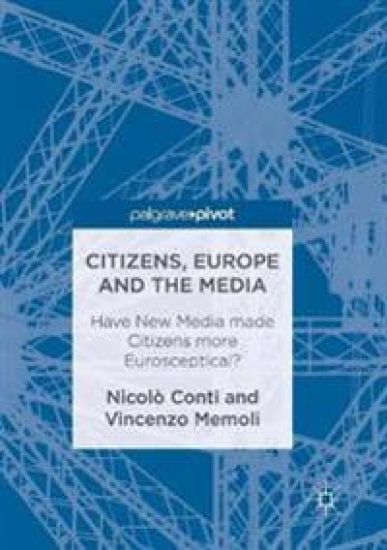
Citizens, Europe and the Media

Citizens, Europe and the Media

Nicolò Conti; Vincenzo Memoli

Springer International Publishing AG
2018
nidottu
The volume presents the most comprehensive survey to date of citizens’ use of media and attitudes towards the EU. It shows that the media have a definite, but differentiated, impact on citizens’ attitudes. A broad use of media positively influences support for the EU, as it refines citizens’ cognitive capabilities and understanding of the European reality. However, prevalent use of online media serves to channel more critical attitudes and disaffection for the EU. A negative climate, particularly on the rise on the Internet and among the young and well-educated generations of active users, could influence the context where the most important political decisions on the EU are taken. This could give a completely new perspective to EU development that, in the past, has always been about creating an ever closer union and whose path might be more difficult in the future if collective action through the Internet becomes a major challenge.
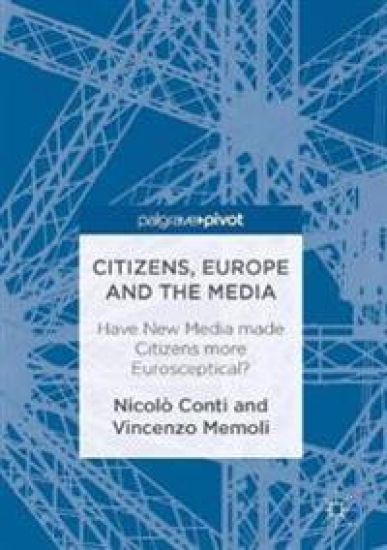
Citizens, Europe and the Media

Citizens, Europe and the Media

Nicolò Conti; Vincenzo Memoli

Springer International Publishing AG
2016
sidottu
The volume presents the most comprehensive survey to date of citizens’ use of media and attitudes towards the EU. It shows that the media have a definite, but differentiated, impact on citizens’ attitudes. A broad use of media positively influences support for the EU, as it refines citizens’ cognitive capabilities and understanding of the European reality. However, prevalent use of online media serves to channel more critical attitudes and disaffection for the EU. A negative climate, particularly on the rise on the Internet and among the young and well-educated generations of active users, could influence the context where the most important political decisions on the EU are taken. This could give a completely new perspective to EU development that, in the past, has always been about creating an ever closer union and whose path might be more difficult in the future if collective action through the Internet becomes a major challenge.
Attitudes Towards Europe Beyond Euroscepticism

Attitudes Towards Europe Beyond Euroscepticism

Danilo Di Mauro; Vincenzo Memoli

Springer International Publishing AG
2016
sidottu
The book addresses the topic of EU legitimacy by exploring the forms, origins and effects of citizens' support to EU institutions. Through examining the wide-ranging levels of support, the authors show how these multi-faceted attitudes cast shade on the outdated, somewhat one-dimensional concept of Euroscepticism. Di Mauro and Memoli not only observe how political issues and the economic crisis affect public opinion, but also demonstrate how national contexts play a crucial role in shaping attitudes towards Europe at any level of support. This volume shows how the lack of accountability in the EU system makes it increasingly vulnerable to the negative effects of economic and societal shocks, and the 'national lens' that we view the EU through influences our voting choices.
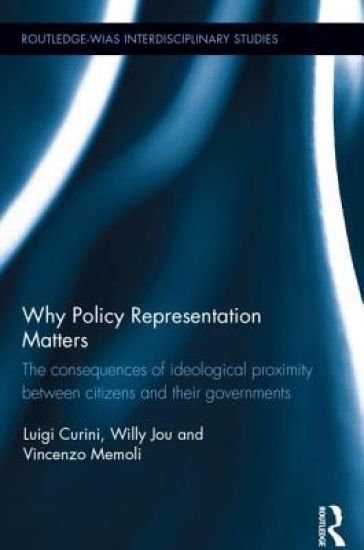
Why Policy Representation Matters

Why Policy Representation Matters

Luigi Curini; Willy Jou; Vincenzo Memoli

Routledge
2015
sidottu
Elections are a fundamental element of democracy, since elected governments reflect voter preferences. At the same time, it is inevitable that policies pursued by any government closely resemble the preferences of some citizens, while alienating others who hold different views. Previous works have examined how institutional settings facilitate or hinder policy proximity between citizens and governments. Building on their findings, the book explores a series of "so what" questions: how and to what extent does the distance between individual and government positions affect citizens' propensity to vote, protest, believe in democracy, and even feel satisfied with their lives?Using cross-national public opinion data, this book is an original scholarly research which develops theoretically grounded hypotheses to test the effect of citizen-government proximity on three dependent variables. After introducing the data (both public opinion surveys and country-level statistics) and the methodology to be used in subsequent chapters, one chapter each is devoted to how proximity or the absence thereof affects political participation, satisfaction with democracy, and happiness. Differences in political attitudes and behavior between electoral winners and losers, and ideological moderates and radicals, are also discussed in depth.